
 = Partner Site
Dead End in Norvelt Reading Level: A Complete Guide
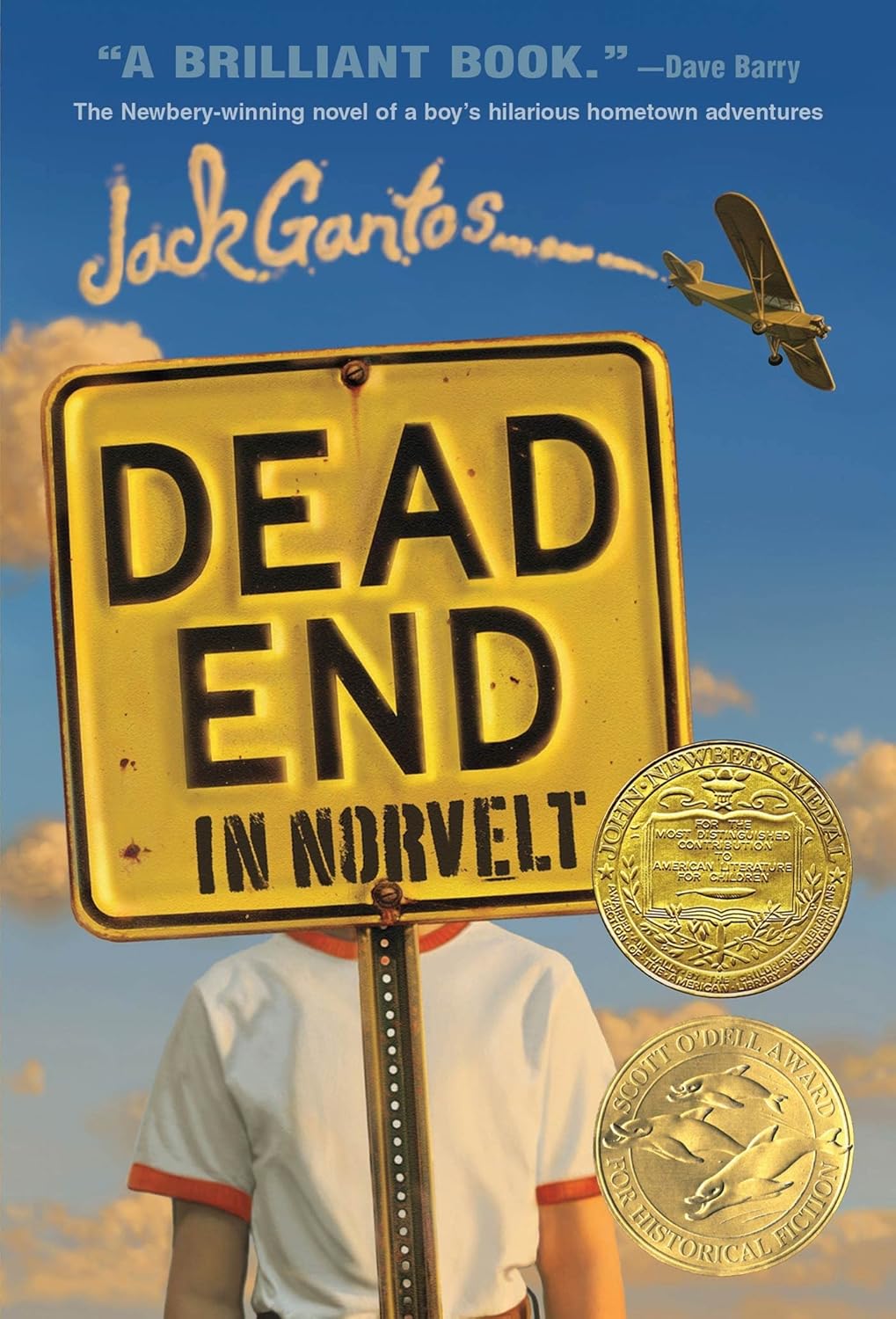
Dead End in Norvelt by Jack Gantos is a Newbery Medal-winning novel that is equal parts autobiographical fiction, screwball comedy, local history lesson, and surprisingly moving meditation on mortality, community, and what it means to leave something behind. Set in the summer of 1962 in the real Pennsylvania town of Norvelt, it follows a twelve-year-old boy named Jack Gantos — yes, the author himself — through one of the strangest, funniest, and most formative summers of his life. This complete guide covers the reading level, age appropriateness, themes, characters, and everything parents and teachers need to know about this wonderfully eccentric novel.
For Parents
Dead End in Norvelt is a genuinely funny, deeply original novel that defies easy categorization — part coming-of-age story, part mystery, part history lesson, part comedy of errors. It deals with death and community in honest ways, but with so much humor and warmth that it never feels heavy. Best suited for readers ages 10-13, it rewards curious, patient readers who enjoy a book that goes somewhere unexpected.
For Teachers
A Newbery Medal winner that is one of the more genuinely distinctive books in the catalog, Dead End in Norvelt is excellent for teaching voice, unreliable narration, the relationship between history and memory, and how humor can coexist with serious themes. Miss Volker’s historical obituaries — embedded throughout the novel — make it an unusually rich text for discussing American history, the New Deal era, and what communities owe to their past. Best suited to grades 5-7.
Dead End in Norvelt at a Glance
Find on Amazon →| Author | Jack Gantos |
| Published | 2011 |
| Grade Level | 5-7 (our assessment) |
| Recommended Age | 10-13 |
| Flesch-Kincaid Grade | 5.6 |
| Word Count | ~56,000 |
| Pages | 341 (standard hardcover) |
| Chapters | 20 |
| Genre | Autobiographical fiction / historical fiction / comedy |
| Setting | Norvelt, Pennsylvania, summer 1962 |
| Awards | Newbery Medal (2012) |
For official Lexile and AR levels, visit Lexile.com or AR BookFinder. ReadingVine provides independent editorial assessments.
What Reading Level Is Dead End in Norvelt?
Dead End in Norvelt reads at approximately a 5th-7th grade level by our editorial assessment, with a Flesch-Kincaid grade level of around 5.6. The prose is accessible and energetic — Gantos writes in a first-person voice that is funny, self-deprecating, and immediately engaging — but the book is denser than its word-level score suggests, partly because of the historical content woven through Miss Volker’s obituaries and partly because the humor operates on several levels at once.
The novel rewards readers who can hold multiple threads simultaneously: the immediate comic misadventures of Jack’s summer, the slowly building mystery of whether the old Norvelt women are being murdered, and the longer historical arc of what Norvelt was, what Eleanor Roosevelt meant to it, and what it means for a community to die out. Readers who are comfortable with that kind of layered reading will find the book deeply satisfying. Those looking for a straightforward plot may find it sprawling.
It is most commonly assigned in grades 5-7 and works well as both a read-aloud and independent text. For official Lexile and Accelerated Reader scores, visit Lexile.com or AR BookFinder.
What Age Is Dead End in Norvelt Appropriate For?
We recommend Dead End in Norvelt for readers ages 10-13. The book deals with death — quite a lot of death, actually, since the elderly women of Norvelt are dying off one by one throughout the novel — but it does so with a dark comic sensibility rather than in a way that is genuinely upsetting. Jack’s nosebleeds, which are played for broad comedy, are a recurring feature. The mystery element involves the possibility of murder, handled at the level of a children’s whodunit.
The novel features the deaths of multiple elderly characters, discussed with humor but with genuine feeling underneath. Jack experiences severe nosebleeds throughout the book, described in comic but occasionally graphic detail — blood is a recurring motif. There are references to World War II, the atomic bomb, the Cold War, and the Cuban Missile Crisis as historical context. A character is involved in a vehicular accident. There is mild, period-appropriate language. There is no sexual content and no gratuitous violence, but parents of younger or more sensitive readers should be aware that death and blood are recurring presences — played for comedy, but present.
What Is Dead End in Norvelt About?
It is the summer of 1962, and twelve-year-old Jack Gantos is grounded for the entire summer after accidentally firing his father’s Japanese war rifle across the corn field his mother had planted. This means no Little League, no movies, no going anywhere — just Norvelt, Pennsylvania, the small planned community where Jack has lived his whole life and which feels, in the heat of that summer, like it might be the last place on earth.
Jack’s one escape is his neighbor Miss Volker, an elderly woman with severely arthritic hands who writes the obituaries for the local paper. Since her hands don’t work well enough to type, she dictates them to Jack, who types for her. This arrangement turns Jack into an unwilling but fascinated student of Norvelt’s history — because Miss Volker doesn’t write ordinary obituaries. She writes miniature history lessons, connecting each deceased resident to the larger story of Norvelt itself, which was founded in the 1930s as a New Deal community strongly supported by Eleanor Roosevelt, and which is now slowly dying as its original residents pass away.
The summer gets stranger as the deaths accelerate. Are the old women of Norvelt dying of natural causes, or is something more sinister happening? Jack becomes convinced there may be a murderer in their midst, a suspicion his mother encourages and his father dismisses. Woven through the mystery are Jack’s father’s restless schemes to move the family to Florida, his mother’s fierce attachment to Norvelt and everything Eleanor Roosevelt built there, Jack’s friendship with a wild girl named Bunny, and Jack’s own nosebleeds, which erupt at moments of excitement or moral crisis with comic regularity.
The novel is autobiographical fiction — the real Jack Gantos really did grow up in Norvelt, and the community Eleanor Roosevelt founded is real — but Gantos takes considerable creative license with events, characters, and chronology. The result is something between memoir and tall tale: a book that is exaggerated in all the right ways while being emotionally true.
Dead End in Norvelt Characters
Is Dead End in Norvelt Banned?
Dead End in Norvelt has not been widely banned or challenged. It does not appear on major lists of frequently challenged books. Some parents have noted the recurring descriptions of Jack’s nosebleeds and the novel’s preoccupation with death as concerns, but neither rises to the level that has generated formal challenges. The book is widely shelved in school and public libraries and is commonly assigned in grades 5-7. It is considered an exemplary and distinctive Newbery Medal winner.
Dead End in Norvelt Themes and Lessons
The central theme of Dead End in Norvelt is the relationship between the living and the dead — specifically, what the living owe to those who came before them and to the communities they built. Miss Volker’s obituaries are the novel’s moral engine: she insists, with fierce conviction, that every Norvelt resident who dies deserves to have their life connected to the larger story of what Norvelt meant. Her work is a form of argument — that ordinary lives matter, that history is made by people who are not famous, that a community’s founding ideals deserve to be remembered even as the community fades.
Running alongside this is a coming-of-age story about what it means to develop a conscience. Jack starts the summer as a fairly ordinary twelve-year-old, grounded and resentful, and ends it having been genuinely changed by what he has witnessed and participated in. Miss Volker is his unlikely teacher — not because she sets out to teach him, but because proximity to someone who cares that much about history and honesty has its own transformative effect.
The novel also engages seriously with the American past — the New Deal, Eleanor Roosevelt, the specific idealism that built places like Norvelt and the specific disappointment of watching them decline. This is unusual for middle grade fiction, and it gives the book a historical weight that lingers after the comedy has faded.
Discussion starters for classrooms: Why does Miss Volker think the obituaries matter so much? What is Norvelt, and why does Jack’s mother want to stay there when his father wants to leave? How does Jack change over the course of the summer? What does the novel suggest about what communities owe to their history? Why do you think Gantos gave the narrator his own name?
How Many Pages and Chapters Are in Dead End in Norvelt?
The standard hardcover edition of Dead End in Norvelt is 341 pages, divided into 20 chapters. The word count is approximately 56,000 words — substantial for a middle grade novel, and the page count is higher than many books at this level. The chapters are long by middle grade standards, averaging around seventeen pages each.
For readers in the target age range of 10-13, expect a reading time of roughly 6-10 hours, or about a week and a half of steady reading at 30 minutes per session. The novel’s pacing is episodic — each chapter tends to contain its own comic set piece or crisis — which makes it well suited to read-aloud sessions where natural stopping points are useful. As a classroom text, plan for a three-to-four week unit with time for the historical discussions the obituary sections invite.
Books Similar to Dead End in Norvelt
About Jack Gantos
Jack Gantos (born 1951) is an American author best known for two very different bodies of work: the beloved Joey Pigza series of novels about a boy with ADHD, and the equally beloved Jack Henry autobiographical fiction series for younger readers. Dead End in Norvelt, which won the Newbery Medal in 2012, draws directly on Gantos’s own childhood in the real Norvelt, Pennsylvania — a community founded in the 1930s by Eleanor Roosevelt as part of a New Deal resettlement program. Gantos has spoken in interviews about the degree to which the novel blends memory and invention, describing it as emotionally true even where it is factually embroidered. He is also the author of the Rotten Ralph picture book series. Before his writing career took off, Gantos served time in federal prison for a drug-related offense — an experience he wrote about with characteristic honesty in his memoir Hole in My Life, which is widely assigned in high school and college writing programs. He received the Newbery Medal, the Sibert Medal, and the Scott O’Dell Award over the course of his career.
Dead End in Norvelt: Frequently Asked Questions
What reading level is Dead End in Norvelt?
Dead End in Norvelt has a Flesch-Kincaid grade level of approximately 5.6. Our editorial assessment places it at grades 5-7 (ages 10-13). The voice is accessible and funny, but the layered historical content and the novel’s willingness to hold comedy and seriousness simultaneously make it more demanding than its word-level score alone suggests. For official Lexile and AR scores, visit Lexile.com or AR BookFinder.
Is Dead End in Norvelt based on a true story?
Partly — it is autobiographical fiction. The real Jack Gantos did grow up in Norvelt, Pennsylvania, and Norvelt is a real place: it was founded in the 1930s by Eleanor Roosevelt as a New Deal resettlement community, and many of the historical details Gantos includes are accurate. However, the specific events of the novel — the mystery, the character of Miss Volker, the particular summer’s misadventures — are fictionalized or invented. Gantos has described it as emotionally true rather than literally true. The author’s note at the end of the book addresses the relationship between the fiction and the history.
What is Norvelt, and why does it matter to the story?
Norvelt is a real planned community in Westmoreland County, Pennsylvania, founded in 1934 as part of Franklin Roosevelt’s New Deal. The town’s name is a portmanteau of “NORth” and “ELeanor Roosevelt” — it was Eleanor Roosevelt’s personal project, an experiment in building a community around principles of cooperative living and economic fairness for struggling coal miners and their families. In the novel, Norvelt’s founding ideals are what Miss Volker’s obituaries are trying to preserve: the idea that an ordinary community built on purpose, with care, deserves to be remembered. The town’s slow decline as its original residents die is the novel’s elegiac undertow beneath the comedy.
Why does Jack have so many nosebleeds?
Jack’s nosebleeds are one of the novel’s great running gags — they erupt at moments of moral crisis, excitement, fear, or guilt, functioning as a kind of external manifestation of his conscience. Gantos plays them for broad comedy (Jack frequently has to stuff his nostrils with something at inconvenient moments) while also using them thematically: the blood that Jack can’t stop is linked to his inability to look away from difficult truths. Whether the nosebleeds are based on anything from Gantos’s actual childhood or are purely invented is left ambiguous in the author’s note.
What grade is Dead End in Norvelt typically assigned in?
Dead End in Norvelt is most commonly assigned in grades 5, 6, and 7, often as part of an American history unit covering the New Deal era, or as a Newbery selection in a literature curriculum. Its combination of comedy, history, and mystery makes it engaging across a range of reader types, and the embedded obituaries give teachers a natural scaffold for discussions of American history and civic memory.
Who is Eleanor Roosevelt and why does she matter in the book?
Eleanor Roosevelt (1884-1962) was the wife of President Franklin D. Roosevelt and one of the most influential First Ladies in American history. She was a tireless advocate for civil rights, workers’ rights, and the poor, and she used her position to shape New Deal policy in concrete ways — including founding the Arthurdale resettlement community in West Virginia and the Norvelt community in Pennsylvania. In the novel, she represents the idealism of the New Deal era: the belief that government could actively build a fairer society. Miss Volker’s devotion to Norvelt is inseparable from her devotion to what Eleanor Roosevelt stood for, and the novel treats both with genuine respect.
Why did Dead End in Norvelt win the Newbery Medal?
Dead End in Norvelt won the Newbery Medal in 2012 for the originality and distinction of its writing — specifically for Gantos’s ability to sustain a comic voice that is also historically serious, for the vividness and specificity of the novel’s sense of place and time, and for the depth of feeling that runs beneath the comedy. The Medal committee recognized a book that does something genuinely difficult: it makes you laugh consistently while also making you feel the weight of what is being lost as Norvelt’s founders die. Very few books for any age manage both things at once.
Is Dead End in Norvelt part of a series?
Yes. Gantos wrote a sequel, From Norvelt to Nowhere (2013), which picks up with Jack shortly after the events of the first novel and takes him on a road trip with Miss Volker to track down a murderer. It has the same comic energy and the same mix of history and mystery as the first book, though it is less critically acclaimed. The first novel stands entirely on its own and is the one most commonly assigned in schools.