
 = Partner Site
Drama Reading Level: A Complete Guide
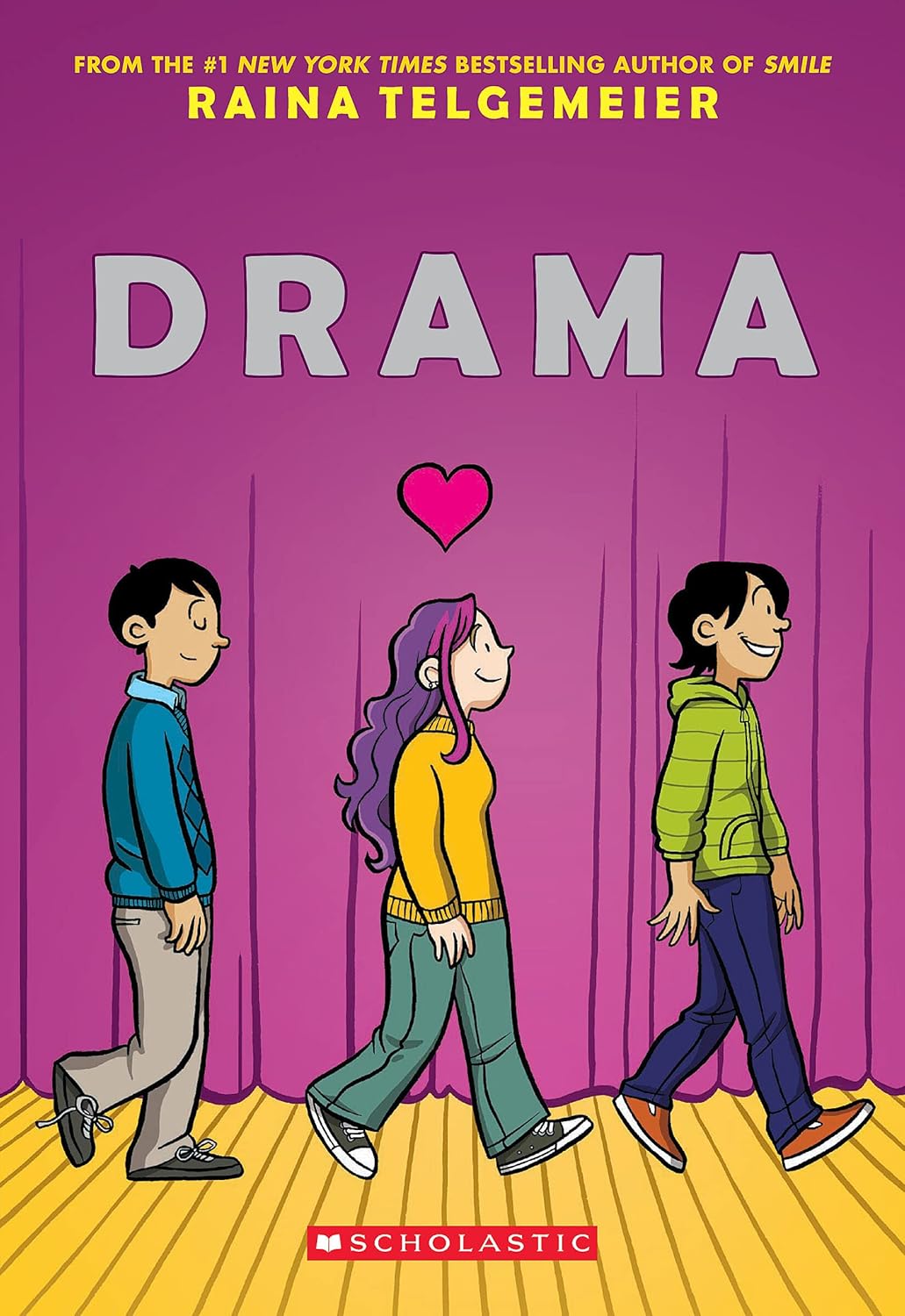
Drama, written and illustrated by Raina Telgemeier, is a 240-page middle-grade graphic novel about Callie, a seventh-grader who loves theater but can’t sing — so she’s the set designer for her school’s drama production of Moon over Mississippi, determined to create something worthy of Broadway on a middle-school budget. While building the set, she also navigates two crushes (both frustrating), a complicated friendship with twins Jesse and Justin, and all the backstage and offstage drama of middle school. Telgemeier’s first fiction graphic novel — her earlier work was autobiographical — it is also the book she has said comes most directly from her own middle school and high school experience in school theater. Published in 2012 by Scholastic/Graphix and a #1 New York Times bestseller, it has been challenged in some school districts for its depiction of LGBTQ+ characters — a distinction that is worth naming and addressing directly. This guide covers reading level, age appropriateness, content, themes, and similar books.
For Parents
A warm, funny graphic novel about a middle-school set designer, her two crushes, and all the offstage drama that comes with a school production. Ages 9–13, grades 4–7. Content note: two male characters — twin brothers — include one who is gay and one who is questioning; this is handled with warmth and without judgment. The book has been challenged in some districts for this content. No other content concerns.
For Teachers
A grades 4–7 classroom and library staple — excellent for theater arts units, for discussions of LGBTQ+ representation in middle-grade literature, and as a companion to Smile for a Telgemeier unit. The set design angle gives the book a STEM-adjacent hook (carpentry, budgeting, problem-solving) that distinguishes it from most graphic novels in this space. The ALA has noted it on challenged books lists; teachers should be aware.
Drama at a Glance
Find on Amazon →| Author & Illustrator | Raina Telgemeier (author & illustrator) |
| Published | 2012 (Scholastic/Graphix) |
| Grade Level | 4–7 (our assessment) |
| Recommended Age | 9–13 |
| Lexile | 320L (prose text only; see below) |
| ATOS Level | 2.3 |
| Pages | 240 |
| Format | Graphic novel (full color; fiction) |
| Genre | Graphic novel / realistic fiction / school story |
| Setting | Middle school; contemporary |
For official Lexile and AR levels, visit Lexile.com or AR BookFinder. ReadingVine provides independent editorial assessments.
What Reading Level Is Drama?
The published Lexile for Drama is 320L with an ATOS of 2.3 — even lower than Smile‘s GN410L, reflecting that the 8,630-word prose text (dialogue and captions only, excluding visual content) is extremely simple. These scores are among the lowest in this catalog for a book with grades 5–8 interest level, and they illustrate most clearly why graphic novel reading level scores require additional context. The full reading experience — following 240 pages of sequential visual narrative, processing emotional subtext through facial expressions and visual pacing, tracking multiple characters across an ensemble story — is considerably more demanding than any formula score reflects. Our editorial assessment: grades 4–7, ages 9–13. The interest level and emotional content are distinctly middle school; the visual literacy demands are genuine. For official scores, visit Lexile.com or AR BookFinder.
What Age Is Drama Appropriate For?
Ages 9–13, grades 4–7. The primary content note for parents:
Two male characters in the book — twin brothers Jesse and Justin — include one who is openly gay and one who is still figuring out his identity. Both are treated with warmth, normality, and without drama about their sexual orientation specifically. Telgemeier drew on real people she knew in writing these characters, and their portrayal has been widely praised by LGBTQ+ readers and educators. The book has been challenged in some school districts specifically for this content. Parents who want to preview the relevant scenes before sharing the book with younger children can do so; the content is brief and handled matter-of-factly. No other content concerns.
What Is Drama About?
Callie loves theater. She cannot sing — which means she can’t audition for Moon over Mississippi, her middle school’s next production — but she can design and build sets. She becomes the stage crew’s set designer, determined to create something genuinely spectacular on a limited budget. This requires carpentry skills she doesn’t entirely have, a budget that keeps shrinking, and a crew that has trouble working together. It also requires navigating her feelings for Matt, a boy in the cast who is cute and kind but has a girlfriend; a new friendship with twins Jesse and Justin who join the production mid-process; and the general experience of seventh grade, in which everything that happens offstage seems to involve just as much drama as what happens on it.
The book is structured in seven acts — the same structure as the production it follows — and Telgemeier tracks both the show’s progress and Callie’s emotional life across the school year. The set gets built; the show opens; people surprise Callie with who they are and who they aren’t; and by the final act, Callie has a better understanding of herself and her own particular kind of talent.
Drama Themes and Lessons
The book’s most distinctive quality for middle-grade fiction is its protagonist: Callie loves theater but cannot perform. She is the set designer, the builder, the problem-solver — the person who makes the show possible without ever being seen. This is a less common middle-grade identity than the talented-but-overlooked-performer, and it gives the book its specific warmth for readers who are the backstage people in their own lives: the ones who make things happen without getting the credit.
The LGBTQ+ content — Jesse and Justin — is the book’s most-discussed element and deserves direct acknowledgment. Telgemeier treats these characters with the same warmth and normality she brings to all her characters; their sexual orientation is part of who they are without being the sum of who they are. The book is on the ALA’s frequently challenged list specifically because some parents and school districts disagree with this approach. Families and schools that are supportive of LGBTQ+ representation will find it handled beautifully; families that prefer to preview it first have that option.
Discussion questions: What does Callie contribute to the show that a performer couldn’t? What is the difference between offstage drama and onstage drama — which is harder to manage? What does Callie learn about what she actually wants from the year? How does Telgemeier make the backstage work feel as important as the performance?
Books Similar to Drama
About Raina Telgemeier
See our Smile guide for a full biography. Drama was Telgemeier’s first fiction graphic novel, published in 2012, two years after Smile. She has said it draws directly from her own experience in school theater — she was in the choir and ensemble for school productions in high school — and that the twin brothers Jesse and Justin are based on real people she knew. The book’s seven-act structure mirrors the structure of the production it follows, a deliberate formal choice that Telgemeier has described as one of the things she is most proud of in the book.
Drama: Frequently Asked Questions
What reading level is Drama?
Lexile 320L (prose text only), ATOS 2.3, interest level grades 5–8. Our assessment: grades 4–7, ages 9–13. The extremely low Lexile and ATOS reflect only the simple dialogue and captions; the full graphic novel reading experience is considerably more demanding. For official scores, visit Lexile.com or AR BookFinder.
What is Drama about?
Callie, a seventh-grader who loves theater but can’t sing, is the set designer for her middle school’s drama production. While building the set on a limited budget, she navigates two crushes, a new friendship with twins Jesse and Justin, and all the offstage drama that comes with seventh grade. Structured in seven acts, like the production it follows.
Does Drama have LGBTQ+ content?
Yes — twin brothers Jesse and Justin include one character who is openly gay and one who is questioning his identity. Both are treated with warmth and normality. The book has been challenged in some school districts for this content and appears on the ALA’s frequently challenged books list. Families who want to preview the relevant sections before sharing with younger children can do so.
Is Drama related to Smile?
Drama is fiction; Smile is autobiographical — they are not sequels to each other. Both are by Raina Telgemeier, published by Scholastic/Graphix, and set in middle school. Smile is the right starting point for readers new to Telgemeier; Drama is the natural second read. Readers who love one invariably seek out the other.