
 = Partner Site
Genesis Begins Again Reading Level: A Complete Guide
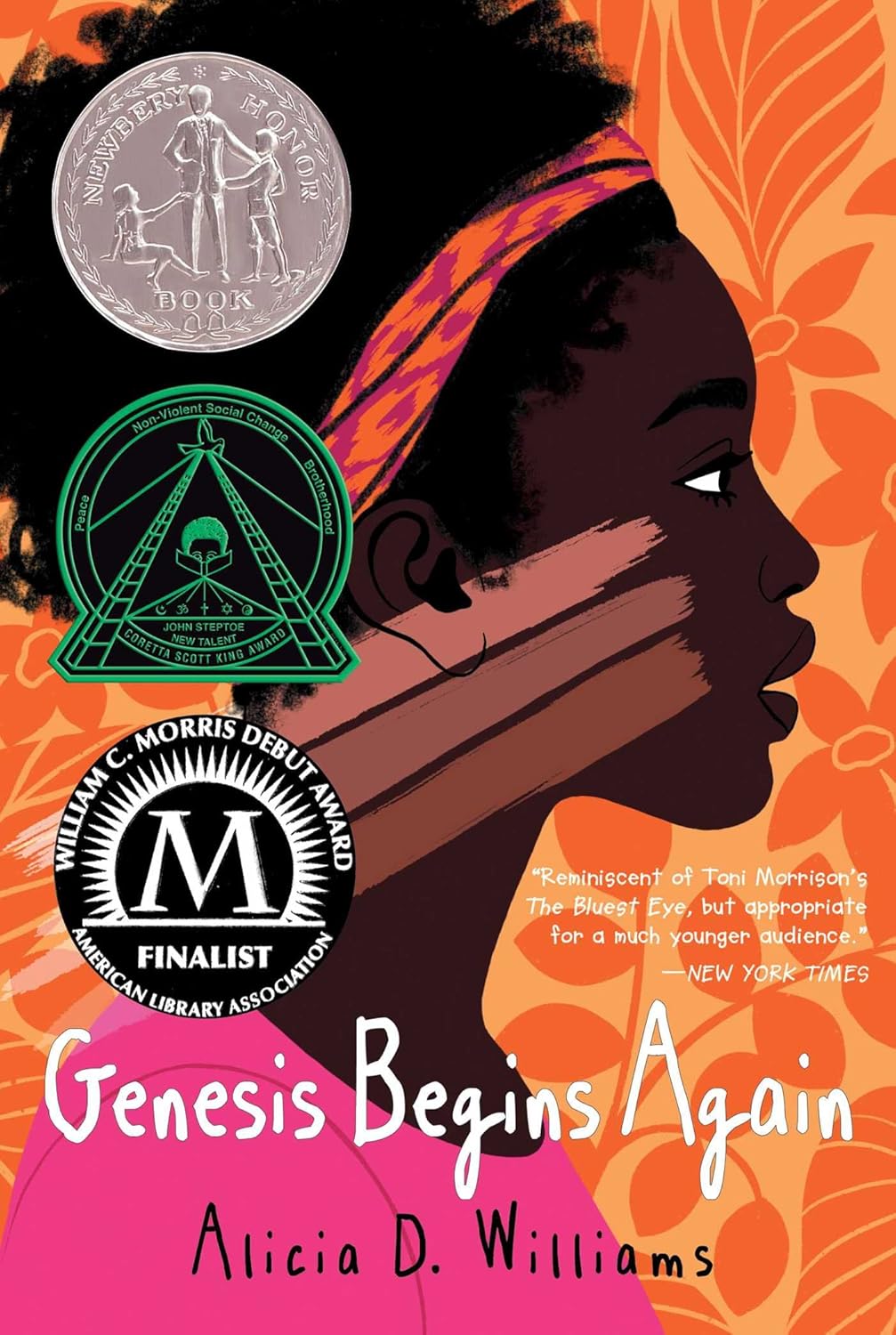
Genesis Begins Again, written by Alicia D. Williams, is a 370-page debut novel about thirteen-year-old Genesis Anderson, who keeps a list of ninety-six things she hates about herself. Number ninety-five: her skin is so dark that people — including her own family — call her charcoal and eggplant. Number sixty-one: her family is always being put out of their house, belongings on the sidewalk, because her father gambles away the rent. Genesis has been moving from apartment to apartment in Detroit, unable to hold friendships, unable to believe that anything about her is worth keeping. When she and her mother move in with her grandmother after another eviction, and then into a house in the suburbs that seems too good to last, Genesis slowly meets people who see her differently: a music teacher who introduces her to Ella Fitzgerald, Billie Holiday, and Etta James; friends who like her for who she is; and slowly, imperfectly, herself. A Newbery Honor winner in 2020, winner of the Coretta Scott King–John Steptoe Award for New Talent, and described by the New York Times as “reminiscent of Toni Morrison’s The Bluest Eye,” it is Alicia D. Williams’s debut novel. This guide covers reading level, age appropriateness, content, themes, and similar books.
For Parents
A Newbery Honor debut novel about a thirteen-year-old who has internalized the colorism and criticism of her own family, and who slowly — through friendship, music, and her own stubborn persistence — learns to see herself differently. Ages 10–14, grades 5–7. Content: the father’s gambling addiction and alcohol use are depicted directly; scenes of him drunk and upset appear throughout. No physical violence. Colorism and verbal abuse from family members are central to the story.
For Teachers
A grades 5–7 classroom text with strong connections to colorism, self-image, family addiction, and the power of music and mentorship. Newbery Honor 2020; Coretta Scott King–John Steptoe Award for New Talent. The New York Times compared it to Toni Morrison’s The Bluest Eye — a comparison that signals its literary ambition without overstating its age range. Alicia D. Williams is a teacher herself; the school and mentorship scenes are specific and honest.
Genesis Begins Again at a Glance
Find on Amazon →| Author | Alicia D. Williams |
| Published | 2019 (Atheneum / Caitlyn Dlouhy Books) |
| Grade Level | 5–7 (our assessment) |
| Recommended Age | 10–14 |
| Lexile | 670L |
| ATOS Level | 4.5 |
| Word Count | 76,058 |
| Pages | 370–384 (editions vary) |
| Genre | Realistic fiction |
| Setting | Detroit, Michigan and suburbs; contemporary |
| Awards | Newbery Honor (2020); Coretta Scott King–John Steptoe Award for New Talent; William C. Morris Award finalist; Kirkus Prize for Young Readers finalist |
For official Lexile and AR levels, visit Lexile.com or AR BookFinder. ReadingVine provides independent editorial assessments.
What Reading Level Is Genesis Begins Again?
Lexile 670L, ATOS 4.5, interest level ages 9–13. Our assessment: grades 5–7, ages 10–14. The 670L reflects Williams’s warm, accessible prose and Genesis’s direct first-person narration. The reading challenge is emotional and thematic — the subject matter (colorism, family addiction, internalized racism, self-worth) requires maturity to process fully — rather than linguistic. At 76,058 words and approximately 370 pages, most readers in the target range complete it in one to two weeks. For official scores, visit Lexile.com or AR BookFinder.
What Age Is Genesis Begins Again Appropriate For?
Ages 10–14, grades 5–7. Content worth noting for parents:
Genesis’s father is a gambling addict who also struggles with alcohol. Multiple scenes depict him drunk and upset — present and affecting, but without physical violence. Colorism — the discrimination and devaluation of darker skin tones within the Black community — is the book’s central theme, and Genesis’s own family members (including her father and grandmother) are the primary sources of this cruelty directed at her. Verbal abuse from family members is depicted throughout. These elements are handled with honesty rather than graphic detail and are integral to the book’s emotional truth. Parents who want to preview content before sharing with younger readers in the age range should be aware of both threads.
What Is Genesis Begins Again About?
Genesis Anderson is thirteen years old and hates herself. She keeps an actual list — ninety-six things, carefully numbered. Number ninety-five is her skin, which is very dark, and which her own family has been commenting on since she was small: charcoal, eggplant, too dark. Number sixty-one is the evictions — the regular, humiliating experience of the family’s furniture appearing on the sidewalk because her father has gambled away the rent again. Genesis has been moving from apartment to apartment her whole life, never in one place long enough to make real friends, never comfortable enough in herself to try.
After another eviction, Genesis and her mother stay with her grandmother — whose relationship to Genesis’s skin is its own complicated wound — and then move to a house in Farmington Hills, a suburb outside Detroit. A house that seems too good to last, because her father’s patterns don’t change just because the address does. But Farmington Hills brings something new: a music teacher, Mrs. Hill, who introduces Genesis to the voices of Ella Fitzgerald, Billie Holiday, and Etta James — women who carried their own weight and made something extraordinary from it. And Farmington Hills brings Trey and Destiny, who might become real friends if Genesis can let them.
The novel follows Genesis’s slow, unsteady work of learning to see herself differently — not through a transformation but through the accumulation of small moments that shift something that has been frozen for a long time.
Colorism — The Book’s Central Subject
Colorism — the discrimination and devaluation of darker skin tones within a racial or ethnic community — is the specific and difficult subject at the heart of this novel, and one that children’s literature does not often address with this directness or this specificity. Williams distinguishes colorism from racism: colorism operates within the Black community, as well as across racial lines, and it has its own long history rooted in the hierarchies imposed by slavery and perpetuated across generations. Genesis’s family’s comments about her skin are not simply individual cruelty; they reflect a pattern of internalized racism that has done harm within communities of color for centuries.
For classrooms, the book’s treatment of colorism provides an opening for discussions of a topic that many students — of all backgrounds — may not have encountered or named before. The New York Times‘s comparison to Toni Morrison’s The Bluest Eye is the most meaningful context for teachers: Morrison’s novel, written for adults, explores the same wound — a Black girl who has internalized the idea that dark skin is ugly — with the same emotional precision and the same refusal to make the wound smaller than it is. Williams makes this territory accessible to middle-grade readers without softening it.
The Music Thread — Ella, Billie, and Etta
Mrs. Hill’s introduction of Genesis to Ella Fitzgerald, Billie Holiday, and Etta James is one of the novel’s most specific and most productive threads. All three women were Black artists who carried public weight — scrutiny of their bodies, their voices, their appearance, their darkness — while making music of extraordinary power. Genesis discovers in their music and their lives something she has not found in the people around her: evidence that a person can be dark-skinned, and seen, and celebrated for it. The music is not a cure; it is a beginning of a different kind of evidence.
For classroom use, pairing specific songs or biographical material about Fitzgerald, Holiday, and James with the relevant chapters is a productive extension — one that Williams’s own teacher training (she has a degree from Hamline University in writing for children) clearly informs.
Genesis Begins Again Themes and Lessons
The novel’s structural conceit — Genesis’s numbered list of things she hates about herself — is both its most devastating device and its most useful one. The list makes Genesis’s self-hatred visible and specific rather than diffuse; readers know exactly what she carries. And as the novel progresses, the list becomes the thing to watch: which items she crosses off, which she adds, and why. The ending is not a transformation — Genesis does not become a different person — but a beginning. The list is shorter. Something has shifted.
Discussion questions: Why does Genesis keep a list? What does the list tell us about how she sees herself — and who taught her to see herself this way? What do Ella Fitzgerald, Billie Holiday, and Etta James give Genesis that the people around her haven’t? What does the novel say about the difference between “not racist” and antiracist — between tolerating dark skin and celebrating it?
Books Similar to Genesis Begins Again
About Alicia D. Williams
Alicia D. Williams was born on September 26, 1970, and grew up in Detroit, Michigan. She holds a degree from Hamline University in writing for children and young adults and has worked as a teacher — an experience visible in the specific, honest depiction of school and mentorship in Genesis Begins Again. Her debut novel received the Newbery Honor, the Coretta Scott King–John Steptoe Award for New Talent, a Kirkus Prize for Young Readers finalist nomination, and a William C. Morris Award finalist nomination. Her subsequent works include the picture book Jump at the Sun: The True Life Tale of Unstoppable Storycatcher Zora Neale Hurston (2021) and the picture book Shirley Chisholm: The Story of the First Black Woman in Congress (2021). She has been recognized as one of the most significant debut voices in children’s literature in recent years.
Genesis Begins Again: Frequently Asked Questions
What reading level is Genesis Begins Again?
Lexile 670L, ATOS 4.5, interest level ages 9–13. Our assessment: grades 5–7, ages 10–14. Warm, direct first-person narration; reading challenge is emotional and thematic rather than linguistic. For official scores, visit Lexile.com or AR BookFinder.
What is Genesis Begins Again about?
Thirteen-year-old Genesis Anderson keeps a list of ninety-six things she hates about herself — chief among them her dark skin, which her own family has been commenting on cruelly her whole life, and the constant evictions caused by her father’s gambling addiction. When her family moves to a suburb outside Detroit, she slowly meets people who see her differently: a music teacher who introduces her to Ella Fitzgerald, Billie Holiday, and Etta James; friends who like her for who she is; and, imperfectly, herself.
What is colorism, and why does it matter in this book?
Colorism is the discrimination and devaluation of darker skin tones within a racial or ethnic community. In the novel, Genesis’s own family members — including her father and grandmother — make cruel comments about her dark skin. This reflects a pattern of internalized racism with historical roots in slavery and its aftermath. The book addresses colorism directly and specifically, making it one of the few middle-grade novels to do so — which is part of why critics compared it to Toni Morrison’s The Bluest Eye.
Is Genesis Begins Again appropriate for middle schoolers?
Yes — grades 5–7, ages 10–14. The content includes a parent’s gambling addiction and alcohol use (multiple scenes of him drunk and upset, no physical violence), colorism and verbal abuse from family members, and the specific emotional weight of internalized self-hatred. These elements are integral to the book’s honesty. Parents who want to preview before sharing with children at the younger end of the range should be aware of both content threads.
What awards did Genesis Begins Again win?
Newbery Honor (2020); Coretta Scott King–John Steptoe Award for New Talent; William C. Morris Award finalist; Kirkus Prize for Young Readers finalist. A notable sweep for a debut novel.