
 = Partner Site
Amina’s Voice Reading Level: A Complete Guide
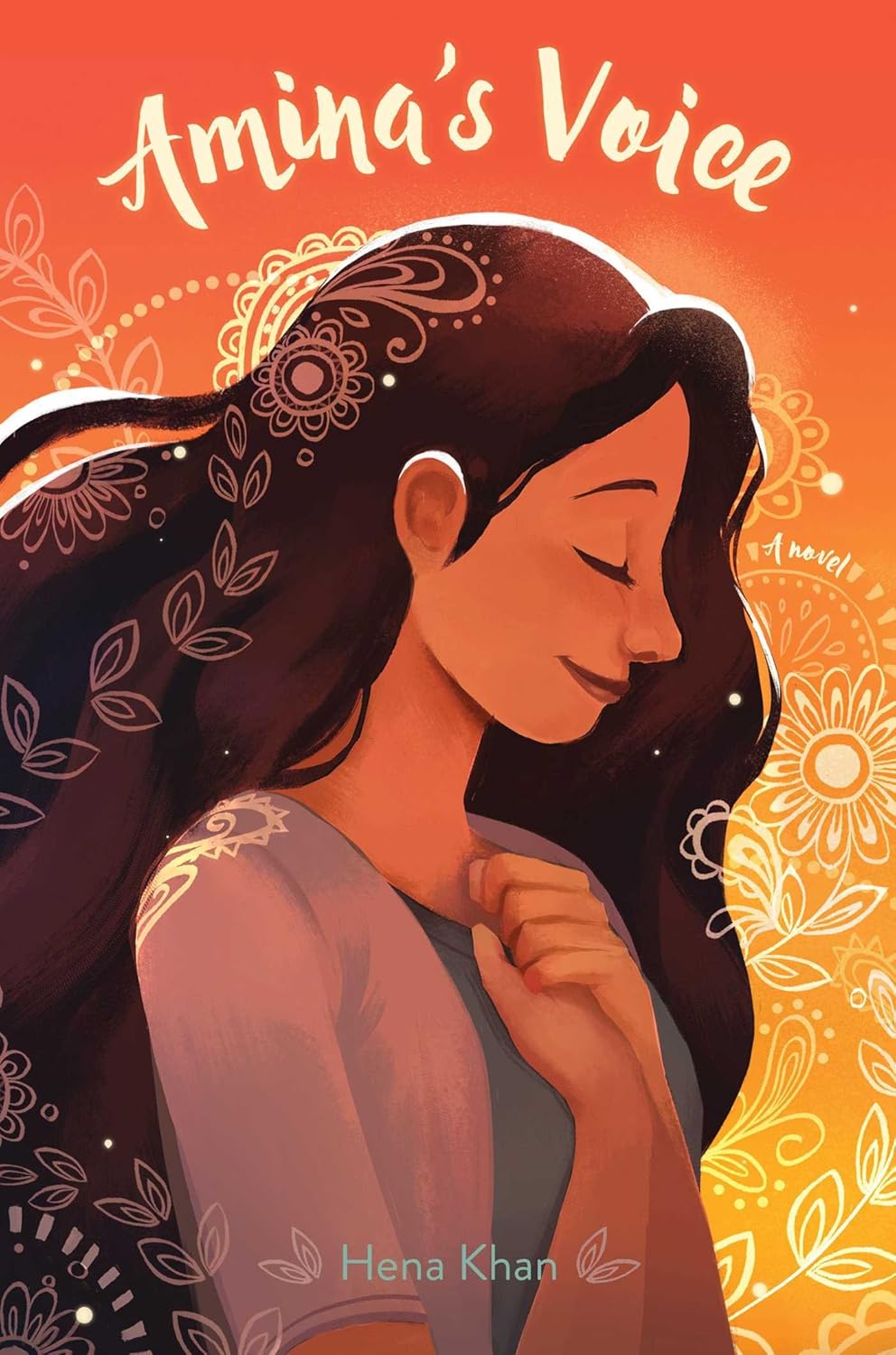
Amina’s Voice, written by Hena Khan, is a 197-page realistic fiction novel about eleven-year-old Amina Khokar, a Pakistani-American girl living in Milwaukee who has the voice everyone else can hear and the voice she can barely use. Amina is a gifted singer — her music teacher wants her to audition for a solo, her parents are entering her in a Quran recitation competition at the mosque, and her best friend Soojin insists she should try out. But performing in front of people makes Amina’s stomach seize, and the social landscape of sixth grade is shifting in uncomfortable ways: Soojin has started spending time with Emily, one of the popular girls, and is even thinking about changing her name to something more American. When Amina’s local mosque is vandalized, the event shakes both her community and her sense of safety, and the question of how to find her voice — literally and figuratively — becomes urgent in a new way. Published in 2017 by Salaam Reads, an imprint of Simon & Schuster created specifically to bring more Muslim stories to the mainstream children’s market, it received starred reviews from Booklist and School Library Journal and was named a Washington Post Best Children’s Book of 2017. R.J. Palacio, author of Wonder, called it a book that “inspires empathy in young readers.” A sequel, Amina’s Song, was published in 2021. This guide covers reading level, age appropriateness, themes, and similar books.
For Parents
A warm, honest novel about a Pakistani-American Muslim girl navigating sixth grade, stage fright, and what it means to stay true to yourself when the social world is pressuring you to change. Ages 8–12, grades 4–7. Content: a mosque vandalism is the community crisis at the center of the book; handled with appropriate gravity but no graphic content. No other concerns.
For Teachers
A grades 4–7 classroom text with strong connections to identity, belonging, religious diversity, and the experience of second-generation immigrant children navigating two cultures. Starred reviews from Booklist and SLJ. Published by Salaam Reads, a Simon & Schuster imprint created to expand Muslim representation in mainstream children’s publishing. Endorsed by R.J. Palacio. A natural classroom companion to Other Words for Home and The Name Jar.
Amina’s Voice at a Glance
Find on Amazon →| Author | Hena Khan |
| Published | 2017 (Salaam Reads / Simon & Schuster) |
| Grade Level | 4–7 (our assessment) |
| Recommended Age | 8–12 |
| Lexile | 800L |
| ATOS Level | 5.0 |
| Word Count | 33,024 |
| Pages | 197–224 (editions vary) |
| Genre | Realistic fiction |
| Setting | Milwaukee, Wisconsin; contemporary |
| Series | Amina’s Voice (2 books: 2017, 2021) |
For official Lexile and AR levels, visit Lexile.com or AR BookFinder. ReadingVine provides independent editorial assessments.
What Reading Level Is Amina’s Voice?
Lexile 800L, ATOS 5.0, interest level grades 4–8. Our assessment: grades 4–7, ages 8–12. Khan’s prose is warm and direct — Amina’s first-person narration is clear and emotionally accessible, and the reading challenge is thematic rather than linguistic. At 33,024 words and under 200 pages, most readers in the target range complete it in three to five days. For official scores, visit Lexile.com or AR BookFinder.
What Is Amina’s Voice About?
Amina Khokar is eleven, Pakistani-American, and the possessor of a singing voice her music teacher describes as exceptional. She is also terrified of performing. Sixth grade brings several pressures at once: her best friend Soojin — Korean-American, recently become an American citizen — is spending time with a new friend Emily and is talking about changing her name to something less “foreign.” Amina’s uncle Tahir has arrived from Pakistan for an extended stay, bringing his complicated personality and a reminder of a world she knows from visits but not from daily life. Her parents want her to compete in a Quran recitation competition at the mosque, which means performing in public. Her music teacher wants her to audition for a solo.
Then the mosque is vandalized. The community Amina has always known as her safe space — the place of prayer, of community dinners, of Quran school — is suddenly a crime scene, and the act of vandalism makes visible a hostility that Amina has been peripherally aware of but not directly confronted with. The response of both the Muslim community and the wider Milwaukee community to the vandalism, and Amina’s own response to it, is the book’s second half. Amina finding her literal voice — the audition, the competition — becomes connected to her finding her figurative voice about who she is and what she belongs to.
Salaam Reads — The Publishing Context
Amina’s Voice was the first book published under Simon & Schuster’s Salaam Reads imprint, launched in 2016 specifically to bring more authentic Muslim stories to the mainstream children’s book market. The imprint’s name — “salaam” being the Arabic and Urdu greeting for peace — signals its mission: stories by and about Muslim children that place Muslim American experience at the center rather than as an element of exoticism or otherness. Khan’s book is an own-voices text in the most direct sense: she is herself a Pakistani-American Muslim who grew up navigating both cultures, and the specificity of Amina’s experience — the food, the mosque community, the Quran school, the dynamics of a Pakistani-American household — comes from that lived knowledge.
Amina’s Voice Themes and Lessons
The book’s central metaphor — Amina’s literal voice as a singer and her figurative voice as a Pakistani-American Muslim girl in America — is handled without heavy-handedness. The connection between the two is real and the novel earns it: Amina’s fear of performing is connected to her broader fear of being seen, of being defined by how others perceive her, of having her identity become a target. The mosque vandalism makes that fear concrete and external, and the community’s response — including non-Muslim neighbors showing up to help with the cleanup — gives the book its hopeful ending without pretending the hostility isn’t real.
The Soojin subplot is the book’s quietest and sharpest observation: Soojin, who is Korean-American, is considering changing her name to something more “American.” The implicit question — does being American require abandoning the parts of you that aren’t — applies equally to Amina, and the two friends’ different responses to this pressure is one of the novel’s most productive discussion threads.
Discussion questions: Why is Soojin considering changing her name — and what does Amina think about it? How does the mosque vandalism change things for Amina? What does “finding your voice” mean in this book — is it just about singing? How does Amina’s relationship with her Pakistani heritage change across the novel?
Books Similar to Amina’s Voice
About Hena Khan
Hena Khan grew up near Rockville, Maryland, the second of four children born to Pakistani immigrants. She holds an MA in international affairs from George Washington University and worked with nonprofit health and research organizations as a writer and editor before turning to children’s books. Amina’s Voice was the inaugural book under Simon & Schuster’s Salaam Reads imprint, launched in 2017, and remains a widely taught title. She has since published the sequel Amina’s Song (2021); the middle-grade novel More to the Story (2020), a reimagining of Louisa May Alcott’s Little Women set in a Pakistani-American family; the Zara’s Rules series; and more than twenty picture books, including Golden Domes and Silver Lanterns, Under My Hijab, and It’s Ramadan, Curious George. She lives in Rockville, Maryland.
Amina’s Voice: Frequently Asked Questions
What reading level is Amina’s Voice?
Lexile 800L, ATOS 5.0, interest level grades 4–8. Our assessment: grades 4–7, ages 8–12. Warm, direct first-person narration; reading challenge is thematic rather than linguistic. For official scores, visit Lexile.com or AR BookFinder.
What is Amina’s Voice about?
Eleven-year-old Amina Khokar, a Pakistani-American Muslim girl in Milwaukee, navigates sixth grade, stage fright, a best friend who is changing, a visiting uncle, and her parents’ expectation that she’ll compete in a Quran recitation competition — while her mosque is vandalized. The book follows Amina finding her literal voice as a singer and her figurative voice as a Muslim American girl.
Is Amina’s Voice appropriate for classroom discussions of Islam?
It is frequently used for exactly this purpose. Hena Khan is a Pakistani-American Muslim herself, and the book depicts Muslim faith and practice as a natural, specific, lived part of Amina’s daily life — Quran school, mosque community, Ramadan, prayer — rather than as an exotic subject requiring explanation. The mosque vandalism and community response provide a concrete basis for classroom discussions of religious hate crimes and community resilience.
Is there a sequel to Amina’s Voice?
Yes — Amina’s Song (2021) continues Amina’s story, following her visit to Pakistan and her return to Milwaukee. It can be read independently but benefits from the context of the first book.
What is Salaam Reads?
Salaam Reads is a Simon & Schuster imprint launched in 2016 to bring more authentic Muslim stories to the mainstream children’s book market. Amina’s Voice was its inaugural publication. The imprint has since published multiple titles by Hena Khan and others, with a focus on own-voices Muslim American children’s and middle-grade fiction.