
 = Partner Site
Other Words for Home Reading Level: A Complete Guide
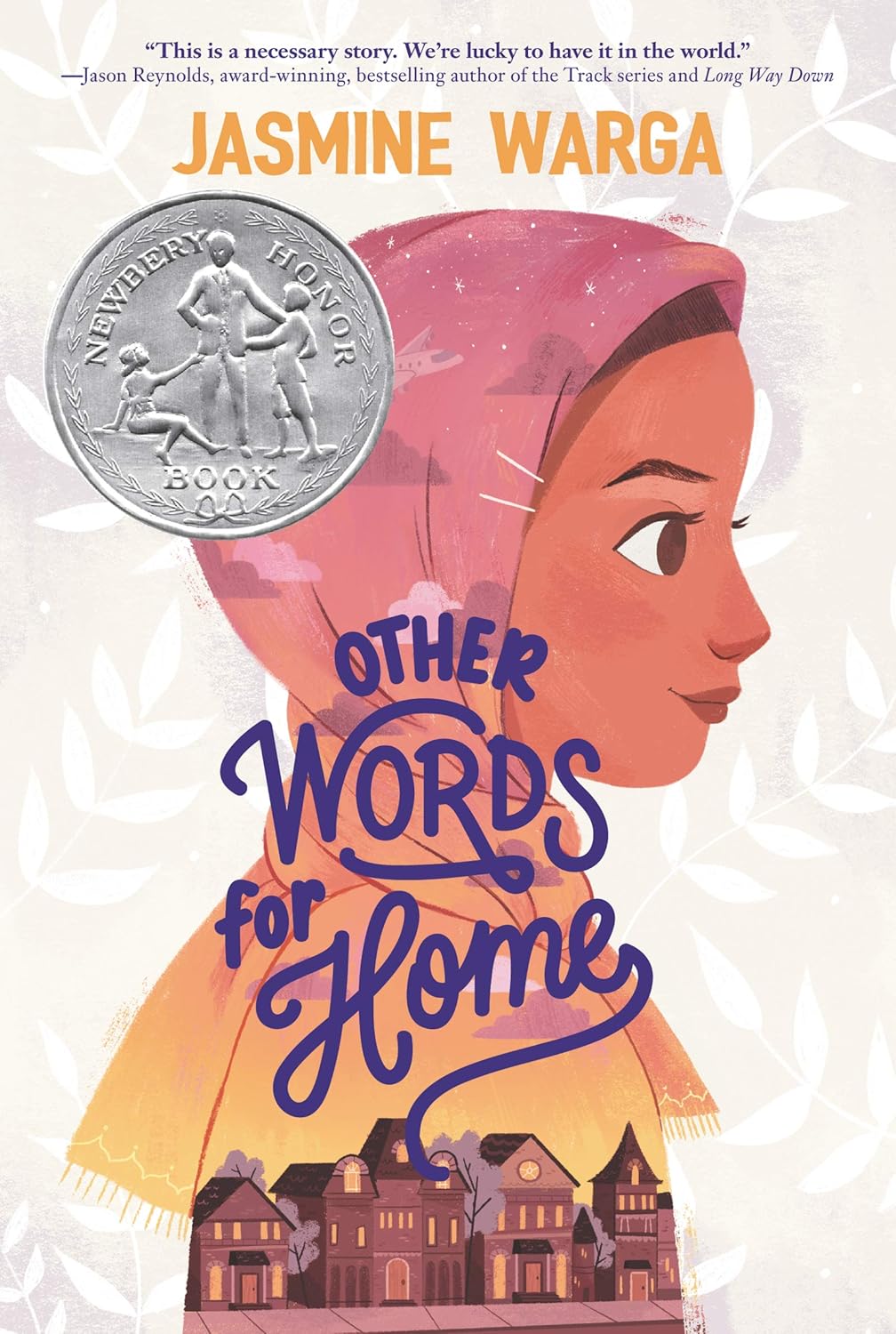
Other Words for Home, written by Jasmine Warga, is a 352-page novel in verse about twelve-year-old Jude, who lives in a coastal city in Syria and loves movies, especially ones starring Julia Roberts. When violence reaches the city and her brother Issa joins the rebellion against the Assad government, Jude’s father decides the country is no longer safe for his pregnant wife and daughter. He sends them to Cincinnati, Ohio, to stay with Uncle Mazin — and he and Issa remain behind. The visit is meant to be short. No one knows how long it will actually be. In Cincinnati, Jude navigates a new language, a new school, a new country, and a new label — “Middle Eastern,” an identity she has never had to carry before — while trying to hold onto the people and the place she loves from across an ocean. A Newbery Honor winner in 2020, a New York Times bestseller, and the debut middle-grade novel of an author previously known for young adult fiction, it was inspired by Warga’s own Lebanese-Jordanian heritage and by research interviews with Cincinnati’s Syrian community. This guide covers reading level, age appropriateness, the verse format, themes, and similar books.
For Parents
A Newbery Honor verse novel about a Syrian girl navigating a new life in Cincinnati while her father and brother remain behind — warm, honest, and written in accessible free verse that reads faster than its page count suggests. Ages 9–13, grades 4–7. Content: the Syrian civil war is the background; Jude’s brother joins the rebellion; family separation and uncertainty are the emotional center. No graphic content. Jude decides to wear hijab — this is handled as her own positive choice.
For Teachers
A grades 4–7 classroom text with strong connections to refugee and immigration units, global current events (the Syrian civil war), and the novel-in-verse format as a literary form. Newbery Honor 2020. Warga interviewed Cincinnati’s Syrian community during research; the book is grounded in specific, documented experience rather than generalization. Pairs productively with Refugee by Gratz for a unit on displaced people in literature.
Other Words for Home at a Glance
Find on Amazon →| Author | Jasmine Warga |
| Published | 2019 (Balzer + Bray / HarperCollins) |
| Grade Level | 4–7 (our assessment) |
| Recommended Age | 9–13 |
| Lexile | 930L (verse format; see below) |
| ATOS Level | 5.3 |
| Word Count | 30,180 |
| Pages | 332–352 (editions vary) |
| Format | Novel in verse (free verse) |
| Genre | Realistic fiction / historical fiction / verse novel |
| Setting | Syria and Cincinnati, Ohio; contemporary |
| Awards | Newbery Honor (2020) |
For official Lexile and AR levels, visit Lexile.com or AR BookFinder. ReadingVine provides independent editorial assessments.
What Reading Level Is Other Words for Home?
The Lexile of 930L is higher than the reading experience of the book would suggest, and this is a consistent feature of novels in verse scored by the Lexile formula. The 930L reflects the formula’s treatment of the condensed, white-space-heavy lines of free verse — the shorter lines score differently than equivalent prose — and overstates the actual reading demands. The ATOS of 5.3 is a more reliable guide to prose complexity. The word count of 30,180 — considerably less than most prose novels of similar page count — indicates how much white space is on each page. Most readers in the recommended age range find the verse format makes the book read faster and more accessibly than a prose novel of equivalent depth. Our assessment: grades 4–7, ages 9–13. For official scores, visit Lexile.com or AR BookFinder.
The Novel-in-Verse Format — A Note for New Readers
Other Words for Home is written entirely in free verse — poems rather than paragraphs, with white space where sentences would be in prose. This is not a poetry collection but a continuous narrative told through poems. For readers new to the format, a few things to know: each poem is a scene or moment, not a complete chapter; the line breaks carry meaning (where Warga breaks a line often creates emphasis or creates a pause that prose couldn’t); and reading verse aloud — even quietly to yourself — brings out the rhythm and the weight of individual lines in a way that silent reading sometimes misses.
The verse format is one reason the Lexile overstates the reading challenge. Readers who approach the book expecting prose will find it surprisingly fast and emotionally immediate; the white space and the compressed lines make each page feel more rather than less readable. The format is also what gives the book its emotional impact: Warga can say in twelve words what prose would take a paragraph to build, and the concentration of the verse makes each image and each moment land with more weight.
What Is Other Words for Home About?
Jude loves her life in Syria. She loves the Mediterranean, she loves movies, she loves her father and her brother Issa and her friends. Then the violence that has been distant becomes close: Issa joins the rebellion against the Assad government, and Jude’s father decides his pregnant wife and twelve-year-old daughter cannot stay. He sends them to Cincinnati, where Uncle Mazin — a doctor with a large house — can take them in. For a short visit. No one says how short.
In Cincinnati, Jude discovers that America is not quite the place the movies suggested. Everything is too fast and too loud. Her English, which she thought was good enough, requires more effort than she expected. Her cousin Sarah would rather not be responsible for her. The category “Middle Eastern” is a new identity she has never had to navigate — one that comes with other people’s assumptions about who she is and what she represents. At the same time: there are unexpected kindnesses, a new friend, a family growing to love her, and a school musical she might just audition for. And there are her father’s voice on the phone and Issa’s occasional messages, reminders that the people she loves are still somewhere, still alive, still waiting for a world that gets safer.
The book is divided into six parts. It follows Jude through her first year in Cincinnati — the disorientation, the slow settling, the specific work of building a life somewhere you didn’t plan to be.
Jude’s Decision to Wear Hijab
One of the book’s most specific and most discussed moments is when Jude, having started her period and reached the age at which her faith tradition invites the decision, chooses to begin wearing hijab. This is presented as her own positive decision — something she wants to do, something that feels right to her — and Warga handles it without exoticizing or over-explaining. For classroom use, the moment is a productive opportunity for discussion about religious practice as a personal choice rather than an external imposition. Jude’s choice is not presented as something done to her; it is presented as something she does. This is the kind of representation that the book’s fans, and the educators who have put it on reading lists, have specifically praised.
Other Words for Home Themes and Lessons
The book’s central argument is about the word “lucky” — a word Jude encounters repeatedly in America from people who mean well and who think her escape from Syria means she should feel fortunate. Warga uses Jude’s wrestling with this word across the novel to explore what is lost in the refugee’s journey even when the journey is, in the most essential sense, successful. Jude is safe. She is also separated from her father, her brother, her home, her language, her self as she understood it. Both things are true simultaneously, and the book insists on holding both.
The verse format is specifically appropriate to this content: the compressed, concentrated lines mirror the experience of having to compress yourself to fit a new context, of having your language reduced to what you can manage rather than what you want to say. As Jude’s English improves, the lines become slightly more expansive — a formal choice that reflects her growing capacity in the new language.
Discussion questions: What does Jude mean when she says the word “lucky” tastes “sweet with promise and bitter with responsibility”? What does Jude carry from Syria that America doesn’t see? What surprises her about America — and what surprises her about herself? Why is the book in verse — what does the format add that prose couldn’t?
Books Similar to Other Words for Home
About Jasmine Warga
Jasmine Warga was born on April 24, 1988, in Cincinnati, Ohio, to an American mother and an immigrant Jordanian father. She grew up between two cultures and carries a Lebanese-Jordanian heritage that informs her writing about immigrant and refugee experience. She studied at Northwestern University. Other Words for Home (2019) was her first middle-grade novel and her first novel in verse; she was inspired to write it after visiting a Syrian family friend in 2013 and observing the interactions between his cousins born in America and cousins who had come from Syria. During the writing process, she interviewed members of Cincinnati’s Syrian community. Her subsequent middle-grade novel A Rover’s Story (2023) — narrated by a Mars rover — became a #1 New York Times bestseller. She teaches at the Vermont College of Fine Arts and lives in Illinois.
Other Words for Home: Frequently Asked Questions
What reading level is Other Words for Home?
Lexile 930L (overstates reading challenge due to verse format — see below), ATOS 5.3, interest level grades 4–8. Our assessment: grades 4–7, ages 9–13. The verse format makes the book read faster and more accessibly than 930L suggests; the 30,180 word count reflects how much white space is on each page. For official scores, visit Lexile.com or AR BookFinder.
Why does the Lexile seem so high for a middle-grade book in verse?
The Lexile formula scores verse differently from prose — the condensed, white-space-heavy lines of free verse score as more complex than equivalent prose. The 930L overstates the actual reading challenge. The ATOS of 5.3 is a more reliable guide; most readers in grades 4–7 find the verse format makes the book more, not less, accessible than prose of similar emotional depth.
What is Other Words for Home about?
Twelve-year-old Jude leaves Syria with her pregnant mother when the civil war reaches their coastal city, sent to stay with relatives in Cincinnati while her father and brother remain behind. The novel in verse follows her first year navigating a new language, school, country, and identity — “Middle Eastern” — while holding onto the home and people she loves from across an ocean.
Is Other Words for Home appropriate for classroom discussions of Islam?
It is frequently used for exactly this purpose. Jude is Muslim; her faith is a natural part of her daily life rather than the book’s subject. Her decision to begin wearing hijab is presented as her own positive choice. The book portrays Muslim practice as ordinary, personal, and specific rather than as exotic or political — which is one of the reasons it has been widely praised by educators for diverse classroom use.
What other books has Jasmine Warga written?
Her young adult novels include My Heart and Other Black Holes (2015) and Here We Are Now (2017). Her middle-grade novels include Other Words for Home (2019, Newbery Honor) and A Rover’s Story (2023, #1 New York Times bestseller, narrated by a Mars rover). She teaches at the Vermont College of Fine Arts.