
 = Partner Site
A Long Walk to Water Reading Level: A Complete Guide
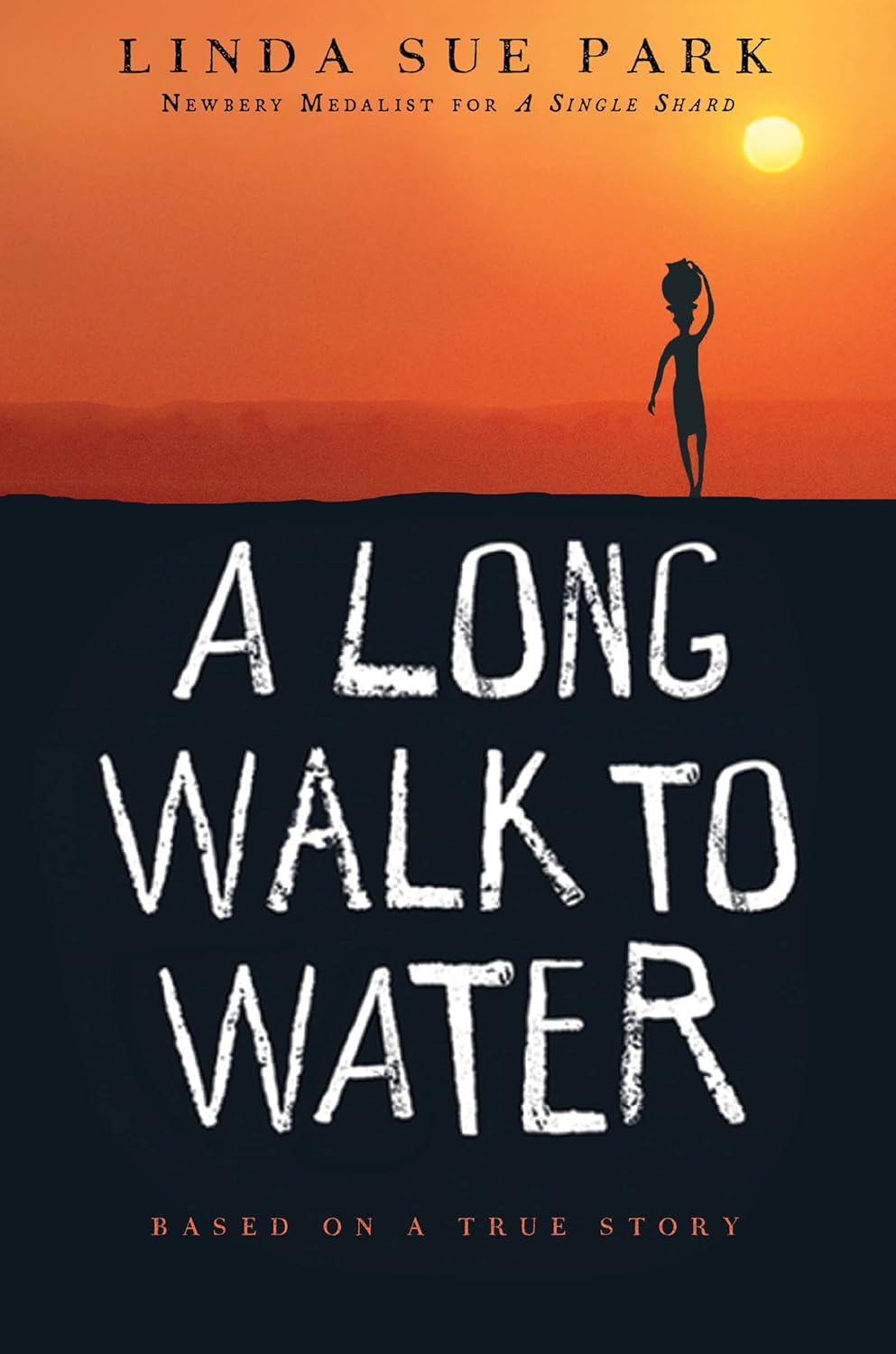
A Long Walk to Water, written by Linda Sue Park, is a 128-page novel told in two alternating narratives set in Sudan a generation apart. It is 1985: eleven-year-old Salva Dut, from the Dinka tribe of southern Sudan, is separated from his family when his village is attacked during the Second Sudanese Civil War. He joins a group of refugees walking across Sudan, then Ethiopia, then Kenya — thousands of miles over years, surviving desert, lions, crocodiles, hunger, and the deaths of people he loves — before eventually becoming one of the “Lost Boys of Sudan” resettled in the United States. It is 2008: Nya, a young girl in South Sudan, spends every day walking two hours to a pond, filling a heavy container, and walking two hours home — twice a day, every day, for seven months of the year, simply to give her family water. The two stories converge in the final chapters in a way that gives the book its structure and its point. Salva Dut is a real person; the novel is based on his life, written with his collaboration. Linda Sue Park is the author of the Newbery Medal-winning A Single Shard. Published in 2010, this book has become one of the most widely assigned classroom novels about the refugee experience, the water crisis in sub-Saharan Africa, and what one person can do against enormous odds. This guide covers reading level, age appropriateness, content, themes, and similar books.
For Parents
A spare, powerful novel about a real boy who walked across Africa to survive the Sudanese Civil War and then returned to build wells for the people he left behind. Ages 10–13, grades 5–7. Content includes war violence, the deaths of companions and family members, and extreme hardship — all depicted with lyrical restraint rather than graphic detail. One of the most important and most teachable short novels in middle-grade literature.
For Teachers
A grades 5–7 classroom standard — short enough to read in one week, rich enough for a month of discussion. Essential for units on the Sudanese Civil War, the global water crisis, refugees, and what individual agency looks like under impossible conditions. The dual-narrative structure (Salva 1985 / Nya 2008) and their convergence at the end is one of the most teachable structural moves in middle-grade fiction. Park collaborated with Salva Dut directly; her author’s note is a productive teaching text.
A Long Walk to Water at a Glance
Find on Amazon →| Author | Linda Sue Park |
| Published | 2010 (Clarion Books / Houghton Mifflin Harcourt) |
| Grade Level | 5–7 (our assessment) |
| Recommended Age | 10–13 |
| Lexile | 720L |
| ATOS Level | 5.0 |
| Guided Reading Level | W |
| Word Count | 21,221 |
| Pages | 121–128 (editions vary) |
| Genre | Historical fiction / biographical novel |
| Setting | Sudan and South Sudan; 1985–2009 |
For official Lexile and AR levels, visit Lexile.com or AR BookFinder. ReadingVine provides independent editorial assessments.
What Reading Level Is A Long Walk to Water?
Lexile 720L, ATOS 5.0, Guided Reading Level W — grades 5–7, interest level grades 5–9. Our assessment: grades 5–7, ages 10–13. The Lexile and ATOS scores understate the book’s reading demands in one important way: Park’s prose is spare and lyrical, not complex, but the content is emotionally and historically demanding in ways the formula doesn’t measure. The 21,221-word count makes it one of the shortest novels in this catalog — a child can decode it quickly, but processing what it describes requires the maturity suggested by the age range. For official scores, visit Lexile.com or AR BookFinder.
What Age Is A Long Walk to Water Appropriate For?
Ages 10–13, grades 5–7. Content includes civil war violence, the deaths of Salva’s companions and family members in the field, extreme starvation and thirst, and the pervasive threat of violent death throughout the refugee journey. Park handles all of this with spare, matter-of-fact prose that acknowledges what happened without dwelling on graphic detail — Redeemed Reader describes it as “heartbreakingly sad — even though she doesn’t dwell on it.” Sensitive readers in the lower end of the age range should be supported by a parent or teacher during reading. The hardship is real and it is not minimized.
What Is A Long Walk to Water About?
Salva’s story (1985): Eleven-year-old Salva Dut is at school in a village in southern Sudan when soldiers arrive and fighting breaks out. He runs. He cannot find his family. He joins a stream of refugees walking — walking for weeks, months, years — across Sudan, through the desert, into Ethiopia, back through Sudan when war reaches Ethiopia, and finally into Kenya, where he spends years in a refugee camp. He loses people he loves along the way: his uncle, killed in front of him; companions who die of thirst or exhaustion or violence. He also gains a survival philosophy — the “just one more step” approach his uncle teaches him, which Salva applies to every impossible distance — and a vision for what he will do if he survives.
Nya’s story (2008): Nya is a young girl in a small village in South Sudan. Every day, twice a day, she walks two hours to a muddy pond and two hours back carrying a heavy container of water. The water is dirty. But it is all there is. The chapters from Nya’s perspective are short — sometimes less than a page — and accumulate into a portrait of what it means to spend your days walking for water.
The two stories converge in the final chapters. Workers arrive in Nya’s village to drill a well. The man overseeing the project — the man whose organization is bringing clean water to this village — is Salva Dut, who survived the desert, the refugee camp, resettlement in the United States, and eventually founded Water for South Sudan, a nonprofit that has drilled hundreds of wells across the country. Nya and Salva meet. They are from different tribes — tribes that have historically been in conflict. The well is for everyone.
The Real Salva Dut
Salva Dut is a real person, and the novel is based on his actual life. Park collaborated with him directly to ensure the book accurately represented his experience. Salva was indeed one of the Lost Boys of Sudan — approximately 20,000 boys who fled the Second Sudanese Civil War and spent years walking across Africa before being resettled in refugee camps and eventually, for about 3,800 of them, in the United States. He was resettled in Rochester, New York, where Linda Sue Park lives — which is how they met.
After being diagnosed with a serious eye condition that threatened his vision and was treated in the United States, Salva founded Water for South Sudan in 2003. The organization trains African engineers and drilling teams and has since drilled hundreds of wells across South Sudan, providing clean water to hundreds of thousands of people. His organization’s website (waterforsouthsudan.org) is a productive classroom resource that connects the book’s ending to the ongoing work.
Nya is a fictional composite — she is not based on a single real person but on the experiences of many people Salva and Park spoke with during their research. Her village, her daily walk, and her tribe’s conflict with Salva’s tribe are all grounded in documented reality even though she herself is invented.
A Long Walk to Water Themes and Lessons
The book’s central survival argument — Salva’s “just one more step, just one more day” philosophy, taught to him by his uncle — is one of the most specific and most useful survival frameworks in middle-grade literature. It doesn’t ask Salva to see the whole journey; it asks him to take the next step. This is practically applicable in ways that make it a productive discussion point for children facing their own daunting tasks, well beyond the specific historical context.
The water crisis content is the book’s most important educational contribution alongside the refugee narrative. The average person in the developed world turns on a tap without thinking; Nya walks four hours a day for water that is not even clean. The contrast is not stated by Park — it is built into the structure of the dual narrative and left for the reader to feel. The well Salva’s organization drills for Nya’s village is not just water; it is the four hours a day Nya will get back, the education she can pursue, the future that becomes possible.
The tribal dimension of the ending deserves specific mention: Salva’s Dinka tribe and Nya’s Nuer tribe have historically been in conflict — violent conflict, including during the civil war years Salva survived. The well is for a Nuer village, drilled by a Dinka man. Park puts this in the text without explaining it heavily; teachers and parents should name it.
Discussion questions: How does Salva’s “one step at a time” approach work — when is it useful? What does Nya’s daily walk tell us about what we take for granted? Why does it matter that Salva and Nya are from different tribes? What does Salva’s organization do now — has it continued? What would you do if you were in Salva’s position after arriving safely in the United States?
Books Similar to A Long Walk to Water
About Linda Sue Park
Linda Sue Park is the author of the Newbery Medal-winning A Single Shard (2002) and more than twenty books for children. She is Korean American, born in 1960 in Urbana, Illinois. She met Salva Dut through a mutual connection in Rochester, New York — where both she and Salva were living — and spent considerable time in interviews with him before writing the book. She has been explicit that this is not an “own voices” text; it is a collaboration between a Korean American author and the Sudanese man whose story she is telling, shaped by that collaboration throughout. Her author’s note addresses this directly and is worth reading with students.
Park’s prose style in this novel is her most spare — each sentence carries weight, there are no wasted words, and the effect is cumulative in a way that makes the short book feel much larger than its page count. She has said the restraint was intentional: the story is so extreme that adding stylistic complexity would have been a disservice to what Salva actually experienced.
A Long Walk to Water: Frequently Asked Questions
What reading level is A Long Walk to Water?
Lexile 720L, ATOS 5.0, Guided Reading Level W. Our assessment: grades 5–7, ages 10–13. The prose is spare and accessible; the reading demands are emotional and historical rather than linguistic. For official scores, visit Lexile.com or AR BookFinder.
What is A Long Walk to Water about?
Two alternating stories: Salva Dut, a real Sudanese boy who becomes one of the Lost Boys of Sudan after fleeing civil war in 1985, walking thousands of miles across Africa over years before being resettled in the United States; and Nya, a fictional composite girl who spends every day walking hours for water in 2008 South Sudan. Their stories converge when Salva’s nonprofit, Water for South Sudan, drills a well in Nya’s village.
Is Salva Dut a real person?
Yes — the novel is based on his actual life, written with his collaboration. After being resettled in Rochester, New York, and receiving treatment for an eye condition, Salva founded Water for South Sudan (waterforsouthsudan.org), which has drilled hundreds of wells across South Sudan. Nya is a fictional composite based on documented experiences, not a specific real person.
Who were the Lost Boys of Sudan?
Approximately 20,000 boys who fled the Second Sudanese Civil War beginning in the mid-1980s, walking across Africa and spending years in refugee camps in Ethiopia and Kenya. About 3,800 were eventually resettled in the United States in the late 1990s and early 2000s. Salva Dut was among them. The term “Lost Boys” comes from the initial description of children wandering without parents or known family — it was coined by aid workers in the refugee camps.
Why does the ending matter — why are Salva and Nya from different tribes?
Salva is Dinka; Nya is Nuer — tribes that have historically been in conflict, including violent conflict during the civil war years Salva survived. The well Salva’s organization drills is for a Nuer village, funded and organized by a Dinka man. Park does not state this significance directly; teachers and parents should name it. It is the book’s most quietly powerful argument: that the work of building something useful is stronger than the history of conflict.