
 = Partner Site
Ish Reading Level: A Complete Guide
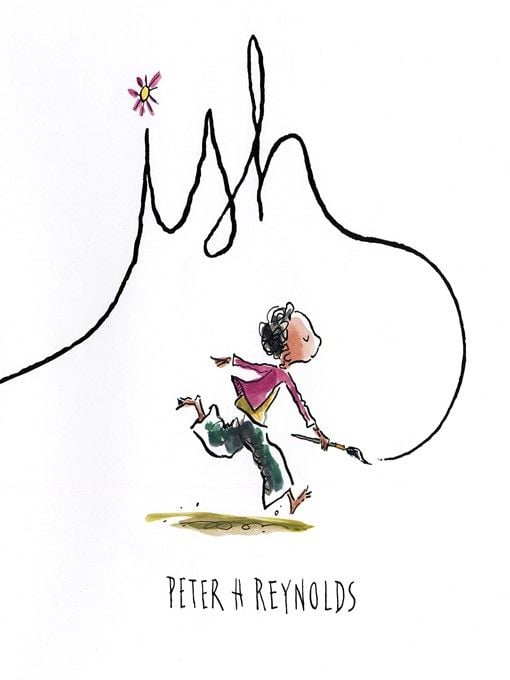
Ish, written and illustrated by Peter H. Reynolds, is a 32-page picture book about Ramon, a boy who draws all the time — freely, happily, without concern for whether his drawings look like anything in particular — until his older brother Leon glances over his shoulder at a vase of flowers he is sketching and laughs. That single laugh is enough. Ramon crumples the drawing. He keeps trying, but every new attempt feels wrong by the standard his brother has introduced. He crumples those too. Then his younger sister Marisol appears and leads him to her room — where the walls are covered with every crumpled drawing Ramon threw away. She points to one. “I love this one,” she says. “It looks so… vase-ish.” Published in 2004 as the companion to The Dot and the second book in Reynolds’s Creatrilogy, it received a starred review from School Library Journal and has become one of the most widely used picture books in American classrooms for discussions of creativity, perfectionism, and the specific damage that criticism does to a child who is still learning to make things. This guide covers Ish‘s reading level, whether it’s a read-aloud or independent read, what it’s about, its themes, how long it takes to read, and similar books — designed for parents and teachers of K–2 readers.
For Parents
A companion to The Dot about what happens when someone laughs at a child’s creative work — and how a sibling’s love can give back what a critic’s contempt took away. Best as a read-aloud for ages 4–8 and an independent read for ages 5–8. No content concerns. The book that explains “ish thinking” — approximate, alive, free from the tyranny of getting things exactly right.
For Teachers
The Creatrilogy’s most practically useful book for classroom culture — specifically for addressing the perfectionism and creative shutdown that criticism produces. Where The Dot helps children begin, Ish helps children recover. The “ish” concept — tree-ish, afternoon-ish, happy-ish — has become a classroom vocabulary item in thousands of schools for talking about approximation, growth, and the difference between “good enough” and “wrong.” Naturally paired with The Dot; both books strengthen each other.
Ish at a Glance
Find on Amazon →| Author & Illustrator | Peter H. Reynolds (author & illustrator) |
| Published | 2004 (Candlewick Press) |
| Grade Level | PreK–2 read-aloud; K–3 independent (our assessment) |
| Recommended Age | Read-aloud ages 4–8; independent reading ages 5–8 |
| Best For | Read-aloud ages 4–8; independent reading ages 5–8 |
| Lexile | 440L |
| ATOS Level | 2.1 |
| Word Count | 336 |
| Pages | 32 |
| Series | Creatrilogy, Book 2 (The Dot, Ish, Sky Color) |
| Genre | Picture book / realistic fiction / social-emotional |
For official Lexile and AR levels, visit Lexile.com or AR BookFinder. ReadingVine provides independent editorial assessments.
What Reading Level Is Ish?
Ish has a Lexile of 440L and an ATOS level of 2.1 — nearly identical to The Dot (AD500L, ATOS 1.9), reflecting the two books’ very similar prose structure and word count. Unlike The Dot, Ish does not carry the “AD” (Adult Directed) Lexile designation, suggesting it is considered appropriate for both read-aloud and independent reading by the scoring systems. At 336 words across 32 pages, it is accessible to early independent readers while being rich enough to reward reading aloud with attention to pace and feeling.
Like The Dot, the reading-level scores accurately capture the prose complexity without capturing the book’s thematic reach. TeachingBooks grades it PreK–6, reflecting that its argument about perfectionism and the creative recovery from criticism speaks to readers across a wide age range. A child in kindergarten understands something important from this book; a sixth-grader who has been told their work isn’t good enough understands something different and equally important. For official Lexile and AR scores, visit Lexile.com or AR BookFinder. ReadingVine’s assessments are independent editorial judgments.
Ish and The Dot: A Companion, Not a Sequel
Ish is the second book in Reynolds’s Creatrilogy, following The Dot (2003), and the two books are best understood as companions that make different arguments about the same territory — creative courage — rather than as a sequel that continues the same story. They can be read in either order, though reading The Dot first is the natural sequence.
The Dot is about the internal creative block: a child who believes she cannot make anything and needs a teacher’s gentle nudge to begin. The creative threat is from inside. Ish is about the external creative block: a child who is already making things joyfully until someone else’s criticism stops him. The creative threat is from outside. Together they map the two most common ways creativity is shut down — from doubt within and contempt without — and they offer two different paths back.
Sharp-eyed readers will also notice that the younger sister in Ish is named Marisol — the same name as the teacher in The Dot. Reynolds made this choice deliberately, connecting the two books’ most important roles: the person who sees what the creator has made and says, simply and honestly, that it is good. In The Dot that person is a teacher. In Ish she is a younger sibling. The gift is the same either way.
Is Ish a Read-Aloud or Independent Read?
This works beautifully as both a read-aloud for ages 4–8 and an independent read for ages 5–8.
As a read-aloud, Ish has two moments that earn a deliberate pause: the moment Leon laughs — which lands differently for every child who has had someone laugh at something they made — and the moment Marisol says “vase-ish,” which lands differently for every adult who has spent years trying to make things “right.” Both moments benefit from the reader going slow and letting the illustration hold the feeling before turning the page. Reynolds’s loose watercolor-and-ink illustrations, which grow more free and energetic as Ramon discovers “ish thinking,” are part of the text’s argument and reward attention.
For independent reading, a confident kindergartner or first-grader can work through the text. The sentences are clear and the story moves forward with Ramon’s emotional arc as its engine — a child who loved making things, was stopped, and found his way back. Children who have had a “Leon moment” — someone dismissing or laughing at something they made — will find their own experience in this story with unusual precision.
After the first reading, ask your child: “Has anyone ever made you feel like your drawing — or your writing, or your building, or your idea — wasn’t good enough?” Then: “What would it feel like if someone said what you made was [whatever it was]-ish, and meant it as a compliment?” The “ish” conversation is the book’s real gift, and it works best when it connects to something real in your child’s life.
What Is Ish About?
Ramon draws all the time. He draws anytime, anything, anywhere — and he is happy doing it. Drawing is simply what he does. One afternoon he is sketching a vase of flowers when his older brother Leon glances over his shoulder and laughs. The vase, Leon points out, does not look like a vase. Ramon looks at his drawing. It doesn’t. He crumples it. He tries again. The new drawing doesn’t look like a vase either. He crumples that one too. Every attempt is measured now against what a real vase looks like — and every attempt fails. Ramon stops drawing.
Then his younger sister Marisol appears. She has something to show him. She leads him to her room, and Ramon stops in the doorway: every crumpled drawing he has thrown away is smoothed out and hanging on her walls. She has collected them all. She loves them. She points to the vase drawing. “I love this one,” she says. “It looks so… vase-ish.” Ramon considers this word. Vase-ish. Not wrong — just approximate. Not a failure of accuracy — a success of something else entirely.
Ramon begins drawing again. He draws tree-ish trees and afternoon-ish afternoons. He draws faces that are happy-ish and feelings that are silly-ish. He is no longer trying to make things that look exactly like what they are; he is making things that feel like what they are, that capture something true even if it isn’t precise. He keeps a journal of “ish poems.” He looks at the world with “ish” eyes — seeing it not as something to reproduce but as something to respond to. The book ends with Ramon drawing freely again, and the reader understanding that the “ish” frame has not lowered his standards but freed him from the wrong ones.
Ish Characters
Ramon is the book’s protagonist — a boy whose natural relationship to drawing is joyful and uncalculating, until it isn’t, and whose recovery is the book’s arc. His creativity before Leon’s laugh is characterized by abundance and ease; his creativity after is characterized by effort and failure; his creativity after Marisol is characterized by something new and richer than either: intention without perfectionism, freedom within form. Leon is the book’s catalyst — not a villain but a careless older sibling who does not think about the weight a single laugh can carry. He appears only briefly, but his presence echoes through the entire middle of the book. Marisol is the book’s hero — a younger sister who has quietly been collecting and cherishing everything Ramon discarded, and who offers him back his own work with a word that changes its meaning entirely. Reynolds named her after the teacher in The Dot, and the connection is exact: both Marisols see what the creator has made and name it as good, with the specific accuracy of someone who genuinely loves it.
Ish Themes and Lessons
The “ish” concept is the book’s greatest contribution to classroom vocabulary — and it has genuinely become classroom vocabulary in thousands of schools. Teachers who have used this book describe children adopting “ish” as a real word in their daily practice: “This is my vase-ish drawing,” “I’m happy-ish,” “It’s not perfect but it’s tree-ish and I like it.” The word gives children a way to claim their work without claiming perfection for it — to say “this is mine and it is good” without having to argue against the standard their inner critic (or outer critic) is holding them to. This is a harder thing to accomplish than it sounds, and Reynolds does it in a single invented suffix.
The book’s most important structural move is that Ramon’s recovery is not caused by Leon apologizing or by Ramon proving Leon wrong. It is caused by Marisol showing Ramon what she has already been doing with his discarded work — treasuring it, living with it on her walls, finding it beautiful in exactly its imprecision. Ramon does not need to win an argument against Leon’s standard. He needs to discover that there is someone who applies a different standard, and that she is right. The shift is not from failure to success; it is from the wrong measuring stick to the right one.
The brother Leon’s role is worth discussing with children because he is not malicious — he is simply careless in the way that older siblings often are careless, not understanding the weight his offhand judgment carries. This is a more useful portrayal for classroom discussions than a bullying villain would be, because children are much more likely to encounter a Leon than a deliberate bully: someone who says something dismissive without thinking, who would probably be surprised to know how much it mattered. The book gives children a way to think about this kind of criticism and decide how much authority to give it.
Talking with your child: Why do you think Leon’s laugh stopped Ramon from drawing? Have you ever had a “Leon moment” — someone saying something that made you stop wanting to try? What did Marisol do that helped Ramon? What do you think “vase-ish” means — is it a compliment or an insult? Can you think of something you make that is [something]-ish, and be proud of it?
How Long Is Ish?
Ish is 32 pages with 336 words — nearly identical in length and format to The Dot (32 pages, 326 words). Most adults can read it aloud in about five to seven minutes, with appropriate pauses at the two key moments. It is the second book in Reynolds’s Creatrilogy; the third, Sky Color (2012), follows Marisol — Ramon’s sister from Ish — as she discovers that the sky does not have to be painted blue. Reading all three books together in sequence gives the fullest picture of Reynolds’s argument about creativity, imperfection, and the freedom that comes from releasing the wrong standards. The Dot and Ish are the most commonly paired; Sky Color extends the Creatrilogy’s world with a new protagonist and a new creative challenge.
Books Similar to Ish
About Peter H. Reynolds
Peter H. Reynolds was born in 1961 in Scarborough, Ontario, Canada. He is the author-illustrator of the Creatrilogy (The Dot, Ish, Sky Color) and several other picture books, the illustrator of the Judy Moody series, and the co-founder of FableVision, a storytelling and learning company, with his twin brother Paul. He owns The Blue Bunny, an independent bookstore in Dedham, Massachusetts. For a fuller biography, see our Dot guide.
Reynolds has said that Ish came directly from his own experience of having his creative work dismissed — of being in the middle of making something freely and having someone else’s judgment land in the middle of it like a stone. He wrote it for children who have had that experience, and for the siblings and teachers and friends who have the power to either compound the damage or undo it. Marisol’s role — the younger sibling who quietly treasures what the older one has discarded — is based on the kind of witness Reynolds believes every creator needs: someone who sees the work without the standard attached to it, and finds it beautiful anyway.
Ish: Frequently Asked Questions
What reading level is Ish?
Ish has a Lexile of 440L and an ATOS level of 2.1 — nearly identical to The Dot in both format and reading level. Our assessment: read-aloud for ages 4–8; independent reading for ages 5–8. For official Lexile and AR scores, visit Lexile.com or AR BookFinder.
What grade is Ish for?
TeachingBooks grades it PreK–6, reflecting that its argument about perfectionism and creative recovery speaks meaningfully to readers well beyond early childhood. Most commonly used in K–3 classrooms. Publisher recommendation: grades K–3, ages 5–9.
How long does it take to read Ish aloud?
About five to seven minutes as a read-aloud. The book earns its two key pauses: at Leon’s laugh and at Marisol’s “vase-ish.” Both moments benefit from slowing down and letting the illustration hold the feeling before turning the page.
What is Ish about?
Ramon draws freely and happily until his older brother Leon laughs at one of his drawings. The laugh stops him. He tries to draw “correctly” and keeps failing. Then his younger sister Marisol shows him her room — covered with every drawing Ramon crumpled and threw away. She loves them. She calls his vase drawing “vase-ish.” The word changes everything: Ramon begins drawing again with a new freedom, making things that are tree-ish and afternoon-ish and happy-ish, released from the wrong standard.
Do I need to read The Dot before Ish?
No — both books stand completely on their own. Reading The Dot first is the natural sequence since it was published first (2003 vs. 2004), and reading both together gives a fuller picture of Reynolds’s Creatrilogy argument about creativity. But Ish makes its own complete argument and many readers encounter it independently without having read The Dot first.
What does “ish” mean in the book?
“Ish” is Marisol’s word for the quality of Ramon’s drawings — not exact, but approximate; not wrong, but alive. “Vase-ish” means it captures something true about a vase without being a perfect reproduction of one. Reynolds uses the concept to argue against the false standard of “correct” art — the idea that a drawing is only good if it looks exactly like what it depicts. “Ish” is a standard that values feeling over accuracy, aliveness over precision, the creator’s response over the critic’s rule.
Why is the sister named Marisol in Ish?
Marisol is also the name of the teacher in The Dot — a deliberate connection Reynolds made between the two books. Both Marisols play the same essential role: they are the person who sees what someone has made and names it as good, with the specific accuracy of someone who genuinely loves it. In The Dot that person is a teacher; in Ish she is a younger sibling. Reynolds is arguing that this role can be played by anyone — that the gift of genuine witness is not limited by position or age.