
 = Partner Site
Jane Eyre Reading Level: A Complete Guide
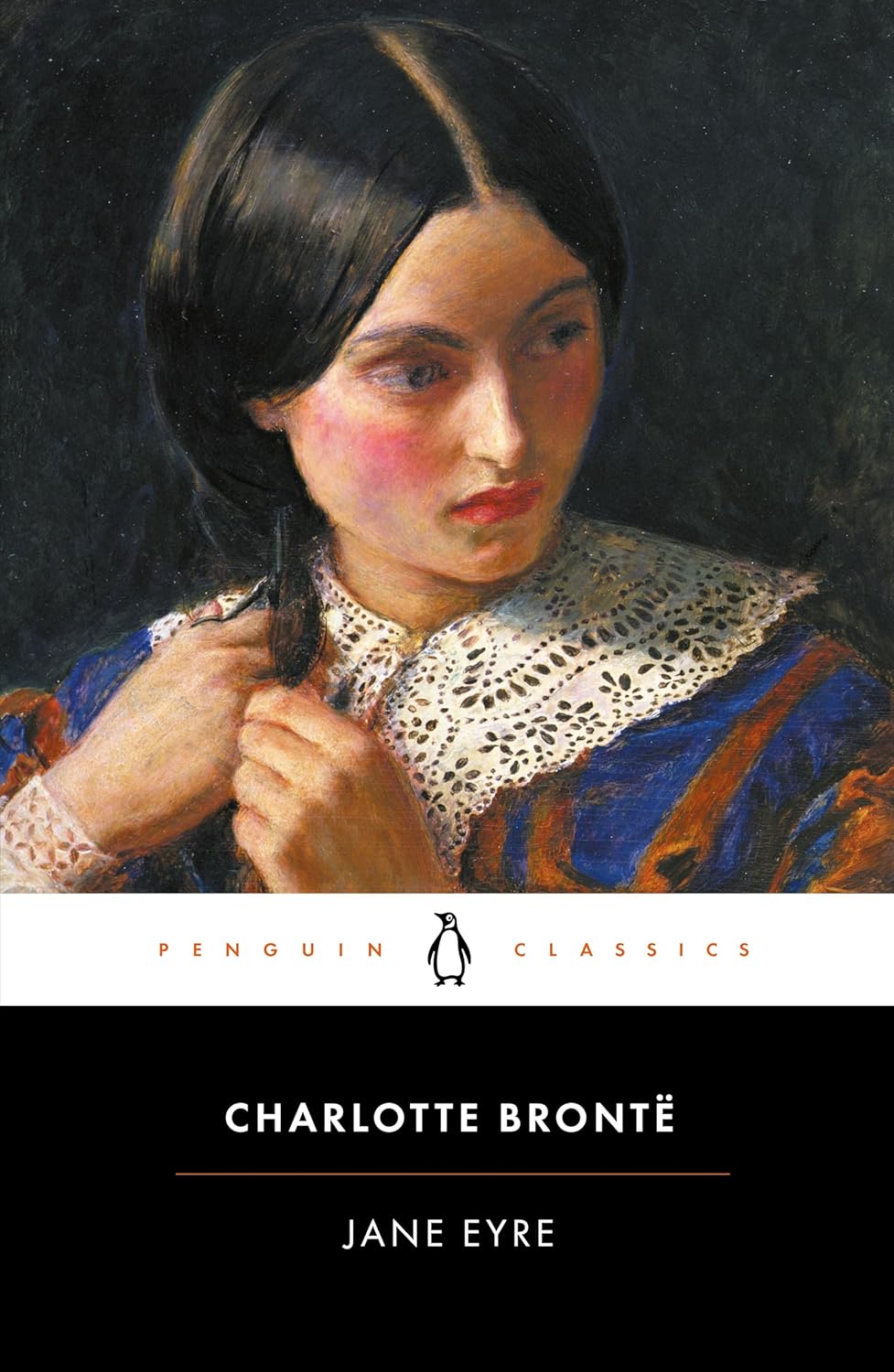
Jane Eyre: An Autobiography, written by Charlotte Brontë under the pseudonym Currer Bell and published in 1847, by Smith, Elder & Co., is a first-person novel narrated by Jane Eyre across five distinct phases of her life. Jane is an orphan raised by a hostile aunt, sent to a charity school, employed as a governess at Thornfield Hall, and ultimately confronted with a secret that threatens to destroy the life she has built through her own intelligence and moral determination. The novel is structured as a bildungsroman — a coming-of-age story in which the protagonist’s growth toward self-knowledge and moral maturity is the primary subject. It was immediately successful on publication and generated significant critical attention, including praise from William Makepeace Thackeray. Charlotte Brontë, Emily Brontë, and their sister Anne all published their first novels in 1847 under the Bell pseudonyms — Currer, Ellis, and Acton — to avoid the prejudice they believed would be directed at women writers; Charlotte revealed her identity in 1848. Jane Eyre is a Common Core State Standards ELA Text Exemplar for grades 11–12 and is among the most widely assigned 19th-century British novels in American high school and college curricula. This guide covers reading level, age appropriateness, content, structure, themes, the Bertha Mason question, and similar books.
For Parents
A first-person Victorian novel about an orphaned governess who falls in love with her employer and discovers he has a secret wife. Ages 14–18, grades 9–12. Content: Bertha Mason is depicted as violent and animalistic — her characterization is discussed in contemporary curricula as a representation of colonial attitudes; a fire set by Bertha injures Rochester; the novel’s treatment of mental illness and race is discussed in AP contexts. No graphic sexual content. Rochester’s attempted bigamy is the novel’s central moral crisis. Standard 10th–12th grade British literature assignment.
For Teachers
A grades 10–12 British literature standard — CCSS ELA Text Exemplar for grades 11–12. Lexile varies significantly by edition (560L–890L depending on scoring method and edition); ATOS not confirmed; word count approximately 183,000–187,000; 38 chapters; approximately 500–590 pages. Published under pseudonym Currer Bell in 1847. The novel’s treatment of Bertha Mason — its racial and colonial dimensions, particularly as read alongside Jean Rhys’s Wide Sargasso Sea (1966) — is a standard AP Literature discussion topic. Public domain; available free at Project Gutenberg.
Jane Eyre at a Glance
Find on Amazon →| Author | Charlotte Brontë (1816–1855); published as Currer Bell |
| Published | 1847 (Smith, Elder & Co.) |
| Grade Level | 9–12 (our assessment; most commonly 10th–12th grade) |
| Recommended Age | 14–18 |
| Lexile | 560L–890L (varies significantly by edition; see below) |
| ATOS Level | Not confirmed |
| Word Count | ~183,000–187,000 |
| Pages | ~500–590 (editions vary) |
| Chapters | 38 |
| Genre | Gothic fiction / Bildungsroman / Victorian novel |
| Setting | Yorkshire, England (Gateshead, Lowood, Thornfield Hall, Moor House, Ferndean); 1800s |
| Status | Public domain; available free at Project Gutenberg |
| Standards | CCSS ELA Text Exemplar, grades 11–12 |
For official Lexile and AR levels by specific edition, visit Lexile.com or AR BookFinder and search by ISBN. ReadingVine provides independent editorial assessments.
What Reading Level Is Jane Eyre?
The Lexile score for Jane Eyre varies significantly by edition and scoring method — from 560L (TeachingBooks, one edition) to 870L–890L (LightSail, different editions). ATOS is not confirmed in standard databases. The variation reflects how different editions and scoring methods handle Brontë’s Victorian prose style, which mixes accessible narrative passages with dense, formally complex passages. Our assessment: grades 9–12, ages 14–18, most commonly assigned in 10th–12th grade. The reading challenge is primarily the 19th-century English prose — long sentences, formal vocabulary, extended dialogue — rather than the plot or themes, which are accessible to high school readers. At approximately 183,000–187,000 words and 38 chapters, most high school curricula plan 4–6 weeks for the full novel. When looking up scores, search by the specific edition’s ISBN. For official scores, visit Lexile.com or AR BookFinder.
The Pseudonym — Currer Bell
Charlotte Brontë published Jane Eyre under the name Currer Bell. Her sisters Emily and Anne published their novels the same year — Emily’s Wuthering Heights and Anne’s Agnes Grey — under the pseudonyms Ellis Bell and Acton Bell. The siblings chose gender-neutral names that preserved their initials, believing that their work would receive fairer critical assessment without the prejudice they expected to be directed at women writers. Charlotte revealed her identity in 1848 after a reviewer accused Currer and Acton Bell of being the same person; she traveled to London to prove that she and Anne were separate individuals. The fact of the pseudonyms and the reasons behind them are standard biographical context for teaching any of the Brontë novels.
Structure — Five Phases
Jane Eyre follows Jane through five distinct settings that structure the novel’s five phases:
Gateshead (Chapters 1–4): Jane as a child in the household of her aunt, Mrs. Reed, who resents and mistreats her. Jane’s conflict with her cousin John Reed, her punishment in the red room, and her encounter with the apothecary Mr. Lloyd establish her character and her circumstances.
Lowood School (Chapters 5–10): Jane is sent to Lowood Institution, a charity school for orphan girls, where conditions are harsh and food is scarce. She forms her most significant early friendship with Helen Burns, who teaches Jane a form of patient endurance Jane cannot fully adopt. Helen dies of tuberculosis. Jane eventually becomes a teacher at Lowood before seeking a position as a governess.
Thornfield Hall (Chapters 11–27): The novel’s longest and central section. Jane is employed as governess to Adèle Varens, the ward of the hall’s owner, Edward Rochester. She and Rochester develop a relationship; they become engaged. The night before the wedding, Rochester’s first wife Bertha Mason — confined to the attic of Thornfield Hall, concealed from Jane and from the world — tears Jane’s wedding veil. At the wedding itself, Bertha’s brother Richard Mason reveals the existing marriage. Jane leaves Thornfield.
Moor House / Marsh End (Chapters 28–35): Jane, destitute, is taken in by the Rivers family — Diana, Mary, and St. John. She learns they are her cousins. She inherits money from an uncle. St. John Rivers, a clergyman preparing to go to India as a missionary, proposes that Jane come with him as his wife — a marriage of utility rather than love. Jane considers and refuses.
Ferndean (Chapters 36–38): Jane returns to Rochester, who has been blinded and lost his hand in a fire at Thornfield — a fire set by Bertha, who died in it. They marry. The novel ends with their life together and with St. John’s ongoing mission in India.
What Is Jane Eyre About?
Jane Eyre is an orphan with no money, no family connections, and no beauty — qualities that, in the social world of the Victorian novel, are the primary currencies of a woman’s prospects. What she has is intelligence, a strong sense of her own dignity, and a moral framework she refuses to compromise even under extreme pressure. The novel follows her from her mistreatment at Gateshead and Lowood, through her employment as a governess at Thornfield Hall, her love for Rochester, the revelation of his first wife Bertha’s existence in the attic, her departure, her time with the Rivers family, her inheritance, St. John’s proposal, and her return to Rochester after Thornfield burns and Bertha dies. The novel ends with Jane and Rochester married and with Rochester partially recovered from his injuries.
The plot’s central moral crisis is the moment when Jane learns that the man she loves and is about to marry already has a wife. Rochester argues that the marriage was forced, that Bertha is mad and not his true partner, that Jane is his moral wife in every way that matters. Jane refuses — not because she does not love him, but because marriage to him under those circumstances would violate her sense of who she is. She leaves. This decision — and the reasoning Jane gives for it — is the novel’s most discussed moral and philosophical moment.
Jane Eyre Characters
Bertha Mason — The Madwoman in the Attic
The critical phrase “the madwoman in the attic” comes from a 1979 literary study by Sandra Gilbert and Susan Gubar of the same name, which used Bertha Mason as a central figure in an argument about 19th-century women writers and the suppressed rage that their work encodes. In the novel, Bertha is Rochester’s first wife — a Creole woman from Jamaica, characterized as violent, animalistic, and mad, whose existence Rochester conceals from Jane and from the world. Her presence disrupts the narrative at several key points: she tears Jane’s wedding veil; she sets fire to Rochester’s bed; she sets fire to Thornfield and dies in the blaze.
Contemporary curricula, particularly at the AP and college levels, treat Bertha’s characterization as a reflection of Victorian racial and colonial attitudes — the representation of a Caribbean woman as inherently mad and dangerous, confined and controlled by her English husband. Jean Rhys’s novel Wide Sargasso Sea (1966) is a prequel to Jane Eyre that tells Bertha’s story from her own perspective, naming her Antoinette Cosway and situating her in post-Emancipation Jamaica before her marriage to Rochester. Teaching Jane Eyre alongside Wide Sargasso Sea is a standard AP Literature and college English pairing.
Jane Eyre Themes and Lessons
Jane’s refusal to stay with Rochester after learning of Bertha’s existence is the novel’s moral pivot. Rochester’s arguments — that Bertha is not truly his wife in any meaningful sense, that their marriage was arranged without his full knowledge of her family’s history of madness, that Jane is his true partner — are persuasive and have sympathy within the novel’s own terms. Jane’s refusal rests on her sense that to stay would be to compromise her integrity: “I care for myself. The more solitary, the more friendless, the more unsustained I am, the more I will respect myself.” This is among the most frequently quoted passages in the novel and is central to discussions of Jane as a feminist character within Victorian literature.
The Gothic elements of Thornfield — the mysterious laughter from the attic, the fire in Rochester’s room, the torn veil — are among the most discussed formal features of the novel. Brontë uses them to create atmosphere and to signal the presence of the secret that Jane does not yet know; they are not supernatural but are presented as uncanny before their explanation is revealed.
Discussion questions: Why does Jane leave Rochester even though she loves him — and is her decision the right one? How is Bertha Mason characterized — and what does that characterization reflect about Victorian attitudes toward race and mental illness? What does St. John Rivers represent — and why does Jane refuse him even though his offer is in some ways compelling? How do the Gothic elements of Thornfield — the laughter, the fire, the torn veil — function before we know their explanation?
Books Similar to Jane Eyre
About Charlotte Brontë
Charlotte Brontë was born on April 21, 1816, in Thornton, Yorkshire, England, the third of six children of the Reverend Patrick Brontë and Maria Branwell Brontë. Her mother died in 1821; her two eldest sisters died of tuberculosis in 1825 after contracting it at the Clergy Daughters’ School at Cowan Bridge — an institution that informed the Lowood School sections of Jane Eyre. Charlotte, Emily, Anne, and their brother Branwell were educated largely at home, creating the imaginary kingdoms of Angria and Gondal that formed an important part of their literary development. Charlotte worked as a teacher and governess, including a period at the Pensionnat Héger in Brussels where she developed an intense attachment to her married teacher M. Héger. She and her sisters published a joint collection of poetry in 1846 under the Bell pseudonyms; it sold two copies. Jane Eyre (1847) was an immediate success. Her other novels include Shirley (1849), Villette (1853), and The Professor (published posthumously, 1857). Her brother Branwell and her sisters Emily and Anne all died between 1848 and 1849. Charlotte married her father’s curate, Arthur Bell Nicholls, in 1854. She died on March 31, 1855, at thirty-eight years old, while pregnant.
Jane Eyre: Frequently Asked Questions
What reading level is Jane Eyre?
Lexile varies significantly by edition: 560L–890L across different scoring methods and editions. ATOS not confirmed. Word count approximately 183,000–187,000; 38 chapters. Our assessment: grades 9–12, ages 14–18, most commonly 10th–12th grade. Reading challenge is primarily the 19th-century Victorian prose; plot and themes are accessible to high school readers. Search by specific edition ISBN for official scores at Lexile.com or AR BookFinder.
What is Jane Eyre about?
Jane Eyre, an orphan with no money or family connections, moves through five phases of life — childhood at Gateshead, Lowood School, employment as a governess at Thornfield Hall, refuge with the Rivers family, and return to Rochester — maintaining her integrity and sense of self-worth at each stage. The novel’s central crisis is the revelation that the man she loves and is about to marry already has a wife confined to the attic of his house.
Who is Bertha Mason in Jane Eyre?
Rochester’s first wife — a Creole woman from Jamaica whom he married before the events of the novel and whom he has confined to the attic at Thornfield Hall. She is characterized in the novel as violent and mad. Her existence is concealed from Jane until the wedding. Her characterization, and what it reflects about Victorian attitudes toward race, colonialism, and mental illness, is a significant subject of contemporary literary scholarship and classroom discussion. Jean Rhys’s novel Wide Sargasso Sea (1966) is a prequel telling Bertha’s story from her own perspective.
Why did Charlotte Brontë publish Jane Eyre under a pseudonym?
Charlotte Brontë and her sisters Emily and Anne all published their 1847 novels under gender-neutral pseudonyms — Currer, Ellis, and Acton Bell — because they believed their work would receive fairer critical assessment without the prejudice they expected to be directed at women writers. Charlotte revealed her identity in 1848.
What grade is Jane Eyre typically assigned?
Most commonly in 10th, 11th, or 12th grade British literature courses. It is a Common Core ELA Text Exemplar for grades 11–12 and a standard AP Literature text. Its length (approximately 500–590 pages) typically requires 4–6 weeks in a high school curriculum. Frequently taught alongside or after Wuthering Heights in a Brontë unit.
What is Wide Sargasso Sea and how does it relate to Jane Eyre?
Wide Sargasso Sea (1966) by Jean Rhys is a prequel to Jane Eyre that tells the story of Bertha Mason — naming her Antoinette Cosway — from her perspective, set in post-Emancipation Jamaica and England before her marriage to Rochester. It is among the most widely taught companion texts to Jane Eyre in AP Literature and college English courses, providing a postcolonial perspective on Bertha’s characterization in Brontë’s novel.