
 = Partner Site
The Scarlet Letter Reading Level: A Complete Guide
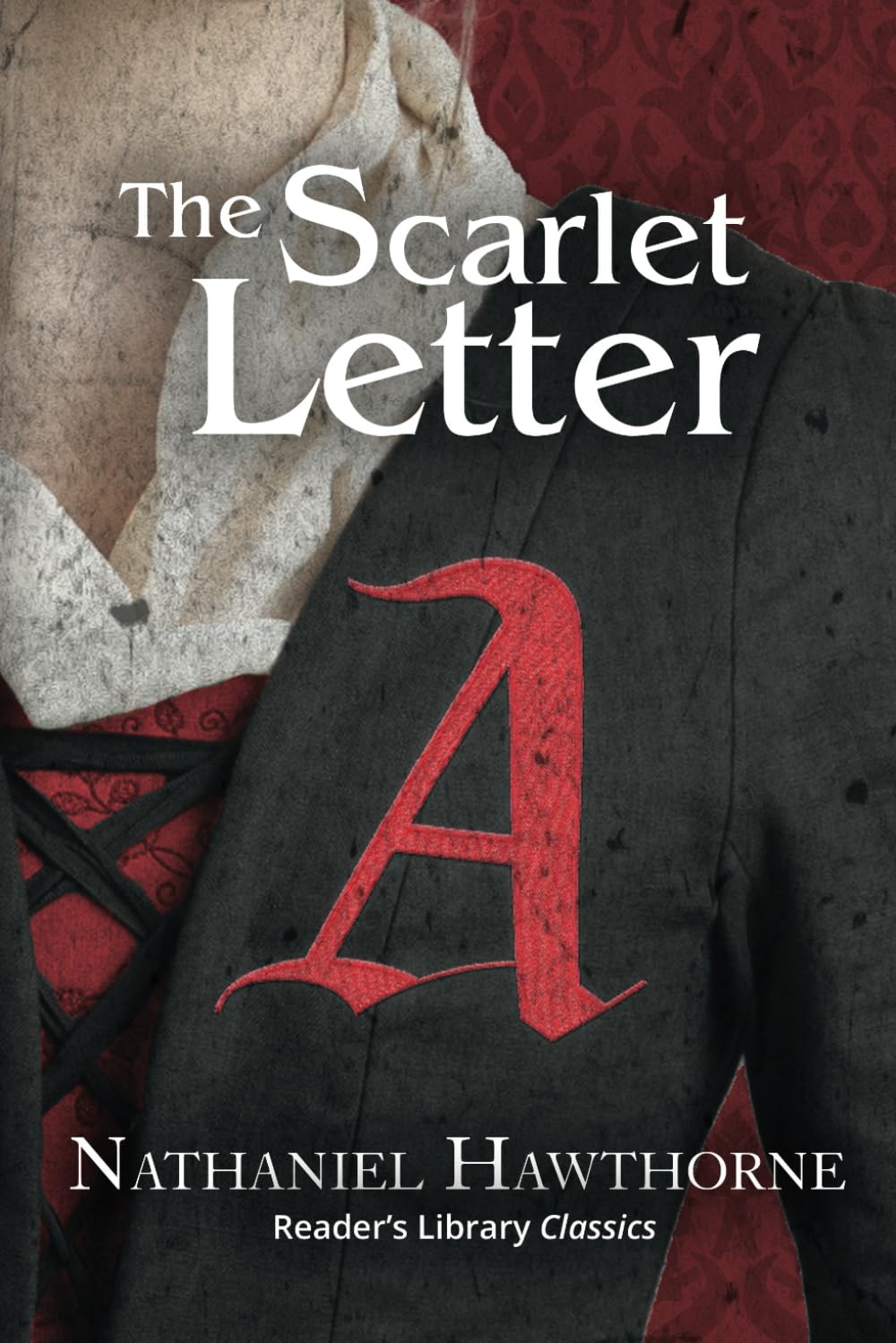
The Scarlet Letter, written by Nathaniel Hawthorne and published in 1850, is a novel set in Puritan Boston in the 1640s — one of the most widely assigned works of American literature and a foundational text of the American literary tradition. Hester Prynne has committed adultery and refused to name the father of her child. As punishment, the Puritan community compels her to wear a scarlet letter “A” on her breast and to stand on a public scaffold in shame. What follows is not simply the story of her punishment but of the three people most entangled in the sin and its aftermath: Hester herself, who carries her shame publicly and finds in it an unexpected strength; the Reverend Arthur Dimmesdale, the community’s beloved minister who is secretly the child’s father and who cannot confess; and Roger Chillingworth, Hester’s estranged husband, who arrives in Boston and devotes himself to destroying Dimmesdale through psychological torment rather than open accusation. Hester and Dimmesdale’s daughter Pearl, born of the sin and shaped by it, moves through the novel as a kind of living embodiment of what cannot be hidden. Published to immediate success and controversy, The Scarlet Letter is widely regarded as the first major American psychological novel — the first American work of fiction to make the internal experience of guilt, shame, and concealed sin its primary subject rather than its backdrop. This guide covers reading level, age appropriateness, content, themes, the Custom-House essay, and similar books.
For Parents
A foundational American novel about adultery, sin, guilt, and hypocrisy in Puritan New England — centered on a woman condemned by her community and the man who condemned her while sharing her guilt. Ages 14–18, grades 9–12. Content: adultery is the premise; psychological cruelty is the central action; no graphic content. The prose is dense 19th-century literary English requiring patience and often classroom scaffolding. Standard 11th grade assignment.
For Teachers
A grades 9–12 American literature standard — most commonly assigned in 11th grade American literature surveys. Lexile 1280–1340L; ATOS 11.7; word count 63,604. The “Custom-House” introductory essay is typically assigned alongside the novel; see the section below for guidance. Public domain; available free at Project Gutenberg. The psychological complexity of all four major characters — and Hawthorne’s narrative technique of moral ambiguity — are the primary literary study angles.
The Scarlet Letter at a Glance
Find on Amazon →| Author | Nathaniel Hawthorne (1804–1864) |
| Published | 1850 (Ticknor, Reed & Fields, Boston) |
| Grade Level | 9–12 (our assessment; most commonly 11th grade) |
| Recommended Age | 14–18 |
| Lexile | 1280L–1340L (varies by edition) |
| ATOS Level | 11.7 |
| Word Count | 63,604 |
| Pages | ~200–280 (varies by edition) |
| Chapters | 24 (plus “The Custom-House” introductory essay) |
| Genre | Historical fiction / psychological novel / romance |
| Setting | Puritan Boston, Massachusetts; 1640s–1650s |
| Status | Public domain; available free at Project Gutenberg |
For official Lexile and AR levels, visit Lexile.com or AR BookFinder. ReadingVine provides independent editorial assessments.
What Reading Level Is The Scarlet Letter?
Lexile 1280L–1340L (varying by edition; the MetaMetrics certified standard is 1340L), ATOS 11.7, word count 63,604. Our assessment: grades 9–12, ages 14–18, most commonly assigned in 11th grade. The Lexile of 1340L places it among the most linguistically demanding texts in the standard high school curriculum — above Lord of the Flies (770L), 1984 (1090L), and comparable to Hamlet and other Shakespearean texts when prose equivalents are calculated. Hawthorne’s sentence structures are long and syntactically complex; his vocabulary is formal 19th-century literary English; and his narrative technique — moral ambiguity, symbolic layering, unreliable and shifting focalization — adds demands the formula does not capture. Most students encounter this novel with classroom scaffolding. For official scores, visit Lexile.com or AR BookFinder.
What Age Is The Scarlet Letter Appropriate For?
Ages 14–18, grades 9–12. Adultery is the novel’s premise — handled as a moral and psychological subject rather than a sensational one. There is no graphic sexual content; the adulterous act itself is entirely offstage. The primary content that requires maturity is the sustained psychological cruelty of Chillingworth toward Dimmesdale, and the moral complexity of a narrative in which the community’s righteous condemnation is consistently presented as more corrupt than the sin it condemns. These are themes appropriate for high school readers; the prose demands make it most suitable for grades 9–12.
The Custom-House Essay — What It Is and Whether to Assign It
“The Custom-House” is Hawthorne’s long introductory essay that precedes the novel proper in all standard editions. In it, Hawthorne describes his years working as a customs surveyor in Salem, his discovery of a manuscript and a fragment of embroidered cloth in the attic of the Custom-House, and the fictional conceit that the manuscript became the source for the novel that follows. It is autobiographical, satirical (a somewhat waspish portrait of his Custom-House colleagues), and thematically rich — introducing ideas about the relationship between the writer and the community, the nature of romance versus history, and the specific burden of Hawthorne’s Salem heritage.
Whether to assign it depends on the course and the students. Many teachers skip it or assign it after the novel, as it can be a significant barrier for students who encounter it cold before beginning what they expect to be a narrative. Its satire and its Hawthornian irony are easier to appreciate with some context. For AP Literature classes and advanced readers, it is rewarding and illuminates the novel’s themes significantly. For standard 11th grade, it is often covered selectively or as a secondary text.
What Is The Scarlet Letter About?
The novel opens on the scaffold: Hester Prynne, holding her infant daughter Pearl, is being publicly shamed by the Puritan community of Boston for the sin of adultery. She has refused under intense pressure to name her child’s father. In the crowd, she sees a man she recognizes — her husband, Roger Chillingworth, who was believed lost at sea, arriving in the New World just in time to witness his wife’s public humiliation. He signals her silently to say nothing of his identity, and she agrees. He takes the name Chillingworth and presents himself as a physician.
The three poles of the novel’s drama then establish themselves. Hester, sentenced to wear the scarlet letter for life, lives on the edge of the Puritan community — scorned but not destroyed. Over years, her skill as a seamstress, her charity, and her composure gradually shift the community’s perception of her letter from “Adulteress” to something more like “Able.” She raises Pearl, a wild, uncontrollable child who seems to Hester like an embodiment of the sin itself — and to the community like a child of the devil. Dimmesdale, the community’s revered young minister, is consumed by guilt he cannot confess; he performs public penances in secret and torments himself while the community lavishes him with admiration he feels he does not deserve. Chillingworth, attaching himself to Dimmesdale as his physician and companion, gradually comes to understand that Dimmesdale is Hester’s partner in sin, and devotes himself to Dimmesdale’s psychological destruction rather than his death — a revenge he finds more satisfying.
The novel builds toward a confrontation on the scaffold where it began — where all three adults and Pearl converge in a final scene that is simultaneously the novel’s resolution and its most morally ambiguous moment.
The Scarlet Letter Characters
Hawthorne and the Salem Legacy
Nathaniel Hawthorne was born in Salem, Massachusetts, in 1804. His great-great-grandfather, John Hathorne, was one of the judges in the Salem witch trials of 1692 — a man who, unlike other judges involved in those proceedings, never publicly repented his role. Hawthorne added the “w” to his surname in part to distance himself from this ancestor, and the guilt and shame of that legacy runs through his writing in ways that are specific and personal rather than generally historical. The Scarlet Letter‘s meditation on collective guilt, the persistence of the past into the present, and the inadequacy of public institutions to adjudicate private conscience is not purely abstract — it is rooted in what Hawthorne knew about his family and his town.
This biographical context is one of the most productive classroom discussion anchors for the novel, because it explains why Hawthorne was so interested in Puritan New England specifically and why his treatment of Puritan moral authority is so ambivalent: he is writing about people who are his ancestors, in a tradition that produced both his family’s shame and his literary imagination.
The Scarlet Letter Themes and Lessons
The novel’s central argument — stated obliquely rather than directly, as is Hawthorne’s method — is that the community’s public condemnation of Hester is not more morally pure than her sin, and may in fact be considerably less so. Hester’s public shame, endured openly and with increasing dignity, transforms her. Dimmesdale’s concealed guilt, festering in private, destroys him. Chillingworth’s revenge, pursued in the name of justice, makes him, in the novel’s most explicit moral judgment, the blackest sinner of the three. The Puritan community, confident in its collective righteousness, is presented throughout as a force of social control rather than moral truth.
This is a sophisticated and somewhat subversive argument for 1850 — a critique of collective moral authority, an endorsement of individual conscience, and a rehabilitation of a woman condemned by society as the novel’s most admirable figure. Hawthorne does not make any of this explicit; he is too careful and too ironic for that. The moral argument emerges from the structure of the novel rather than from any character’s speech.
The scarlet letter itself is the novel’s most famous symbol and also its most unstable one: it begins as “Adulteress,” gradually accrues the meaning “Able,” and by the novel’s end has been proposed to mean “Angel.” This semiotic instability — the same symbol meaning different things to different observers at different times — is one of the text’s most productive discussion anchors for AP students.
Discussion questions: Who is the novel’s greatest sinner — Hester, Dimmesdale, or Chillingworth? How does the scarlet letter’s meaning change across the novel, and what does that change suggest about the nature of symbols? What does Hawthorne think of the Puritan community — does he condemn it? What makes Hester’s response to her punishment more admirable than Dimmesdale’s? Why does Chillingworth’s revenge ultimately destroy him more than his victim?
Is The Scarlet Letter Banned?
The Scarlet Letter has a long challenge history. When published in 1850, it drew criticism from some religious reviewers for its sympathetic treatment of the woman who committed adultery — one ecclesiastical reviewer called it the story of “the nauseous amour of a Puritan pastor.” In more recent decades, it has been challenged in various school districts — most notably in 1977 by parents who objected to it as “pornographic and obscene,” despite the absence of any explicit sexual content. It does not appear on the ALA’s top-100 most-challenged lists for recent decades, which reflect more contemporary titles, but it has a documented history of challenge and ban attempts across more than a century. These challenges have been largely unsuccessful; the novel remains a standard 11th grade American literature assignment.
Books Similar to The Scarlet Letter
About Nathaniel Hawthorne
Nathaniel Hawthorne was born on July 4, 1804, in Salem, Massachusetts, into a family with deep roots in the Puritan history of New England — including his great-great-grandfather John Hathorne, one of the judges in the Salem witch trials who never publicly repented. He attended Bowdoin College in Maine (graduating 1825), where he was classmates with Franklin Pierce and Henry Wadsworth Longfellow. He spent years in relative obscurity writing short stories — collected in Twice-Told Tales (1837) and Mosses from an Old Manse (1846) — before The Scarlet Letter (1850) made him immediately famous. His other novels include The House of the Seven Gables (1851), The Blithedale Romance (1852), and The Marble Faun (1860). He was friends with Herman Melville, who dedicated Moby-Dick to him. He died in 1864. His short stories, particularly “Young Goodman Brown,” “The Minister’s Black Veil,” and “Rappaccini’s Daughter,” are frequently taught alongside The Scarlet Letter for their shared themes of guilt, secret sin, and Puritan moral psychology.
The Scarlet Letter: Frequently Asked Questions
What reading level is The Scarlet Letter?
Lexile 1280L–1340L (varies by edition; MetaMetrics certified standard is 1340L), ATOS 11.7, word count 63,604. Our assessment: grades 9–12, ages 14–18, most commonly assigned in 11th grade. One of the most linguistically demanding texts in the standard high school curriculum; most students encounter it with classroom scaffolding. For official scores, visit Lexile.com or AR BookFinder.
What is The Scarlet Letter about?
Hester Prynne, condemned by Puritan Boston for adultery, is forced to wear a scarlet “A” and raise her daughter Pearl alone while refusing to name the child’s father. The novel follows three people entangled in the sin’s aftermath: Hester, who endures her public shame with increasing dignity; the Reverend Dimmesdale, the child’s secret father, who is consumed by guilt he cannot confess; and Roger Chillingworth, Hester’s estranged husband, who devotes himself to Dimmesdale’s psychological destruction.
What does the scarlet letter “A” stand for?
Initially it stands for “Adulteress” — the sin for which Hester was condemned. Over the course of the novel, as Hester’s character and conduct gradually shift the community’s perception, the letter is reinterpreted to mean “Able.” By the novel’s end, some in the community propose it might mean “Angel.” This shifting meaning — the same symbol meaning different things to different people at different times — is one of the novel’s central literary arguments about the nature of signs, symbols, and social interpretation.
Is The Scarlet Letter a banned book?
It has been challenged in various school districts over the years — initially in 1850 for its frank treatment of adultery, and most notably in 1977 by parents who called it “pornographic and obscene” despite the absence of any explicit sexual content. It does not appear on the ALA’s top-100 most-challenged lists for recent decades, but has a documented history of challenge and ban attempts spanning more than a century. These challenges have been largely unsuccessful; the novel remains a standard 11th grade American literature assignment.
What grade is The Scarlet Letter typically assigned?
Most commonly 11th grade, in American literature survey courses. It also appears in AP Literature curricula at 11th and 12th grade. Some honors programs introduce it in 10th grade. Its 1280–1340L Lexile and ATOS 11.7 make it most appropriate for grades 9–12 with classroom support.
Who is Roger Chillingworth in The Scarlet Letter?
Roger Chillingworth is Hester Prynne’s estranged husband — a scholar who arrives in Boston just as Hester is being publicly shamed, conceals his identity, and reinvents himself as a physician. He gradually deduces that the Reverend Dimmesdale is Hester’s partner in adultery and devotes himself to Dimmesdale’s psychological destruction rather than open accusation. Hawthorne presents him as the novel’s most unambiguous sinner — more corrupted by his pursuit of revenge than either Hester or Dimmesdale is by the original sin.