
 = Partner Site
Frankenstein Reading Level: A Complete Guide
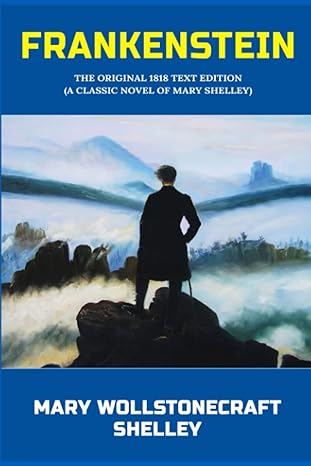
Frankenstein; or, The Modern Prometheus is an 1818 novel by Mary Wollstonecraft Shelley, written when she was eighteen years old and published anonymously when she was twenty. It tells the story of Victor Frankenstein, a young scientist who creates a living creature from assembled body parts and then recoils in horror from what he has made—setting in motion a tragedy of abandonment, revenge, and mutual destruction. Widely regarded as the founding text of both science fiction and the modern Gothic novel, Frankenstein is one of the most intellectually generative works ever assigned in a high school classroom, raising questions about scientific responsibility, the nature of humanity, and the ethics of creation that have only grown more urgent in the two centuries since its publication. This guide covers the book’s reading level, age appropriateness, characters, themes, and teaching resources for students, parents, and educators.
For Parents
Frankenstein is a serious Gothic novel with mature themes, but its content is considerably less explicit than many other canonical high school texts. The novel contains death, grief, and violence—several characters are murdered, and the story’s emotional arc is one of sustained tragedy—but there is no sexual content, no graphic gore, and no profanity. It is most commonly assigned in grades 9–12. Parents of younger or more sensitive students should be aware of the novel’s pervasive tone of despair and its depictions of grief and isolation, but it is generally considered appropriate for strong readers from about age 14 onward.
For Teachers
Frankenstein is one of the most versatile texts in the high school canon. It anchors units on Gothic literature, Romantic-era writing, the history of science fiction, and the ethics of scientific progress. Its nested narrative structure—letters containing a story containing another story—is an excellent vehicle for teaching point of view, reliability, and how frame narrators shape reader sympathy. The Creature’s impassioned, philosophically rigorous speeches make for some of the most productive close-reading opportunities in any survey course. The novel pairs productively with Brave New World, The Strange Case of Dr. Jekyll and Mr. Hyde, Milton’s Paradise Lost, and contemporary bioethics readings.
Frankenstein at a Glance
Find on Amazon →| Author | Mary Wollstonecraft Shelley |
| Published | 1818 (revised edition 1831) |
| Grade Level | 9–12 (our assessment) |
| Recommended Age | 14–18 |
| Flesch-Kincaid Grade | 12.0 |
| Word Count | ~80,000 |
| Pages | ~280 (standard paperback) |
| Chapters | 4 framing letters + 24 chapters (1831 edition) |
| Genre | Gothic fiction / science fiction |
| Setting | Geneva, Ingolstadt, the Arctic; late 18th century |
For official Lexile and AR levels, visit Lexile.com or AR BookFinder. ReadingVine provides independent editorial assessments.
What Reading Level Is Frankenstein?
ReadingVine places Frankenstein at a grade 9–12 reading level. Its Flesch-Kincaid score is approximately 12.0, reflecting the formal, elevated prose of early nineteenth-century English literary writing. Shelley’s sentences are long and syntactically complex, her vocabulary is advanced—words like “tumultuous,” “countenance,” “ignominy,” and “concatenation” appear regularly—and the framing narrative structure requires readers to track multiple layers of storytelling simultaneously. Unlike the low-score/high-complexity gap found in novels written in vernacular English (like The Color Purple or Their Eyes Were Watching God), Frankenstein‘s score accurately reflects its linguistic difficulty. Most teachers find it most productive with students who already have some experience with pre-twentieth-century prose, typically grades 10–12, though strong ninth-grade readers handle it well.
The Creature’s sections of the novel, in which he recounts his self-education and his philosophical reflections on his own existence, are among the most complex passages in the high school canon. His voice is arguably more sophisticated than Victor’s—a deliberate choice by Shelley that invites readers to reconsider who, exactly, the monster in this story is. For official Lexile and AR scores, visit Lexile.com or AR BookFinder.
What Age Is Frankenstein Appropriate For?
ReadingVine recommends Frankenstein for readers ages 14–18. The novel’s content is mature but not explicit in the way that many other assigned high school texts are. There is no sexual content and no profanity. The violence in the novel is real—characters are strangled, drowned, and destroyed—but it is not graphically described; Shelley’s horror is primarily psychological and philosophical rather than visceral. The more significant age consideration is emotional and intellectual: the novel deals unflinchingly with grief, isolation, suicidal despair, and the complete breakdown of a human being under the weight of guilt and loss. These themes are powerful and important, but they require a reader mature enough to engage with them rather than be overwhelmed by them.
Frankenstein contains the murders of multiple characters, including a child. These deaths are described but not gratuitously; the horror is moral and emotional rather than graphic. The novel’s overall tone is one of sustained tragedy, guilt, and despair—Victor Frankenstein deteriorates physically and psychologically over the course of the story, and several characters die by violence or as a consequence of his actions. There is no sexual content and no profanity. The most significant content consideration is the novel’s pervasive darkness of tone rather than any specific scene.
What Is Frankenstein About?
The novel is structured as a series of nested narratives. Captain Robert Walton, on an Arctic expedition, writes letters to his sister describing a strange encounter: a gaunt, feverish man named Victor Frankenstein, found half-dead on the ice, pursuing a massive figure across the frozen waste. Victor, recovering aboard the ship, tells Walton his story. He was a gifted young student from Geneva who became obsessed with the secret of life—how it begins, whether it can be created or reanimated. After years of study at the University of Ingolstadt, he succeeds: he assembles a creature from corpse parts and animates it. Then, horrified by what he has made, he flees. The Creature is left alone in the world—enormous, monstrous in appearance, and utterly without any of the care, guidance, or love that every human being requires to become a person.
The Creature teaches himself to speak by secretly observing a family of exiles in the woods. He learns to read. He discovers—in the books he finds and in the journals he eventually steals from Victor’s coat pocket—the full story of his own creation and his creator’s revulsion at him. He approaches Victor and makes a demand: create a companion for him, a female of his kind, so that he need not live entirely alone. If Victor refuses, the Creature promises to make him as miserable as he himself has been made. Victor begins the work, then destroys it in a moment of doubt. The Creature, in revenge, begins systematically destroying everyone Victor loves.
Shelley narrates the Creature’s perspective in long, eloquent, philosophically sophisticated passages that form the moral and intellectual center of the novel. The Creature is not the shambling, bolt-necked monster of later adaptations; he is well-spoken, deeply educated, and in many ways more sympathetic than his creator. His argument—that he was made as he is, abandoned without his consent, and denied all the conditions necessary for a good life—is never fully refuted by Victor or by the novel. The story ends in the Arctic, where Victor dies in pursuit of the Creature he can neither destroy nor stop creating. The Creature, grief-stricken over the man who made and hated him, disappears into the ice to die alone. It is one of the bleakest endings in the English literary tradition.
Frankenstein Characters
Frankenstein Themes and Lessons
The novel’s central question—what obligations does a creator have to what it creates?—was radical in 1818 and remains urgently relevant in an era of genetic engineering, artificial intelligence, and synthetic biology. Victor creates a being capable of thought, feeling, and suffering, then abandons it without a second thought. The Creature’s subsequent violence is not random or inexplicable; it is the direct consequence of neglect, rejection, and the denial of every social and emotional need a conscious being has. Shelley does not excuse the murders, but she insists that we understand the chain of causation. The true horror of the novel is not the Creature but the scientist who made him and refused to accept responsibility for what he had done.
The novel is also deeply engaged with Romantic-era debates about nature, education, and the formation of character. The Creature’s self-education—his secret observation of the De Lacey family, his reading of Paradise Lost, Plutarch’s Lives, and The Sorrows of Young Werther—is one of the most remarkable passages of self-fashioning in all of literature, and it makes an explicit argument: that the Creature’s character was made by his environment and his experiences, not by some innate monstrousness. Discussion questions: Who is the real monster in this novel, and what does the question reveal about how we define monstrosity? What does the frame narrative structure (Walton → Victor → the Creature) do to our sympathies? What would the story look like from the Creature’s point of view alone?
How Many Pages and Chapters in Frankenstein?
Frankenstein runs approximately 280 pages in the standard Penguin Classics or Norton Critical Edition paperback. The most commonly assigned version is the 1831 revised edition, which consists of four framing letters from Captain Walton followed by 24 chapters. (The original 1818 edition has 23 chapters organized across three volumes—teachers and students using scholarly editions may encounter this structure instead.) At approximately 80,000 words, it is a moderately long novel by high school standards—comparable in length to Lord of the Flies and shorter than 1984. An average high school reader will complete it in 6–8 hours. Most teachers assign it over three to four weeks, with the nested narrative structure making it particularly well-suited to unit plans that pause at each shift in narrator.
Books Similar to Frankenstein
About Mary Shelley
Mary Wollstonecraft Shelley was born on August 30, 1797, in London, the daughter of two towering intellectual figures: philosopher and political radical William Godwin and feminist philosopher Mary Wollstonecraft, who died eleven days after Mary’s birth. She grew up reading voraciously in her father’s study and eloped at sixteen with the Romantic poet Percy Bysshe Shelley, with whom she traveled across Europe. In the summer of 1816—”the year without a summer,” following the catastrophic eruption of Mount Tambora in Indonesia, which cooled the global climate and drove Europe indoors—she was staying near Lake Geneva with Percy, Lord Byron, and the physician John Polidori when Byron proposed a ghost-story competition. Mary struggled to find an idea for days, then had a waking vision of a pale student kneeling beside a hideous thing he had assembled and brought to life. She began writing what would become Frankenstein that night; she was eighteen years old. The novel was published anonymously in January 1818 when she was twenty, and her name first appeared in print with the revised 1831 edition. Percy Shelley wrote the preface to the first edition and contributed edits throughout, though the novel is unambiguously Mary’s work and vision. She went on to write several other novels, including The Last Man (1826), an apocalyptic vision of humanity wiped out by plague, but none achieved the cultural permanence of Frankenstein, which has never been out of print and has given its name to an entire category of moral and scientific anxiety. She died on February 1, 1851, at the age of fifty-three.
Frankenstein: Frequently Asked Questions
What reading level is Frankenstein?
ReadingVine places Frankenstein at a grade 9–12 reading level, with a Flesch-Kincaid score of approximately 12.0. Unlike some high school texts where a low readability score masks sophisticated meaning, Frankenstein‘s score reflects genuine linguistic complexity: long, elaborate sentences, an advanced Romantic-era vocabulary, and a nested narrative structure that requires careful attention to who is speaking at any given moment. It is most productively assigned to students with prior experience reading pre-twentieth-century prose, typically grades 10–12, though strong ninth-grade readers handle it well.
What is Frankenstein really about?
At its core, Frankenstein is a novel about the responsibilities of creation—what we owe to the beings and circumstances we bring into the world, and what happens when we abandon them. Victor creates a conscious, feeling being and then flees in revulsion, leaving the Creature without a name, a community, a purpose, or any of the conditions necessary for a good life. Everything that follows—the murders, the pursuit, the mutual destruction—flows from that original act of abandonment. Shelley is also writing about ambition, hubris, and the ethics of science: Victor does not ask whether he should create life, only whether he can. The novel is often read as a warning about the consequences of that kind of unchecked intellectual ambition.
What is the difference between the 1818 and 1831 editions of Frankenstein?
The original 1818 edition was published anonymously when Mary Shelley was twenty. The revised 1831 edition, published under her name, contains significant changes: the most notable is that Elizabeth Lavenza is no longer Victor’s cousin but an orphan adopted by his family (the 1818 cousin relationship struck some readers as unseemly). The 1831 revision also gives the novel a somewhat more explicitly moral tone—an older Shelley looking back on her youthful creation. Most schools and bookstores use the 1831 edition. Scholars who want to engage with Shelley’s original vision, before Percy Bysshe Shelley’s editorial involvement, often prefer the 1818 text.
Who is the real monster in Frankenstein?
This is one of the novel’s most productive classroom questions, and Shelley deliberately refuses to answer it for you. The Creature commits murders—but he was created conscious, capable of love, and in need of care, then abandoned without any of it. Victor, by contrast, is the one who made the choice to create a being without considering what that being would need or what he himself owed it. Many readers find Victor the more culpable figure—his crimes are crimes of negligence, selfishness, and cowardice rather than violence, but their consequences are just as devastating. Shelley seems to have designed the novel so that the question cannot be cleanly resolved, which is part of why it has sustained two centuries of debate.
Why does the Creature have no name in Frankenstein?
The Creature is never named in the novel—a deliberate authorial choice. Victor, as his creator, had the opportunity to name him and chose not to; naming is an act of acknowledgment and relationship, and Victor’s refusal to name the Creature is part of his larger refusal to acknowledge responsibility for him. The absence of a name also keeps the Creature in a state of ontological uncertainty that the novel never resolves: he exists in the world, but the world—and his maker—refuses to grant him the most basic recognition of personhood. The common habit of calling the Creature “Frankenstein” is itself a reflection of the cultural erasure the novel documents.
Is Frankenstein the first science fiction novel?
Frankenstein is widely credited as the founding text of modern science fiction, in that it is the first major work of fiction to use a speculative scientific premise—the creation of artificial life through chemistry and electricity—as the central engine of its plot and themes, rather than magic, the supernatural, or divine intervention. Earlier works contained fantastical science, but Shelley’s insistence on a rational, experimental framework for Victor’s work marked something genuinely new. Critics including Brian Aldiss and others have argued for this claim at length. Whether or not it is strictly “first,” it is unquestionably the most influential origin point of the genre.
How does Frankenstein end?
Victor Frankenstein dies aboard Walton’s ship, exhausted and broken by his years of pursuit and guilt. When Walton finds the Creature grieving over Victor’s body, the Creature tells Walton that he has suffered as much as any being alive and that with Victor’s death, his own reason for existing is gone. He announces that he will travel to the northernmost ice and build a funeral pyre for himself, disappearing into the darkness. The ending is deliberately unresolved—there is no punishment, no redemption, no satisfying conclusion. Both creator and created are destroyed by their relationship with each other, and the final image is of the Creature vanishing into the darkness of the Arctic, alone as he always was.
How many pages and words is Frankenstein?
Frankenstein is approximately 280 pages in the standard Penguin Classics or Norton Critical Edition paperback, and approximately 80,000 words. The 1831 edition—the most commonly assigned version—consists of four framing letters from Captain Walton followed by 24 chapters. An average high school reader will complete it in 6–8 hours. Most teachers assign it over three to four weeks.