
 = Partner Site
Their Eyes Were Watching God Reading Level: A Complete Guide
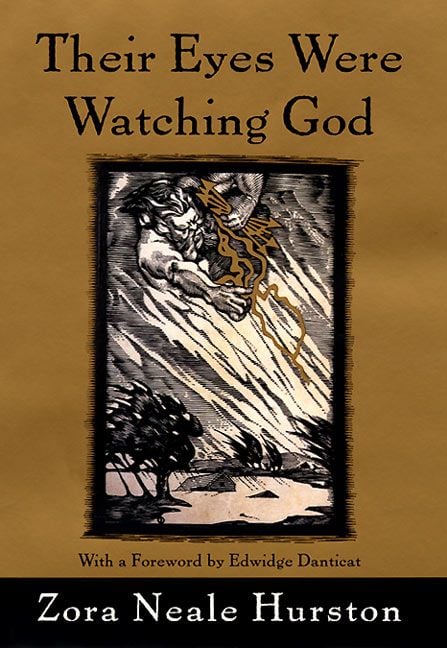
Their Eyes Were Watching God is a 1937 novel by Zora Neale Hurston, widely considered the masterpiece of the Harlem Renaissance and one of the most celebrated works in African American literature. Set in the early twentieth-century South, it follows Janie Crawford across three marriages and several decades as she moves from a life shaped by others’ expectations toward one defined by her own desire, voice, and independence. This guide covers the book’s reading level, age appropriateness, themes, characters, and teaching resources for high school students, parents, and educators.
For Parents
Their Eyes Were Watching God is a staple of high school and college curricula and one of the most taught works of American literature. The novel deals with marriage, sexuality, domestic violence, and death, all treated with literary care rather than graphic detail. Hurston’s use of African American vernacular dialect may require some adjustment for modern readers. The novel is most commonly assigned in grades 9–12 and is appropriate for readers ages 14 and older.
For Teachers
Few novels offer richer material for the intersection of literary, historical, and cultural analysis than Their Eyes Were Watching God. Hurston’s prose—lyrical, metaphor-saturated, and rooted in African American oral and folk tradition—is a model text for figurative language instruction. The novel’s framing structure, its use of dialect as a political and artistic choice, and its complex treatment of gender, race, and self-determination all reward sustained close reading. It pairs naturally with Hurston’s anthropological nonfiction, with Alice Walker’s essay “In Search of Zora Neale Hurston,” and with primary source material on the Harlem Renaissance and Jim Crow–era Florida.
Their Eyes Were Watching God at a Glance
Find on Amazon →| Author | Zora Neale Hurston |
| Published | 1937 |
| Grade Level | 9–12 (our assessment) |
| Recommended Age | 14–18 |
| Flesch-Kincaid Grade | 4.3 |
| Word Count | ~64,000 |
| Pages | 193 (standard paperback) |
| Chapters | 20 |
| Genre | Literary fiction / coming-of-age novel |
| Setting | Eatonville, Florida; the Everglades; early 20th century |
For official Lexile and AR levels, visit Lexile.com or AR BookFinder. ReadingVine provides independent editorial assessments.
What Reading Level Is Their Eyes Were Watching God?
ReadingVine places Their Eyes Were Watching God at a grade 9–12 reading level. Its Flesch-Kincaid score of approximately 4.3 reflects the fact that much of the novel is rendered in African American vernacular English—the spoken dialect of Hurston’s characters, which she recorded and celebrated as a trained anthropologist who had spent years documenting the folk culture of the South. The dialogue is conversational and phonetically spelled, which can create the appearance of simplicity while actually demanding close attention to rhythm, idiom, and implied meaning.
The real complexity is in Hurston’s narrative prose, which operates at a entirely different register from the dialogue—lyrical, metaphor-dense, and rooted in a rich oral tradition of storytelling. The famous opening sentence—”Ships at a distance have every man’s wish on board”—signals immediately that the narrator’s voice is doing something unusual and demanding. Students who read only at the level of plot will find the novel accessible; students who engage with Hurston’s prose style and symbolic architecture will find it endlessly rich. Most teachers find the novel benefits from substantial historical and cultural context before students begin reading, particularly regarding the Harlem Renaissance, Eatonville, and Hurston’s anthropological practice.
For official Lexile and AR scores, visit Lexile.com or AR BookFinder.
What Age Is Their Eyes Were Watching God Appropriate For?
ReadingVine recommends Their Eyes Were Watching God for readers ages 14–18. The novel deals with marriage, sexuality (handled through metaphor and implication rather than explicit description), domestic violence (Tea Cake strikes Janie near the novel’s end), and death. None of this is gratuitous—it is all woven into Hurston’s exploration of Janie’s inner life and her journey toward self-determination. The emotional and cultural complexity of the novel makes it best suited to high school readers who can engage with it in a supported classroom context.
Their Eyes Were Watching God depicts three marriages, including one characterized by emotional and verbal domination (Jody Starks) and one that includes a scene of physical violence (Tea Cake strikes Janie, an act Hurston treats with deliberate complexity rather than condemnation). Janie’s sexual awakening is depicted through extended natural metaphor—most notably the famous pear tree scene—rather than explicit description. The novel also depicts the death of a major character by gunshot and the hurricane that devastates the Everglades community. There is no profanity. The use of African American vernacular dialect throughout, including period-accurate language, may require classroom discussion of historical context.
What Is Their Eyes Were Watching God About?
The novel opens with Janie Crawford returning to Eatonville, Florida, after a long absence, to find the town’s porch-sitters ready to judge her. She sits down with her best friend Pheoby Watson and tells her story—and the novel unfolds as that telling. Janie was raised by her grandmother, Nanny, a formerly enslaved woman who survived the Civil War and whose deepest wish is to see Janie safely married before she dies. Nanny arranges Janie’s marriage to Logan Killicks, an older farmer with sixty acres, but Janie finds no love or joy in it. When the charming and ambitious Joe “Jody” Starks arrives and promises her a life on the horizon, she leaves Logan and runs away with him.
Joe becomes the mayor of Eatonville, the first incorporated Black town in America, and builds a thriving business. But his vision of Janie’s role in that life—decorative, silent, subordinate—is one she cannot inhabit. He silences her in public, controls her appearance, and diminishes her in ways that are less dramatic but no less suffocating than Logan’s neglect. When Joe dies, Janie is finally free—and when Tea Cake Woods walks into her store, young, playful, and genuinely interested in who she is, something in her comes alive for the first time. She leaves Eatonville for the Everglades, where Tea Cake works the muck fields and she works alongside him, and for a time she lives the life the pear tree promised her.
The novel’s final act is shaped by a catastrophic hurricane that sweeps through the Everglades, during which Tea Cake saves Janie’s life but is bitten by a rabid dog. As rabies destroys him, Tea Cake becomes violent and delusional, and Janie shoots him in self-defense. She is tried for his murder and acquitted, but returns to Eatonville alone, carrying the seeds of Tea Cake’s beloved garden. Hurston wrote the novel in seven weeks in Haiti in 1937 while doing anthropological fieldwork, reportedly under intense personal and professional pressure. Its initial reception was mixed—some Harlem Renaissance contemporaries, including Richard Wright, dismissed it as apolitical—but after Alice Walker’s landmark 1975 essay “In Search of Zora Neale Hurston,” it was rediscovered and reissued, becoming one of the most widely taught novels in American education.
Their Eyes Were Watching God Characters
Is Their Eyes Were Watching God Banned?
Their Eyes Were Watching God has been challenged in school districts and is listed among the ALA’s frequently challenged classics. The most documented formal challenge occurred in 1997 in Brentsville, Virginia, where a parent objected to the novel’s language and alleged sexual explicitness—though the novel contains no graphic sexual content; the challenges appear to have been directed at the sensual symbolism of the pear tree scene and the novel’s frank depiction of Janie’s desire for love and physical connection. The use of African American vernacular dialect has also drawn criticism, though educators have consistently defended Hurston’s dialect as a deliberate anthropological and artistic choice that honors rather than demeans her characters’ speech.
More historically significant than individual bans is the novel’s near-disappearance from literary culture for nearly three decades after its initial publication. It went out of print after Hurston’s death in 1960, largely due to resistance from some Harlem Renaissance contemporaries who felt it was insufficiently political, and was not reissued until 1978—prompted by Alice Walker’s 1975 essay in Ms. magazine that brought Hurston’s work back to public attention. Today the novel is considered one of the cornerstones of American literature and is taught at every level from high school through graduate school.
Their Eyes Were Watching God Themes and Lessons
The novel’s central theme is the relationship between a woman’s inner life and the social structures—marriage, race, class, community judgment—that attempt to define and contain it. Janie does not simply want love; she wants the kind of love she first imagined while lying under a blossoming pear tree at sixteen, watching bees and blossoms in a state of natural harmony that she will spend the rest of the novel seeking in human form. The pear tree is the novel’s governing symbol: the standard by which every relationship is measured and the image of a fullness of being that Janie believes is possible and refuses to abandon even when those around her insist she settle for less.
Equally central is Hurston’s treatment of voice and silence. Jody Starks literally silences Janie in public—she is not permitted to speak on the porch, not permitted to have opinions at town meetings. Her inner life is rich and running continuously, but she has learned to keep her “inside” and her “outside” entirely separate, a split that Hurston presents as a form of psychic survival and a form of death simultaneously. It is only with Tea Cake, and only after Jody’s death frees her, that Janie’s inside and outside begin to match. The novel asks whether it is possible to be fully known by another person and still survive the losses that knowing entails. Discussion questions: What does the pear tree represent to Janie? How does Hurston use Janie’s hair as a symbol throughout the novel? What does Janie mean when she says she has “been to the horizon and back”?
How Many Pages and Chapters Are in Their Eyes Were Watching God?
Their Eyes Were Watching God is divided into 20 chapters and runs 193 pages in the standard Harper Perennial paperback edition. At approximately 64,000 words, it is relatively compact for a novel of its literary weight—comparable in length to Lord of the Flies and Brave New World. An average high school reader will complete it in 4–6 hours of reading time. Most teachers assign it over two to three weeks, with time built in to unpack Hurston’s dialect, discuss the historical context, and work through the novel’s figurative language in detail. Because the dialect can initially slow readers down, many teachers recommend reading selected passages aloud in class during the early chapters.
Books Similar to Their Eyes Were Watching God
About Zora Neale Hurston
Zora Neale Hurston (1891–1960) was born in Notasulga, Alabama, and grew up in Eatonville, Florida—the first incorporated all-Black town in the United States, which becomes the novel’s central setting. She left home at thirteen after her mother’s death and eventually made her way to Baltimore, where she lied about her age to enroll in public school, and then to Howard University and Barnard College, where she studied anthropology under Franz Boas, one of the founders of modern cultural anthropology. She conducted extensive fieldwork in the American South and the Caribbean documenting African American and Caribbean folklore, producing the landmark collection Mules and Men (1935). She was a major figure of the Harlem Renaissance, though her political views—she was a Republican who opposed the New Deal and criticized the Brown v. Board of Education decision—put her at odds with many of her contemporaries. Their Eyes Were Watching God was written in seven weeks in Haiti in 1937. Despite her output and reputation, she died in poverty in a welfare home in Fort Pierce, Florida in 1960, and was buried in an unmarked grave. In 1973, Alice Walker found the site and marked it with a headstone. Walker’s 1975 essay “In Search of Zora Neale Hurston” in Ms. magazine sparked the revival of Hurston’s reputation and the 1978 reissue that brought Their Eyes Were Watching God to the canonical status it holds today.
Their Eyes Were Watching God: Frequently Asked Questions
What is the reading level of Their Eyes Were Watching God?
ReadingVine places Their Eyes Were Watching God at a grade 9–12 reading level, with a Flesch-Kincaid score of approximately 4.3. The score reflects the conversational vernacular dialect of Hurston’s characters, but the novel’s lyrical narrative prose and dense symbolic architecture are considerably more demanding. It is most appropriately taught in grades 9–12, with substantial historical and cultural context provided before students begin reading.
Did Their Eyes Were Watching God win any awards?
Their Eyes Were Watching God did not win a formal literary prize upon publication in 1937, and it went out of print after Hurston’s death in 1960 before being rediscovered and reissued in 1978. Since its revival, it has been recognized as a canonical work: it is ranked No. 23 on the Radcliffe Publishing Course’s Top 100 Novels of the 20th Century and is widely regarded as one of the most important novels in American literary history. It is taught at every level of American education, from high school through graduate school.
What does the pear tree symbolize in Their Eyes Were Watching God?
The pear tree is the novel’s most important symbol. At sixteen, Janie lies beneath a blossoming pear tree and has a vision of complete, harmonious union—bees and blossoms in a state of mutual, joyful connection—that becomes her standard for what love should feel like. Every marriage and relationship in the novel is measured against this image. Logan Killicks offers security without feeling. Jody Starks offers ambition and status without equality. Tea Cake, for a time, comes closest to the pear tree’s promise: he courts Janie as herself, not as an ornament or an asset. The pear tree represents Janie’s deepest conviction that the life she imagines is possible and worth holding out for.
Why did Hurston use dialect in Their Eyes Were Watching God?
Hurston was a trained anthropologist who had spent years documenting the folk culture, language, and oral tradition of African American communities in the South and Caribbean. Her use of African American vernacular English in the novel’s dialogue was not a concession to stereotype but a deliberate celebration of a living linguistic tradition she considered beautiful and worthy of literary preservation. Some Harlem Renaissance contemporaries, including Richard Wright, criticized the dialect as pandering to white audiences. Hurston rejected this critique, arguing that authentic representation of Black speech and culture was itself a political act. Most contemporary scholars and readers agree.
Why did Janie shoot Tea Cake?
After the hurricane, Tea Cake is bitten by a rabid dog while saving Janie’s life. As rabies takes hold, Tea Cake becomes delusional and violent, and when he attacks Janie with a pistol, she shoots him in self-defense—killing him as he fires at her. It is one of the novel’s most painful and most discussed scenes. Hurston presents it not as a betrayal but as an act of love in impossible circumstances: Janie cannot save Tea Cake from what the disease has done to him, and she chooses to protect her own life rather than let him kill her. She is tried for his murder and acquitted, largely on the testimony of the white and Black workers from the muck who understood what happened.
What does the title Their Eyes Were Watching God mean?
The title comes from chapter 18, during the hurricane, when Janie and Tea Cake and their neighbor Motor Boat huddle in a house as the storm batters them and the floodwaters rise. The passage describes the moment when the characters, facing forces entirely beyond their control—the storm, death, the indifferent power of the natural world—stop looking at each other and look outward: “They seemed to be staring at the dark, but their eyes were watching God.” The title points to the novel’s spiritual and philosophical core: the question of what human beings do when they confront something larger than themselves, and whether the answer is faith, resignation, or something more complicated than either.
Why did Their Eyes Were Watching God go out of print?
After its 1937 publication, the novel received mixed reviews. Several prominent Harlem Renaissance writers, most notably Richard Wright, dismissed it as lacking political engagement with the realities of Black life in America. After Hurston’s death in 1960 in poverty and obscurity, the novel went out of print entirely. It was Alice Walker’s 1975 essay “In Search of Zora Neale Hurston,” published in Ms. magazine, that began the revival of Hurston’s reputation. Walker physically located Hurston’s unmarked grave and had it marked, and her sustained advocacy for Hurston’s work led directly to the 1978 reissue that returned Their Eyes Were Watching God to readers—and eventually to the center of the American literary canon.
How many pages is Their Eyes Were Watching God?
Their Eyes Were Watching God is 193 pages in the standard Harper Perennial paperback and approximately 64,000 words across 20 chapters. An average high school reader will complete it in 4–6 hours, though most teachers assign it over two to three weeks to allow thorough discussion of the dialect, symbolism, and historical context the novel requires.