
 = Partner Site
The Crossover Reading Level: A Complete Guide
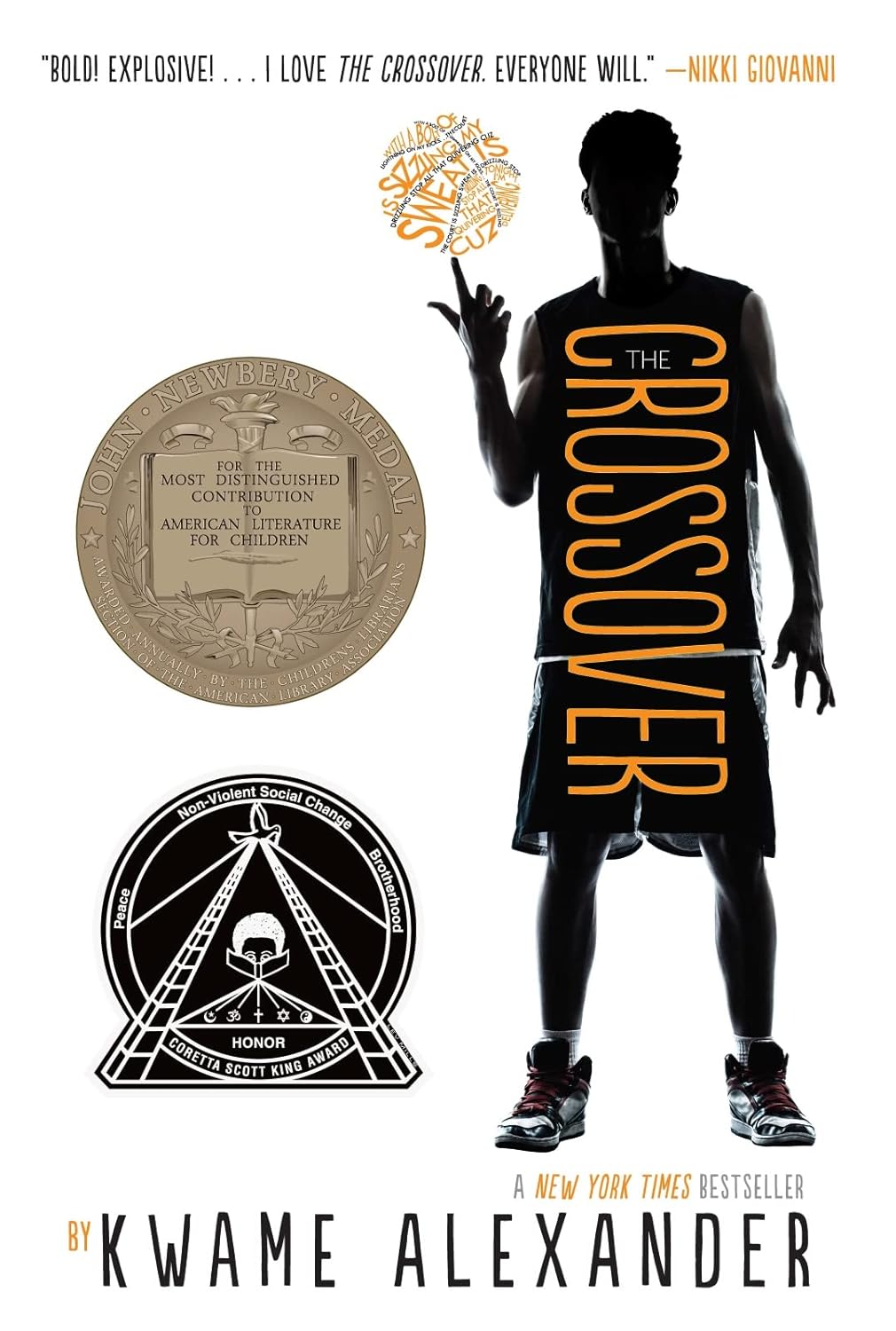
The Crossover by Kwame Alexander tells the powerful story of twin basketball stars navigating family, rivalry, first love, and loss—all in verse. This guide provides parents and teachers with reading level information, age recommendations, content insights, and discussion questions for this Newbery Medal-winning novel about brotherhood, growing up, and finding your voice.
For Parents
Find the right reading level for your child, understand the book’s portrayal of sudden loss and family crisis, and get conversation starters to help your child explore themes of sibling relationships, health, and processing grief.
For Teachers
Access grade-level guidance, reading metrics, character analysis support, and thematic discussion questions perfect for classroom use. This Newbery Medal winner offers rich opportunities for exploring verse novels, basketball culture, and family dynamics.
The Crossover at a Glance
Find on Amazon →| Author | Kwame Alexander |
| Published | 2014 |
| Grade Level | 5–7 (our assessment) |
| Recommended Age | 10–13 |
| Flesch-Kincaid Grade | 4.2 |
| Word Count | ~14,000 |
| Pages | 237 (standard hardcover) |
| Chapters | Poetic sections/poems (no traditional chapters) |
| Genre | Verse novel / realistic fiction / sports |
| Setting | Contemporary middle school and home |
| Awards | Newbery Medal (2015), Coretta Scott King Honor |
For official Lexile and AR levels, visit Lexile.com or AR BookFinder. ReadingVine provides independent editorial assessments.
What Reading Level Is The Crossover?
The Crossover is appropriate for grades 5–7, with a Flesch-Kincaid grade level of 4.2. The verse novel format means fewer words per page than traditional prose, making it visually accessible even to reluctant readers. However, the emotional content and thematic complexity require maturity beyond what the word count might suggest. The poetry uses vivid, economical language—each word carries weight and meaning.
Kwame Alexander’s writing style is distinctive and dynamic. He uses free verse poetry with varied line breaks, spacing, and visual arrangement to create rhythm and emotion. Some poems are concrete poems where the shape on the page mirrors the meaning (like basketball plays). The language includes basketball terminology, hip-hop references, and contemporary slang that will resonate with middle school readers. The verse format allows Alexander to convey complex emotions quickly and powerfully—grief, jealousy, love, fear—in ways that feel immediate and authentic.
While the low word count and verse format might suggest this is for younger readers, the story resonates most deeply with readers ages 10–13 who can understand first love, sibling rivalry that goes too far, parental health crises, and sudden loss. The book rewards readers who appreciate poetry, sports stories, and emotionally honest explorations of family and grief. It’s particularly effective for reluctant readers and boys, who often see themselves in Josh’s voice and the basketball-focused narrative.
What Age Is The Crossover Appropriate For?
The Crossover is most appropriate for readers ages 10–13. The story deals with a father’s sudden death from a heart attack, which is the emotional climax and requires maturity to process. Alexander handles the death and grief honestly but appropriately for middle-grade readers, showing both the devastation and the ways families support each other through loss.
Father’s death: Josh and Jordan’s father collapses during a basketball game but survives that incident. However, he later dies suddenly from a heart attack at home after continuing to ignore his worsening heart condition. The death is not graphic, but the loss is profound and the grief is portrayed honestly.
Health crisis and medical neglect: The father has a serious heart condition but refuses treatment, ignoring symptoms and doctor’s orders. This creates tension and ultimately leads to his death.
Sibling conflict: Josh and Jordan have a serious falling out. Josh accidentally injures Jordan during a moment of anger, which strains their relationship and fills Josh with guilt.
First romance: Jordan falls for a girl named Alexis, which creates jealousy in Josh. The romance is innocent but the emotions are real and sometimes painful.
Grief and emotional pain: The book portrays grief, guilt, and emotional suffering in honest ways. Josh blames himself for not preventing his father’s death, which may resonate with children who’ve experienced loss.
What’s NOT in the book: No graphic violence, no sexual content, no profanity (though some mild language typical of middle schoolers). The father’s death is sad but not traumatic or graphic. The book ends with the family beginning to heal, showing that while grief is permanent, life continues and families can support each other through the hardest times.
What Is The Crossover About?
Twelve-year-old Josh Bell and his twin brother Jordan are basketball stars. They’re identical twins with very different personalities—Josh loves his long dreadlocks (which he calls his locks) and wants to follow in his father’s basketball footsteps, while Jordan (nicknamed JB) is flashier and more social. Together, they dominate on the court, their father coaching them with wisdom and tough love.
Their father, Chuck “Da Man” Bell, was a professional basketball player in Europe before a knee injury ended his career. Now he coaches his sons and runs a youth basketball program. Their mother is the assistant principal at their school, which sometimes creates awkward moments but also keeps the family close. The family dynamics are loving but complicated—basketball is their bond, their language, and their dream.
Everything changes when Jordan falls for a girl named Alexis (called Miss Sweet Tea). Jordan becomes obsessed with Alexis, spending less time with Josh and more time texting and talking to her. Josh feels abandoned and jealous. The twin bond that’s always been unbreakable begins to fracture. Josh doesn’t know how to handle these feelings—he’s always shared everything with JB, but now JB has someone else who’s more important.
Meanwhile, their father is having health problems. He’s been diagnosed with hypertension and other heart issues, and his doctor has ordered him to change his diet, exercise, and take medication. But their dad is stubborn and proud. He refuses to follow medical advice, insisting he’s fine, eating unhealthy foods, and ignoring symptoms. Josh and his mother worry, but his father won’t listen. He keeps coaching, keeps pushing himself, keeps pretending everything is okay.
The tension between Josh and Jordan comes to a head during a basketball game. Josh, frustrated and angry about being pushed aside for Alexis, throws the ball at Jordan’s face during practice. Jordan gets a bloody nose and a black eye. The brothers stop speaking. Josh is filled with guilt and regret, but Jordan won’t forgive him. The silence between them is painful—they’ve never gone this long without talking, and Josh doesn’t know how to fix what he’s broken.
Their mother tries to help them reconcile, and their father tries to mediate, but the rift remains. Josh writes in his journal (many of the poems are his journal entries), processing his feelings about losing his brother to a girl, about his father’s health, about feeling alone and guilty and angry all at once.
During a championship basketball game, their father collapses on the court from a heart attack. Josh and Jordan watch in horror as paramedics work on him and he’s rushed to the hospital. He survives this incident, but continues refusing to take his health seriously. Later, at home, their father suffers a fatal heart attack and dies. The death is sudden and devastating. The family is shattered.
In the aftermath, Josh is consumed with grief and guilt. He blames himself for not making his father go to the doctor, for fighting with Jordan instead of appreciating the time they had together, for focusing on basketball and jealousy instead of what really mattered. Jordan is equally devastated. The brothers finally come back together, united in their grief and their need for each other.
The book’s final section deals with the family’s grief and healing. Their mother holds them together, showing strength while also allowing herself to grieve. Josh and Jordan reconnect, realizing that their bond is more important than any argument or any girl. They begin to process their father’s death, understanding that while he’s gone, his lessons and love remain with them. They play basketball in his honor, carrying forward his legacy.
The book ends with the family beginning to heal. The grief is still fresh and painful, but they’re facing it together. Josh finds his voice again—both on the court and in his poetry. The crossover of the title refers not just to a basketball move but to crossing over from childhood to a more mature understanding of life, loss, and what truly matters: family, love, and being there for the people who need you most.
The Crossover Characters
The Crossover Themes and Lessons
At its heart, The Crossover is about the bond between brothers and what happens when that bond is tested. Josh and JB have been inseparable their entire lives—twins, teammates, best friends. When Jordan starts dating Alexis, Josh feels abandoned and doesn’t know how to handle the jealousy and loss. His anger leads him to hurt Jordan, both physically and emotionally, and the guilt nearly destroys him. The book teaches that sibling relationships are precious and fragile, that jealousy can make us do things we regret, and that forgiveness and reconciliation—though difficult—are essential. The tragedy of their father’s death ultimately brings the brothers back together, showing that family bonds can survive conflict if both people are willing to repair them.
The book also explores grief and the sudden, devastating impact of loss. Their father’s death is unexpected—he’s there coaching one moment, gone the next. Josh’s grief is compounded by guilt: he wishes he’d forced his father to go to the doctor, wishes he’d appreciated the time they had instead of fighting with Jordan, wishes he could have one more conversation. The book portrays grief honestly, showing that it’s messy, painful, and doesn’t have a timeline. But it also shows that families can support each other through the worst losses, and that while the pain of loss never fully goes away, it’s possible to honor those we’ve lost by living fully and carrying forward their lessons and love.
Discussion questions for families:
- Why does Josh feel so jealous when Jordan starts dating Alexis? How could he have handled those feelings differently?
- Why does Josh’s father refuse to take care of his health? What does this teach about listening to doctors and taking medical advice seriously?
- How do Josh and Jordan’s relationship change throughout the book? What brings them back together?
- How does the verse novel format affect the way the story feels? Does the poetry make the emotions stronger?
How Many Pages and Chapters in The Crossover?
The Crossover has 237 pages but only about 14,000 words—significantly shorter than traditional novels of similar length because it’s written in verse. The book is divided into five sections rather than traditional chapters, with each section containing multiple poems of varying lengths. Some poems are just a few lines, while others span several pages. The white space and line breaks mean pages are quick to read.
For independent readers in the target age range (10–13), the book typically takes 2–3 hours to complete, or about 3–5 days of reading 30–45 minutes per day. The verse format makes it feel accessible and fast-paced. The basketball terminology and hip-hop style appeal to many middle school readers, particularly boys and sports fans. The emotional honesty and contemporary voice make it engaging even for reluctant readers.
As a read-aloud, The Crossover takes approximately 2–2.5 hours total. The poetry is wonderful for reading aloud—the rhythm, line breaks, and word choice create a musical quality that brings the story to life when spoken. The book provides excellent opportunities to discuss sibling relationships, first love, grief, and the importance of health. Many families and classrooms use it to teach verse novels, basketball culture, African American family dynamics, and processing loss. Teachers often pair it with discussions about poetry techniques and how form enhances meaning.
Books Similar to The Crossover
If your child enjoyed The Crossover, here are six similar books that explore themes of family, sports, growing up, and loss:
About Kwame Alexander
Kwame Alexander (born 1968) is a poet, educator, and children’s book author who has revolutionized middle-grade literature with his verse novels. The Crossover, published in 2014, won the Newbery Medal in 2015 and a Coretta Scott King Honor, bringing verse novels into the mainstream and proving that poetry could reach young readers, particularly boys and reluctant readers who often avoid traditional novels. Alexander was inspired to write The Crossover by his own love of basketball and his relationship with his father. He wanted to write a book that would appeal to middle school boys by combining sports action with real emotional depth. The verse format was deliberate—Alexander believes poetry’s economy and rhythm make stories more immediate and powerful, allowing readers to feel emotions viscerally rather than just read about them. The basketball terminology and hip-hop influenced language create an authentic voice that resonates with contemporary youth. Alexander researched heart disease and the particular risks facing African American men (who have higher rates of hypertension and heart disease) to make the father’s health crisis realistic and educational. The book has been credited with introducing countless young readers to poetry and showing that verse novels can be cool, relevant, and emotionally powerful. Many teachers report that reluctant readers, particularly boys, devour The Crossover because they connect with Josh’s voice, the basketball culture, and the short, visually accessible pages. Alexander drew on his own father’s basketball legacy and the complicated relationship many sons have with athletic fathers—the pressure to live up to expectations, the desire to make them proud, the fear of disappointing them. The grief and guilt Josh experiences after his father’s death reflect real emotions children feel when they lose a parent, particularly when they wonder if they could have prevented it. Alexander wanted to show that these feelings are normal and that it’s okay to grieve while also honoring the person’s memory by living fully. The book spawned a series with Rebound (a prequel about the father’s youth) and several companion books. Alexander has written many other verse novels including Booked (about soccer), The Playbook (sports and life advice), and collaborations with other authors. He founded the literacy program VERSIFY and continues to advocate for bringing poetry and diverse books to young readers. However, The Crossover remains his most celebrated work, fundamentally changing what middle-grade literature can look like and proving that poetry, sports, family, and grief can combine into a story that’s both accessible and profound.
The Crossover: Frequently Asked Questions
What happens to the dad in The Crossover?
Josh and Jordan’s father, Chuck Bell, collapses during a championship basketball game from a heart attack, but survives this initial incident. He had been diagnosed with hypertension and other heart problems earlier in the story, and his doctor ordered him to change his diet, exercise, and take medication. However, their father was stubborn and refused to follow medical advice, insisting he was fine. After collapsing during the game and being rushed to the hospital, he continues to ignore his worsening condition. Later, at home, he suffers a fatal heart attack and dies suddenly. His death is the emotional climax of the book and devastates the family. The tragedy is particularly painful because it might have been prevented if he had taken his health seriously and followed his doctor’s orders. His death brings Josh and Jordan back together after their falling out and teaches them painful lessons about what truly matters in life.
Is The Crossover written in verse?
Yes, The Crossover is a verse novel, meaning the entire story is written in free verse poetry rather than traditional prose. Each “chapter” is actually a poem, with some poems just a few lines and others spanning several pages. Author Kwame Alexander uses line breaks, spacing, and visual arrangement to create rhythm and convey emotion. The verse format makes the book quick to read—it’s only about 14,000 words despite being 237 pages—and the white space and short lines make it visually accessible, particularly for reluctant readers. Alexander uses various poetic techniques including concrete poems (where the shape on the page mirrors the meaning, like basketball plays), repetition, wordplay, and rhythm. The basketball terminology and hip-hop influenced language create an authentic contemporary voice. Many readers find that the verse format makes the emotions more immediate and impactful than traditional prose would, and it’s particularly effective for the grief sections where words feel inadequate anyway.
What grade level is The Crossover?
The Crossover is appropriate for grades 5–7 (ages 10–13). The Flesch-Kincaid reading level is 4.2, which seems low, but this is misleading—the verse format with short lines and white space creates a low word count and reading level score, but the emotional content is sophisticated and requires maturity. The themes—a father’s sudden death, sibling conflict, first love, grief and guilt—are best understood by fifth graders and older who can process these complex emotions. The book is often taught in middle school (grades 6–8) where students can fully appreciate both the poetry techniques and the emotional depth. Strong fifth graders can read it independently, though they may need support discussing the father’s death and Josh’s grief. The verse format makes it particularly accessible to reluctant readers and boys who might avoid longer traditional novels. The basketball focus, contemporary language, and authentic voice appeal strongly to middle school readers, especially athletes and sports fans.
Why does Josh throw the ball at Jordan in The Crossover?
Josh throws the ball at Jordan’s face during basketball practice out of jealousy, frustration, and anger about being pushed aside. Jordan has fallen for a girl named Alexis and has become obsessed with her, spending all his time texting her, talking about her, and being with her instead of with Josh. Josh feels abandoned and replaced—he and Jordan have been inseparable their entire lives as twins and basketball teammates, and suddenly Josh feels like he doesn’t matter to Jordan anymore. During practice, Josh’s frustration boils over and he deliberately throws the ball hard at Jordan’s face, giving him a bloody nose and black eye. The moment is impulsive and fueled by anger, but Josh immediately regrets it. This incident causes a serious rift between the brothers—they stop speaking to each other, which is devastating for both of them. Josh is consumed with guilt, and Jordan won’t forgive him. The silence between them represents the biggest crisis of their relationship and shows how jealousy and unprocessed emotions can make you hurt the people you love most.
Is The Crossover a true story?
No, The Crossover is fiction, not a true story. However, Kwame Alexander drew inspiration from real elements of his life. He loves basketball and incorporated that passion into the story. His own father was important to him, and he explored the father-son relationship through Chuck and his sons. The health crisis facing African American men—particularly higher rates of hypertension and heart disease—is real, and Alexander wanted to address this through the father’s storyline. While the specific events and characters are fictional, the emotions, family dynamics, and basketball culture feel authentic because Alexander drew on real experiences, relationships, and community knowledge. The verse format and contemporary voice reflect how Alexander believes young people today think and speak. Many readers find the story so emotionally true and the characters so real that they connect deeply with Josh’s experience, even though it’s not based on a specific true event. The book’s power comes from its emotional honesty and authentic portrayal of brotherhood, family, sports culture, and grief rather than from being based on actual events.
What is the main message of The Crossover?
The main message is that family and relationships are more important than anything else, and that we should appreciate and prioritize the people we love while we have them. Josh learns this lesson painfully—he’s so focused on basketball, so consumed with jealousy over Jordan’s girlfriend, and so caught up in his own hurt feelings that he doesn’t appreciate his father’s time or his relationship with Jordan until it’s too late. His father’s sudden death teaches him that life is fragile and unpredictable, and that what we think matters (like winning games or being the best player) is less important than being there for the people who love us. The book also teaches about the dangers of ignoring health problems—the father’s refusal to take his condition seriously leads to his death, showing young readers that medical advice should be taken seriously. Finally, the book explores forgiveness and reconciliation—Josh and Jordan’s relationship is damaged by jealousy and anger, but they ultimately reconcile, showing that sibling bonds can survive conflict if both people are willing to repair the relationship. The “crossover” of the title refers both to a basketball move and to crossing over from childhood innocence to a more mature understanding of what truly matters in life.
Does The Crossover have a sequel?
There is no direct sequel to The Crossover continuing Josh and Jordan’s story, but Kwame Alexander wrote Rebound (2018), which is a prequel focusing on their father Chuck “Da Man” Bell’s youth. Rebound tells the story of Chuck as a twelve-year-old boy dealing with his own father’s death and discovering basketball as a way to heal. It’s also written in verse and explores similar themes of grief, family, and finding yourself through sports. While it’s not a sequel, it enriches The Crossover by giving readers Chuck’s backstory and showing how his own experiences with loss shaped who he became as a father and coach. Alexander has also written other verse novels including Booked (about soccer), The Playbook (sports and life advice), and solo (about a boy who loves soccer and music). These books share The Crossover’s style and themes but feature different characters and stories. For readers who loved The Crossover, Rebound offers the closest continuation by exploring the Bell family history and showing where Chuck’s basketball wisdom and life lessons came from.
What are the main themes in The Crossover?
The main themes include brotherhood and the twin bond—Josh and Jordan’s relationship is tested by jealousy and conflict but ultimately proves unbreakable. Family and legacy are central, showing how fathers pass wisdom to sons and how family bonds sustain us through tragedy. Grief and loss are explored honestly through the father’s unexpected death and the family’s painful journey through mourning. Growing up and maturity appear as Josh learns that life involves change, that relationships evolve (like Jordan dating), and that loss is part of life. Basketball serves as a metaphor for life—teamwork, strategy, practice, and resilience on the court mirror life lessons. First love and jealousy are examined through Jordan’s relationship with Alexis and Josh’s painful feelings of being replaced. Health and taking medical advice seriously is highlighted through the father’s refusal to care for his heart condition, teaching that ignoring health problems can have devastating consequences. Finally, forgiveness and reconciliation show that relationships damaged by anger can heal if both people are willing to work at it.