
 = Partner Site
Ghost Reading Level: A Complete Guide
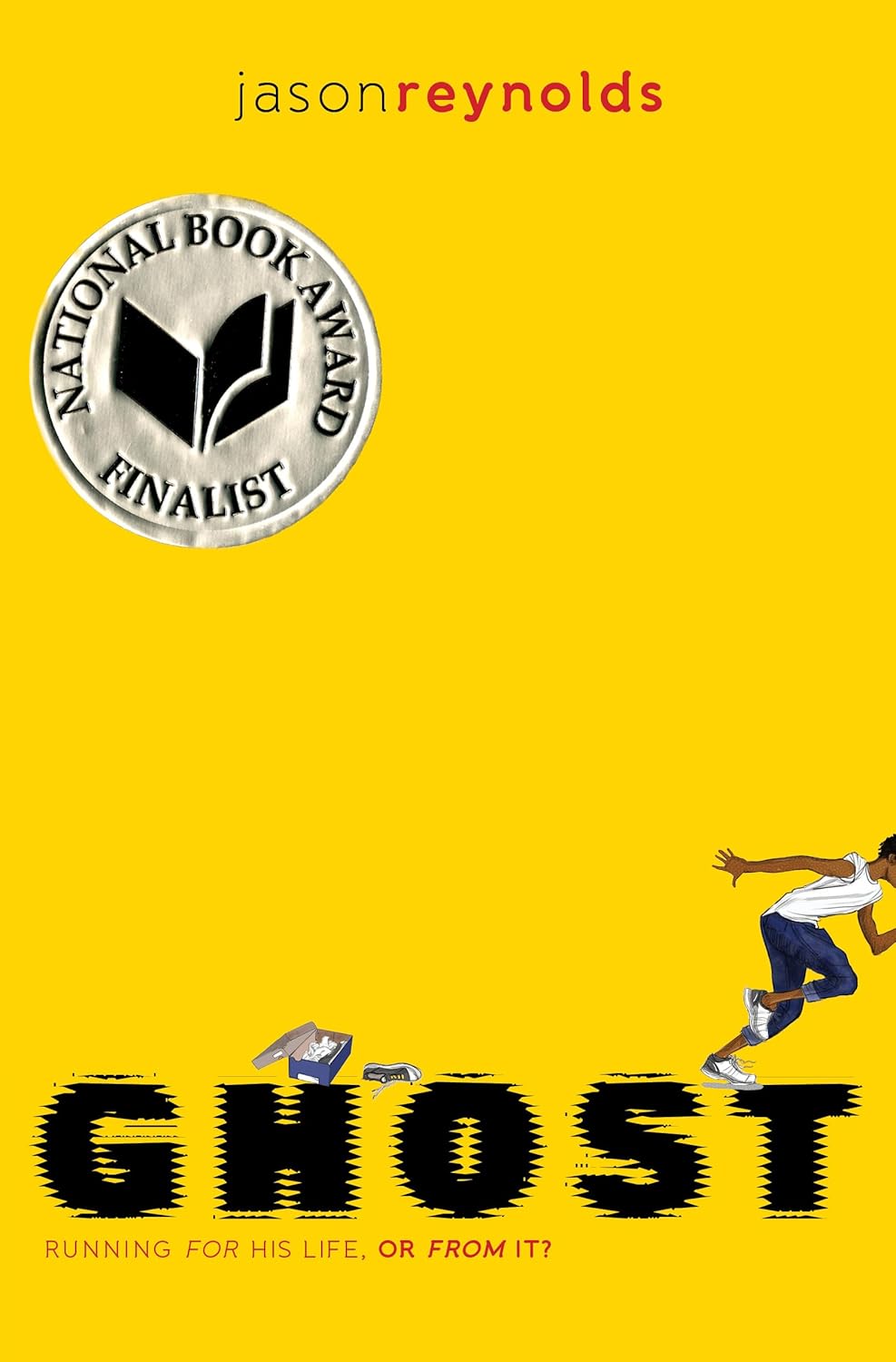
Ghost, written by Jason Reynolds, is a 180-page realistic fiction novel and the first book in the Track series — four linked novels, each narrated by a different member of the Defenders track team, each carrying something heavy from before they ever laced up their spikes. Castle Crenshaw, known to everyone as Ghost, is fast. He discovered this on the night his father came after him and his mother with a gun, and Ghost ran — faster than he knew he could, faster than anyone had ever seen a kid run — and kept running. Now his father is in prison, Ghost lives in the projects with his mother who works double shifts, and all that speed has nowhere to go except into trouble. Then he sees an elite middle school track team practicing and, without thinking, races them. Coach sees something. Ghost makes the team. And the work of turning raw speed into something purposeful — and turning a boy who has been running away from something into one who can run toward it — begins. A National Book Award Finalist for Young People’s Literature, winner of the Cybils Award and the Charlotte Huck Award, Reynolds’s debut entry in the Track series established one of the most widely read contemporary middle-grade sports series in American publishing. This guide covers reading level, age appropriateness, content, the Track series, themes, and similar books.
For Parents
The first book in the Track series — about a boy whose raw speed comes from the worst night of his life, and a coach who sees what it could become. Ages 10–14, grades 4–7. Content: Ghost’s father shot at him and his mother — this is the foundational trauma of the book and is depicted directly. Gun violence, poverty, and an incarcerated parent are present throughout. No graphic content beyond the central incident. The Track series is best read in order.
For Teachers
A grades 4–7 classroom and independent reading staple — one of the most taught contemporary middle-grade novels about a Black male protagonist, mentorship, and what it means to run toward something rather than away from it. National Book Award Finalist; Cybils Award; Charlotte Huck Award. Reynolds was the National Ambassador for Young People’s Literature 2020–2022. The Track series is most productively read in order; this is the entry point.
Ghost at a Glance
Find on Amazon →| Author | Jason Reynolds |
| Published | 2016 (Atheneum Books for Young Readers) |
| Grade Level | 4–7 (our assessment) |
| Recommended Age | 10–14 |
| Lexile | 730L |
| ATOS Level | 4.6 |
| Word Count | 39,562 |
| Pages | 180 |
| Genre | Realistic fiction / sports |
| Series | Track, Book 1 of 4+ (Ghost → Patina → Sunny → Lu) |
| Setting | Contemporary; urban United States |
| Awards | National Book Award Finalist (YPL); Cybils Award (2016); Charlotte Huck Award (2017) |
For official Lexile and AR levels, visit Lexile.com or AR BookFinder. ReadingVine provides independent editorial assessments.
What Reading Level Is Ghost?
Lexile 730L, ATOS 4.6, word count 39,562, interest level grades 3–8. Our assessment: grades 4–7, ages 10–14. Reynolds’s prose in Ghost’s first-person narration is vivid, fast-moving, and grounded in Ghost’s specific voice — funny and angry and observant in equal measure. The reading challenge is emotional and thematic rather than linguistic; the content (gun violence, incarcerated parent, poverty) requires maturity to process fully. At 180 pages and 39,562 words, most readers in the target range complete it in four to seven days. For official scores, visit Lexile.com or AR BookFinder.
What Age Is Ghost Appropriate For?
Ages 10–14, grades 4–7. Content worth noting:
The novel’s foundational event: when Ghost was very young, his father came after him and his mother with a gun and actually fired at them. Ghost discovered his speed running from his father that night. This is not depicted graphically but is described directly in Ghost’s narration and is the emotional core of the book. Ghost’s father is in prison; his mother works multiple jobs; they live in poverty. These elements are handled with honesty rather than exploitation but are genuinely present throughout. Parents of younger readers in the interest range (ages 10–11) should be aware before sharing.
What Is Ghost About?
Castle Crenshaw has been running since the night his father pointed a gun at him and his mother. He didn’t know he was fast until then. He’s known ever since. He runs everywhere — not training, not competing, just running, the way some people pace when they’re anxious. He gets in trouble at school. He steals a pair of gold sneakers from a running store. He is, in his own word, a mess.
Then he sees an elite middle school track team practicing at a local track and, without thinking, sprints against them from a standing start — and keeps up. Coach, who runs the Defenders, sees it. He recruits Ghost. Ghost has never trained, has never competed, has never thought about running as anything other than what you do when something is chasing you. Coach sees something different: the fastest natural sprinter he has encountered in years, with everything required to be genuinely exceptional — if he can stay out of trouble long enough to develop it.
The novel follows Ghost’s first season on the Defenders — learning to train, learning to compete, meeting Patina and Sunny and Lu, managing his anger, managing his past, and figuring out what it means to run toward something rather than away from something. Coach’s philosophy — “you can’t run away from who you are, but what you can do is run toward who you want to be” — is the book’s central argument, and Ghost has to decide whether he believes it.
Coach — The Novel’s Central Mentor Figure
Coach is one of the more fully realized mentor figures in contemporary middle-grade fiction — not because he is warm and encouraging but because he is demanding, specific, and honest in ways that Ghost is not accustomed to. He sees Ghost’s talent clearly, names it without flattery, and connects it to standards Ghost has to meet before it matters. He also, in ways that become clear across the novel, carries his own history — one that parallels Ghost’s in specific ways that the novel eventually reveals.
The relationship between Ghost and Coach is the book’s emotional spine, and it is more complicated than the standard mentor-athlete template. Coach is not trying to save Ghost; he is offering Ghost something real and asking Ghost to meet it. The distinction matters — and Reynolds handles it carefully enough that neither figure becomes a type.
The Track Series
Ghost is Book 1 of the Track series: Ghost (2016), Patina (2017), Sunny (2018), Lu (2018), and a fifth book Coach (2025). Each book follows a different team member in their own narration, with distinct voices and distinct weights to carry. The series is best read in order — Ghost establishes the team and the world; each subsequent book adds a narrator whose situation was introduced in the previous book. Readers who know Ghost when they meet Patina, and know both when they meet Sunny, feel the team’s accumulating weight in ways that standalone reading cannot replicate.
Ghost Themes and Lessons
Reynolds does not write Ghost as a damaged kid who needs fixing. Ghost is smart, funny, observant, and full of a specific kind of life — his narration is one of the most compelling in recent middle-grade fiction. What he is also, underneath all of that, is scared and grieving in ways he doesn’t have language for yet. The track team doesn’t give him the language; it gives him a place to be that is structured enough to hold him while he finds it himself.
The stealing incident — Ghost steals gold sneakers from a running store because he wants them and can’t afford them — is the novel’s most morally specific moment. It is not redeemed by good intentions or explained away by circumstances. Ghost knows it was wrong; Coach knows it was wrong; and the consequences are real. Reynolds treats Ghost’s moral agency with the same seriousness he treats Ghost’s athletic talent: both are real, both matter, and neither excuses the other.
Discussion questions: Why does Ghost run everywhere — what is he running from and what is he running toward? What does Coach see in Ghost that Ghost can’t yet see in himself? Why did Ghost steal the sneakers — and what does it cost him? What does the track team give Ghost that his regular life doesn’t?
Books Similar to Ghost
About Jason Reynolds
Jason Reynolds was born on December 6, 1983, in Washington, D.C., and grew up in Oxon Hill, Maryland. He did not read a book of his own choosing until he was seventeen — a collection of Tupac Shakur’s poetry — and has spoken extensively about being the kind of child who falls through the cracks of traditional literacy instruction. He holds a degree from the University of Maryland and began his career as a poet before turning to fiction. His debut novel, When I Was the Greatest, was published in 2014. Ghost (2016) was his first middle-grade novel and established the Track series that would become his most widely taught work. He is the author of more than twenty books for children and young adults, including the Long Way Down series, Look Both Ways (National Book Award Finalist), and All American Boys (co-written with Brendan Kiely). He served as the National Ambassador for Young People’s Literature from 2020 to 2022. He lives in Washington, D.C.
Ghost: Frequently Asked Questions
What reading level is Ghost by Jason Reynolds?
Lexile 730L, ATOS 4.6, word count 39,562, grades 3–8. Our assessment: grades 4–7, ages 10–14. Vivid, fast-moving first-person narration; reading challenge is emotional and thematic rather than linguistic. For official scores, visit Lexile.com or AR BookFinder.
What is Ghost about?
Castle “Ghost” Crenshaw discovers his speed running from his father, who shot at him and his mother when Ghost was young. His father is in prison; Ghost gets in trouble; his talent has nowhere useful to go. When he impulsively races an elite track team, Coach sees something extraordinary and recruits him. The novel follows Ghost’s first season on the Defenders — learning to train, managing his past, and figuring out what it means to run toward something rather than away from it.
Is Ghost part of a series?
Yes — the Track series: Ghost (2016), Patina (2017), Sunny (2018), Lu (2018), and Coach (2025). Each book follows a different team member. The series is best read in order; Ghost is the entry point that establishes the team and Coach.
Is Ghost appropriate for middle schoolers?
Grades 4–7, ages 10–14. The foundational content: Ghost’s father shot at him and his mother when Ghost was young. This is described directly in Ghost’s narration and is the book’s emotional core. Poverty and an incarcerated parent are present throughout. Content is handled honestly rather than graphically; parents of younger readers in the range should be aware before sharing.
Who is Jason Reynolds?
Jason Reynolds is the author of more than twenty books for children and young adults, including the Track series, Long Way Down, Look Both Ways, and All American Boys. He served as the National Ambassador for Young People’s Literature from 2020 to 2022. He grew up not reading by choice until age seventeen, an experience that shapes how he writes for young people who don’t see themselves as readers.