
 = Partner Site
Sunny Reading Level: A Complete Guide
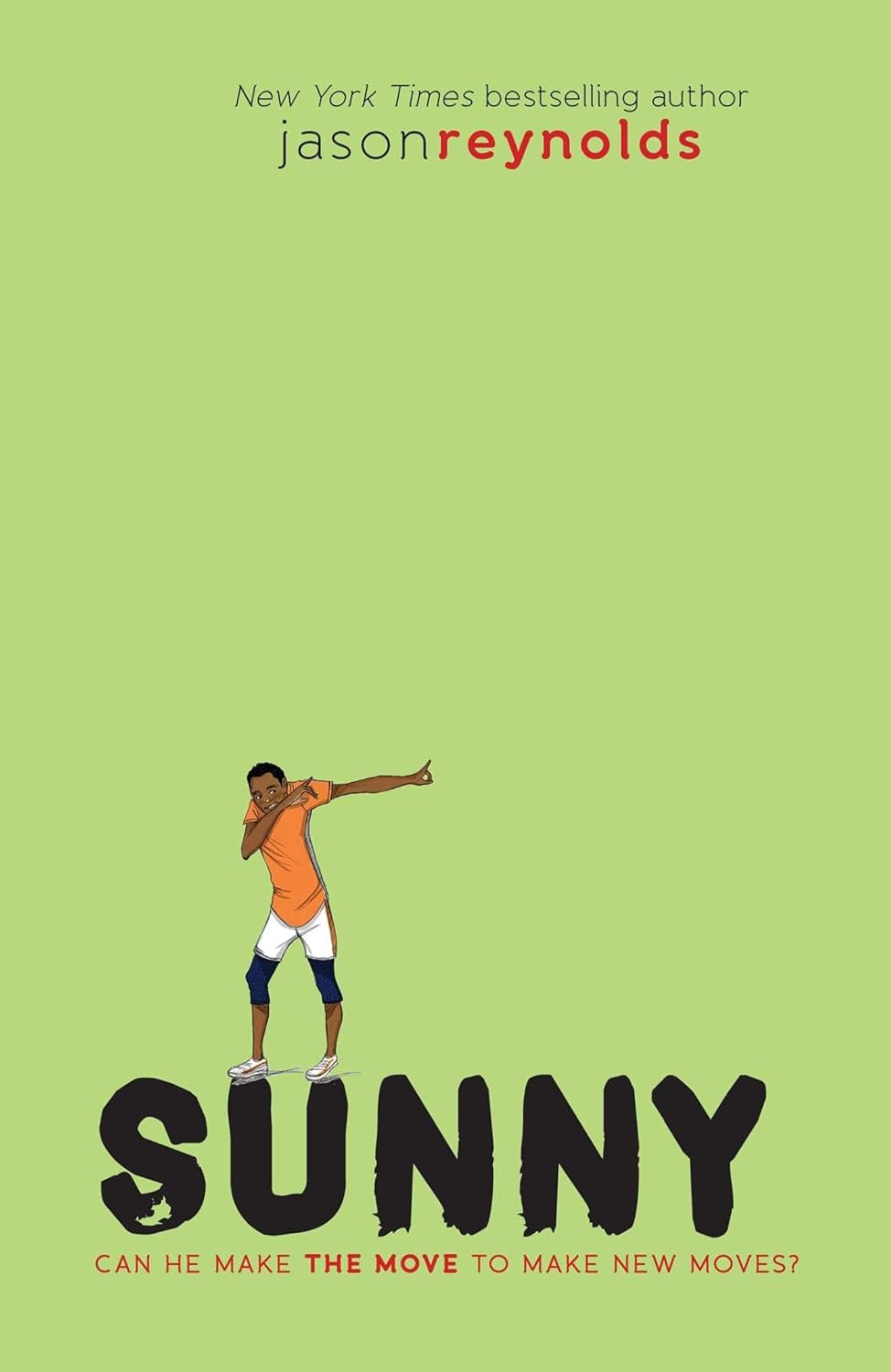
Sunny, written by Jason Reynolds, is the third book in the Track series — four linked novels, each narrated by a different member of the Defenders track team, each with a distinct voice and a distinct weight to carry. Sunny Lancaster is the most cheerful kid on the team — always ready with a goofy smile and something nice to say, the chillest dude on the Defenders. But Sunny’s life hasn’t always been sun-beamy bright. Sunny is a murderer. Or so he has always believed: he was born on the same day his mother died of a rare blood condition, and his father Darryl — who insists on being called by his first name rather than Dad — seems to hold that birth and that death as two sides of the same coin. Darryl makes Sunny run because Sunny’s mother was fast. Running is the only thing Darryl has ever wanted from him. Nobody knows that Sunny hears inaudible sounds and rhythms that make him dance to an interior beat — sounds Reynolds renders on the page as “tickboom” and “hunger-growl” and “skwilurp bleep blurp squish.” Nobody knows, until one day near the finish line of a race, Sunny just stops running. Published in 2018 by Atheneum Books with starred reviews from Kirkus and Booklist, it is the most formally inventive of the four Track books — the most musical, the most interior, and the most demanding of a reader willing to slow down and listen. This guide covers reading level, age appropriateness, content, the Track series, and similar books.
For Parents
The third book in the Track series — narrated by the team’s sunniest member, who carries the belief that he killed his mother by being born. Ages 10–14, grades 4–7. Content: grief over a parent’s death, a father who is emotionally withholding and sometimes cruel, and Sunny’s stream-of-consciousness voice that renders his interior experience in invented sounds and rhythms. Read Ghost first; the series deepens considerably across all four books.
For Teachers
A grades 4–7 classroom text and one of the Track series’ most formally interesting entries — Sunny’s stream-of-consciousness, onomatopoetic narration is excellent material for discussions of voice, point of view, and how prose style can reflect a character’s inner life. Booklist starred review noted “a musicality to the text” and called it a “beautiful opportunity for discussion about viewpoint, privilege, loss, and diversity of experience.” Reading aloud is specifically recommended.
Sunny at a Glance
Find on Amazon →| Author | Jason Reynolds |
| Published | 2018 (Atheneum Books for Young Readers) |
| Grade Level | 4–7 (our assessment) |
| Recommended Age | 10–14 |
| Lexile | 700L |
| ATOS Level | 4.5 |
| Word Count | 24,767 |
| Genre | Realistic fiction / sports |
| Series | Track, Book 3 of 4 (Ghost → Patina → Sunny → Lu) |
| Setting | Contemporary; urban United States |
For official Lexile and AR levels, visit Lexile.com or AR BookFinder. ReadingVine provides independent editorial assessments.
What Reading Level Is Sunny?
Lexile 700L, ATOS 4.5, interest level grades 4–8. Our assessment: grades 4–7, ages 10–14. The formula scores reflect the prose text accurately for most of the book, but Sunny’s voice introduces a complication: his stream-of-consciousness narration, with invented onomatopoeic words and a scattered, musical quality, is more demanding to process than the Lexile suggests — Redeemed Reader specifically recommended reading this one aloud. The reading challenge is less about decoding than about tuning in to a very specific frequency. Once a reader is on Sunny’s wavelength, the book moves quickly; before that, patience is required. For official scores, visit Lexile.com or AR BookFinder.
Read the Track Series in Order
The Track series works best read in order: Ghost (2016), Patina (2017), Sunny (2018), Lu (2018). Each book follows a different team member in their own narration, and reading in order means the team feels like a team — readers who meet Sunny in Book 3 will know Ghost and Patina well enough that their presence adds weight. Sunny can be read as a standalone and the essential information is provided, but the series rewards sequential reading. See our Ghost guide for the full series introduction.
What Is Sunny About?
Sunny Lancaster is thirteen years old and the fastest miler on the Defenders track team. He is also relentlessly, almost aggressively cheerful — a quality that his teammates find slightly baffling and that the reader gradually understands as armor. Sunny came into the world on the same day his mother left it, dying of a rare blood condition that stopped her heart. His father Darryl — who insists on being called Darryl, not Dad — seems to have decided that Sunny’s purpose is to carry his mother’s speed forward. Running is all Darryl has ever wanted from his son.
Sunny runs. He runs well. He runs without joy. He hears rhythms and sounds that nobody else seems to hear — interior music that he has never been able to explain, that makes him want to dance when he’s supposed to be running. His homeschool tutor Aurelia, who understands him better than most, has given him a diary. He writes in it. He dances when no one is looking. And then, near the finish line of a race, Sunny just stops. Stops running. Coach doesn’t know what to make of it.
The novel follows Sunny through the aftermath of that moment — what it means that he stopped, what it would mean to keep going, what his father’s silence and his mother’s absence have cost him, and whether he can find a way to run for himself rather than for a ghost.
Sunny’s Voice — The Most Distinctive in the Track Series
Each of the four Track novels has its own voice and integrity, but Sunny’s voice may be the most distinctive and the most demanding to enter. His thoughts are “all over my head. Some are in the back and some are in the front and some are tucked behind my ears and others pressing hard against my eyes.” The sounds he hears are rendered as invented words — “tickboom,” “hunger-growl,” “skwilurp bleep blurp squish” — that won’t mean anything to a reader who tries to decode them logically but will resonate immediately for a reader who feels them.
Booklist’s starred review described “a musicality to the text” and noted that Reynolds’s “entrancing grasp of voice” pulls readers into Sunny’s world. The practical advice from multiple reviewers is consistent: read it aloud. Sunny’s voice is designed to be heard as much as seen, and the rhythm of the invented sounds and the scattered sentences lands differently spoken than silent. For classroom use, the voice is exceptional material for discussions of how prose style can reflect a character’s interior state — the scattered, sound-driven narration is not a stylistic affectation but a portrait of how Sunny actually processes the world.
Sunny Themes and Lessons
The novel’s central wound is specific and quietly devastating: Sunny has spent his entire life believing, in some not-entirely-rational but entirely felt way, that he is responsible for his mother’s death. This belief has shaped every relationship he has — his father’s coldness, his own relentless sunniness, his inability to run with joy — without ever being examined directly. The novel is about what happens when that wound is finally looked at.
The dance thread is the book’s most hopeful element: the interior rhythms Sunny hears, which have always seemed like a problem or a distraction, turn out to be who he actually is. The question of what it would mean to let himself be that person — to dance instead of run, to be Sunny instead of performing Sunny — is what the novel is really asking.
Discussion questions: Why does Sunny insist on being called “sunny” — what is he protecting? What do the sounds Sunny hears tell us about how he experiences the world? Why does Darryl refuse to be called Dad — what does that refusal cost Sunny? Why did Sunny stop running at the finish line?
Books Similar to Sunny
About Jason Reynolds
See our Ghost guide for a full biography of Jason Reynolds. Sunny was published in April 2018, the same year as the fourth Track book, Lu. Reynolds has said that of the four Track narrators, Sunny was the most personally challenging to write — the stream-of-consciousness voice required him to find a register that was both genuinely interior and genuinely readable. The Booklist starred review noted that Sunny’s voice is “deliberately more scattered and onomatopoetic than the series’ prior narrators” — a formal choice that is inseparable from the character’s emotional situation.
Sunny: Frequently Asked Questions
What reading level is Sunny by Jason Reynolds?
Lexile 700L, ATOS 4.5, interest level grades 4–8. Our assessment: grades 4–7, ages 10–14. The formula scores are accurate for most of the prose, but Sunny’s stream-of-consciousness narration is more demanding to process than the Lexile suggests — reading aloud is specifically recommended. For official scores, visit Lexile.com or AR BookFinder.
What is Sunny about?
Sunny Lancaster, the cheerful miler of the Defenders track team, carries the belief that he killed his mother by being born on the day she died. His father Darryl forces him to run to honor her memory. Sunny hears rhythms nobody else can hear, wants to dance, and one day — near the finish line — just stops running. The novel follows what that stopping means and what comes after it.
Do I need to read Ghost before Sunny?
Reading in order (Ghost → Patina → Sunny → Lu) is recommended — the team has more weight when you know the other members. Sunny can be read as a standalone; the essential context is provided. But the series rewards sequential reading, and Ghost is the natural starting point.
Why is Sunny’s narration so unusual?
Sunny’s voice is stream-of-consciousness, with invented onomatopoetic words (“tickboom,” “hunger-growl”) and thoughts that are “all over his head.” This reflects how Sunny actually processes the world — through sound and rhythm rather than linear thought. Multiple reviewers recommend reading it aloud, where the musicality of the prose becomes clearer. It is the most formally distinctive of the four Track narrators.