
 = Partner Site
Booked Reading Level: A Complete Guide
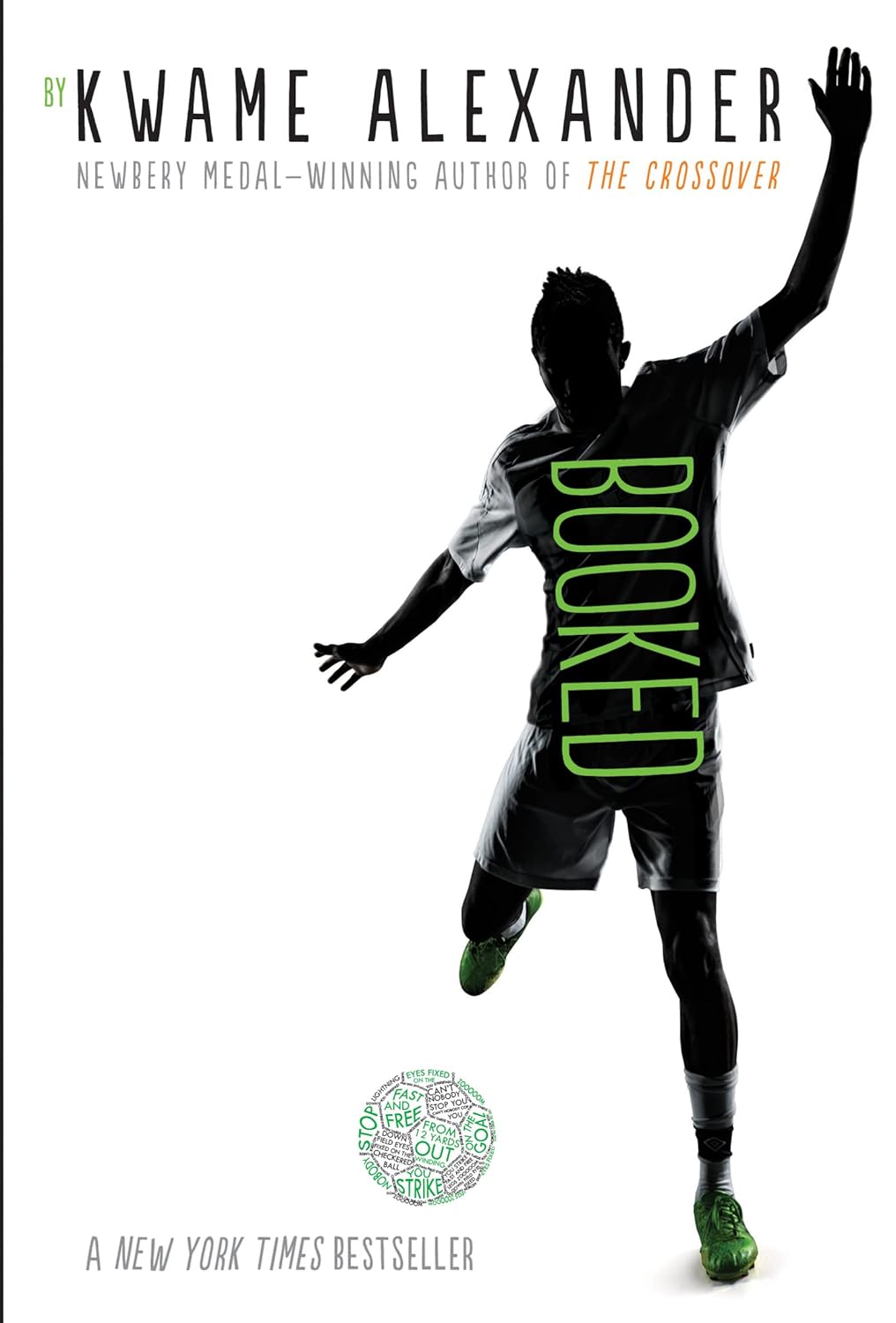
Booked, written by Kwame Alexander, is a 320-page novel in verse about twelve-year-old Nick Hall, who loves soccer with everything he has and hates books with almost equal intensity. His father, a linguistics professor who believes in the transformative power of words, forces Nick to study the dictionary — the last place Nick wants to be when he could be on the field. Then his parents’ marriage starts to crack. A bully makes school miserable. There’s a girl named April who makes it less so. And there’s The Mac — a rapping, enthusiastic librarian who keeps putting books in Nick’s hands and, gradually, finds the ones that stick. A follow-up to Alexander’s Newbery Medal-winning The Crossover (though fully readable as a standalone), it uses free verse, acrostics, haiku, and other poetic forms across its pages, with the pacing of a soccer match: at times leisurely and at others frenetic. It was on the New York Times bestseller list, and received starred reviews from Kirkus and Horn Book. The Chicago Tribune called it proof that “Kwame Alexander has the magic to pull off this unlikely feat, both as a poet and as a storyteller.” This guide covers reading level, the verse format, content, themes, and similar books.
For Parents
A fast, fun novel in verse about a soccer-obsessed twelve-year-old who hates books and discovers, slowly and reluctantly, that words have power. Ages 10–13, grades 5–7. Mild content: the parents’ troubled marriage is a sustained theme; a medical emergency occurs midway through. No other content concerns. A proven reluctant-reader gateway, especially for boys who play sports.
For Teachers
A grades 5–7 classroom and independent reading text — one of the most reliable reluctant-reader gateways for middle school boys, particularly those who play soccer or who resist reading. National Book Award longlist; New York Times bestseller; starred reviews from Kirkus and Horn Book. Uses multiple verse forms (free verse, acrostics, haiku) that make excellent entry points for poetry writing units. Stands alone; knowledge of The Crossover not required.
Booked at a Glance
Find on Amazon →| Author | Kwame Alexander |
| Published | 2016 (HMH Books for Young Readers) |
| Grade Level | 5–7 (our assessment) |
| Recommended Age | 10–13 |
| Lexile | 660L (verse format; see below) |
| ATOS Level | 3.9 |
| Word Count | 19,652 |
| Pages | 320 |
| Format | Novel in verse (free verse, acrostics, haiku, and others) |
| Genre | Realistic fiction / sports / verse novel |
| Setting | Contemporary; suburban United States |
For official Lexile and AR levels, visit Lexile.com or AR BookFinder. ReadingVine provides independent editorial assessments.
What Reading Level Is Booked?
Lexile 660L, ATOS 3.9, interest level grades 5–8. As with all novels in verse in this catalog, the formula scores understate the reading experience — 660L and ATOS 3.9 reflect the compressed, white-space-heavy text of verse rather than the full emotional and thematic demands of the content. The 19,652 word count explains the Lexile: with 320 pages and only ~60 words per page, the formula sees simple prose where a reader experiences a complete middle-grade narrative. Our assessment: grades 5–7, ages 10–13. The interest level and emotional content are clearly grades 5–7; the verse format makes the book considerably more accessible to read than a prose novel of equivalent depth. For official scores, visit Lexile.com or AR BookFinder.
What Is Booked About?
Nick Hall is twelve, Black, and the best midfielder his age in the county. Soccer is everything. School is what you do in between soccer. Books are what his father, a linguistics professor who genuinely believes that words can save your life, forces on him — including a copy of Merriam-Webster’s that Nick is supposed to study like a playbook. Nick would rather be practicing free kicks.
The year falls apart in familiar ways: his parents’ marriage is in trouble, with arguments that carry through the walls at night. Liam, a bully, makes every school day a negotiation. April, who is new and plays guitar and has read more books than Nick has heard of, makes certain school days significantly better. And The Mac — the school’s rapping, book-pushing, genuinely enthusiastic librarian — keeps putting novels in Nick’s hands, finding the ones that catch despite himself: soccer fiction, then other kinds. A medical emergency halfway through the book forces Nick to be still in ways he has been avoiding, and in that stillness, something shifts.
The novel is fundamentally about a father and a son and the specific, complicated love between them — a love that expresses itself in the father’s obsession with language and in Nick’s resistance to it, and that becomes visible to both of them in a crisis.
The Verse Forms — What Alexander Does with the Page
Booked uses a wider range of poetic forms than most novels in verse. Alexander moves between free verse, acrostic poems, haiku, list poems, and other structures depending on what a moment requires — the soccer scenes are fast and kinetic, the interior moments are more measured, the wordplay sequences reflect Nick’s gradually developing interest in language. Horn Book’s starred review noted that “Alexander skillfully juggles verse styles to realistically capture Nick’s humor and smarts, passion for soccer, and vulnerability.”
For classroom use, the variety of forms makes the book an excellent poetry writing entry point. Each time Alexander shifts form, there’s a reason — the acrostics reveal character in a different way than the free verse does; the dictionary definitions that open each section signal Nick’s relationship with language at that point in the story. Asking students to identify which form is used in a given poem and why is one of the most productive close-reading exercises the book offers.
The Mac — The Rapping Librarian
The Mac is one of the more memorable teacher-mentor figures in recent middle-grade fiction — a school librarian who raps, who is genuinely enthusiastic about books to a degree that Nick initially finds alarming, and who has the specific skill of matching the right book to the specific reader. He doesn’t try to make Nick love books in general; he finds the books that Nick, specifically, will not be able to put down. This is a portrait of what great librarianship actually looks like, and it is one of the reasons the book appears on so many school reading lists.
Relationship to The Crossover
Booked is described as a follow-up to Alexander’s Newbery Medal-winning The Crossover (2015) — both are novels in verse about Black middle-school athletes, both use sports as a structural metaphor for the emotional content, and both center on the relationship between a father and a son. However, they do not share characters or plot; Booked is fully readable as a standalone. Readers who love The Crossover will find Booked recognizable in structure and spirit; readers who encounter Booked first are not missing context. The two books are best thought of as companions rather than sequels.
Booked Themes and Lessons
The novel’s central argument — that words have power, that language is not something that happens to you but something you can use — is delivered through the specific mechanism of a boy who resists this argument and is proven wrong about it through experience rather than instruction. Nick does not become a book-lover because his father tells him to. He becomes one because The Mac finds the right books, and because his own life creates situations in which the words he’s been absorbing turn out to be useful. This is a more honest argument for reading than most books make, because it acknowledges that readers have to meet their books halfway.
The dictionary definitions that appear at the beginning of each chapter are one of the book’s most distinctive structural choices — and one of the most productive for classroom discussion. Alexander uses the dictionary not as a pedantic gesture but as a way of signaling what each section will be about in a language Nick is learning to love. Tracking which words appear and why is one of the richest exercises the book offers.
Discussion questions: Why does Nick hate books at the start — and what changes that? What does his father actually mean when he says words have power? What was the first book The Mac gave Nick that actually got him? How does the verse format make the soccer scenes feel different from the way prose would tell them?
Books Similar to Booked
About Kwame Alexander
Kwame Alexander is the author of more than twenty books for children and young adults, a poet, and a literacy advocate. He received the Newbery Medal for The Crossover in 2015 and the Coretta Scott King Honor for the same book. His other works include Swing (2018, with Mary Rand Hess), Rebound (2018, a prequel to The Crossover), the picture books Acoustic Rooster and His Barnyard Band and Out of Wonder: Poems Celebrating Poets, and the novel An American Story (2023). He is the founder of Book-in-a-Day, a literacy program, and LEAP for Ghana, an educational nonprofit. He served as a consultant on the Apple TV+ series The Crossover, which adapts his Newbery Medal-winning novel. He was born in New York City and lives in London.
Booked: Frequently Asked Questions
What reading level is Booked?
Lexile 660L, ATOS 3.9, interest level grades 5–8. Our assessment: grades 5–7, ages 10–13. The verse format means formula scores significantly understate the reading experience — 19,652 words across 320 pages is about 60 words per page, which pulls formula scores down while the emotional and thematic content is fully middle-grade. For official scores, visit Lexile.com or AR BookFinder.
What is Booked about?
Twelve-year-old Nick Hall loves soccer and hates books. His father, a linguistics professor, forces him to study the dictionary. His parents’ marriage is in trouble. A bully makes school difficult; a girl named April makes it slightly less so. The Mac, a rapping librarian, keeps finding the books Nick can’t put down. A medical emergency forces Nick still. By the end, Nick has discovered that words have power — not because his father told him so, but because experience proved it.
Do I need to read The Crossover first?
No — Booked is a standalone novel with different characters and a different setting. The two books are companions in spirit and format, not sequels. Readers who love one typically seek out the other, but neither requires the other as context.
Is Booked good for reluctant readers?
It is one of the more reliable reluctant-reader verse novels for middle school boys, particularly those who play sports. The soccer content is vivid and specific; the verse format means the pages turn fast; and the story of a boy who hates reading discovering why reading matters is a natural hook for exactly the reader who resists it. Kirkus called it “a satisfying, winning read.”
What poetry forms does Alexander use in Booked?
Free verse, acrostics, haiku, list poems, and dictionary-definition entries that open each chapter. The variety of forms makes the book an excellent entry point for poetry writing units — each form is used for a reason, and identifying why Alexander chose a particular form for a particular moment is one of the most productive close-reading exercises the book offers.