
 = Partner Site
Lilly’s Purple Plastic Purse Reading Level: A Complete Guide
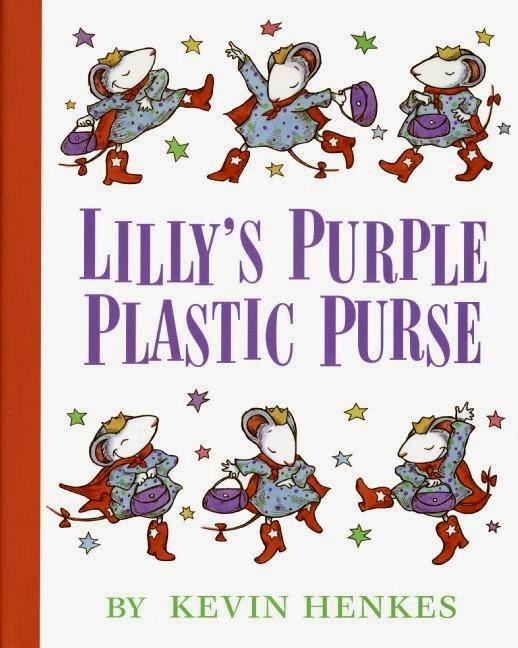
Lilly’s Purple Plastic Purse, written and illustrated by Kevin Henkes, is a 32-page picture book about a mouse named Lilly who loves everything about school — especially her teacher, Mr. Slinger, who is the coolest, hippest, most wonderful teacher who has ever lived. When her grandmother gives her a purple plastic purse, movie star sunglasses, and three shiny quarters, Lilly cannot wait to share them. Mr. Slinger asks her to wait until sharing time. Lilly cannot. The purse gets confiscated, Lilly gets furious, and she does something she immediately regrets — before discovering that Mr. Slinger, in keeping her purse, also left her a note and a snack. The journey from fury to remorse to apology is one of the most emotionally true arcs in picture book literature. Published in 1996, it received starred reviews from every major children’s literature journal, was named an ALA Notable Children’s Book, and earned USA Today‘s description of Lilly as “one of the great female characters in literature — like Anna Karenina with whiskers.” This guide covers Lilly’s Purple Plastic Purse‘s reading level, whether it’s a read-aloud or independent read, what it’s about, its themes, how long it takes to read, and similar books — designed for parents and teachers of K–2 readers.
For Parents
A funny, emotionally honest picture book about a child who gets angry, does something mean, feels terrible about it, and makes it right — one of the best picture books available for teaching the full cycle of anger and apology. Best as a read-aloud for ages 4–7 and an independent read for ages 5–8. No content concerns. Lilly is one of the most beloved characters in children’s literature.
For Teachers
A K–2 classroom staple for SEL units on anger, impulse control, making mistakes, and apology — used widely alongside Chrysanthemum and Wemberly Worried in Kevin Henkes author studies. The emotional arc (desire → impulse → anger → revenge → remorse → repair) is the most complete moral sequence of any Henkes picture book and rewards explicit discussion at every stage. Mr. Slinger is one of the most beloved teacher characters in children’s literature.
Lilly’s Purple Plastic Purse at a Glance
Find on Amazon →| Author & Illustrator | Kevin Henkes (author & illustrator) |
| Published | 1996 (Greenwillow Books / HarperCollins) |
| Grade Level | PreK–K read-aloud; K–2 independent (our assessment) |
| Recommended Age | Read-aloud ages 4–7; independent reading ages 5–8 |
| Best For | Read-aloud ages 4–7; independent reading ages 5–8 |
| Lexile | 600L |
| ATOS Level | 3.1 |
| Word Count | 1,148 |
| Pages | 32 |
| Genre | Picture book / realistic fiction / humor |
| Awards | ALA Notable Children’s Book; IRA Children’s Choice; American Booksellers Book of the Year (1997) |
For official Lexile and AR levels, visit Lexile.com or AR BookFinder. ReadingVine provides independent editorial assessments.
What Reading Level Is Lilly’s Purple Plastic Purse?
Lilly’s Purple Plastic Purse has a Lexile of 600L and an ATOS level of 3.1 — the highest reading level scores among the Kevin Henkes picture books in this catalog, and notably without the “AD” (Adult Directed) designation that appears on Wemberly Worried. This means it is appropriate for both read-aloud and independent reading. The 600L Lexile and ATOS 3.1 reflect genuine linguistic richness: Henkes uses a wider vocabulary than most picture books, longer and more varied sentences, and a narrative structure complex enough to carry Lilly’s full emotional arc from delight through fury to remorse to repair.
At 1,148 words across 32 pages — approximately 46 words per page — it is more than twice as long as Wemberly Worried and more than five times as long as Knuffle Bunny. A confident K–2 reader can manage the text independently; strong PreK–K readers can work through it with some support. The vocabulary is accessible but rich; the sentences sometimes run long; the illustrations carry significant additional meaning (Lilly’s changing facial expressions, the brilliant end papers showing every single one of the things Lilly wants to be when she grows up) that rewards close looking alongside reading. For official Lexile and AR scores, visit Lexile.com or AR BookFinder. ReadingVine’s assessments are independent editorial judgments.
Is Lilly’s Purple Plastic Purse a Read-Aloud or Independent Read?
This works beautifully as both a read-aloud for ages 4–7 and an independent read for ages 5–8.
As a read-aloud, Lilly’s Purple Plastic Purse is one of the great picture book read-aloud experiences — Lilly’s voice is so vivid and so specific that reading it aloud feels almost theatrical. The moment when she realizes what she has done and begins to shrink smaller and smaller on the page is one of those passages that lands differently every time, because every child in the room has been Lilly and knows exactly what that shrinking feels like. The book has the perfect read-aloud length — long enough to develop a full emotional arc, short enough for a single sitting.
For independent reading, a strong K–2 reader can work through the text with genuine engagement. At ATOS 3.1 it is the most linguistically demanding picture book in this catalog, but the story pulls readers forward with Lilly’s momentum, and children who love the book will return to it on their own to pore over the illustrations and find the details (the end papers listing everything Lilly wants to be when she grows up; Mr. Slinger’s snack; the Lightbulb Lab) they may have missed the first time.
Before turning the last page, ask your child: “What do you think Mr. Slinger put in the purse?” Then read the ending. Afterward, look together at the front and back end papers — they are covered with tiny drawings of everything Lilly wants to be when she grows up, and every child who has ever made a list like that will recognize themselves in it.
What Is Lilly’s Purple Plastic Purse About?
Lilly loves school with her whole self. She loves the squeaky chalk. She loves the fish sticks on Fridays. She loves the Lightbulb Lab where her creativity is celebrated. And she loves Mr. Slinger — who wears cool clothes, greets her best work with a reverent “Wow,” and is, as far as Lilly is concerned, the greatest teacher who has ever taught.
Then her grandmother gives her three shiny quarters, movie star sunglasses, and a purple plastic purse that plays a tinkling tune when it is opened. Lilly brings all three to school. She cannot wait for sharing time. She tries to wait. She really does. But the purse is right there, and it plays a tune, and her classmates haven’t heard it yet. She opens it during class. She opens it again. Mr. Slinger, very kindly, asks her to put it away until sharing time. Lilly cannot. Mr. Slinger, still kindly, takes the purse and puts it in his desk. He will give it back at the end of the day.
Lilly is furious. She draws a picture of Mr. Slinger looking mean and horrible and writes terrible words next to it, and she slips it into Mr. Slinger’s bag. The moment she does it, she feels the specific horror of someone who knows exactly what they have done wrong and cannot undo it.
At the end of the day, Mr. Slinger returns the purse. Inside it, he has placed a small bag of snacks and a note that reads: “Today was a difficult day. Tomorrow will be better.” Lilly reaches into his bag to retrieve her terrible drawing — but it is too late. He has already read it.
That night, Lilly cannot eat. She cannot sleep. She feels terrible. With her parents’ help, she makes Mr. Slinger a book called “The Really Really Really Really Bad, Yucky, No Good Day” and brings it to school the next morning. Mr. Slinger reads it. He puts it in his bag to take home. And by the time Lilly sits down at her desk, she has decided what she wants to be when she grows up: a teacher. A great one. Just like Mr. Slinger.
Lilly’s Purple Plastic Purse Characters
Lilly is one of children’s literature’s most fully realized protagonists — a mouse who is funny, passionate, dramatic, impulsive, and genuinely sorry when she has done wrong. She does not make small choices: she either loves something completely or rages against it with her entire being, and the book’s most significant achievement is making her understandable and sympathetic at every extreme. Mr. Slinger is the book’s other great creation: a teacher who is cool without being fake, who disciplines Lilly fairly and without cruelty, who leaves her a kind note and a snack even after she has drawn a horrible picture of him, and who models, in his response to Lilly’s behavior, exactly what good teaching looks like when a child makes a mistake. Lilly’s parents appear briefly but importantly — they help her process her feelings without dismissing them, help her make the apology book, and send her back to school ready to try again. Their quiet, effective parenting is as worth noting as Lilly’s drama.
Lilly’s Purple Plastic Purse Themes and Lessons
The emotional arc of Lilly’s Purple Plastic Purse is the most complete and most honest sequence of any Henkes picture book in this catalog. Desire → impulse → frustration → rage → revenge → immediate regret → discovery of kindness → inability to undo the harm → remorse → repair → resolution. Most picture books about anger stop at “Lilly felt sad for what she did.” This one keeps going, through the specific misery of knowing you have hurt someone who was kind to you, through the night of not being able to eat or sleep, through the deliberate effort of making an apology that costs something. Children who read this book get the complete sequence — not a shortcut.
Mr. Slinger is as important to the book’s argument as Lilly. His response to her behavior — taking the purse fairly, leaving a kind note, reading her terrible drawing without cruelty, accepting her apology book the next morning — models the kind of teaching that makes children want to be teachers when they grow up. The book’s ending (Lilly deciding she wants to be a teacher like Mr. Slinger) is not just a sweet resolution; it is an argument about what good adult behavior produces in children who witness it. Lilly becomes, in that moment, what she has been given.
Talking with your child: Why do you think Lilly couldn’t wait until sharing time? How did she feel right after she put the mean picture in Mr. Slinger’s bag? What did Mr. Slinger do that surprised her? Have you ever done something you wished you could take back? What did Lilly do to make it better — and do you think that helped?
How Long Is Lilly’s Purple Plastic Purse?
Lilly’s Purple Plastic Purse is 32 pages with 1,148 words — the longest picture book text in this K–2 catalog, with approximately 46 words per page. Most adults can read it aloud in about twelve to fifteen minutes. This is toward the upper end of a single picture book read-aloud session, but the pacing rarely flags — Lilly’s momentum carries the reader from page to page without effort. The book richly rewards second and third readings: Henkes packs the end papers with tiny drawings of everything Lilly wants to be when she grows up (a scientist, an artist, a pilot, a teacher, a dancer, a doctor), and children who know the ending read the beginning with a different understanding of exactly why Mr. Slinger matters so much to her.
Books Similar to Lilly’s Purple Plastic Purse
About Kevin Henkes
Kevin Henkes was born in 1960 in Racine, Wisconsin, and published his first children’s book at age nineteen after traveling to New York during his freshman year at the University of Wisconsin and being offered a contract on the spot. He has since created nearly fifty books for young readers. His mouse character series — a loose constellation of picture books featuring anthropomorphic mice in recognizable childhood situations — includes Lilly’s Purple Plastic Purse, Chrysanthemum, Wemberly Worried, Owen, Julius, the Baby of the World, Chester’s Way, and others. Lilly herself first appeared in Chester’s Way (1988) and Julius, the Baby of the World (1990) before earning her own title in 1996. She has become the most recognizable of Henkes’s mouse characters — the New York Times Book Review predicted that Lilly “will probably lead the pack” of beloved characters remembered by her generation of readers.
Henkes received the Caldecott Medal for Kitten’s First Full Moon in 2005, Caldecott Honors for Owen and Waiting, and Newbery Honor citations for his novels Olive’s Ocean and The Year of Billy Miller. He is one of the few children’s book creators to have received both the Caldecott Medal and Newbery Honor recognition, reflecting his range across picture books and longer fiction. For a fuller biography, see our Wemberly Worried guide. He lives in Madison, Wisconsin.
Lilly’s Purple Plastic Purse: Frequently Asked Questions
What reading level is Lilly’s Purple Plastic Purse?
Lilly’s Purple Plastic Purse has a Lexile of 600L and an ATOS level of 3.1 — the highest reading level scores among Kevin Henkes picture books in this catalog. Appropriate for both read-aloud and independent reading. Our assessment: read-aloud for ages 4–7; independent reading for ages 5–8. For official Lexile and AR scores, visit Lexile.com or AR BookFinder.
Can a kindergartner read Lilly’s Purple Plastic Purse alone?
A strong kindergartner or early first-grader reading confidently can manage the text. At 1,148 words with an ATOS level of 3.1, it is significantly more demanding than most simple picture books. Many children first encounter it as a read-aloud and return to it independently — the story’s momentum and Lilly’s vivid voice make it compelling at any reading level.
How long does it take to read Lilly’s Purple Plastic Purse aloud?
About twelve to fifteen minutes for a full read-aloud. At 1,148 words, it is the longest picture book text in this K–2 catalog — but Lilly’s energy and the story’s momentum carry readers forward without effort. It rewards slowing down at the end papers (front and back) to look at all the things Lilly wants to be when she grows up.
What is Lilly’s Purple Plastic Purse about?
Lilly loves school and adores her teacher Mr. Slinger. When her grandmother gives her a purple plastic purse, sunglasses, and quarters, she can’t wait to show them off — even during class. Mr. Slinger takes the purse until the end of the day. Furious, Lilly draws a horrible picture of him and slips it into his bag. At the end of the day she finds he has returned the purse with a kind note and a snack. Filled with remorse, she makes him an apology book. By the next morning, she has decided she wants to be a teacher just like him.
What does Mr. Slinger put in Lilly’s purse?
A small bag of snacks and a handwritten note that reads: “Today was a difficult day. Tomorrow will be better.” It is this — finding his kindness where she expected punishment — that makes Lilly’s remorse complete and drives her to make the apology book. Mr. Slinger’s note is one of the most quoted lines in picture book literature precisely because it is exactly the right thing to say to a child who has had a hard day.
What does Lilly want to be when she grows up?
The end papers of the book are covered with tiny drawings of everything Lilly has considered: a doctor, a dancer, a scientist, a pilot, a teacher, an artist, and dozens more. By the end of the story, she has decided: a teacher. Just like Mr. Slinger. The end papers reward close looking — children who know Lilly find themselves in every one of her aspirations.
Is Lilly’s Purple Plastic Purse part of a series?
Lilly is Kevin Henkes’s most beloved mouse character, appearing first in Chester’s Way (1988) and Julius, the Baby of the World (1990) before getting her own title in Lilly’s Purple Plastic Purse (1996) and returning in Lilly’s Big Day (2006). Each book is complete on its own. Readers who love Lilly will find her in all four, each at a different moment of her mouse-childhood.