
 = Partner Site
Little Bear Reading Level: A Complete Guide
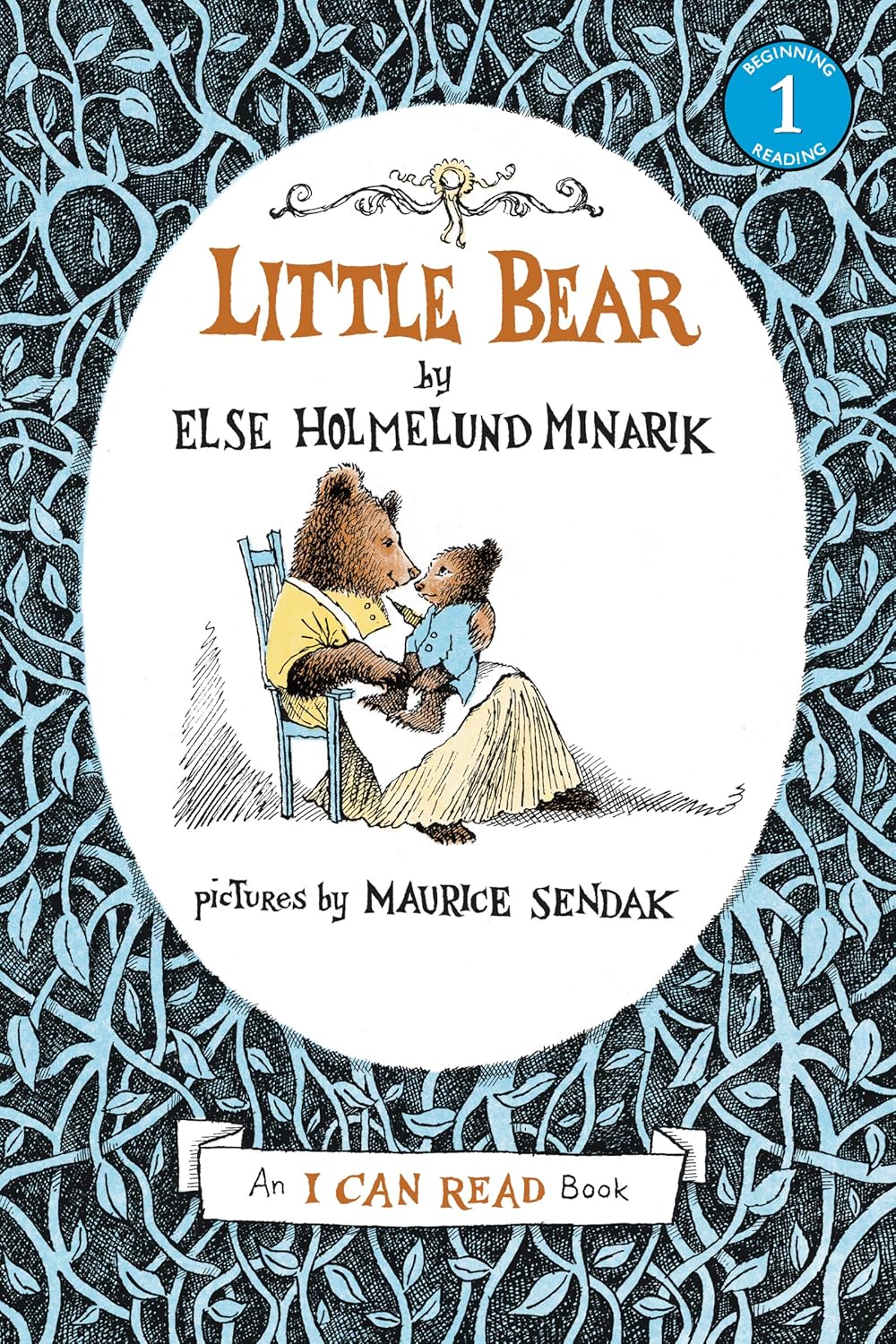
Little Bear by Else Holmelund Minarik, illustrated by Maurice Sendak, is one of the most important early readers — and one of the warmest. First published in 1957, it was the very first book in the I Can Read series, establishing the format that would teach millions of children to read over the decades that followed. Four quiet stories about a small bear cub, his patient and loving mother, and the particular pleasures of childhood imagination, Little Bear offers early readers something rarer than most beginning books manage: genuine literary tenderness, at exactly the right level. This guide covers the reading level, recommended age, read-aloud vs. independent reading guidance, themes, and everything parents and teachers need to know about sharing Little Bear with young readers.
For Parents
Find out whether Little Bear works best as a read-aloud or independent read for your child, what age range it suits, and why this gentle, beautifully illustrated early reader — the first book ever in the I Can Read series — remains one of the most beloved beginning chapter books in American children’s publishing.
For Teachers
Grade-level data, read-aloud timing, key themes, and discussion questions for the book that launched the I Can Read series in 1957. Exceptional for early reading instruction, for discussions of family relationships and maternal love, and for introducing children to the experience of a multi-chapter early reader.
Little Bear at a Glance
Find on Amazon →| Author | Else Holmelund Minarik |
| Illustrator | Maurice Sendak |
| Published | 1957 |
| Grade Level | K–2 (our assessment) |
| Recommended Age | 4–7 |
| Best For | Read-aloud ages 3–6; independent reading ages 4–7 |
| Flesch-Kincaid Grade | 2.2 |
| Word Count | ~1,500 |
| Pages | 63 |
| Chapters | 4 stories |
| Genre | Early reader / realistic fantasy |
| Setting | The woods; Little Bear’s home |
| Awards | ALA Notable Children’s Book; NY Times Best Children’s Books of the Past 50 Years (1997); launched the I Can Read series |
For official Lexile and AR levels, visit Lexile.com or AR BookFinder. ReadingVine provides independent editorial assessments.
What Reading Level Is Little Bear?
Little Bear is a K–2 reading level by our editorial assessment, with a Flesch-Kincaid grade level of approximately 2.2. At around 1,500 words across four short stories it is one of the longer books at this level — comparable in word count to Amelia Bedelia or Curious George — and it is structured as an I Can Read Level 1 early reader, designed for children who are beginning to sound out words and sentences with simple vocabulary and short, clear prose. The four stories average about 375 words each, which gives a child the experience of completing a chapter-length narrative within a single comfortable reading session.
What makes Little Bear distinctive at this level is the quality of Minarik’s prose rather than its complexity. The sentences are short and the vocabulary is simple, but the dialogue between Little Bear and his mother — patient, playful, loving, slightly humorous — has a warmth and naturalness that most early reader prose does not achieve. Maurice Sendak’s illustrations, rendered in delicate crosshatched ink with gentle washes of color, give the book a visual refinement that Sendak himself would surpass in Where the Wild Things Are six years later but that is exactly right for the intimate scale of Little Bear’s world. For parents who use specific reading level systems: we recommend checking your child’s level on Lexile.com or AR BookFinder for official scores, or asking your child’s teacher for their Guided Reading or DRA level.
Is Little Bear a Read-Aloud or Independent Read?
Little Bear works beautifully as both a read-aloud for ages 3–6 and an independent read for ages 4–7. As a read-aloud, it is one of the gentlest and most satisfying books at this level — each of the four stories is self-contained and warm, and the dialogue between Little Bear and Mother Bear sounds particularly good when read aloud with the slight differentiation of voice that their relationship deserves. Most adults can read one story aloud in about 3–5 minutes, or the full book in about 15–20 minutes.
As a read-aloud, Little Bear rewards a delivery that honors the quiet comedy of Mother Bear’s patience. She knows, almost always, what Little Bear is going to discover — that he does not need a coat because he has his own fur, that the moon he “flew to” is in fact a tree, that the birthday soup she pretended not to have made is wonderful — and she plays along with his imagination while gently guiding him back to reality. Reading this dialogue with warm restraint, rather than playing it for laughs, produces the book’s best effect: a portrait of a loving parent who takes a child seriously without ever condescending to them. Children feel this, even if they couldn’t name what they’re feeling.
For independent reading, Little Bear is one of the most natural and satisfying early reader experiences available. The four-story structure gives a beginning reader the experience of chapters — completing one story and moving to the next — without the intimidation of a chapter book’s length. The vocabulary is genuinely accessible, the sentences are clear, and the stories are interesting enough that children want to finish them. Little Bear is one of those early readers that parents report their children reading to themselves in bed, which is among the highest possible endorsements a beginning reader can receive.
There is nothing in this book that requires parental preparation. Little Bear goes to the moon (in his imagination) and comes back. He makes birthday soup. He wishes for a winter adventure and gets one. Everything is gentle, warm, and exactly as resolved as a small bear’s day should be.
When you read the first story, “What Will Little Bear Wear?”, don’t rush past Mother Bear’s final answer — that Little Bear has his own fur coat and doesn’t need anything else. Pause on that line and let it land. Then ask: “Did Mother Bear know the whole time what the answer would be?” The dialogue in Little Bear is full of this kind of gentle dramatic irony, and children who start noticing it read the rest of the book differently — watching for the moments when Mother Bear knows something Little Bear is about to find out.
What Is Little Bear About?
Little Bear contains four stories. In “What Will Little Bear Wear?”, Little Bear asks Mother Bear for a coat because it is cold outside. She makes him a hat, then a coat, then snow pants — and then reminds him that he already has his own fur coat, which has been there the whole time. In “Birthday Soup,” Little Bear worries that Mother Bear has forgotten his birthday because she seems to have no cake. He makes birthday soup for all his friends — and then Mother Bear arrives with a birthday cake she had hidden the whole time. In “Little Bear Goes to the Moon,” Little Bear builds a space helmet, flies to the moon, and comes back to find a “strange bear” in his house — who turns out, of course, to be himself, recognized by a loving mother who plays along. In “Little Bear’s Wish,” Little Bear tells Mother Bear all the things he wishes for at bedtime, and she answers each one with a wish of her own: she wishes for a good little bear, which she already has.
The four stories share a single emotional structure: Little Bear reaches for something beyond what he has, and Mother Bear shows him, warmly and without condescension, that what he already has is enough. It is not a book about disappointment — the soup is good, the moon is wonderful, the birthday cake arrives — but about the specific comfort of being loved and known completely by someone who has been one step ahead of you the whole time.
Little Bear Characters
Little Bear Themes and Lessons
The central theme of Little Bear is the security of unconditional love — specifically, the particular security of being loved by a parent who knows you completely, takes your imagination seriously, and is always waiting when you come home. Each story sends Little Bear out into the world of his own making and brings him back to Mother Bear, who has been there the whole time. The moon he flew to is real to him, and she honors that. The soup he made is good, and she says so. The birthday cake was hidden, but the love that hid it was not. Children who hear these stories are receiving something they need: a portrait of a parent whose love is both complete and playful, serious and warm.
The book is also a gentle study in imagination as its own reward. Little Bear goes to the moon in a cardboard space helmet, and the moon he visits is as real to him as the moon that exists. He does not need to actually leave the earth; he needs to have the experience of going and coming back. Minarik understands this perfectly, and Mother Bear understands it too — she calls him a “strange bear” when he returns because she knows the game he is playing and plays it back. For young children who spend considerable time in their own invented worlds, this validation is significant: the book says that your imagination is a real place, and going there is a real journey.
Historically, Little Bear carries enormous significance as the book that launched the I Can Read series. Before 1957, beginning readers — the Dick and Jane primers and their equivalents — were designed to control vocabulary at the expense of genuine literary quality: they were safe, simple, and dull. Minarik’s editor, Ursula Nordstrom at Harper and Brothers (the same editor who would later work with Maurice Sendak on Where the Wild Things Are), asked Minarik to write something that used simple vocabulary but did not sacrifice warmth, humor, or genuine story. Little Bear was the result. It proved that an early reader could be genuinely worth reading, and every I Can Read book published since owes it a debt.
Discussion starters for families: Why did Little Bear think he needed a coat? How did Mother Bear know he had his own fur coat the whole time? Did you believe Little Bear really went to the moon? What was Mother Bear’s wish at the end? What would you wish for?
How Long Is Little Bear?
Little Bear has 63 pages and approximately 1,500 words across four stories. Each individual story runs about 3–5 minutes as a read-aloud; the full book takes about 15–20 minutes to read aloud from beginning to end. The four-story structure makes it easy to read one story per sitting if needed, though the stories are warm and brief enough that many families read all four at once.
A child reading independently at a kindergarten or first-grade level will typically finish one story in about 5–8 minutes and the full book in about 20–30 minutes. A child reading independently at a confident first-grade or second-grade level will finish more quickly. Little Bear is one of those books that children who have just learned to read independently return to repeatedly — not because it is simple, but because it is reliably good.
Books Similar to Little Bear
If your child loves Little Bear, these titles share its warm early reader format, its gentle humor, or its place in the Early Reader Bridge cluster:
About the Author and Illustrator
Else Holmelund Minarik (1920–2012) was a Danish-born American author and teacher who immigrated to the United States with her family at the age of four. She taught first grade on Long Island, and it was her classroom experience — watching her students struggle to find books that were both simple enough to read and interesting enough to want to read — that led her to write Little Bear. She showed the manuscript to Random House first, where an editor suggested she change the bears into humans. She disagreed and took it to Harper and Brothers, where editor Ursula Nordstrom recognized what it was and published it in 1957 as the first book in the new I Can Read series. Nordstrom later described Little Bear as the model for what an I Can Read book should be: genuinely literary, warmly funny, and never condescending to the child who is working to decode it. Minarik wrote four more Little Bear books with Sendak — Father Bear Comes Home (1959), Little Bear’s Friend (1960), Little Bear’s Visit (1961), and A Kiss for Little Bear (1968) — as well as other I Can Read titles. She died in 2012 at the age of 91, having published her final book the year before.
Maurice Sendak (1928–2012) was an American illustrator and author who is widely considered the most important figure in twentieth-century American children’s book illustration. His work on Little Bear in 1957 was relatively early in his career — he had been illustrating other writers’ texts since 1951 — and the quiet, crosshatched ink drawings with gentle color washes that he produced for Minarik’s stories are a different register from the wild expressionism of Where the Wild Things Are (1963) and In the Night Kitchen (1970), but they are unmistakably his: warm, precise, observant of the small physical gestures that reveal character, and deeply attentive to the emotional temperature of each scene. Sendak went on to win the Caldecott Medal for Where the Wild Things Are, the international Hans Christian Andersen Award, the Laura Ingalls Wilder Award, and the Astrid Lindgren Memorial Award, making him one of the most decorated children’s book illustrators in history. He and Minarik both died in 2012.
Little Bear: Frequently Asked Questions
What reading level is Little Bear?
Little Bear is a K–2 reading level by our editorial assessment, with a Flesch-Kincaid grade level of approximately 2.2. Published as an I Can Read Level 1 book — the very first I Can Read Level 1 book — it uses simple vocabulary and short sentences across four stories totaling around 1,500 words. It works best as a read-aloud for ages 3–6 and as an independent read for ages 4–7. For official Lexile and AR levels, visit Lexile.com or AR BookFinder.
What age is Little Bear for?
Little Bear is appropriate for ages 3–7. As a read-aloud it works beautifully from age 3 — the stories are short, warm, and gentle enough for very young children, and Mother Bear’s voice is one of the most comforting in early reader literature. As an independent read it suits children ages 4–7 who are building early reading confidence. It is one of the books that reading specialists most often recommend as a first experience of reading a multi-story book independently.
Was Little Bear really the first I Can Read book?
Yes — Little Bear, published by Harper and Brothers in 1957, was the very first book in the I Can Read series, which now includes hundreds of titles across multiple reading levels. Editor Ursula Nordstrom commissioned Minarik to write a beginning reader that was genuinely literary and warm rather than safe and dull, and Little Bear was the result. Its success established the template for the entire series: simple vocabulary and clear sentences, but real stories worth reading and real warmth worth feeling. Every I Can Read book published since 1957 exists because this one worked.
How long does it take to read Little Bear aloud?
Each of the four stories in Little Bear takes about 3–5 minutes to read aloud; the full book takes about 15–20 minutes. The four-story structure makes it easy to read one story per sitting if needed, though many families read all four at once. It is a book that naturally ends at bedtime — Little Bear’s last story ends with him going to sleep after his mother answers his wishes — making it an excellent choice for the final book of the evening.
What are the four stories in Little Bear?
The four stories in Little Bear are: “What Will Little Bear Wear?”, in which Little Bear asks for cold-weather clothes and discovers he has his own fur coat; “Birthday Soup,” in which Little Bear makes soup for his friends when he thinks Mother Bear has forgotten his birthday, and she produces a cake she had hidden all along; “Little Bear Goes to the Moon,” in which Little Bear builds a space helmet, flies to the moon, and comes home to be greeted as a “strange bear” by Mother Bear, who plays along; and “Little Bear’s Wish,” in which Little Bear tells Mother Bear his wishes at bedtime and she tells him hers — which is for a good little bear, which she already has.
Are there other Little Bear books?
Yes — Else Holmelund Minarik wrote four more Little Bear books illustrated by Maurice Sendak: Father Bear Comes Home (1959), Little Bear’s Friend (1960), Little Bear’s Visit (1961, a Caldecott Honor Book), and A Kiss for Little Bear (1968). All five Sendak-illustrated books are considered the core Little Bear canon. Additional titles were written by Minarik based on a television adaptation and by other authors after the series continued, but the five original Sendak books are the essential ones.