
 = Partner Site
No Talking Reading Level: A Complete Guide
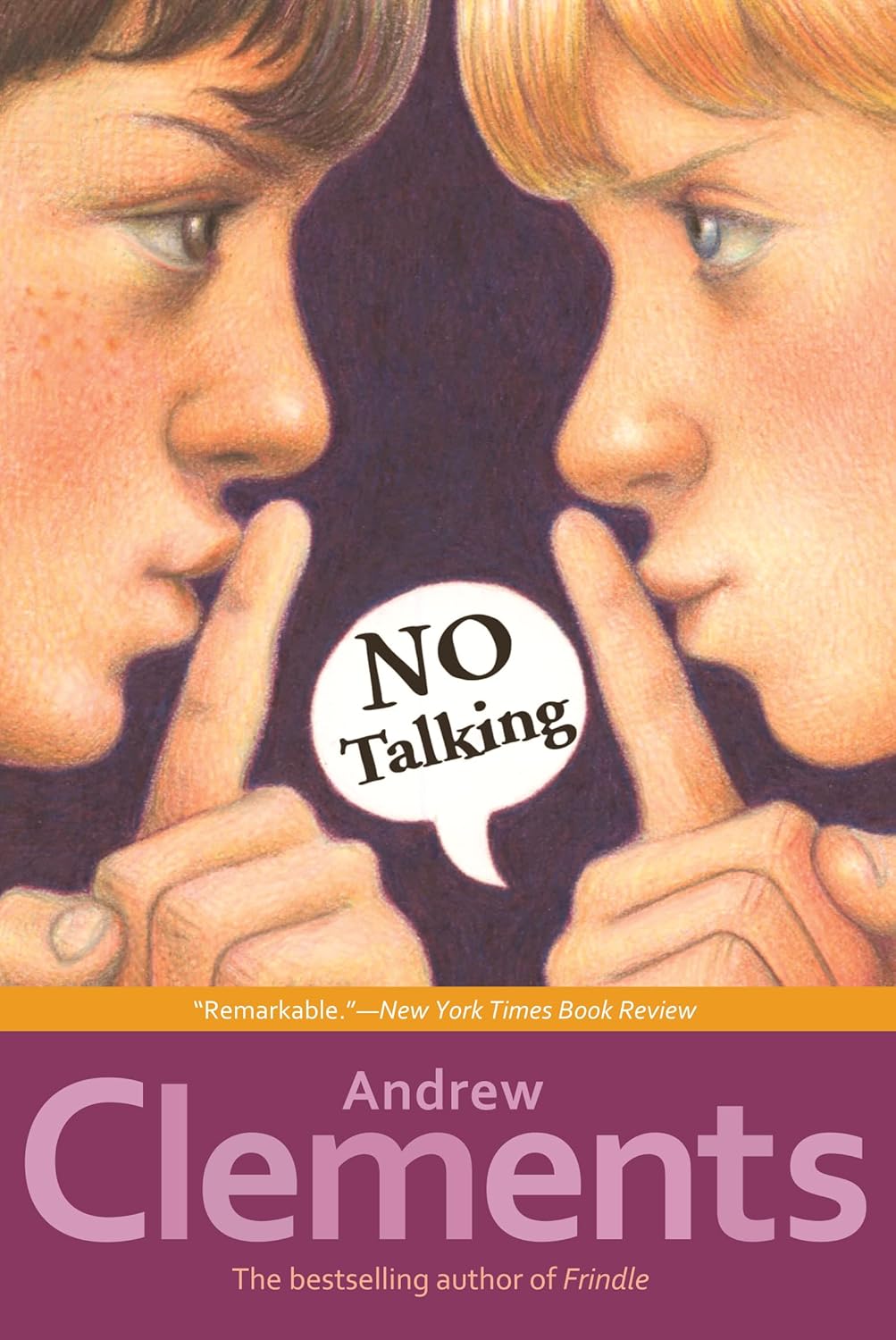
No Talking, written by Andrew Clements and illustrated by Mark Elliott, is a 160-page school novel about the loudest fifth grade in Laketon Elementary — the Unshushables — and the two days they spend in an accidental contest to see which team can say the fewest words. It starts when Dave Packer, a certified loudmouth who has been reading about Gandhi’s weekly day of silence, decides to try a whole day without talking. At lunch he hears Lynsey Burgess chattering away. He breaks his silence to lob an insult. She fires back. And suddenly there is a contest: boys against girls, two days, as few words as possible. The only rule is that you can answer a teacher’s direct question, but only with three words. What happens when the noisiest class in school goes silent is both funny and, in the way of all Clements school novels, genuinely thoughtful about language, communication, and what words are actually for. Published in 2007 by Atheneum, it is one of Clements’s most popular novels after Frindle. This guide covers reading level, age appropriateness, themes, and similar books.
For Parents
A funny, fast school novel about a fifth-grade class that accidentally stops talking for two days — and what everyone learns about language and kindness in the silence. Ages 7–11, grades 3–5. No content concerns. One of Clements’s most beloved novels and an excellent read-aloud for the whole family. After reading it, you will probably try the three-word rule yourself.
For Teachers
A grades 3–5 classroom staple — one of the best available for discussions of language, communication, active listening, and what words are actually worth saying. The three-word rule generates genuinely interesting in-class activities. A natural companion to Frindle for a Clements language unit. Short enough to read aloud in one to two weeks; funny enough to keep everyone engaged.
No Talking at a Glance
Find on Amazon →| Author | Andrew Clements (1949–2019) |
| Illustrator | Mark Elliott |
| Published | 2007 (Atheneum Books for Young Readers) |
| Grade Level | 3–5 (our assessment) |
| Recommended Age | 7–11 |
| Lexile | 750L |
| ATOS Level | 5.0 |
| Word Count | 23,704 |
| Pages | 160 |
| Genre | Realistic fiction / humor / school story |
| Setting | Elementary school, contemporary |
For official Lexile and AR levels, visit Lexile.com or AR BookFinder. ReadingVine provides independent editorial assessments.
What Reading Level Is No Talking?
Lexile 750L, ATOS 5.0, grades 3–6. Our assessment: grades 3–5, ages 7–11. Clements’s prose is characteristically clear and accessible; the 23,704-word count makes this one of his shorter novels, readable in two to four days for most readers in the target range. The ATOS 5.0 reflects vocabulary and sentence complexity that skews slightly above the interest level — fifth grade for independent reading, but an excellent classroom read-aloud from grade 3 onward. For official scores, visit Lexile.com or AR BookFinder.
What Is No Talking About?
Dave Packer has been reading about Gandhi. Specifically, Gandhi’s weekly day of silence — the idea that spending one day without speaking helps you think more clearly and say things that matter when you do speak. Dave decides to try it. He makes it to lunch. Then Lynsey Burgess sits nearby, talking at full volume, and Dave can’t help himself: he insults her. She insults back. And the contest is born: boys vs. girls, two school days, as few words as possible. You can answer a teacher’s direct question, but only with exactly three words. Any extra word counts against your team.
What follows is the comedy of a notoriously loud class suddenly going silent. Teachers don’t know what to make of it. The principal — who normally uses a red plastic bullhorn to manage the Unshushables — feels like she’s losing control when there’s nothing to control. Most teachers are baffled and annoyed. Mr. Burton, the science teacher, thinks it’s wonderful. By the end of the two days, Dave and Lynsey have stopped hating each other, the boys and girls have started talking to each other instead of past each other, and the whole class has learned something about what words are actually worth. The book’s final argument is not that silence is better than speech, but that thoughtful speech is better than noise — and that the difference between the two is worth knowing.
The Three-Word Rule — The Book’s Most Productive Feature
The contest’s core rule — only three words when answering a teacher’s direct question — is the book’s most productive classroom feature because it can be directly tried. Many teachers who assign or read aloud No Talking spend one period or one lunch period playing the three-word rule with their class. The exercise produces immediate insight: students discover which three words matter, learn to choose what to say, and notice how much of ordinary conversation is filler. This is the book’s argument demonstrated rather than stated — which is exactly how Clements’s best school novels work.
The three-word rule also generates significant humor: the book’s funniest passages are the characters’ attempts to communicate whole thoughts in three words, and the creative ways they find to say what they mean within the constraint. Language games of this kind are genuinely valuable for vocabulary, for precision in writing, and for understanding that all communication involves choices about what to include and exclude.
No Talking Themes and Lessons
Clements built the novel on a simple but genuine philosophical idea: Gandhi’s weekly day of silence was not about shutting up but about making room to think. Words spoken reflexively, without thought, don’t mean much — and they can crowd out the words that do. What the Unshushables discover across their two silent days is not that silence is better than speech but that speech means more when you’ve had to choose it.
The gender dynamics of the contest — boys vs. girls — are handled with more nuance than the premise might suggest. The competition starts from genuine hostility (Dave and Lynsey dislike each other sincerely) and ends with genuine respect; the process is the book’s argument that competition can create understanding if both sides are paying attention to the same thing. By the end, Dave and Lynsey are something other than enemies, and the whole class is something other than the Unshushables.
Discussion questions: What do you think would happen if your class tried the three-word rule for one period? What’s the difference between talking and communicating? Which teacher’s reaction to the silence made the most sense to you — Mr. Burton’s or the principal’s? Why did Gandhi practice a day of silence every week?
Books Similar to No Talking
About Andrew Clements
See our The Report Card guide for a full biography. No Talking was published in 2007, three years after The Report Card, and shares its DNA: a child challenges a school convention, things escalate beyond what was intended, no one is simply a villain, and the book ends with a genuine argument about something real rather than a tidy resolution. Clements has said the book was partly inspired by reading about Gandhi’s practice of weekly silence and partly by observing what happens in classrooms when students genuinely listen to each other rather than waiting for their turn to speak.
No Talking: Frequently Asked Questions
What reading level is No Talking?
Lexile 750L, ATOS 5.0, grades 3–6. Our assessment: grades 3–5, ages 7–11. Clear and accessible prose; 23,704 words; most readers finish in two to four days. For official scores, visit Lexile.com or AR BookFinder.
What is No Talking about?
Dave Packer, the loudest kid in the loudest fifth grade, starts a contest with Lynsey Burgess: boys vs. girls, two school days, as few words as possible — with a maximum of three words when answering a teacher’s direct question. What happens when the Unshushables go silent teaches everyone in the school something about what words are actually worth.
What is the three-word rule in No Talking?
The contest rule: you can only speak when a teacher asks you a direct question, and then only with exactly three words. Any additional word counts against your team. The rule forces characters to choose their words carefully — and reveals how much of ordinary conversation is noise rather than communication. Many teachers who read this book try the three-word rule with their class for one period.
Is No Talking good for a read-aloud?
Excellent — one of Clements’s best read-alouds. The comedy lands better when heard, the three-word passages are funnier performed, and the whole-family-try-the-rule dynamic that several Goodreads reviewers mention is much easier to generate when you’ve read it together. Short enough to finish in one to two weeks of classroom sessions.