
 = Partner Site
Saving Winslow Reading Level: A Complete Guide
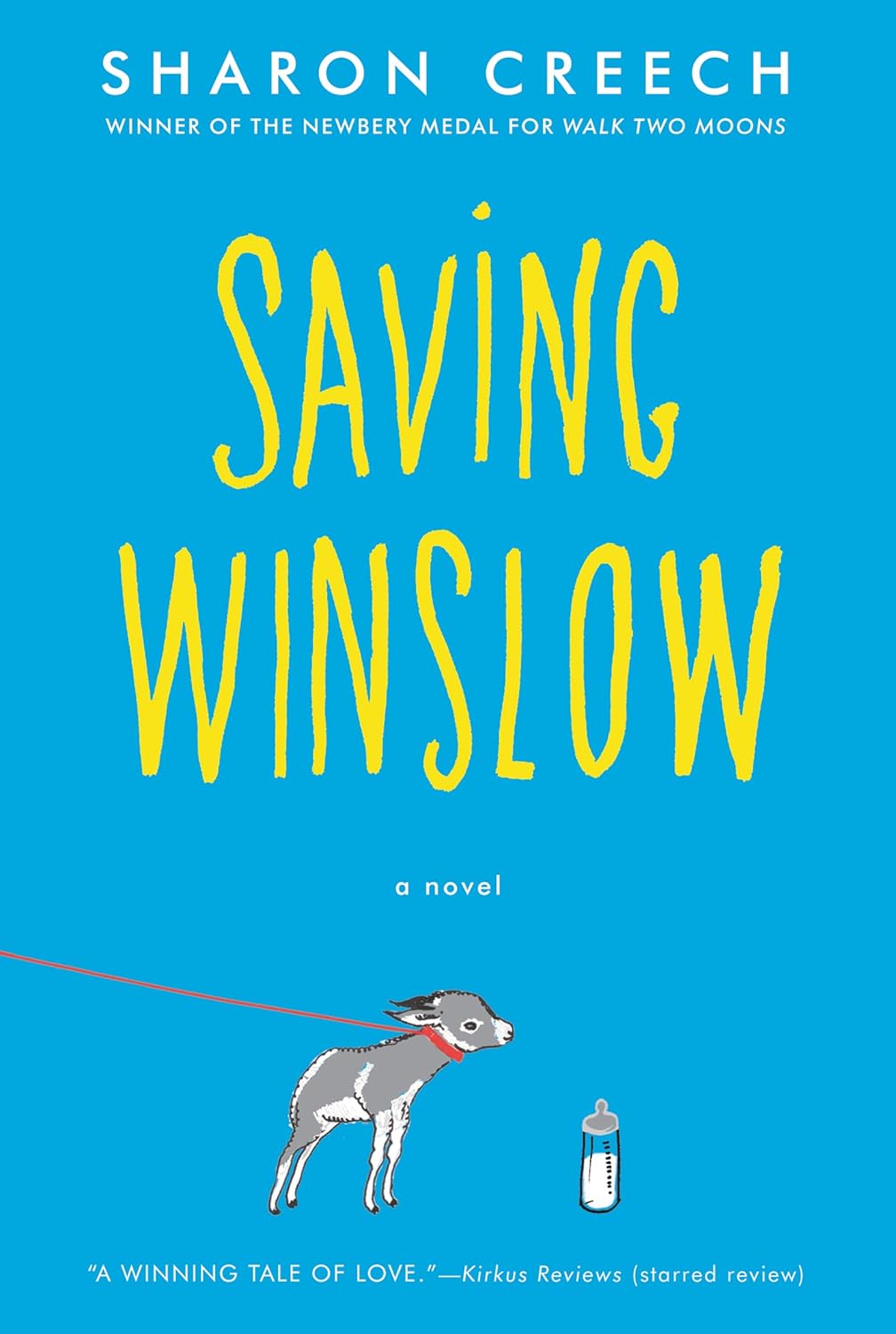
Saving Winslow, written by Sharon Creech, is a 165-page novel about nine-year-old Louie, whose father brings home a sickly newborn miniature donkey that nobody expects to survive. Louie has a poor record with small creatures — with four legs they run away, with two legs they last three months before hitting the bottom of the cage — but he is determined to save this one. He names the donkey Winslow. Taking care of Winslow gives Louie something to hold onto while he worries about his older brother Gus, who is in the army and sends only brief messages home. Louie’s new friend Nora, who has experienced loss of her own, is drawn to Winslow too. Published in 2018 by HarperCollins, an ALA Notable Children’s Book, a Texas Bluebonnet Award winner, and the recipient of starred reviews from Kirkus, Publishers Weekly, and Horn Book, it is written in the spirit of Creech’s earlier novels Love That Dog and Moo — spare, poetic, and carrying more emotion than its brief length suggests. Publishers Weekly described Creech as packing “a tremendous amount of emotion between the lines of her understated prose.” This guide covers reading level, age appropriateness, content, themes, and similar books.
For Parents
A brief, gentle novel about a boy who saves a tiny donkey nobody expected to live — and what the saving does for him while his brother is far away in the army. Ages 8–12, grades 3–6. Content note: Louie’s friend Nora lost a premature baby brother and her dog; loss is a consistent underlying theme. The donkey survives. Sharon Creech is a Newbery Medal winner (Walk Two Moons).
For Teachers
A grades 3–6 classroom text that pairs naturally with Charlotte’s Web for a human-animal bond unit and with Love That Dog for a Creech author study. Creech’s spare prose style — “whisper-weight chapters,” per one reviewer — rewards close reading for what is said between the lines. ALA Notable Children’s Book; Texas Bluebonnet Award.
Saving Winslow at a Glance
Find on Amazon →| Author | Sharon Creech |
| Published | 2018 (HarperCollins) |
| Grade Level | 3–6 (our assessment) |
| Recommended Age | 8–12 |
| Lexile | 690L |
| ATOS Level | 4.2 |
| Word Count | 16,667 |
| Pages | 165 |
| Genre | Realistic fiction |
| Setting | Contemporary; small town |
| Awards | ALA Notable Children’s Book; Texas Bluebonnet Award; starred reviews Kirkus, PW, Horn Book |
For official Lexile and AR levels, visit Lexile.com or AR BookFinder. ReadingVine provides independent editorial assessments.
What Reading Level Is Saving Winslow?
Lexile 690L, ATOS 4.2, grades 3–8. Our assessment: grades 3–6, ages 8–12. At 16,667 words and 165 pages, it is one of the shorter novels in this catalog — comparable in length to Pedro’s Journal (81 pages). Most readers in the target range complete it in two to four days. The 690L reflects Creech’s spare, accessible prose; the emotional complexity is considerably above what the formula score suggests. For official scores, visit Lexile.com or AR BookFinder.
What Age Is Saving Winslow Appropriate For?
Ages 8–12, grades 3–6. The themes of loss run through the book quietly: Louie worries about his brother in the army; Nora has lost a premature baby brother and a dog and carries that loss visibly; the possibility that Winslow might die is present from the first pages. Common Sense Media notes “the unpredictability of loss is a key theme.” The losses are handled with Creech’s characteristic restraint — present but not traumatizing — and the book ends with more hope than grief.
What Is Saving Winslow About?
Louie’s father comes home with a newborn miniature donkey so fragile that the farm where it was born couldn’t keep it. No one expects it to survive. Louie names it Winslow and takes on the work of keeping it alive: coaxing it to take a bottle, giving it shots, talking to it, sitting with it, willing it to get stronger. He is aware that animals die all the time at his uncle’s farm. He is aware that his track record is poor. He saves Winslow anyway.
Running alongside the donkey story, quieter but present throughout: Louie’s brother Gus has joined the army. Gus was always big and brave and the one who made things feel safe, and his absence is a specific kind of loss — not death, but distance and uncertainty. Louie’s care for Winslow becomes connected in his mind to his care for Gus: if he can save Winslow, maybe Gus will be all right too. Horn Book’s starred review noted the story is “told simply but subtly, celebrating the unexpected strength of the vulnerable” — which describes both Winslow and, more quietly, Louie himself.
Nora, Louie’s new friend, arrives at the story carrying her own losses — her premature baby brother who didn’t survive, her dog who died. She is skeptical about Winslow’s chances in a way that makes sense for someone who has watched things she loved not make it. Her friendship with Louie, built around Winslow, is the book’s quietest emotional thread.
Sharon Creech’s Prose Style
Creech is known for spare, poetic prose that carries more weight than its sentence length suggests. Saving Winslow is structured in very short chapters — what one reviewer called “whisper-weight chapters” — that accumulate into a larger emotional picture without spelling it out. Publishers Weekly’s starred review noted that Creech “packs a tremendous amount of emotion between the lines of her understated prose,” and this is the quality most often cited by teachers using the book for close reading: the gap between what the text says directly and what it means is wider here than in most books at this reading level, making it productive for comprehension instruction with students who are ready to read below the surface.
The approach is consistent with Creech’s earlier work. Love That Dog (2001) and Hate That Cat (2008) use a similar compressed structure — short, seemingly simple entries that reveal a deeper emotional reality over time. Saving Winslow is written in traditional third-person prose rather than verse, but the short chapters and the understated style place it in the same register.
Saving Winslow Themes and Lessons
The book’s central gesture — Louie’s conviction that saving Winslow is connected to keeping Gus safe — is the kind of magical thinking children engage in around loss and worry, and Creech handles it with compassion rather than correction. She does not explain or resolve it directly; she lets it exist as something Louie believes, and the reader understands what it means without being told. This is the kind of emotional sophistication that distinguishes Creech’s work at this reading level.
Talking with your child: Why does Louie think saving Winslow will help keep Gus safe? How does Nora’s experience of loss affect how she talks about Winslow’s chances? What does it mean to care for something that might not make it? What surprised you about how the book ended?
Books Similar to Saving Winslow
About Sharon Creech
Sharon Creech is the author of more than twenty-five books for children and young adults, including the Newbery Medal winner Walk Two Moons (1995) and the Newbery Honor book The Wanderer (2001). Born in 1945 in South Euclid, Ohio, she has lived in England and spent much of her adult life in upstate New York. Her other notable works include Love That Dog (2001), a novel-in-verse about a boy who learns to love poetry after losing his dog; Hate That Cat (2008), a companion to Love That Dog; and Moo (2016), about a family that moves to Maine and is given a cow to care for. Saving Winslow follows in the tradition of Moo — a child given responsibility for an animal and discovering what that responsibility teaches them about the larger world.
Saving Winslow: Frequently Asked Questions
What reading level is Saving Winslow?
Lexile 690L, ATOS 4.2, grades 3–8. Our assessment: grades 3–6, ages 8–12. At 16,667 words and 165 pages, most readers finish in two to four days. The emotional complexity is above what the formula score suggests. For official scores, visit Lexile.com or AR BookFinder.
What is Saving Winslow about?
Nine-year-old Louie takes on the care of a sickly newborn miniature donkey nobody expects to survive, naming him Winslow. Caring for Winslow helps Louie manage his worry about his brother Gus, who is in the army. His new friend Nora, who has experienced loss of her own, is drawn to Winslow but skeptical about his chances.
Does Winslow die in Saving Winslow?
No — Winslow survives. The possibility of his death is present throughout, and his survival is not guaranteed until late in the book, but he does make it. Parents who want to reassure children before they read can share this without spoiling the emotional journey of the story.
Who is Sharon Creech?
Sharon Creech is the Newbery Medal-winning author of Walk Two Moons (1995) and more than twenty-five books for children. Her other works include Love That Dog, The Wanderer, and Moo. She is known for spare, poetic prose that carries considerable emotional weight in compact forms.
What other Sharon Creech books are similar?
Love That Dog (2001) is the closest companion — a short novel-in-verse about a boy who processes the loss of his dog through poetry, written in the same compact, emotionally layered style. Moo (2016) is also closely related — a family given a cow to care for, structured around the same discovery that caring for an animal teaches you things about yourself. Both are appropriate for the same age range.