
 = Partner Site
The Invisible String Reading Level: A Complete Guide
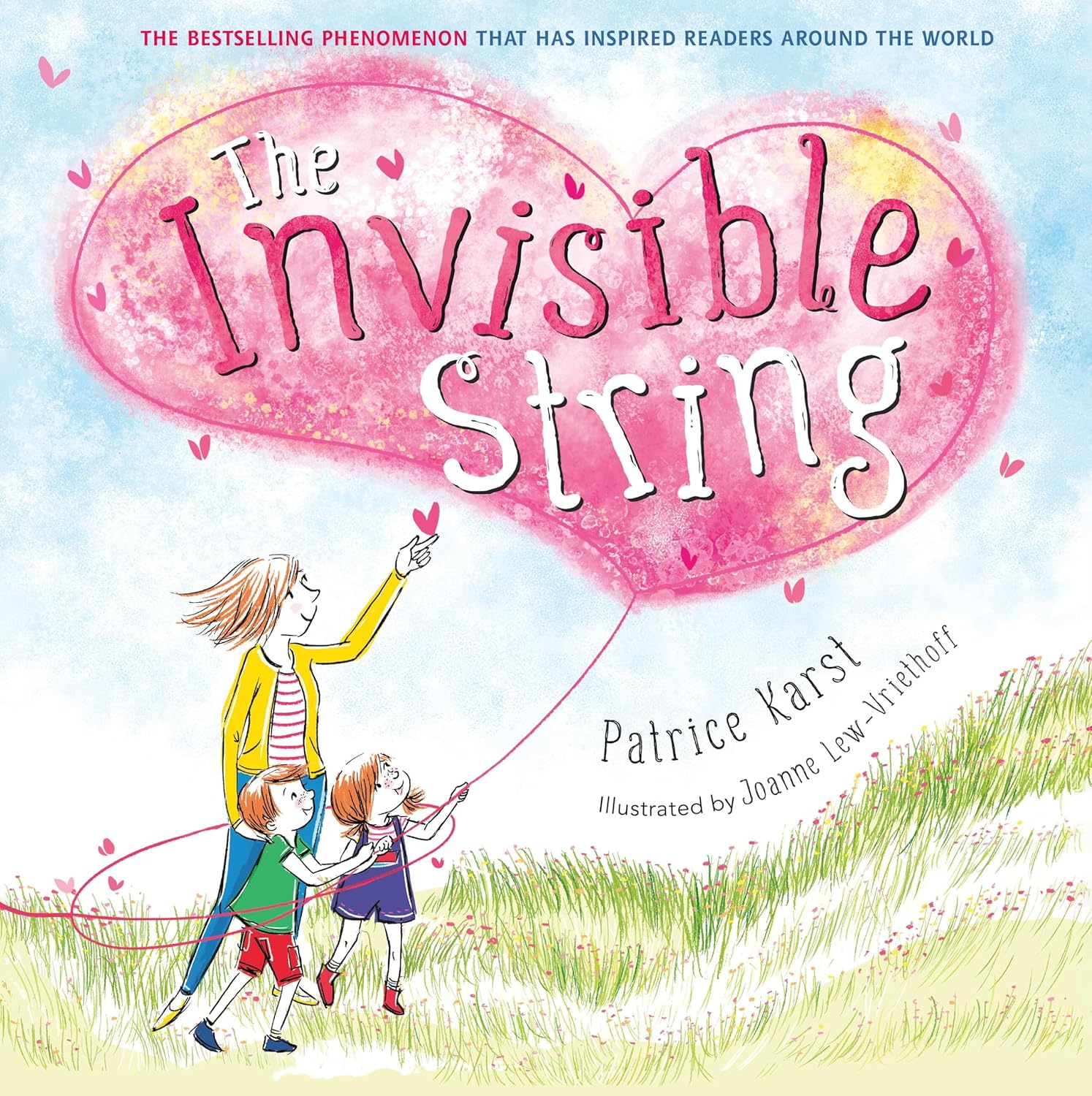
The Invisible String, written by Patrice Karst and illustrated by Joanne Lew-Vriethoff, is a 36-page picture book about two young children who wake up frightened during a thunderstorm and ask their mother if she will always be there. Her answer is the book: people who love each other are always connected by an invisible string made of love — one that cannot be seen but can always be felt, that reaches across any distance, that holds even through anger, and that extends even to people who have died. First published in 2000 and updated with new illustrations in 2018, it has sold over two million copies and been translated into twenty languages. It is used in classrooms, therapists’ offices, hospice centers, grief groups, military family programs, and foster care agencies around the world — wherever a child needs to know that love does not require presence, and that connection does not end with separation. This guide covers The Invisible String‘s reading level, whether it’s a read-aloud or independent read, what it’s about, its themes, how long it takes to read, and similar books — designed for parents and teachers of K–2 readers.
For Parents
A reassuring picture book for any child navigating separation — from a parent going to work, a deployment, a divorce, a move, or the death of someone they love. Appropriate for ages 4–8. The book addresses death directly, including connection to people who have died.
For Teachers
Widely used for back-to-school separation anxiety, family change units, and grief support in K–2 classrooms. The invisible string concept gives children a concrete metaphor for an abstract feeling. Recommended by school counselors and social workers as a first-day or early-year read-aloud.
The Invisible String at a Glance
Find on Amazon →| Author | Patrice Karst |
| Illustrator | Joanne Lew-Vriethoff (2018 edition); Geoff Stevenson (original 2000 edition) |
| Published | 2000 (original); 2018 updated edition (Little, Brown Books for Young Readers) |
| Grade Level | PreK–1 read-aloud; K–2 independent (our assessment) |
| Recommended Age | Read-aloud ages 4–8; independent reading ages 5–8 |
| Best For | Read-aloud ages 4–8; independent reading ages 5–8 |
| Lexile | AD520L |
| Word Count | ~400 |
| Pages | 36 |
| Genre | Picture book / social-emotional / comfort book |
For official Lexile and AR levels, visit Lexile.com or AR BookFinder. ReadingVine provides independent editorial assessments.
What Reading Level Is The Invisible String?
The Invisible String has a Lexile of AD520L — Adult Directed, indicating it is designed primarily as a read-aloud. The prose is clear and accessible, with simple sentence structures and concrete language designed to make an abstract concept — the persistence of love across distance — understandable to young children. A confident kindergartner or early first-grader can work through the text independently, though most children will encounter the book as a read-aloud first, in a context where the adult reading it is also part of the conversation the book opens.
Unusually for a picture book, The Invisible String is often read to children by adults other than parents — therapists, school counselors, hospice workers, military family support staff — because it is specifically useful in moments of transition, loss, and separation. The reading level scores matter less for this book than for almost any other in this catalog; what matters is when and why it is read. For official Lexile and AR scores, visit Lexile.com or AR BookFinder. ReadingVine’s assessments are independent editorial judgments.
Is The Invisible String a Read-Aloud or Independent Read?
This is primarily a read-aloud for ages 4–8, and most powerfully read in the presence of the person whose connection the child needs to feel. The book works as a bedtime read, a first-day-of-school read, a read on the night before a parent deploys or travels, a read after a death in the family. It is not a book about a concept so much as a book that performs a concept — reading it with a child is itself an act of the connection it describes.
For independent reading, a child who knows the book well and finds comfort in returning to it can work through the text on their own. Some children carry the physical book as a comfort object during a difficult time, and having it available for that purpose is a valid and supported use.
After reading, hold your child’s hand and say: “Can you feel the string between us right now?” Then: “When I’m at work tomorrow and you’re at school, the string will still be there. You can give it a little tug whenever you miss me, and I’ll feel it.” Let the child tug your hand now, so they know what tugging the string will feel like later when they need it.
What Is The Invisible String About?
Two children wake up frightened during a thunderstorm and climb into their mother’s bed. She holds them and tells them not to worry — they are always connected to the people who love them, no matter what. The children are skeptical: “That’s impossible!” They want to know more. What kind of string? Can you see it? What is it made of? Their mother answers each question: it is made of love, invisible but always felt, always present. It reaches across any distance — to school, to a grandparent’s house, across the ocean. It holds even when you are angry at the person on the other end. And it can reach, she tells them gently, all the way to Uncle Brian in heaven.
The children lie back in the dark and imagine their strings — to friends, to family, and then outward to the wider world. The book ends with the children reassured and beginning to drift to sleep, held by the knowledge that love does not require proximity and does not end with separation. The book deliberately covers a wide range of separation scenarios so that whatever kind of loss or separation a specific child is navigating, they can find their situation within it.
The Invisible String Characters
The mother is the book’s central voice — warm, patient, and certain in the way children most need adults to be: not dismissing the fear, but offering something real to hold onto instead. The two children are the book’s audience surrogate: skeptical, curious, and ultimately reassured. Uncle Brian in heaven appears only as a name and a destination for a string — but his presence is the book’s most quietly important detail, making it specific enough to address grief directly rather than only separation. The evidence that the invisible string holds even across death is what makes the book genuinely useful for loss, not just distance.
The Invisible String Themes and Lessons
The invisible string metaphor works because it is both simple enough for a four-year-old and rich enough for an adult. Children can understand a string — it is physical, directional, something that connects two points. Saying that love works like a string gives children something concrete to visualize and, more importantly, something to do: tug the string. Feel the tug back. The action of imagining a tug — and imagining the person on the other end feeling it — is a genuine comfort strategy that therapists working with children who have separation anxiety have adopted into clinical practice directly from this book.
The book’s willingness to address death through Uncle Brian is one of its most important qualities. Many picture books about connection avoid death entirely or treat it obliquely. The Invisible String names it and includes it as one more form of distance the string bridges. Parents and teachers should read the book themselves before using it in a grief context, to know where the reference appears and how they want to address it in conversation.
Talking with your child: Who do you have invisible strings to? Can you feel the string between us right now? Is there someone you miss who is far away — can you imagine your string reaching all the way to them? If you gave the string a tug right now, what do you think they would feel?
When to Read The Invisible String
The Invisible String is recommended by pediatricians, therapists, school counselors, social workers, and hospice workers for these specific situations:
Separation anxiety: The night before school starts, or with a child struggling with morning drop-off — the string stays there even in the classroom. Parent travel or deployment: Before a parent leaves for a work trip or military deployment; the child can hold a physical piece of string as a tangible version of the invisible one. Divorce or family change: When a child is navigating living between two homes — the string reaches to both. Death of a loved one: As a first or early grief read-aloud; the book names death directly and gently. Foster care transitions: Specifically adopted by foster care agencies for children navigating placement changes. First day of school: For any child worried about being separated from their parent.
How Long Is The Invisible String?
The Invisible String is 36 pages with approximately 400 words. Most adults can read it aloud in about six to eight minutes. It is part of a growing series of companion books by Karst including The Invisible Leash (for the loss of a pet), The Invisible Web (universal human connection), and The Invisible String Backpack (for school separation). The original remains the most widely used and most versatile.
Books Similar to The Invisible String
About Patrice Karst and Joanne Lew-Vriethoff
Patrice Karst was born in London, England, and now lives in Santa Barbara, California. She has said the invisible string concept came to her one night when her own young son was frightened and she needed to explain that love does not disappear when people are separated. The original 2000 edition, illustrated by Geoff Stevenson, sold steadily for nearly two decades; the 2018 updated edition with illustrations by Joanne Lew-Vriethoff brought the book to a new generation with brighter, more diverse imagery. Karst has since expanded the concept into a full series of companion books addressing specific contexts.
Joanne Lew-Vriethoff was born in Malaysia, grew up in Los Angeles, studied at the ArtCenter College of Design in Pasadena, and now lives in Malaysia. Her warm, cartoon-style illustrations for the 2018 edition brought joyful movement and diverse representation to the book’s imagery, showing the children’s imagined strings reaching to a wide range of people around the world.
The Invisible String: Frequently Asked Questions
What reading level is The Invisible String?
The Invisible String has a Lexile of AD520L — Adult Directed, designed primarily as a read-aloud. A confident K–1 reader can work through it independently. Our assessment: read-aloud for ages 4–8; independent reading for ages 5–8. For official Lexile and AR scores, visit Lexile.com or AR BookFinder.
What is The Invisible String about?
Two children wake up frightened during a thunderstorm and their mother reassures them: people who love each other are always connected by an invisible string made of love. It reaches across any distance — to school, to faraway relatives, even to people who have died. The children drift back to sleep held by the knowledge that love does not require proximity.
Does The Invisible String mention death?
Yes — the mother tells the children that the invisible string can reach “all the way to Uncle Brian in heaven.” Handled gently and briefly, but directly. Parents using the book with a recently bereaved child should read it first. The death reference makes it genuinely useful for grief, not just separation anxiety.
Is The Invisible String good for separation anxiety?
It is one of the most widely recommended picture books for separation anxiety — used by school counselors, therapists, pediatricians, and social workers. The invisible string metaphor gives children a concrete image for an abstract feeling, and imagining tugging the string is a specific, usable strategy.
Is there a difference between the 2000 and 2018 editions?
The text is essentially the same; the main difference is the illustrations. The 2000 edition was illustrated by Geoff Stevenson. The 2018 edition features new illustrations by Joanne Lew-Vriethoff, with a more colorful, contemporary style and more diverse representation. The 2018 edition is most commonly found in bookstores and school libraries today.
How long does it take to read The Invisible String aloud?
About six to eight minutes. Slightly longer than most picture books in this catalog at 36 pages, but the conversation it opens often takes longer than the reading itself.