
 = Partner Site
The Merry Adventures of Robin Hood Reading Level: A Complete Guide
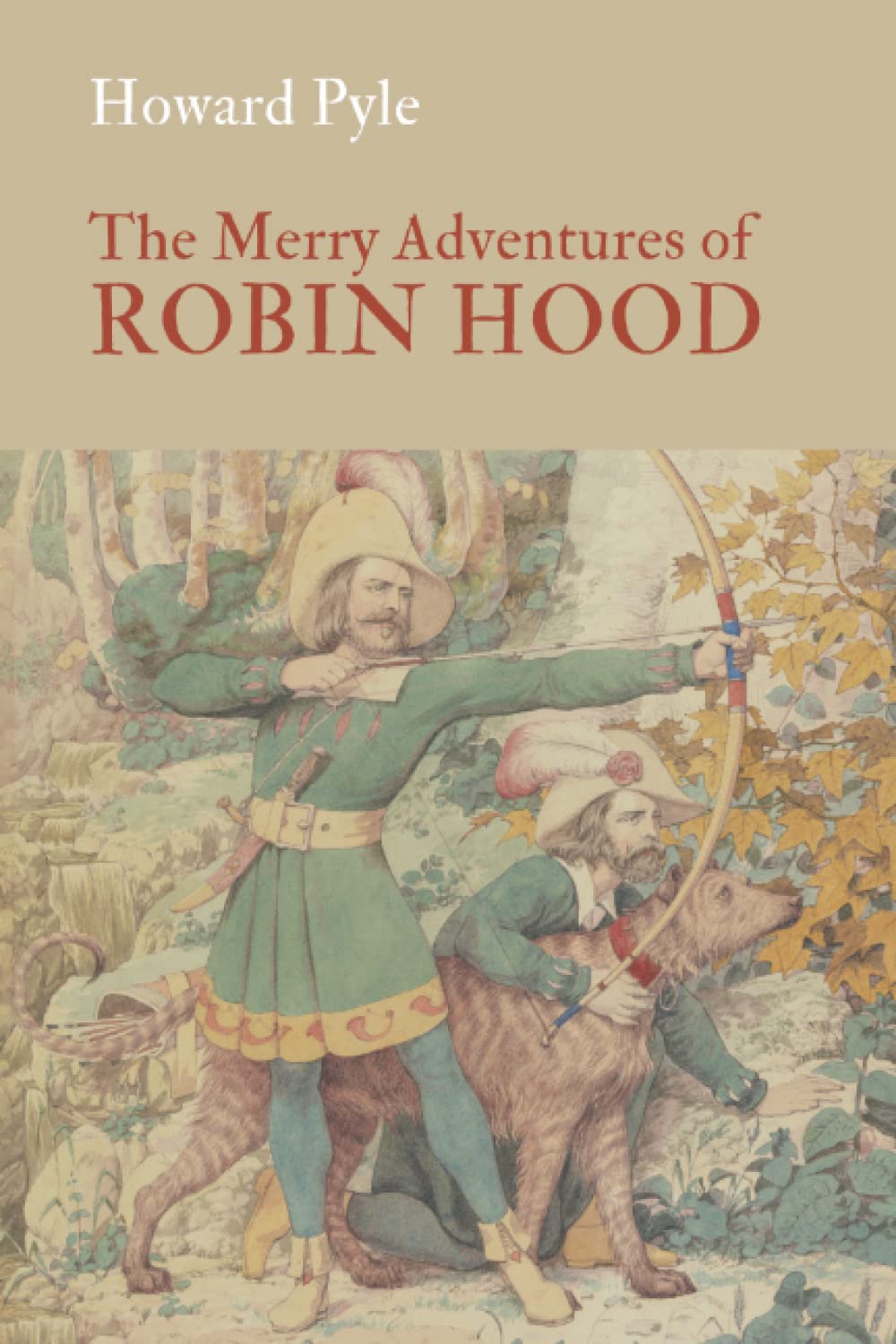
The Merry Adventures of Robin Hood of Great Renown in Nottinghamshire, written and illustrated by Howard Pyle and published by Scribner’s in 1883, is the book that established the Robin Hood most people know. Pyle compiled traditional medieval ballads about the outlaw of Sherwood Forest into a unified narrative for children — adding coherence, characterization, and his own pseudo-archaic prose style that gave the legend its distinctive voice. In Pyle’s telling, Robin Hood is a thoroughly noble figure: a yeoman who takes from the corrupt rich to give to the deserving poor, who is unfailingly generous, who fights with skill and wit rather than cruelty, and whose band of Merry Men are characterized by loyalty, humor, and a specific medieval English spirit. The book is not a novel with a continuous plot but a collection of linked episodes — each chapter a different adventure — that together follow Robin from his origins as an outlaw through his many encounters with the Sheriff of Nottingham, Friar Tuck, Little John, Will Scarlet, and Maid Marian, to his death. Pyle illustrated it himself; his woodcut-style black-and-white illustrations, rendered in a style deliberately evoking medieval manuscripts and early printing, are among the finest examples of American book illustration of the 19th century. Published with immediate success, the book is in the public domain and has been continuously in print for nearly 150 years. This guide covers reading level, the prose style challenge, content, themes, and similar books.
For Parents
The definitive literary version of the Robin Hood legend — a collection of linked adventure episodes about the outlaw of Sherwood Forest, written in Pyle’s deliberate pseudo-archaic style. Ages 10–14, grades 5–8. The Lexile is 1260L — very high, reflecting the archaic language — but the interest level and adventure content are accessible from about age 10. Best read aloud for younger children; strong independent readers from about age 12.
For Teachers
A grades 5–8 classic most productively used with specific chapters or as a read-aloud rather than as an independent reading assignment in full. The pseudo-archaic prose rewards reading aloud considerably more than silent reading. Pyle’s illustrations are exceptional for visual literacy work. Howard Pyle (1853–1911) taught the Brandywine School illustrators (N.C. Wyeth, Jessie Willcox Smith). Public domain; available free online.
The Merry Adventures of Robin Hood at a Glance
Find on Amazon →| Author & Illustrator | Howard Pyle (1853–1911) |
| Published | 1883 (Charles Scribner’s Sons) |
| Grade Level | 5–8 (full text); 4–7 (adapted/abridged editions) |
| Recommended Age | 10–14 (full text); 8–12 (abridged) |
| Lexile | 1260L (reflects archaic language; see below) |
| ATOS Level | Not confirmed |
| Pages | ~296 |
| Format | Linked episode collection (not a continuous plot novel) |
| Genre | Adventure / legend / historical fiction / classic |
| Setting | Sherwood Forest, Nottinghamshire; medieval England |
| Status | Public domain; available free at Project Gutenberg |
For official Lexile and AR levels, visit Lexile.com or AR BookFinder. ReadingVine provides independent editorial assessments.
What Reading Level Is The Merry Adventures of Robin Hood?
The Lexile of 1260L is among the highest in this catalog — higher even than The Jungle Book (1140L) — and reflects the specific challenge of Pyle’s prose: a deliberately archaic style designed to evoke medieval English ballads, full of “thee” and “thou,” “prithee” and “marry,” “good morrow” and “God-den.” The vocabulary and sentence structure are not complex in the way of 19th-century adult literary prose; they are archaic in the way of a skilled modern author reaching backward to create a period voice. Readers who find this style charming and fun — and many do — read a different book than readers who find it tiresome.
Our assessment: grades 5–8 for the full text, ages 10–14. The adventure content and episodic structure are accessible from about age 10; the archaic dialogue is the barrier. The book is widely noted as an excellent read-aloud — one Amazon reviewer calls the archaic text “fun to read aloud” — and classroom use as a teacher read-aloud or family reading-together is the most natural format. For official scores, visit Lexile.com or AR BookFinder.
What Pyle Did to Robin Hood
The Robin Hood of medieval ballads was a yeoman outlaw — skilled with a bow, occasionally violent, not particularly philanthropic. In Pyle’s 1883 retelling, Robin becomes a thoroughly noble hero: a man who robs the rich specifically to give to the poor, whose violence is always in service of justice rather than personal gain, whose band is characterized by loyalty and good humor, and whose relationship with authority is principled rather than merely criminal. This version of Robin Hood — the philanthropic hero of Sherwood — is now the universal one. Nearly every Robin Hood film, novel, and stage production since 1883 draws on Pyle’s characterization rather than the medieval originals.
Pyle also created or solidified many of the specific story episodes that are now considered canonical: the quarterstaff fight between Robin and Little John on the bridge; the encounter with Friar Tuck; the golden arrow at the Sheriff’s archery contest; the complicity of Alan-a-Dale. Some of these have medieval ballad origins that Pyle drew on; others are substantially Pyle’s own invention or elaboration. The book is both a compilation of tradition and an act of creative mythology-making.
The Episodic Structure — How to Use the Book
The Merry Adventures of Robin Hood is not a continuous plot novel. Each chapter is a distinct adventure episode that can be read independently of the others — Robin meets Little John; Robin encounters Friar Tuck; Robin outwits the Sheriff; and so on. The episodes are linked by character continuity and by the general arc from Robin’s origins to his death, but there is no single sustained plot that makes any individual chapter incomprehensible without the preceding ones.
This episodic structure makes the book more flexible for classroom and family use than its Lexile suggests. Individual chapters can be assigned or read aloud as discrete units; a parent or teacher can read “Robin Hood and the Tinker” or “The Shooting Match at Nottingham Town” with a child without needing to have started from the beginning. For children who are curious about the legend but not ready for the full book, starting with one or two of the most famous episodes is a natural entry point.
Howard Pyle’s Illustrations
Pyle’s illustrations for The Merry Adventures of Robin Hood — black-and-white pen and ink drawings in a style that deliberately evokes medieval woodcuts and early printed books — are among the finest American book illustrations of the 19th century. They set the visual standard for Robin Hood and his men that subsequent illustrators and filmmakers have been working from or against ever since. The green-clad archer in Sherwood Forest; the quarter-staff fight on the bridge; Friar Tuck wading in the river — these images are Pyle’s, and they have been replicated and adapted across 140 years of Robin Hood storytelling. Pyle went on to illustrate the King Arthur stories, pirate adventures, and the medieval settings that would define his career, training N.C. Wyeth, Jessie Willcox Smith, Harvey Dunn, and other artists who became the defining illustrators of early 20th-century American children’s publishing.
The Merry Adventures of Robin Hood Themes and Lessons
The book’s central moral argument — that law and justice are not always the same thing, and that a person who breaks corrupt laws in service of genuine justice can be a hero — is one of children’s literature’s most persistent themes and one of its most genuinely complex ones. Robin Hood steals. He breaks the king’s forest laws. He resists legitimate (if corrupt) authority. Pyle never frames any of this as a problem; the entire narrative endorses Robin’s choices. This is worth discussing with children who are old enough to ask whether stealing is always wrong, and whether authority is always right.
Discussion questions: Is Robin Hood right to steal from the rich to give to the poor — is it stealing if it goes to someone who needs it? What makes the Sheriff of Nottingham a villain rather than simply an officer of the law? How does Pyle’s Robin Hood differ from the medieval ballad tradition he drew on? What does the archaic language add to the reading experience — does it make it feel more like a legend?
Books Similar to The Merry Adventures of Robin Hood
About Howard Pyle
Howard Pyle (1853–1911) was born in Wilmington, Delaware, studied art in Philadelphia and New York, and became one of the most influential American illustrators and children’s authors of the 19th century. The Merry Adventures of Robin Hood (1883) was his first book and established his reputation immediately. He went on to write and illustrate a four-volume retelling of the King Arthur legends (The Story of King Arthur and His Knights, 1903, and three sequels), Men of Iron (1892), Otto of the Silver Hand (1888), and many other works. He is credited with establishing the modern visual iconography of pirates — his swashbuckling illustrations created the image of pirate dress and behavior that film and popular culture have perpetuated since. In 1894 he began teaching illustration at Drexel Institute, and in 1900 he founded his own school of art, the Howard Pyle School of Illustration Art, which trained N.C. Wyeth, Jessie Willcox Smith, Harvey Dunn, Frank Schoonover, and others who would become the defining illustrators of early 20th-century American children’s books and magazines — a group later called the Brandywine School. He died in 1911 in Florence, Italy, while visiting Europe to study mural painting.
The Merry Adventures of Robin Hood: Frequently Asked Questions
What reading level is The Merry Adventures of Robin Hood?
Lexile 1260L — the highest in this catalog for a children’s book, reflecting Pyle’s deliberately archaic prose style rather than complex adult literary vocabulary. Our assessment: grades 5–8 for the full text, ages 10–14. Best read aloud for younger children; appropriate as independent reading for strong readers 12 and up. For official scores, visit Lexile.com or AR BookFinder.
What is The Merry Adventures of Robin Hood about?
The linked adventure episodes of Robin Hood — how he became an outlaw, how he recruited the Merry Men (Little John, Friar Tuck, Will Scarlet, Alan-a-Dale), his many encounters with and outwitting of the Sheriff of Nottingham, his contests with the king’s men, and ultimately his death. Pyle’s Robin is a philanthropic hero who steals from the corrupt rich to give to the deserving poor, setting the standard for all Robin Hood stories since.
Why is the Lexile so high for a children’s book?
The 1260L reflects Pyle’s pseudo-archaic prose style — deliberately written to evoke medieval English ballads, full of archaic terms and constructions (“thee,” “thou,” “prithee,” “marry,” “God-den”). The adventure content and moral framework are entirely accessible to children from about age 10; the language is the barrier, not the ideas. The book is widely recommended as a read-aloud specifically because the archaic language is enjoyable when heard.
Do I have to read it from the beginning?
No — the book is organized as linked episodes, each a self-contained adventure. Individual chapters can be read independently; starting with one of the most famous episodes (“Robin Hood and the Tinker,” “The Shooting Match at Nottingham Town,” or “Robin Hood and Little John”) is a natural entry point for children who are curious about the legend but not ready for the full book.
Who is Howard Pyle?
Howard Pyle (1853–1911) was the American author and illustrator who wrote The Merry Adventures of Robin Hood, the four-volume King Arthur series, and many other illustrated children’s books. He is credited with establishing the modern visual iconography of both Robin Hood and pirates, and his school of illustration trained N.C. Wyeth, Jessie Willcox Smith, and other artists who became the defining illustrators of early 20th-century American children’s literature — a group called the Brandywine School.