
 = Partner Site
The Mysterious Benedict Society Reading Level: A Complete Guide
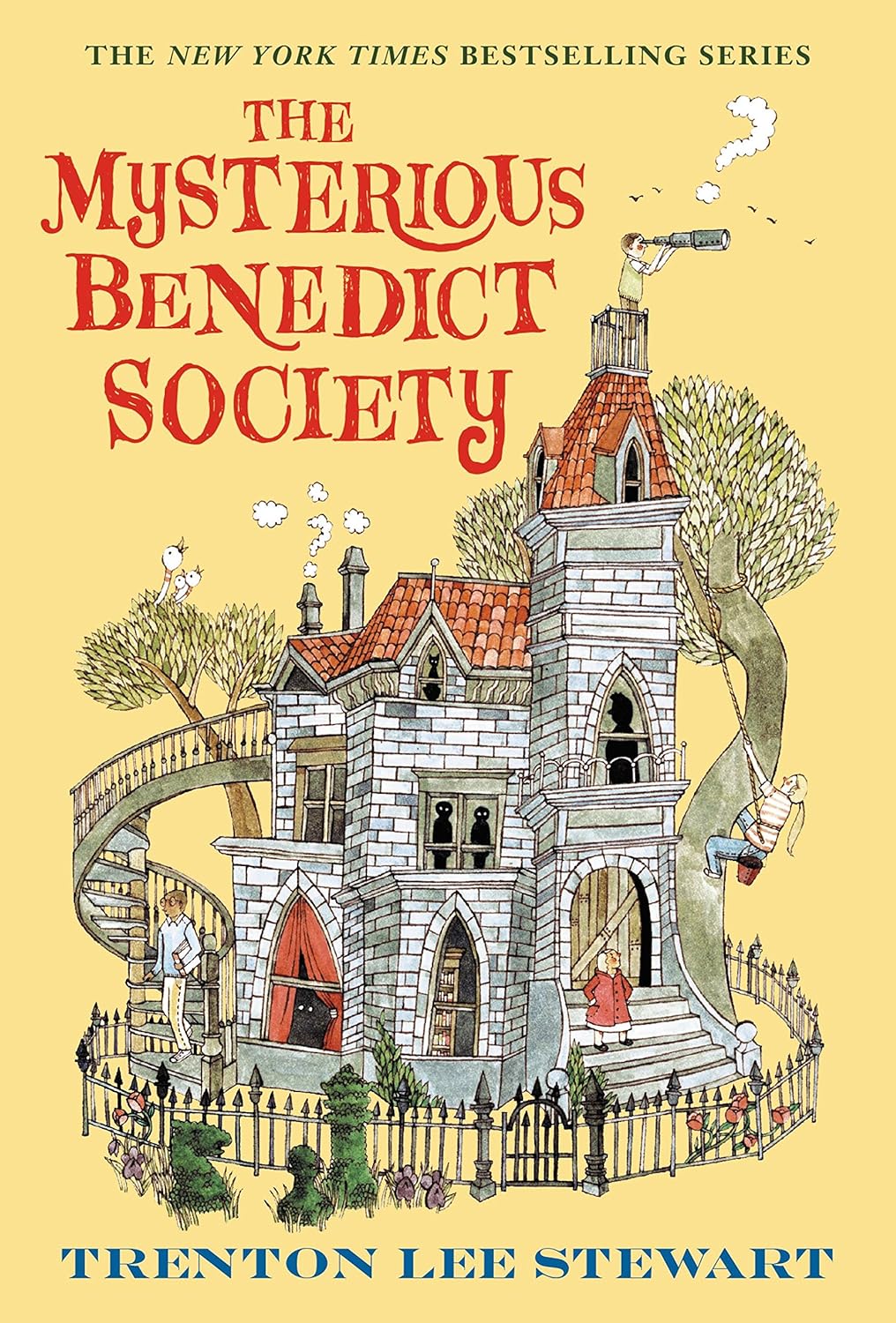
The Mysterious Benedict Society, written by Trenton Lee Stewart and illustrated by Carson Ellis, is a 485-page adventure novel about four gifted children who respond to a peculiar newspaper advertisement — “Are you a gifted child looking for special opportunities?” — and, after surviving a grueling series of mind-bending tests, are recruited by the eccentric Mr. Benedict for a secret mission that only the most resourceful, intelligent, and morally courageous children could survive. The mission: to infiltrate the Learning Institute for the Very Enlightened, a school on a private island run by the sinister Mr. Curtain, who is using a device called the Whisperer to broadcast hidden messages into people’s minds across the country, manufacturing anxiety and dependence. The four children — Reynie Muldoon, Kate Wetherall, George “Sticky” Washington, and Constance Contraire — are the only ones who can stop him, and they must do it as undercover students, without outside communication, while not blowing each other’s cover. First published in 2007 by Little, Brown, it received starred reviews from Kirkus, School Library Journal, and Booklist, became a New York Times bestseller, launched a beloved series, and was adapted into a streaming television series by Disney+. This complete guide covers The Mysterious Benedict Society‘s reading level, recommended age, content considerations, key characters, themes, and similar books — designed for parents, teachers, and students.
For Parents
A long, inventive, deeply satisfying adventure novel about four very different gifted children who must work together to stop a mind-control conspiracy — one of the most beloved middle-grade series of the past two decades. Ages 8–14, grades 4–8. No content concerns beyond standard adventure peril. The opening test sequence alone has converted hundreds of thousands of reluctant readers into enthusiastic ones. Be prepared: once a child starts this series, they read all of it.
For Teachers
A grades 4–8 classroom and independent reading standard — rich in themes of intelligence, teamwork, identity, and resistance to manipulation. The opening test sequence is one of the most effective tools for teaching logical reasoning and creative problem-solving in children’s fiction. The Disney+ adaptation is a productive companion text. The four protagonists’ distinct gifted profiles make the book excellent for discussions of different types of intelligence and what it means to contribute to a group.
The Mysterious Benedict Society at a Glance
Find on Amazon →| Author | Trenton Lee Stewart |
| Illustrator | Carson Ellis |
| Published | 2007 (Little, Brown Books for Young Readers) |
| Grade Level | 4–8 (our assessment) |
| Recommended Age | 8–14 |
| Lexile | ~870–890L (estimated; series range) |
| ATOS Level | ~5.9–6.1 (estimated; series range) |
| Word Count | 118,460 |
| Pages | 485–512 (editions vary) |
| Genre | Adventure / mystery / speculative fiction |
| Series | The Mysterious Benedict Society (4 books + prequel) |
For official Lexile and AR levels, visit Lexile.com or AR BookFinder. ReadingVine provides independent editorial assessments.
What Reading Level Is The Mysterious Benedict Society?
The Mysterious Benedict Society has an estimated Lexile of approximately 870–890L and an ATOS level of approximately 5.9–6.1, based on the series’ confirmed scores for Books 2 and 4 (890L, ATOS 6.1 and 830L, ATOS 5.9 respectively). These scores place it at a grades 5–7 independent reading level — consistent with the publisher’s recommendation (grades 4–8) and with its widespread use across those grades. At 118,460 words and approximately 500 pages, it is one of the longest books in this catalog, comparable in length to the middle Harry Potter volumes.
Despite the length and the reading level scores, the book is consistently one of the most effective page-turners in middle-grade publishing: the opening test sequence hooks readers immediately, the four protagonists’ dynamics generate sustained interest, and the mystery of the Whisperer and Mr. Curtain gives the plot its forward momentum. Teachers and parents who are concerned about the length typically find that children who start the book do not need encouragement to finish it. For official Lexile and AR scores, visit Lexile.com or AR BookFinder. ReadingVine’s assessments are independent editorial judgments.
What Age Is The Mysterious Benedict Society Appropriate For?
We recommend The Mysterious Benedict Society for readers ages 8–14, grades 4–8. There are no significant content concerns: the peril is adventure-level — children in danger, a mind-control conspiracy, physical challenges — without graphic violence or disturbing content. The book is emotionally and intellectually demanding in exactly the right ways: it requires sustained attention, rewards careful reading of the logical puzzles embedded in the text, and asks children to think seriously about manipulation, propaganda, and the ethics of intelligence. It is appropriate for advanced fourth-graders reading independently and deeply satisfying for eighth-graders who want something substantial.
The Opening Tests — The Book’s Most Famous Sequence
The first section of The Mysterious Benedict Society — in which dozens of children take a series of increasingly strange and challenging tests to determine who is qualified for Mr. Benedict’s mission — is one of the most celebrated opening sequences in middle-grade fiction. The tests are genuinely difficult, genuinely clever, and genuinely fair: they test not just raw intelligence but resourcefulness, creativity, honesty, and the specific quality of caring about the right things. They also invite the reader to solve them alongside the characters, which makes the reading active rather than passive from the first pages.
The tests include a standard pencil-and-paper exam with a trick question (“Is today’s test the most important one you will ever take?”), a maze with an unorthodox solution, and a series of subsequent challenges that each require a different kind of intelligence. Crucially, the four children who pass are not the four who score highest on the standard exam — they are the four who see through the standard approaches to the non-obvious solutions. This is the book’s most important implicit argument: that the kind of intelligence needed to do genuinely good work in the world is not the kind measured by conventional tests. Stewart does not state this directly; he embeds it in the structure of the selection process itself.
For classroom use, the opening test sequence is extraordinary: teachers have used individual test problems as discussion starters for logical reasoning, creative problem-solving, and the question of what intelligence actually means. The “is today’s test the most important one?” question alone has generated more classroom discussion than most dedicated lesson plans on the subject.
What Is The Mysterious Benedict Society About?
A newspaper advertisement asks: “Are you a gifted child looking for special opportunities?” Reynie Muldoon — a quiet, perceptive orphan who lives at Stonetown Orphanage and tutors himself with library books — responds and begins a series of extraordinary tests. He passes each one in ways the test designers did not entirely anticipate. He is not alone: Kate Wetherall, athletic and practical, arrives with a bucket full of tools she never puts down. George Washington, called Sticky because facts stick to him — once read, never forgotten — arrives terrified but passes despite himself. Constance Contraire, a tiny and extraordinarily difficult child with opinions about everything and no apparent desire to cooperate, passes in ways that only later make sense.
The four children are summoned to meet Mr. Benedict — a brilliant, deeply good man with a condition called narcolepsy (he falls asleep when he laughs, so his assistants try not to say anything funny) — who explains the mission. His twin brother, Ledroptha Curtain, runs the Learning Institute for the Very Enlightened: a school for exceptional children on a private island, apparently a prestigious opportunity. In reality, Curtain has built a device called the Whisperer, which reads and transmits thoughts through a receiver. He is broadcasting hidden messages into people’s minds across the country, generating an “Emergency” — a pervasive, sourceless anxiety — that makes people more dependent on his information and more susceptible to his influence. Only children are immune to the Whisperer’s messages; specifically, the most strong-minded, unusual, and independently thinking children. Only the four children who passed Mr. Benedict’s tests.
The four must enter the Institute as students, earn Curtain’s trust, identify what the Whisperer is doing, and find a way to shut it down — all without communicating with the outside world, without revealing that they know each other before arriving, and without getting caught by Curtain or his student enforcers, called Executives and Messengers. The novel follows them through the Institute across a school year, as they build their friendship, discover the full extent of Curtain’s plan, and work out a solution that requires every one of them to contribute what only they can do.
The Mysterious Benedict Society Characters
The Mysterious Benedict Society Themes and Lessons
The book’s most sustained and most serious argument is about manipulation: specifically, how a sufficiently sophisticated system of influence can make people anxious, dependent, and unable to think clearly — without anyone ever noticing it is happening. The Whisperer’s “Emergency” is an anxiety that feels sourceless because it is sourceless; people reach for Curtain’s reassurances because the anxiety is real even though its cause is manufactured. This is recognizable as a description of media manipulation, propaganda, and algorithmic anxiety amplification — and the book was published in 2007, well before any of those terms were in common use. Stewart’s prescience on this point makes the book more relevant with each passing year and more productive for classroom discussion than it may have seemed at publication.
The four protagonists’ different kinds of intelligence — Reynie’s perception, Kate’s practical capability, Sticky’s encyclopedic memory, Constance’s stubborn resistance — are never ranked against each other. Each is indispensable; none is sufficient alone. The book argues, through the structure of its plot rather than through statement, that genuine intelligence is not a single quality measurable on a single scale. The test sequence at the opening makes this argument structurally: the four children who pass are not the four highest scorers on the conventional exam but the four who see through the conventional approaches. This is worth naming for children who are labeled gifted in some ways and feel that other ways of being smart are not valued.
Discussion questions for classrooms and families: What made each of the four children pass the tests — what quality did each one have that the others didn’t? Why do you think only children were immune to the Whisperer’s messages? What was the most ethically difficult moment for Reynie — and what did he decide? Is Constance’s stubbornness a gift or a problem, or both? What does Mr. Curtain have in common with his brother, and how are they different?
The Mysterious Benedict Society Series
The series includes four main novels and a prequel: The Mysterious Benedict Society (2007), The Mysterious Benedict Society and the Perilous Journey (2008), The Mysterious Benedict Society and the Prisoner’s Dilemma (2009), a long pause, then The Mysterious Benedict Society and the Riddle of Ages (2019), and the prequel The Extraordinary Education of Nicholas Benedict (2012), which tells Mr. Benedict’s own childhood story as a gifted orphan. All four children return for the full series; the later books develop their individual character arcs considerably. The Disney+ streaming series, produced with Stewart’s involvement, covers the first book across two seasons and has introduced the series to a new generation of readers.
How Long Is The Mysterious Benedict Society?
The Mysterious Benedict Society is approximately 500 pages with 118,460 words — one of the longer books in this catalog, comparable to the middle Harry Potter volumes. Most independent readers ages 10–14 complete it in two to four weeks; enthusiastic readers ages 8–12 have been known to finish it in a single weekend. The book’s reputation as a page-turner is accurate and well-earned. The audiobook is narrated by Del Roy (Books 1 and 2) and is widely available and highly recommended.
Books Similar to The Mysterious Benedict Society
About Trenton Lee Stewart and Carson Ellis
Trenton Lee Stewart grew up in Fernwood, Arkansas, and holds degrees in English and creative writing from Hendrix College and the Iowa Writers’ Workshop — one of the most prestigious creative writing programs in the United States. He taught English and writing before turning to fiction, and has said that the four children of the Mysterious Benedict Society are in some ways composites of the different kinds of gifted students he encountered in his classroom: children whose intelligence was real and whose needs were not always being met by conventional educational systems. He wrote the first book over several years, refining the opening test sequence extensively. He now lives in Arkansas.
Carson Ellis is an illustrator based in Portland, Oregon, known for her distinctive, slightly surreal visual style. She provided the chapter heading illustrations for the Mysterious Benedict Society series — small, elegant pen-and-ink drawings that give the books their visual identity without defining the characters so specifically as to constrain the reader’s imagination. She has also illustrated the Wildwood trilogy with her husband Colin Meloy, the Decemberists’ frontman, and several picture books including Du Iz Tak? and Home. Her illustration style for the Benedict Society is deliberately restrained: she understands that a book this long should not define its characters too visually.
The Mysterious Benedict Society: Frequently Asked Questions
What reading level is The Mysterious Benedict Society?
Estimated Lexile ~870–890L and ATOS ~5.9–6.1, based on series-confirmed scores for Books 2 and 4 (TeachingBooks does not publish Book 1’s scores directly). Our assessment: grades 4–8, ages 8–14. At 118,460 words and approximately 500 pages, one of the longer books in this catalog. For official Lexile and AR scores, visit Lexile.com or AR BookFinder.
What is The Mysterious Benedict Society about?
Four gifted children — Reynie, Kate, Sticky, and Constance — are recruited by the eccentric Mr. Benedict after surviving an extraordinary series of tests. Their mission: to infiltrate a prestigious school run by Mr. Benedict’s twin brother, whose device called the Whisperer is broadcasting hidden messages into people’s minds across the country, manufacturing anxiety and making people susceptible to his influence. Only the four children can stop him — but they must do it undercover, without outside communication, without blowing each other’s cover.
What age is The Mysterious Benedict Society for?
Ages 8–14, grades 4–8. No significant content concerns beyond standard adventure peril. The book is intellectually demanding — the puzzles in the opening test sequence are genuinely difficult, and the plot requires sustained attention across 500 pages — but it is also one of the most effective page-turners in middle-grade publishing, and motivated readers at the younger end of the range often surprise adults with how quickly they finish it.
Is there a Mysterious Benedict Society TV show?
Yes — a Disney+ streaming series, produced with Trenton Lee Stewart’s involvement, covers the first book across two seasons. It has introduced the series to a new generation of readers and is generally regarded as a faithful and well-cast adaptation of Stewart’s first novel. Families who finish the book will find the series a warm companion; families who discover the show first often seek out the books immediately.
How many books are in The Mysterious Benedict Society series?
Four main novels plus a prequel: The Mysterious Benedict Society (2007), The Mysterious Benedict Society and the Perilous Journey (2008), The Mysterious Benedict Society and the Prisoner’s Dilemma (2009), The Mysterious Benedict Society and the Riddle of Ages (2019), and the prequel The Extraordinary Education of Nicholas Benedict (2012), which tells Mr. Benedict’s childhood story. All four children appear in the full series.
Why can only children resist the Whisperer?
The Whisperer transmits hidden messages that generate anxiety and create dependence on Mr. Curtain’s reassurances. Adults — who are more formed in their habits of thought and more susceptible to social pressure — are affected. The most strong-minded, unusual, and independently thinking children resist it, because their thinking does not yet follow the patterns the Whisperer exploits. Specifically, the four children who pass Mr. Benedict’s tests are the most resistant of all — their particular combination of gifts makes them almost immune. This is the book’s most prescient argument: that independent thinking is both the rarest and the most valuable quality in a world of manufactured anxiety.