
 = Partner Site
The Serpent’s Shadow Reading Level: A Complete Guide
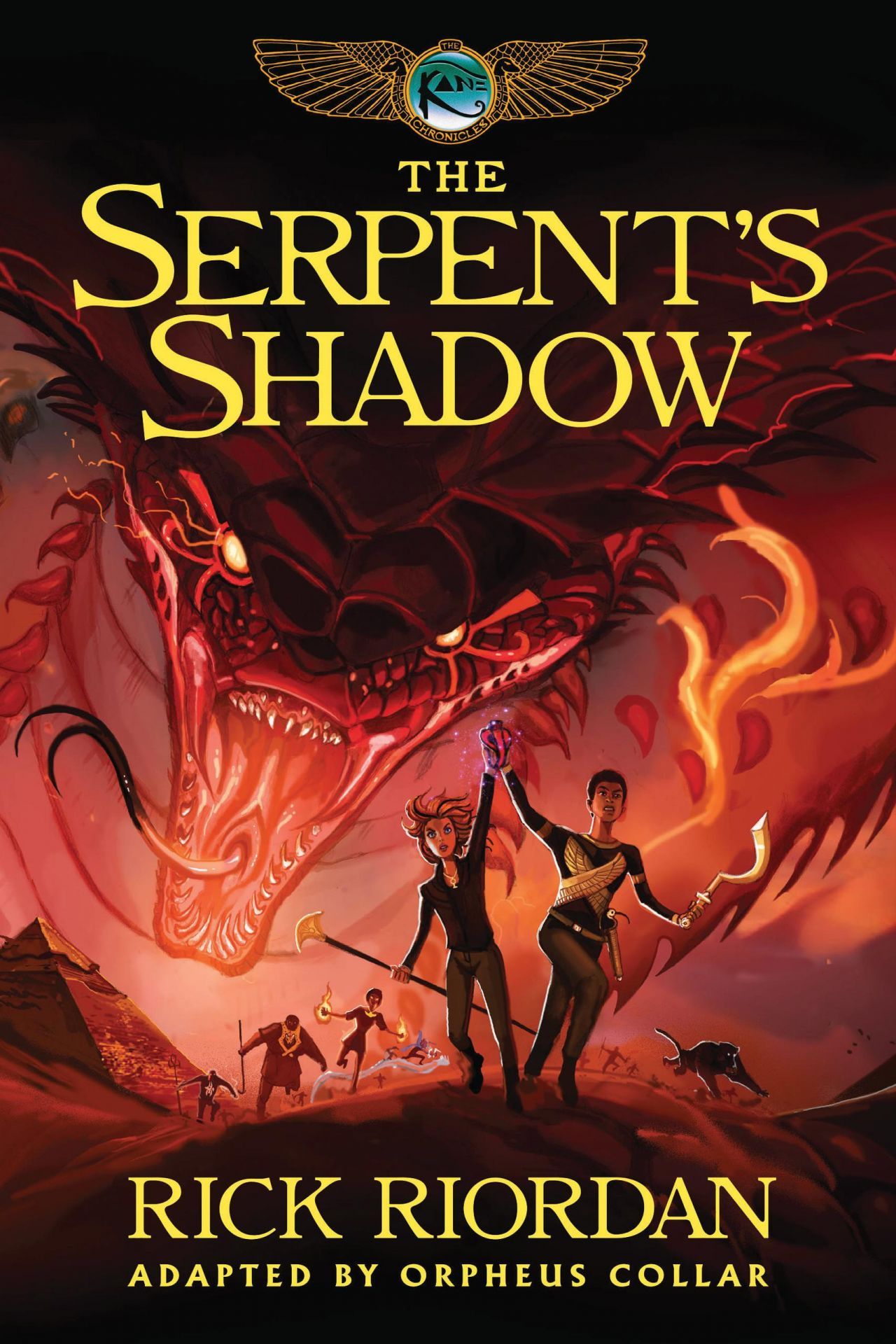
The Serpent’s Shadow by Rick Riordan is the third and final book in the Kane Chronicles trilogy, following Carter and Sadie Kane as they face Apophis — the serpent of chaos — in a final confrontation that will determine whether the Egyptian magical world survives. The shortest and most focused book in the series, it draws every major character arc to a conclusion, resolves the romantic complications that have been building across two books, and delivers a final battle that is both satisfying on its own terms and generous in the callbacks it makes to everything that came before. This complete guide covers The Serpent’s Shadow‘s reading level, recommended age, content considerations, characters, themes, and books similar to The Serpent’s Shadow, designed for parents, teachers, and students.
For Parents
The tightest and most emotionally satisfying book in the trilogy — the romantic threads are resolved in an inventive and genuinely moving way, the final battle is well-staged, and the conclusion honors everything the series built. Best for readers ages 9–13 who have read the first two books.
For Teachers
The conclusion of the series unit — most effective when read as the payoff for the Egyptian mythology introduced in Books 1 and 2. The concept of shadow magic (the idea that a person’s shadow represents their legacy and impact) opens useful discussion of what we leave behind and what survives us. The Walt/Anubis resolution is one of the series’ most inventive mythological moves.
The Serpent’s Shadow at a Glance
Find on Amazon →| Author | Rick Riordan |
| Published | 2012 |
| Grade Level | 4–7 (our assessment) |
| Recommended Age | 9–13 |
| Flesch-Kincaid Grade | ~4.8 |
| Word Count | 98,599 |
| Pages | 416 (Disney Hyperion hardcover) |
| Chapters | 32 |
| Genre | Fantasy / mythology / adventure |
| Setting | New York; Egypt; the Duat; the Land of the Dead; contemporary |
| Series | The Kane Chronicles, Book 3 |
For official Lexile and AR levels, visit Lexile.com or AR BookFinder. ReadingVine provides independent editorial assessments.
What Reading Level Is The Serpent’s Shadow?
The Serpent’s Shadow reads at approximately a 4th–7th grade level by our editorial assessment, with a Flesch-Kincaid grade level of around 4.8 — consistent with the second book. At 98,599 words and 416 pages, it is the shortest book in the trilogy, and it reads faster than either predecessor because the setup work is complete and the novel can move directly toward its resolution. The alternating Carter/Sadie narration continues, and both voices are at their most confident here — three books in, Riordan has these characters precisely calibrated.
The reading demands are primarily contextual. The Serpent’s Shadow is entirely inaccessible to readers who haven’t completed the first two books — the characters, their relationships, the mythology, and the stakes all depend completely on what has been established before. For readers who have followed the series, the density of callbacks and payoffs is part of the pleasure. For official Lexile and AR scores, visit Lexile.com or AR BookFinder. ReadingVine’s assessments are independent editorial judgments.
What Age Is The Serpent’s Shadow Appropriate For?
We recommend The Serpent’s Shadow for readers ages 9–13 who have read the first two books. The content is appropriate for the full range. The final battle with Apophis is the most intense sequence in the trilogy, involving significant magical violence and characters in genuine danger, but it is handled within the adventure genre’s conventions without gratuitous content. The romantic resolutions — Sadie’s feelings for both Anubis and Walt, Carter’s relationship with Zia — are handled warmly and entirely appropriately for the age range. One character effectively dies and is immediately reborn in a different form, which requires some explanation but is not distressing once understood.
What Is The Serpent’s Shadow About?
Apophis is no longer a distant threat — he is actively making his move, attacking the House of Life, consuming gods, and growing powerful enough to swallow the sun. The Egyptian magical world is fracturing: the House of Life’s magicians are in near-civil war, the gods are divided and weakened, and Brooklyn House stands almost alone. Carter and Sadie’s only hope is a spell called the Execration — a magical banishment that could destroy Apophis using his own shadow — but the spell has been lost for millennia and the one person who might know it is a murderous ghost named Setne who has every reason to mislead them.
The quest takes Carter and Sadie to Egypt and into the depths of the Duat in search of Setne and the knowledge he holds. Along the way, the book resolves the series’ major character threads — Walt’s secret and his connection to Anubis reaches its conclusion in one of Riordan’s most inventive mythological moves; Carter’s relationship with Zia advances; and Sadie’s feelings for both Anubis and Walt resolve in a way that is both surprising and, in retrospect, carefully prepared. The final battle at the Brooklyn Bridge is the series’ most ambitious set piece, involving the full cast of characters who have been gathered across three books.
The novel’s title refers to its central magical concept: in Egyptian belief, a person’s shadow represents their legacy, their impact on the world. The spell that might destroy Apophis works by turning the chaos serpent’s own shadow — his legacy of destruction — against him. This is both the book’s plot mechanism and its thematic statement: what you build or destroy echoes beyond you, and what you leave behind can define you as surely as what you did while living.
The Serpent’s Shadow Characters
Is The Serpent’s Shadow Banned?
The Serpent’s Shadow has been challenged in some schools and libraries on the same grounds as the first two books — its treatment of Egyptian gods as real and present. These challenges have not resulted in widespread removal. The book is widely available and does not appear on any major challenged books lists as a standalone title.
The Serpent’s Shadow Themes and Lessons
The shadow concept is the novel’s central thematic contribution. In Egyptian belief, the shadow (the sheut) was one of the five parts of the soul — and it represented a person’s impact on the world, their legacy, what they left behind after they were gone. The spell that might destroy Apophis works by turning his shadow — the legacy of everything he has destroyed — against him. The novel is asking: what do we leave in the world by what we do? Is the shadow we cast a source of power or a source of vulnerability?
Walt’s resolution is the trilogy’s most emotionally resonant moment and its most inventive use of Egyptian mythology. The relationship between Anubis, the god of death and funerals, and Walt, a young man who is dying, is resolved through a genuinely Egyptian understanding of what it means for a human being to become host to a god — not possession but something closer to partnership, with the human consciousness remaining intact. Riordan’s research into Egyptian religious concepts about the relationship between the living and the dead makes this work in a way it couldn’t in a series drawing on less specific mythology.
The trilogy’s final argument is about what Carter and Sadie have built — not the battle they have won, but Brooklyn House, the community they have gathered, the young magicians they have trained to take their place. The Kanes began as isolated children who barely knew each other; they end as the center of a community. This is Riordan’s most explicit statement that heroism is not about individual triumph but about what you build and who you bring with you.
Discussion questions for classrooms and families: What does the shadow concept mean — and how does turning Apophis’s shadow against him reflect what he has been? How does Walt’s resolution honor both his own story and the mythological tradition it draws on? What has Brooklyn House become by the end of the trilogy — and what does that say about what Carter and Sadie value? How does the series’ ending compare to the Percy Jackson ending in what it says about heroism?
How Many Pages and Chapters in The Serpent’s Shadow?
The Disney Hyperion hardcover is 416 pages across 32 chapters. Word count is 98,599 words — the shortest of the three Kane Chronicles books and the fastest read in the trilogy. Most readers in the target age range finish it in one week of comfortable reading, and many finish it faster once the final battle sequence begins. The paperback edition includes the short story “The Son of Sobek,” a crossover in which Carter Kane meets Percy Jackson — worth reading as a coda to both series.
Books Similar to The Serpent’s Shadow
About Rick Riordan
Rick Riordan was born in 1964 in San Antonio, Texas. The Serpent’s Shadow, published in 2012, completed the Kane Chronicles trilogy and the first phase of what has become an extensive mythology universe. Riordan has said that the Kane Chronicles holds a special place in his catalog because Carter and Sadie were his first protagonists who were not white — a deliberate choice he made because he believed mythology education was more powerful when children could see themselves in the heroes, and because Egyptian mythology has specific and historically accurate connections to African heritage that he wanted to honor.
The paperback edition of The Serpent’s Shadow includes “The Son of Sobek,” a short story crossover in which Carter meets Percy Jackson. Riordan followed the Kane Chronicles with the Magnus Chase and the Gods of Asgard series (Norse mythology) and The Trials of Apollo, and has continued to expand his mythology universe. He lives in Boston.
The Serpent’s Shadow: Frequently Asked Questions
What reading level is The Serpent’s Shadow?
The Serpent’s Shadow has a Flesch-Kincaid grade level of approximately 4.8. Our editorial assessment places it at grades 4–7 (ages 9–13). It is the shortest book in the trilogy and the fastest read. For official Lexile and AR scores, visit Lexile.com or AR BookFinder.
What grade is The Serpent’s Shadow appropriate for?
We recommend grades 4–7, for readers who have completed the first two books. Content is appropriate for the full 9–13 age range. The final battle is the most intense sequence in the trilogy but remains within adventure-genre conventions.
How many pages are in The Serpent’s Shadow?
The Disney Hyperion hardcover is 416 pages across 32 chapters. Word count is 98,599 words — the shortest of the three Kane Chronicles books. Most readers finish it in about one week.
What is The Serpent’s Shadow about?
Carter and Sadie must find a lost spell — the Execration — that might destroy Apophis using his own shadow, before the serpent of chaos gains enough power to swallow the sun and unmake the world. The search leads them to an untrustworthy ghost named Setne and ultimately to the final confrontation with Apophis that determines the fate of the Egyptian magical world.
What is shadow magic in the Kane Chronicles?
In Egyptian belief the sheut — the shadow — was one of the five parts of the soul, representing a person’s legacy and impact on the world. Shadow magic in the Kane Chronicles draws on this concept: a person’s shadow can be used as a source of magical power, and turning an enemy’s shadow against them means using the weight of everything they have done as a weapon against them. This is the key to defeating Apophis.
What happens to Walt in The Serpent’s Shadow?
Walt, who has been dying of a family curse throughout the series, becomes the human host for Anubis — allowing the god of death to inhabit a mortal body while Walt’s own consciousness remains present and alive. This resolves both Walt’s death sentence and the complication of Sadie’s feelings for both of them simultaneously. The resolution is grounded in genuine Egyptian mythology about the relationship between the living and the dead.
Is The Serpent’s Shadow the end of the Kane Chronicles?
Yes — it is the trilogy’s conclusion. The story continues in a series of crossover short stories (“The Son of Sobek,” “The Staff of Serapis,” and “The Crown of Ptolemy”) that connect the Kane Chronicles to the Percy Jackson universe. Carter and Sadie also appear in other Riordan short story collections. The main trilogy concludes completely with this book.
Does Percy Jackson appear in the Kane Chronicles?
Not in the main trilogy, but yes in the short story “The Son of Sobek,” included in the paperback edition of The Serpent’s Shadow. Carter Kane meets Percy Jackson in a story that connects the two series’ universes. Further crossover short stories — “The Staff of Serapis” (Annabeth meets Sadie) and “The Crown of Ptolemy” (all four meet) — expand the connection.