
 = Partner Site
Magnus Chase and the Gods of Asgard: Sword of Summer Reading Level: A Complete Guide
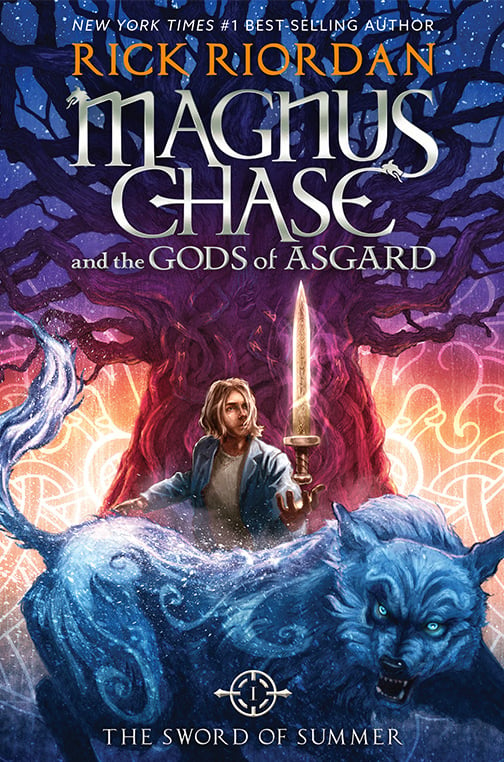
The Sword of Summer by Rick Riordan is the first book in the Magnus Chase and the Gods of Asgard trilogy, following sixteen-year-old Magnus Chase — a homeless teenager in Boston who discovers he is the son of a Norse god, dies fighting a fire giant, and wakes up in Hotel Valhalla as one of Odin’s chosen warriors. Riordan’s third mythology series applies his signature formula to Norse mythology with a protagonist who is notably different from his predecessors: Magnus is quieter, less instinctively heroic, and dealing with real trauma — the death of his mother, two years on the streets — before any of the mythology enters the picture. This complete guide covers The Sword of Summer‘s reading level, recommended age, content considerations, characters, themes, and books similar to The Sword of Summer, designed for parents, teachers, and students.
For Parents
The most emotionally grounded of Riordan’s series openers — Magnus’s homelessness and grief are handled with real specificity before the mythology begins. The cast is the most diverse in Riordan’s catalog, including a deaf elf, a Muslim Valkyrie, and a dwarf with a passion for fashion. Best for readers ages 10–14.
For Teachers
A strong grades 5–8 independent read that provides accessible Norse mythology education — Ragnarök, Yggdrasil, the Nine Worlds, Valhalla, and the einherjar are all introduced clearly and engagingly. The cast’s explicit diversity makes it a natural text for discussions of representation. Connects directly to the Percy Jackson universe through Magnus’s cousin Annabeth Chase.
The Sword of Summer at a Glance
Find on Amazon →| Author | Rick Riordan |
| Published | 2015 |
| Grade Level | 5–8 (our assessment) |
| Recommended Age | 10–14 |
| Flesch-Kincaid Grade | ~4.8 |
| Word Count | 117,670 |
| Pages | 513 (Disney Hyperion hardcover) |
| Chapters | 70 |
| Genre | Fantasy / mythology / adventure |
| Setting | Boston; Hotel Valhalla; the Nine Worlds of Norse mythology; contemporary |
| Series | Magnus Chase and the Gods of Asgard, Book 1 |
For official Lexile and AR levels, visit Lexile.com or AR BookFinder. ReadingVine provides independent editorial assessments.
What Reading Level Is The Sword of Summer?
The Sword of Summer reads at approximately a 5th–8th grade level by our editorial assessment, with a Flesch-Kincaid grade level of around 4.8. The prose is accessible and fast-moving, written in Magnus’s first-person voice — dryer and more self-deprecating than Percy Jackson’s, but equally immediate. The seventy short chapters make the 513-page book feel considerably more approachable than its length suggests; Riordan’s chapter-ending hooks are as reliable as ever, and each chapter averages around seven pages.
We place the series one grade band higher than Percy Jackson (5–8 rather than 3–6) because the subject matter is somewhat more mature. Magnus has been homeless for two years following his mother’s murder, the Norse mythological framework involves more genuinely dark material than the Greek — Ragnarök is the end of everything, not just a battle to win — and the series’ emotional register is deeper and more grief-weighted than the earlier books. The mythology itself is also less familiar, though Riordan always provides what readers need. At 117,670 words, it is comparable in length to The Red Pyramid and most readers finish it in one to two weeks. For official Lexile and AR scores, visit Lexile.com or AR BookFinder. ReadingVine’s assessments are independent editorial judgments.
What Age Is The Sword of Summer Appropriate For?
We recommend The Sword of Summer for readers ages 10–14. The content is appropriate for the full range — there is no sexual content, no profanity, and the violence is adventure-story combat. The elements worth noting for parents are primarily in the novel’s premise and emotional texture rather than in specific scenes.
Magnus Chase begins the novel as a homeless teenager, having lived on the streets of Boston for two years following his mother’s death — killed by wolves connected to the mythological world. His homelessness is depicted with genuine specificity: he knows which shelters are safe, which soup kitchens are good, which weather is survivable. This is not sanitized or treated as a quirky backstory. Parents of readers who are sensitive to themes of parental loss, homelessness, or family instability should be aware that these are the novel’s emotional foundation, not incidental details. Magnus also dies in the first act — fighting a fire giant — and is resurrected as an einherjar, one of Odin’s chosen warriors destined to fight at Ragnarök. Death and resurrection are treated thoughtfully, and the afterlife of Valhalla is rendered with humor, but the fact of Magnus’s death is handled with more weight than Riordan’s earlier protagonists’ encounters with mortality. The Norse mythological framework is darker overall than Greek or Egyptian: Ragnarök is not a battle to be prevented indefinitely but one to be delayed, and the series is honest about the difference.
For readers 10 and up, the darker emotional foundation is what makes The Sword of Summer feel more substantial than the lighter Percy Jackson openers. The humor remains throughout — the chapter titles alone are worth the price — but the series earns its comedy against a backdrop that takes grief and loss seriously.
What Is The Sword of Summer About?
Magnus Chase has been living on the streets of Boston for two years, since the night his mother told him to run and was killed by wolves he didn’t fully understand. He has avoided his remaining family, including his uncle Randolph — a man his mother warned him about — and survived by his wits. When Randolph tracks him down and tells him he is the son of a Norse god and must find a legendary sword before it falls into the wrong hands, Magnus dismisses it. Then fire giants attack, and Magnus fights back, and falls into the Charles River, and dies.
He wakes up in Hotel Valhalla — a gleaming tower in Boston’s Back Bay where Odin’s chosen warriors, the einherjar, prepare for Ragnarök by fighting and dying and being resurrected every day. His Valkyrie escort, Samirah al-Abbas, explains the situation: Magnus is the son of Frey, the Norse god of summer and health, and he has been chosen to fight in the final battle at the end of the world. The sword he died trying to find — Jack, the Sword of Summer, which is sentient and opinionated — is still missing, and without it, Ragnarök may come sooner rather than later.
The quest to find Jack takes Magnus and his growing group of companions — Sam, the elven runecaster Hearthstone (deaf, communicating in sign language), the dwarf weaponsmith Blitzen (devoted to fine tailoring), and a talking horse named Stanley — across the Nine Worlds of Norse mythology, from the halls of the dwarves to the realm of the giants to the edge of Niflheim. Riordan’s Norse mythology is faithful enough to his sources that readers familiar with the Eddas will recognize the encounters and the rules; readers new to it will find everything they need.
The Sword of Summer Characters
Is The Sword of Summer Banned?
The Sword of Summer has been challenged in some schools and libraries on the same grounds as Riordan’s earlier series — its portrayal of pagan mythology as real and worthy of engagement. The series has also drawn some challenges specifically related to its diverse cast: Sam’s Muslim faith, Hearthstone’s deafness, and in Book 2, Alex Fierro’s gender identity. These challenges have not resulted in widespread removal. The series is widely available and has been recognized by educators and librarians for its representation of marginalized communities.
The Sword of Summer Themes and Lessons
The series’ most immediate thematic distinction from Riordan’s earlier work is its treatment of chosen family. Magnus’s biological family has largely failed him — his mother is dead, his father is absent, his uncle Randolph proves complicated, his other uncle Fredrick has been kept from him. The people who become his family are Hearthstone, Blitzen, and Sam — an elf, a dwarf, and a Valkyrie who have nothing in common except their connection to Magnus and to each other. The series argues consistently and warmly that chosen family is as real as blood family, and sometimes more reliable.
Hearthstone’s deafness is handled with more specificity and care than disability typically receives in middle-grade fiction. He communicates in ASL throughout the series, his companions learn to sign, and the novel depicts both the richness of Deaf culture and the specific ways a hearing world has dismissed and failed him. His backstory — the loss that drove him to seek power — is the trilogy’s most emotionally serious personal history, and Riordan handles it without sentimentality.
The Norse mythological framework introduces a concept absent from the Greek and Egyptian series: inevitability. Ragnarök is coming, it cannot be permanently prevented, and the best the heroes can do is delay it and face it with courage when it arrives. This is a genuinely different relationship to fate than Percy or the Kanes have — closer to the actual Norse mythological worldview — and it gives the series a more melancholy undertone that some readers find more resonant than the Greek series’ sunnier disposition.
Discussion questions for classrooms and families: What makes Blitzen and Hearthstone Magnus’s family even though they are not related? How does Magnus’s homelessness shape his approach to the mythological world? What does the series say about heroism by making Magnus’s power a healing magic rather than a fighting power? How is the Norse view of fate (Ragnarök is coming) different from the Greek view (Fate can be changed)?
How Many Pages and Chapters in The Sword of Summer?
The Disney Hyperion hardcover is 513 pages across 70 very short chapters — averaging around seven pages each, with chapter titles that are among the funniest in Riordan’s catalog. Word count is 117,670 words. The short chapters make the book feel faster than its length suggests, and most readers in the target age range finish it in one to two weeks. The novel’s seventy chapters give it the same relentless forward momentum as Riordan’s earlier series while covering more emotional ground per chapter.
Books Similar to The Sword of Summer
About Rick Riordan
Rick Riordan was born in 1964 in San Antonio, Texas, and spent fifteen years as a middle school English and history teacher before the Percy Jackson series made him one of the best-selling children’s authors in the world. He has said that the Magnus Chase series was deliberately designed to address gaps he saw in his own catalog: a protagonist from a marginalized background (homelessness), a main cast that included characters with disabilities (Hearthstone), characters from non-Christian religious traditions (Sam’s Islam), and characters whose gender identity would be addressed directly (Alex Fierro in Book 2). The Norse mythology was chosen partly because of its particular emotional character — darker and more fatalistic than Greek mythology, with a worldview that Riordan found more honest about the nature of loss.
The Magnus Chase trilogy was published between 2015 and 2017. It connects to the Percy Jackson universe through Annabeth Chase, Magnus’s cousin. Riordan has continued to expand his mythology universe with The Trials of Apollo and other series. He lives in Boston.
The Sword of Summer: Frequently Asked Questions
What reading level is The Sword of Summer?
The Sword of Summer has a Flesch-Kincaid grade level of approximately 4.8. Our editorial assessment places it at grades 5–8 (ages 10–14) — one grade band above Percy Jackson, reflecting the darker emotional tone and more mature subject matter. For official Lexile and AR scores, visit Lexile.com or AR BookFinder.
What grade is The Sword of Summer appropriate for?
We recommend grades 5–8. Strong 5th-grade readers who have followed the Percy Jackson series will manage it comfortably; the grief, homelessness, and Norse mythological darkness make it more suitable for readers 10 and up than the lighter Percy Jackson openers.
How many pages are in The Sword of Summer?
The Disney Hyperion hardcover is 513 pages across 70 short chapters. Word count is 117,670 words. Most readers in the target age range finish it in one to two weeks.
What is The Sword of Summer about?
Magnus Chase is a sixteen-year-old homeless teenager in Boston who discovers he is the son of the Norse god Frey — and dies fighting a fire giant before he can process this information. He wakes up in Hotel Valhalla as one of Odin’s chosen warriors, and must find a legendary sentient sword before it falls into the wrong hands and Ragnarök arrives ahead of schedule.
Is Magnus Chase related to Percy Jackson?
Yes — Magnus Chase is the cousin of Annabeth Chase, Percy Jackson’s girlfriend and one of the series’ main characters. They share a last name and a family connection, and Annabeth appears briefly in this book to establish the relationship. No Percy Jackson familiarity is required to enjoy the Magnus Chase series, though readers of the earlier series will enjoy the connection.
Do I need to read Percy Jackson first?
No. The Magnus Chase series stands completely on its own — the Norse mythology is introduced fresh, the characters are all new, and the story is self-contained. The connection to Percy Jackson is a bonus for fans of the earlier series, not a prerequisite.
What is an einherjar in Norse mythology?
The einherjar are the warriors chosen by the Valkyries after dying heroically in battle, brought to Valhalla to train and feast and fight in preparation for Ragnarök — the final battle at the end of the world. In the novel, Magnus becomes an einherjar and lives in Hotel Valhalla, dying and being resurrected daily in combat training. The einherjar are drawn from genuine Norse mythology: the Prose Edda describes Valhalla and its warriors in detail.
What Norse myths are in The Sword of Summer?
The novel draws on the Prose Edda and Poetic Edda for its mythological material — the Nine Worlds of Yggdrasil (the World Tree), Valhalla and the einherjar, Fenris Wolf and his binding, the myth of Sumarbrander (the Sword of Summer), the dwarves of Nidavellir, and the general structure of Norse cosmology including Odin, Frey, Thor, and Loki. Riordan is faithful enough to his sources that readers familiar with Norse mythology will recognize most of his material.