
 = Partner Site
El Deafo Reading Level: A Complete Guide
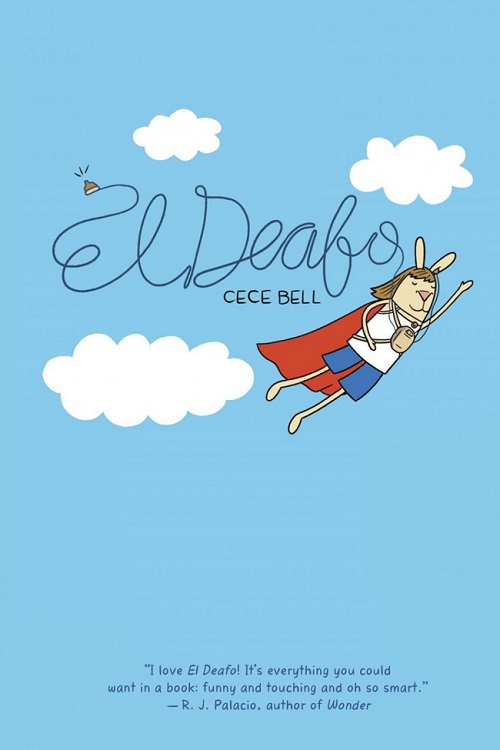
El Deafo by Cece Bell is a Newbery Honor graphic memoir about the author’s own experience losing her hearing as a young child and growing up deaf in a hearing world. Warm, funny, and deeply honest about the loneliness and small triumphs of navigating difference, it follows Cece from her diagnosis through elementary school as she figures out friendship, crushes, and what it means to find a superpower in something the world mostly treats as a limitation. This complete guide covers El Deafo‘s reading level, recommended age, content considerations, characters, themes, and books similar to El Deafo, designed for parents, teachers, and students.
For Parents
A warm, accessible graphic memoir that handles disability, loneliness, and the awkwardness of childhood friendship with honesty and humor. Best for readers ages 8–12, it is particularly valuable for children who have a hearing loss or know someone who does — but its portrait of feeling different resonates well beyond that experience.
For Teachers
A Newbery Honor book well suited to grades 3–6, El Deafo is an excellent text for teaching memoir, disability representation, and the graphic novel as a literary form. The visual format makes it highly accessible to reluctant readers, and the friendship dynamics give it rich material for discussion. Pairs naturally with Hello, Universe for a unit on belonging and difference.
El Deafo at a Glance
Find on Amazon →| Author / Illustrator | Cece Bell |
| Published | 2014 |
| Grade Level | 3–6 (our assessment) |
| Recommended Age | 8–12 |
| Flesch-Kincaid Grade | ~2.9 |
| Word Count | ~8,000 (prose text) |
| Pages | 248 (Amulet Books hardcover) |
| Genre | Graphic memoir / autobiography |
| Setting | Virginia, 1970s–1980s |
| Awards | Newbery Honor (2015); Eisner Award (2015) |
For official Lexile and AR levels, visit Lexile.com or AR BookFinder. ReadingVine provides independent editorial assessments.
What Reading Level Is El Deafo?
El Deafo reads at approximately a 3rd–6th grade level by our editorial assessment. The Flesch-Kincaid formula places the prose text at around grade 2.9 — low, as is typical for graphic novels where the storytelling is distributed between words and pictures. The actual reading experience sits considerably above that number: Bell’s memoir deals with complex emotions, social dynamics, and the specific cognitive and social challenges of hearing loss in ways that reward maturity and life experience.
As with all graphic novels, the reading level score captures only the text, not the work required to read images alongside words — a skill that involves its own kind of sophistication. Strong readers in 3rd grade will follow the story comfortably; the emotional nuance of the friendship dynamics and the memoir’s reflection on identity and difference will land more fully for readers in 4th–6th grade. For official Lexile and AR scores, visit Lexile.com or AR BookFinder. ReadingVine’s assessments are independent editorial judgments.
What Age Is El Deafo Appropriate For?
We recommend El Deafo for readers ages 8–12. The book contains no violence, no profanity, and no mature content. Its emotional difficulty is entirely appropriate to the age range — the loneliness of feeling different, the complexity of childhood friendships, the embarrassment of having a visible disability in a world not designed for it. One chapter involves Cece accidentally eavesdropping on a teacher when her powerful hearing aid picks up sounds from across the school, which is played for gentle comedy rather than anything concerning.
The book is particularly meaningful for children who are deaf or hard of hearing, or who have a family member or friend with hearing loss — it gives language and form to experiences that are often invisible in children’s literature. For all readers, it is an honest and generous portrait of what it is like to navigate a world built around an ability you don’t fully share.
What Is El Deafo About?
Cece Bell was four years old when bacterial meningitis left her profoundly deaf. The world she had known — full of sound, of her mother’s voice, of television and music — became suddenly silent, and she had to learn to navigate it again from the beginning. El Deafo follows her from that diagnosis through elementary school, rendered in Bell’s warm, rounded illustration style with all the characters drawn as anthropomorphic rabbits.
The memoir’s central challenge is not deafness itself but the social landscape it creates. Cece wears a Phonic Ear — a large, powerful hearing aid worn on her chest — that makes her visibly different from her classmates and that she initially finds humiliating. But the Phonic Ear has an unexpected property: it picks up sound from a transmitter worn by her teacher, which means Cece can hear her teacher wherever she goes in the school — in the hallway, in the bathroom, at lunch. Cece begins to see the Phonic Ear not as a limitation but as a superpower, and herself not as Cece the deaf girl but as El Deafo, superhero.
The memoir’s emotional core is friendship — specifically the difficulty of finding a friend who sees Cece as a person rather than as a project, a curiosity, or a responsibility. Bell depicts several friendships that don’t quite work — the girl who speaks too loudly and too carefully, the girl who speaks for Cece without asking, the boy who doesn’t seem to notice the hearing aid at all — with the specificity and honesty that comes from having actually lived through them. The friendship that finally works, when it comes, is all the more satisfying for the ones that didn’t.
El Deafo Characters
Is El Deafo Banned?
El Deafo has not been banned or formally challenged in American schools or libraries and does not appear on any lists of frequently challenged books. It is widely shelved and assigned without controversy and is considered a distinguished, age-appropriate work of graphic memoir. Its Newbery Honor and Eisner Award recognition have made it a standard recommendation across school and public library collections.
El Deafo Themes and Lessons
The memoir’s central argument is that difference can be a source of power rather than only a source of limitation — but Bell earns this conclusion rather than asserting it. She first shows, with great honesty, all the ways hearing loss actually does limit her: the social misunderstandings, the exhaustion of lipreading, the specific humiliation of being visibly different in a school where everyone wants to be the same. The El Deafo reframe — seeing the Phonic Ear as a superpower rather than a burden — is not a denial of those difficulties but a way of holding them differently.
The friendship thread is the memoir’s most instructive element. Bell distinguishes clearly between friends who accommodate her disability and friends who see her, and the distinction turns out to matter more than anything else. Martha and Ginny both mean well; their failure is not of intention but of attention — they respond to the hearing loss rather than to Cece. Emma succeeds not because she ignores the hearing loss but because she never lets it define her relationship with Cece. This is one of the most useful things any book has said to children about how to be a good friend to someone with a disability.
Discussion questions for classrooms and families: What is the difference between the way Martha treats Cece and the way Emma treats her — why does one feel like friendship and the other doesn’t? What does Cece mean when she thinks of herself as El Deafo? Have you ever felt like something that made you different could also be a strength? What would you want a friend to know about how to treat you if you had a hearing loss?
How Many Pages in El Deafo?
El Deafo is 248 pages in a graphic memoir format with no formal chapter divisions — the story flows continuously, broken by scene and time changes rather than numbered chapters. At approximately 8,000 words of prose text, the reading experience is driven primarily by Bell’s illustrations. Most readers in the target age range finish it in one to three sittings. The memoir covers roughly a decade of Cece’s childhood, from her meningitis diagnosis at age four through early adolescence, and the pacing is episodic rather than plot-driven — each section focuses on a period or a relationship rather than building toward a single climactic event.
Books Similar to El Deafo
About Cece Bell
Cece Bell was born in 1971 in Salem, Virginia. She contracted bacterial meningitis at age four, which left her profoundly deaf. She grew up wearing a Phonic Ear hearing aid and attended mainstream schools, the experiences that form the basis of El Deafo. She later received cochlear implants as an adult. Bell studied art and has worked as an illustrator and author of children’s books for many years, but El Deafo — her first graphic memoir — is by far her most celebrated work.
El Deafo was published in 2014 and won both a Newbery Honor and an Eisner Award the following year, an unusual combination that reflects its recognition as both distinguished literature and distinguished comics work. Bell has said in interviews that she wrote the book because she wished it had existed when she was growing up — that she had needed to see herself and her experience reflected in a book, and that it hadn’t been there. She lives in Virginia with her husband, the author Tom Angleberger.
El Deafo: Frequently Asked Questions
What reading level is El Deafo?
El Deafo has a Flesch-Kincaid grade level of approximately 2.9 for its prose text. Our editorial assessment places it at grades 3–6 (ages 8–12). The emotional nuance of the memoir sits well above the sentence-level score; readers in 4th–6th grade will get the most from it. For official Lexile and AR scores, visit Lexile.com or AR BookFinder.
What grade is El Deafo appropriate for?
We recommend grades 3–6 as the primary range. Strong 3rd-grade readers will follow the story comfortably; the friendship dynamics and the memoir’s reflection on identity land more fully for readers in 4th grade and up. It works well as a classroom read-aloud for grades 3–4 and as an independent read from grades 3–6.
How many pages are in El Deafo?
The Amulet Books hardcover is 248 pages in a continuous graphic memoir format with no numbered chapters. At approximately 8,000 words of prose text, most readers finish it in one to three sittings.
What is El Deafo about?
Cece Bell’s graphic memoir about losing her hearing at age four and growing up deaf in a hearing world. It follows her through childhood and early adolescence as she navigates school, friendship, and the experience of being visibly different — and gradually discovers that the powerful hearing aid she finds humiliating might actually be a superpower.
Is El Deafo a true story?
Yes. El Deafo is a memoir — the autobiographical account of Cece Bell’s own childhood. The events, friendships, and experiences depicted are drawn from her real life. Bell has said she wrote it because she wished a book like it had existed when she was growing up.
Why are the characters drawn as rabbits in El Deafo?
Bell has said in interviews that drawing the characters as anthropomorphic rabbits was partly a way of creating some emotional distance from events that were personally difficult to depict, and partly an aesthetic choice that suited the warm, slightly cartoonish tone she wanted. The rabbit ears also have a practical visual function — they make the characters’ reactions and emotions easy to read at a glance in a format where facial expression carries a lot of narrative weight.
What is a Phonic Ear?
The Phonic Ear is the hearing aid Cece wears in the memoir — a large, chest-worn device common in the 1970s that used FM radio technology to transmit sound from a microphone worn by her teacher directly to her hearing aid. It was significantly more powerful than standard hearing aids of the era, which is why it could pick up her teacher’s voice from elsewhere in the school building. The device and its unexpected range are central to the memoir’s El Deafo superpower concept.
Is El Deafo good for a child with hearing loss?
Yes — it is one of the most meaningful books available for children who are deaf or hard of hearing. Bell’s memoir gives language and form to experiences that are rarely depicted in children’s literature, and many readers with hearing loss have described it as the first time they saw their own life reflected in a book. It is equally valuable for hearing children who know someone with hearing loss, and for all children as a portrait of what it means to find your own kind of strength.