
 = Partner Site
Dog Man Reading Level: A Complete Guide
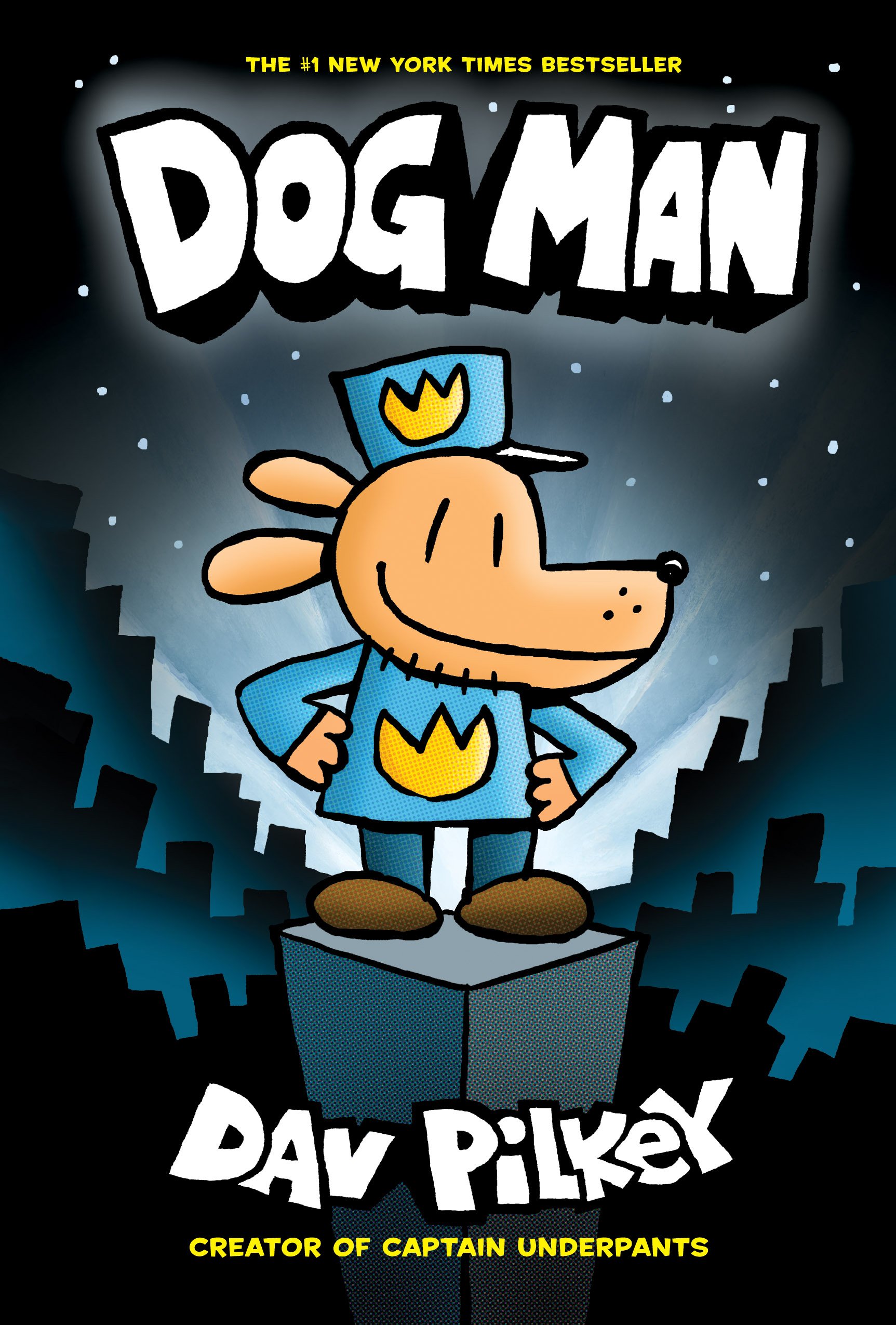
Dog Man by Dav Pilkey is the first book in the Dog Man series, a full-color graphic novel about a police officer and his dog who are fused together after an accident, creating a crime-fighting hero who is part man, part dog, and entirely committed to justice — if easily distracted by fire hydrants. Spun off from the Captain Underpants universe, it is drawn by fictional child characters George and Harold and shares the same exuberant, gloriously silly spirit. This complete guide covers Dog Man‘s reading level, recommended age, content considerations, characters, themes, and books similar to Dog Man, designed for parents, teachers, and students.
For Parents
The most effective graphic novel series in print for early and reluctant readers — Dog Man combines full-color illustrations, simple text, and Pilkey’s reliably funny slapstick to create a book that children who claim to hate reading finish in a single sitting. Best for ages 6–10.
For Teachers
An outstanding choice for independent reading in grades 1–4, particularly for reluctant readers and early readers building stamina. The graphic novel format makes it genuinely accessible to children who find prose chapter books daunting, and the series is long enough to sustain independent reading habits through multiple volumes.
Dog Man at a Glance
Find on Amazon →| Author / Illustrator | Dav Pilkey |
| Published | 2016 |
| Grade Level | 1–4 (our assessment) |
| Recommended Age | 5–10 |
| Flesch-Kincaid Grade | ~2.3 |
| Word Count | ~1,500 (prose text) |
| Pages | 224 (Scholastic hardcover) |
| Chapters | 10 |
| Genre | Graphic novel / humor |
| Setting | A fictional city, contemporary |
| Series | Dog Man, Book 1 |
For official Lexile and AR levels, visit Lexile.com or AR BookFinder. ReadingVine provides independent editorial assessments.
What Reading Level Is Dog Man?
Dog Man reads at approximately a 1st–4th grade level by our editorial assessment, with a Flesch-Kincaid grade level of around 2.3. The actual prose text is minimal — approximately 1,500 words across 224 pages — because the vast majority of the storytelling is done through full-color illustrations in a graphic novel format. The text that does appear is simple, punchy, and often presented as dialogue or caption boxes rather than flowing prose. A beginning reader who has mastered basic phonics can follow the story independently.
Like the Captain Underpants books, Dog Man is deliberately designed to lower every barrier a reluctant or early reader faces. The pages are visually engaging, the story moves fast, the humor pays off constantly, and the format makes a 224-page book feel nothing like a 224-page book. The series is particularly effective for children who are not yet reading fluently and need something that rewards effort immediately. For official Lexile and AR scores, visit Lexile.com or AR BookFinder. ReadingVine’s assessments are independent editorial judgments.
What Age Is Dog Man Appropriate For?
We recommend Dog Man for readers ages 5–10. The content is entirely harmless — the violence is cartoon slapstick with no real consequences, the humor is broad and physical, and there is nothing mature or upsetting in the series. The villain Petey the Cat is menacing in a purely comic way, and his schemes are foiled with consistent cheerfulness. It is one of the most content-safe recommendations in the catalog for young readers.
The one note worth making for parents is the same as for Captain Underpants: the book’s humor is rooted in authority figures being outsmarted and in general irreverence toward rules and institutions. This is played for laughs rather than as genuine subversion, and children in the target age range find it enormously satisfying. Parents who prefer books with more conventional moral framing should be aware of the tone.
What Is Dog Man About?
A police officer named Greg and his dog are both critically injured in an explosion. The doctor, faced with the need to save both of them, sews the dog’s head onto the officer’s body — creating Dog Man, a hero who has the strength and authority of a police officer and the loyalty, enthusiasm, and nose of a dog. Dog Man immediately sets about protecting the city from crime, primarily from the schemes of Petey the Cat, a villain whose plans for world domination are consistently elaborate, occasionally inspired, and reliably foiled.
The story is presented as a graphic novel created by George and Harold — the protagonists of the Captain Underpants series — and shares their slightly wobbly handmade aesthetic, their deliberate misspellings, and their deep affection for their subject. The framing device connects Dog Man to the Captain Underpants universe without requiring any familiarity with the earlier series; Dog Man stands completely on its own.
The book is structured in short chapters, each moving the story forward in quick bursts, and Pilkey’s visual comedy is at its best here — the gap between Dog Man’s heroic intentions and his dog instincts (chasing squirrels, begging for treats, being easily distracted by anything interesting) is the series’ central and endlessly renewable joke. The whole enterprise is warm, fast, and very funny.
Dog Man Characters
Is Dog Man Banned?
Dog Man has appeared on the American Library Association’s lists of frequently challenged books, sharing the concerns raised about the Captain Underpants series — toilet humor, disrespectful portrayal of authority figures, and content deemed inappropriate for the age group. The challenges have not resulted in widespread removal, and the series remains one of the most widely circulated in school and public libraries.
Dav Pilkey has addressed these challenges publicly, noting that the Dog Man series — like Captain Underpants — was created specifically for children who struggle with reading and who need books that meet them where they are. The series has an exceptionally strong record of engaging children who have been told they are not readers.
Dog Man Themes and Lessons
Dog Man is funnier and lighter than it is thematically ambitious in its first volume, but even here Pilkey is doing something more than just slapstick. Dog Man’s heroism is not based on superior intelligence or special training — it is based entirely on his nature, his loyalty, and his instinct toward goodness. The joke that he is easily distracted by dog things is also, quietly, a portrait of a character who is fully and happily himself, and who doesn’t need to be anything other than what he is in order to be valuable.
As the series develops, the relationship between Petey and Li’l Petey becomes its emotional core, raising the question of whether someone raised to be selfish and cruel can choose something different. This thread deepens considerably in later volumes, but its seeds are visible even in the first book in Pilkey’s interest in Petey as something more than a straightforward villain.
Discussion questions for families: Why does Dog Man always catch the bad guys even though he’s easily distracted? Is Petey a bad cat or just a sad one? What makes Dog Man a hero — is it his powers or something else?
How Many Pages and Chapters in Dog Man?
The Scholastic hardcover edition of Dog Man is 224 pages across 10 short chapters. With approximately 1,500 words of prose text, the page count is almost entirely accounted for by full-color illustrations. Most readers in the target age range finish it in one sitting of thirty to sixty minutes. The series currently runs to thirteen main volumes plus several spinoffs, including the Cat Kid Comic Club series, which follows Li’l Petey and his friends making their own comics.
Books Similar to Dog Man
About Dav Pilkey
Dav Pilkey was born in 1966 in Cleveland, Ohio. He was diagnosed with ADHD and dyslexia as a child and spent much of elementary school sitting in the hallway as punishment for disruptive behavior — which is where he drew comics. The Captain Underpants series, launched in 1997, became one of the best-selling children’s book franchises of all time. Dog Man, launched in 2016 as a spinoff of the Captain Underpants universe, has proven even more successful: the series has sold more than 50 million copies and regularly occupies the top spots on children’s bestseller lists.
Pilkey has said that Dog Man was created for the same children Captain Underpants was created for — kids who struggle with reading and who need books that are so engaging they forget they’re working. The Dog Man series has an exceptional record with reluctant readers, and Pilkey receives more mail from parents reporting that their child finished their first book because of Dog Man than from any other source. He lives in the Pacific Northwest.
Dog Man: Frequently Asked Questions
What reading level is Dog Man?
Dog Man has a Flesch-Kincaid grade level of approximately 2.3. Our editorial assessment places it at grades 1–4 (ages 5–10). With approximately 1,500 words of prose across 224 pages, the vast majority of the story is told through full-color illustrations. It is accessible to beginning readers who have mastered basic phonics. For official Lexile and AR scores, visit Lexile.com or AR BookFinder.
What grade is Dog Man appropriate for?
We recommend grades 1–4 as the primary range. Kindergarteners who are beginning to read can follow the story with minimal support; the humor holds through 5th grade and beyond for children who love graphic novels. It is one of the most reliable recommendations for reluctant and early readers in grades 1–3.
How many pages are in Dog Man?
The Scholastic hardcover is 224 pages across 10 short chapters. With roughly 1,500 words of actual prose, most readers finish it in one sitting of thirty to sixty minutes. The pages are almost entirely full-color illustration.
What is Dog Man about?
A police officer and his dog are critically injured in an explosion. The doctor saves both by sewing the dog’s head onto the officer’s body — creating Dog Man, a hero who fights crime with a police officer’s authority and a dog’s instincts. He is perpetually thwarted in his missions by fire hydrants and squirrels, and perpetually successful anyway. His primary nemesis is Petey the Cat, a scheming villain whose plans for world domination are elaborate and consistently foiled.
Is Dog Man good for a reluctant reader?
Yes — it is one of the two or three most effective reluctant reader recommendations in the entire catalog for children ages 5–9, alongside Captain Underpants. The graphic novel format, the very small amount of text per page, and the immediate humor remove almost every obstacle a reluctant reader faces. Many parents report this series as the first their child has finished voluntarily.
Is Dog Man part of a series?
Yes — the first of thirteen main Dog Man books, plus several spinoffs including the Cat Kid Comic Club series and a Fetch-22 standalone. Each book is self-contained; the series is best read in order but doesn’t require it. The later books develop Petey’s character considerably and are slightly more emotionally complex than the early volumes.
Is Dog Man related to Captain Underpants?
Yes. Dog Man is presented as a comic book series created by George and Harold — the protagonists of the Captain Underpants books — and shares their handmade aesthetic, deliberate misspellings, and comic sensibility. No familiarity with Captain Underpants is required to enjoy Dog Man; the books are fully standalone. Readers who love Dog Man and want more Pilkey will find Captain Underpants a natural next step.
Is Dog Man appropriate for a 5-year-old?
Yes, with a caveat — a 5-year-old will likely need to be read to or read alongside rather than reading independently, as most children at that age are still building their reading skills. The content is entirely appropriate; the format is highly engaging even for non-readers who can follow the visual story. It works beautifully as a shared read-aloud for this age group.