
 = Partner Site
The Voyage of the Dawn Treader Reading Level: A Complete Guide
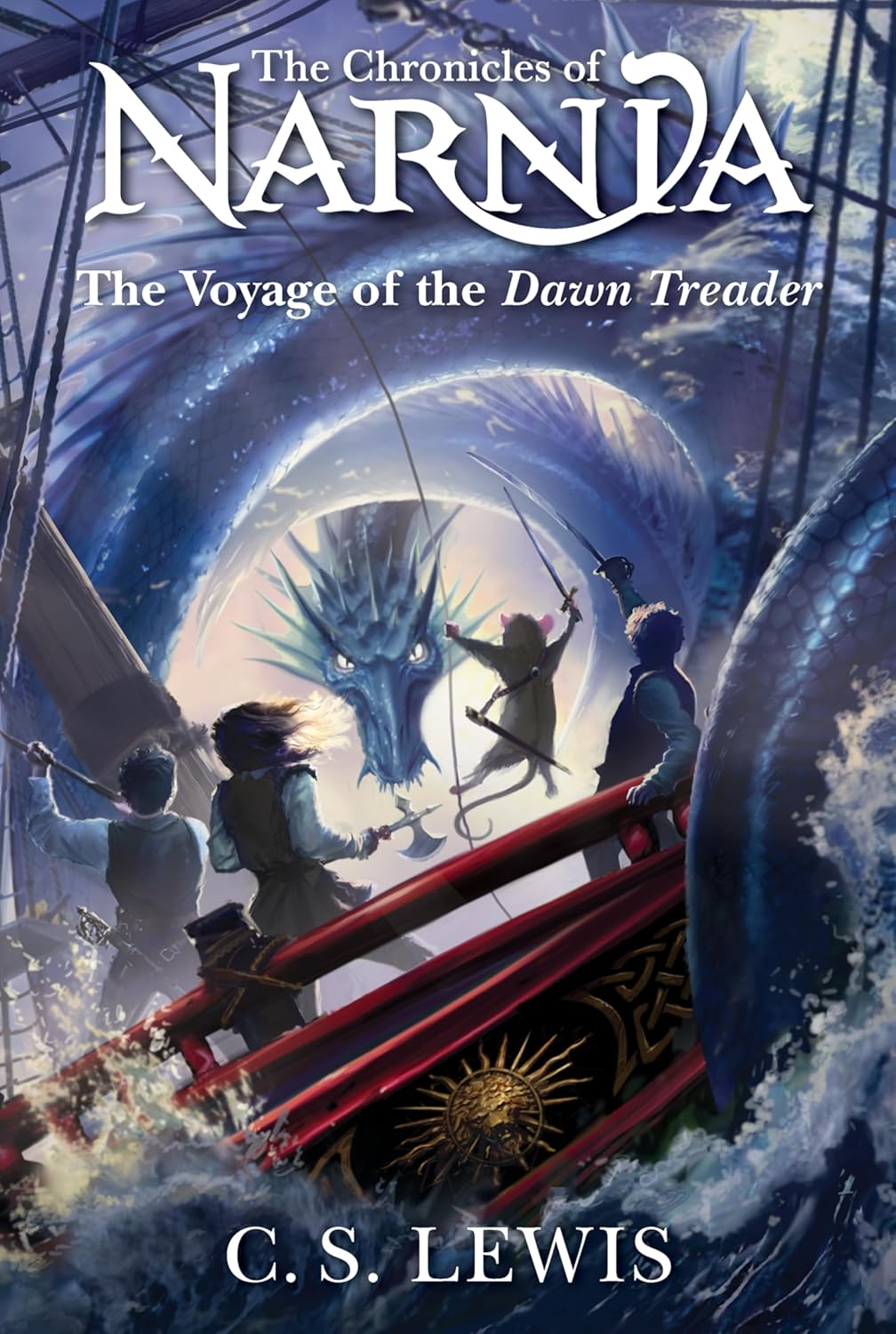
The Voyage of the Dawn Treader, written by C.S. Lewis and illustrated by Pauline Baynes, is the third published novel in the Chronicles of Narnia series (published 1952) and the fifth in the series’ internal chronological order. Unlike its predecessors, it is not a story of war or throne restoration — it is a voyage: Edmund and Lucy Pevensie, along with their insufferable cousin Eustace Scrubb, are pulled into Narnia through a painting of a ship at sea and find themselves aboard King Caspian’s vessel, the Dawn Treader, sailing east toward the edge of the world. Caspian has sworn to find the seven great lords of Narnia who were exiled by his uncle Miraz; the voyage takes the company to seven islands, each with its own wonder and its own danger. Eustace is turned into a dragon and must be un-dragoned by Aslan. Reepicheep the chivalric mouse sails his tiny coracle alone to Aslan’s country at the world’s eastern edge. Lucy hears her name spoken by a spell and is tempted by a vision of herself as she is not. The book is drawn from the Irish literary tradition of the Immram — the voyage narrative — and Lewis adapted his model directly from the medieval Voyage of Saint Brendan. Many readers consider it the finest book in the series. This complete guide covers The Voyage of the Dawn Treader‘s reading level, recommended age, content considerations, key characters, themes, and books similar to The Voyage of the Dawn Treader — designed for parents, teachers, and students.
For Parents
A sea voyage adventure — the Chronicles of Narnia book most beloved by readers who prefer wonder and discovery to battle and politics. Ages 8–12, grades 4–7. Content includes some violence (slavers, sea serpent, dark island), and Eustace’s dragon transformation may be intense for younger readers; nothing gratuitous. Best read after The Lion, the Witch and the Wardrobe and Prince Caspian.
For Teachers
A grades 4–7 classroom and independent reading text — episodic chapter structure (island by island) makes it ideal for chapter-by-chapter discussion. Eustace’s dragon transformation is the series’ richest character arc for discussion of pride, growth, and grace. The Immram voyage tradition and connection to Saint Brendan’s Voyage offer productive historical and literary context. Contains a colonial-era worldview that is worth critical examination in grades 6 and up.
The Voyage of the Dawn Treader at a Glance
Find on Amazon →| Author | C.S. Lewis (Clive Staples Lewis, 1898–1963) |
| Illustrator | Pauline Baynes |
| Published | 1952 (Geoffrey Bles; UK); HarperCollins current publisher |
| Grade Level | 4–7 (our assessment) |
| Recommended Age | 8–12 |
| Lexile | 970L |
| ATOS Level | 5.9 |
| Guided Reading Level | T |
| Word Count | 53,758 |
| Pages | ~288 (editions vary) |
| Chapters | 16 |
| Series | Chronicles of Narnia — Book 3 (publication order); Book 5 (chronological order) |
| Genre | High fantasy / voyage narrative / children’s literature |
For official Lexile and AR levels, visit Lexile.com or AR BookFinder. ReadingVine provides independent editorial assessments.
What Reading Level Is The Voyage of the Dawn Treader?
The Voyage of the Dawn Treader has a Lexile of 970L and an ATOS level of 5.9, with a Guided Reading Level of T — slightly higher than Prince Caspian (ATOS 5.7, Lexile ~870–888L) and consistent with the overall Chronicles of Narnia range. At 53,758 words it is the longest book in the Narnia series and considerably longer than the two preceding Narnia novels, which means that readers who were comfortable with the earlier books may need a little more time with this one. The prose style is identical to Lewis’s other Narnia books — clear, slightly formal, with a conversational authorial voice that occasionally addresses the reader directly.
Our editorial assessment places it at grades 4–7, ages 8–12. The episodic island-by-island structure makes it somewhat more accessible than its word count suggests: each island is essentially a self-contained episode, and the book can be discussed chapter by chapter without losing the cumulative arc. For official Lexile and AR scores, visit Lexile.com or AR BookFinder. ReadingVine’s assessments are independent editorial judgments.
What Age Is The Voyage of the Dawn Treader Appropriate For?
We recommend The Voyage of the Dawn Treader for readers ages 8–12, grades 4–7. The book contains some content worth noting. The slave market at the book’s opening is depicted with directness appropriate to the period. A sea serpent attacks the ship in a scene that some younger readers find alarming. The Dark Island — where dreams (not daydreams, but all the terrors people dream at night) come true — is the most genuinely frightening passage in the Narnia series; Lewis significantly revised this chapter between the US and UK editions, and the version in most current editions is the softer UK revision. Eustace’s transformation into a dragon is presented as the natural consequence of greedy, dragonish thinking, and his un-dragoning by Aslan is depicted as painful — he must have his dragon skin torn away, which he cannot do alone.
None of these elements are gratuitous, and children who were comfortable with The Lion, the Witch and the Wardrobe will find The Voyage of the Dawn Treader comparable or slightly more intense. The book also contains Lewis’s most explicit Christian symbolism — Aslan appearing as a lamb at the world’s edge, in an image evoking the Gospel of John — which is worth discussing with readers who are engaging with the series’ allegorical dimensions.
What Is The Voyage of the Dawn Treader About?
Edmund and Lucy Pevensie are staying with their cousin Eustace Scrubb — selfish, bookish, convinced of his own superiority, and deeply unpleasant — while Peter studies with Professor Kirke and Susan travels in America with their parents. A painting of a ship at sea pulls all three children into Narnia, where they find themselves alongside the Dawn Treader, King Caspian’s ship, now three years into Caspian’s reign. Caspian is fulfilling his coronation vow: to find the seven great lords of Narnia who were exiled by his uncle Miraz. The Dawn Treader and her crew sail east toward the edge of the world, discovering each lord — living, dead, or enchanted — at the seven islands along the way.
The islands encountered include: the Lone Islands, where a slave market is broken up and a lost lord found; Dragon Island, where Eustace’s dragonish thoughts turn him literally into a dragon, and Aslan appears at night to strip away his dragon skin; Deathwater Island, where enchanted water turns everything to gold and another lord is found petrified; the Island of the Dufflepuds, where a magician’s spell has turned his servants invisible and Lucy must find and read the spell to restore them; the Dark Island, where all dreams come true; Ramandu’s Island, where three sleeping lords lie enchanted at a golden feast; and finally the World’s End, a shallow sea of sweet water and white lilies where Reepicheep sails alone to Aslan’s country. Lucy and Edmund say goodbye to Aslan — who appears as a lamb and tells them they will find him in their own world under another name. They return to England.
Eustace Scrubb — The Book’s Greatest Character
The Voyage of the Dawn Treader opens with one of the best first sentences in children’s literature: “There was a boy called Eustace Clarence Scrubb, and he almost deserved it.” Eustace is a new kind of character for the Narnia series — not a Pevensie, not naturally heroic, not even particularly likable. He has been raised on “books that told him about exports and imports and governments and drains” rather than on fairy stories; he has never been taught to imagine anything outside the material world; he is sulky, selfish, and convinced that he is right about everything.
His transformation into a dragon is one of the most psychologically precise moments in all of Lewis’s fiction: he thinks dragonish thoughts — how to use the treasure for himself, how inconvenient everyone else is — and wakes to find himself a dragon. The transformation is not a punishment from outside but the revelation of what he already was. His un-dragoning by Aslan is the passage most Narnia readers cite as the one that moved them most: Aslan tears away his dragon skin, which Eustace cannot do on his own no matter how he tries, and the removal is painful. “That very first tear he made was so deep that I thought it had gone right into my heart,” Eustace says afterward in his journal.
Eustace returns in The Silver Chair as a significantly different person — still recognizably Eustace, but transformed. His arc across the two books is the Narnia series’ most complete and most honest account of character change, and it is grounded in Lewis’s specific theological argument: that genuine change requires something from outside the self that the self cannot provide. Aslan tears the skin; Eustace cannot. This is the series’ most direct statement of the Christian doctrine of grace, and it is also simply a very good story about what it feels like to change.
The Voyage of the Dawn Treader Characters
The Voyage of the Dawn Treader Themes and Lessons
Unlike the other Narnia books, The Voyage of the Dawn Treader has “virtually no overt villains,” as critics have noted. The slavers at the beginning are quickly defeated; every subsequent danger is either natural (the sea serpent, the storm) or a temptation internal to the characters themselves (Eustace’s greed, Lucy’s vanity, the seductiveness of the Deathwater gold). This makes the book the most psychologically oriented in the series — a voyage not just across a magical sea but through the specific moral weaknesses of the people making the journey.
The Immram tradition Lewis drew on — the Irish voyage narrative exemplified by the medieval Voyage of Saint Brendan — imagines the sea voyage as a form of spiritual progress: each island is a different temptation or test, each encounter changes the voyager, and the destination is not geographic but transcendent. Lewis adapted this structure directly, which is why the book feels different from its predecessors. It is less a narrative with a plot and more a sequence of moral encounters organized into a journey toward something the characters can feel but cannot name until they arrive.
A note on colonial-era attitudes: scholars and critics have pointed out that the book’s treatment of several island peoples — particularly the Lone Islanders who accept slavery and the Dufflepuds who are easily manipulated — reflects assumptions common in British literature of Lewis’s era about the relationship between “civilized” Europeans and the peoples they encountered. This is worth acknowledging in any classroom reading of the book with students who are old enough to discuss it critically — not to dismiss the book, but to read it with the awareness that Lewis’s imaginative world was shaped by his historical context as well as his faith.
Discussion questions for classrooms and families: What did Eustace’s dragon skin represent — and why couldn’t he tear it off himself? Why do you think Reepicheep was so certain about where he was going? What did Aslan mean when he told Edmund and Lucy they would find him in their own world under another name? What does the Dark Island (where all dreams come true) tell us about the difference between what we wish for and what we actually want?
The Voyage of the Dawn Treader Film (2010)
The 2010 20th Century Fox film, directed by Michael Apted, stars Ben Barnes as Caspian, Georgie Henley as Lucy, Skandar Keynes as Edmund, and Will Poulter as Eustace in a notably effective performance. The film restructures the episodic island sequence around a unified antagonist (a green mist that did not exist in the book) and makes other changes to impose a more conventional movie narrative arc. It is rated PG and runs approximately 113 minutes. Will Poulter’s Eustace is widely praised as the film’s highlight and as a faithful capture of Lewis’s character. The film was not followed by further Disney/Walden or Fox Narnia adaptations; a Netflix series has been in development.
How Long Is The Voyage of the Dawn Treader?
The Voyage of the Dawn Treader is approximately 288 pages across 16 chapters with 53,758 words — the longest book in the Chronicles of Narnia series and roughly equivalent to the word count of a full middle-grade novel. Most independent readers complete it in two to three weeks; classroom read-alouds typically run three to four weeks at a chapter per session. The episodic island structure means each chapter is relatively self-contained, making daily stopping points feel natural. Eustace returns in The Silver Chair, the next Narnia book in both publication and chronological order, along with a new character, Jill Pole.
Books Similar to The Voyage of the Dawn Treader
About C.S. Lewis
For a full biography of C.S. Lewis, see our Prince Caspian guide. The Voyage of the Dawn Treader was the third Narnia book published (1952) and, by many measures, Lewis’s own favorite. He said that he found the episodic voyage structure — the freedom to invent each island as its own complete world — more congenial than the more tightly plotted earlier books. The dedication is to Geoffrey Corbett (later Jeffrey Barfield), the adopted son of Owen Barfield, one of Lewis’s closest friends in the Inklings group.
Lewis drew the Immram structure from the medieval Irish Voyage of Saint Brendan directly — Caspian’s company follows Brendan’s route almost exactly, though Lewis reverses the direction (east rather than west) to signify new beginnings and rebirth rather than the traditional western association with death and endings in Celtic literature. Lewis was a medievalist by training and profession; his knowledge of the Immram tradition was deep, and his use of it is precise rather than incidental. Scholars of Celtic literature and of Lewis’s medieval sources have written extensively about the specific parallels between the Dawn Treader’s voyage and Saint Brendan’s.
The Voyage of the Dawn Treader: Frequently Asked Questions
What reading level is The Voyage of the Dawn Treader?
Lexile 970L, ATOS 5.9, Guided Reading Level T. Our assessment: grades 4–7, ages 8–12. Slightly higher scores than Prince Caspian reflecting the longer word count (53,758 words). For official Lexile and AR scores, visit Lexile.com or AR BookFinder.
What is The Voyage of the Dawn Treader about?
Edmund, Lucy, and their cousin Eustace are pulled into Narnia through a painting and join King Caspian’s ship, the Dawn Treader, sailing east to find seven exiled lords of Narnia. The voyage takes them to seven islands, each with its own wonder and danger. Eustace is turned into a dragon by his own greed and un-dragoned by Aslan. Reepicheep sails alone to Aslan’s country at the world’s edge. Edmund and Lucy say their final goodbye to Aslan.
Why does Eustace turn into a dragon in The Voyage of the Dawn Treader?
Eustace finds a dragon’s hoard on Dragon Island, puts on a golden bracelet, and falls asleep on the treasure while thinking dragonish thoughts — greedy, selfish, focused only on how to use the gold for himself. He wakes as a dragon. Lewis presents the transformation as the external revelation of what Eustace already was internally: his dragon skin is his character made visible. His un-dragoning by Aslan — which is painful and which Eustace cannot accomplish alone — is the book’s central passage about grace and character change.
What happens to Reepicheep at the end?
Reepicheep rows his tiny coracle alone into Aslan’s country at the world’s eastern edge and does not return. A Dryad prophesied at his cradle that he would one day find what he sought at the world’s end; his entire life has been oriented toward this destination. His departure is the most joyful exit in the series — not a death but an arrival — and is widely cited by readers as one of the most moving passages in the Chronicles of Narnia.
What does Aslan mean when he says Edmund and Lucy will find him in their own world?
Aslan appears as a lamb at the world’s end and tells Lucy and Edmund that they will not return to Narnia — they must learn to know him in their own world, where he has “another name.” This is Lewis’s most direct statement of the allegorical connection between Aslan and Christ: children who have learned to love Aslan in Narnia are being prepared to recognize that love in the world they actually live in. It is also simply a goodbye — loving and final — to characters the reader has followed through three books.
Is there a Voyage of the Dawn Treader movie?
Yes — the 2010 20th Century Fox film, directed by Michael Apted, starring Ben Barnes, Georgie Henley, Skandar Keynes, and Will Poulter as Eustace. Will Poulter’s performance is widely praised. The film adds a unified villain (a green mist) not in the book and restructures the episodic island sequence. Rated PG, approximately 113 minutes.