
 = Partner Site
Timmy Failure: Mistakes Were Made Reading Level: A Complete Guide
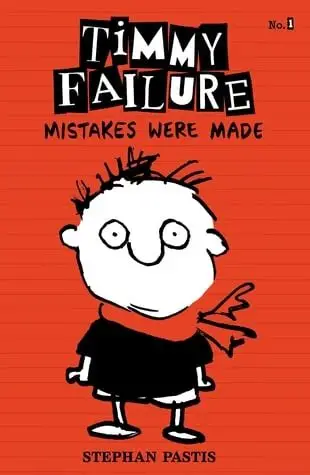
Timmy Failure: Mistakes Were Made, written and illustrated by Stephan Pastis, is a 294-page illustrated novel about Timmy Failure — the CEO of Total Failure, Inc., the best detective agency in town, and possibly the nation, a fact that Timmy himself has no doubts about despite all available evidence to the contrary. His business partner is Total, a 1,500-pound polar bear who has never spoken a word or solved a case. His first client is a classmate who wants to know who stole his Halloween candy; Timmy’s investigation concludes that the client’s younger brother “is not tidy.” Timmy is, by any objective measure, the worst detective in his city. He is also absolutely certain he is the best, and nothing — no failure, no humiliation, no overwhelming evidence — has yet convinced him otherwise. Narrated entirely by Timmy himself in a voice of supreme, delusional confidence, the book is one of the most reliably funny middle-grade novels of the past decade and one of the best available examples of the unreliable narrator in children’s literature. Published in 2013 by Candlewick Press and endorsed by Jeff Kinney (“Timmy Failure is a winner!”), it launched a series of seven books and a 2020 Disney+ film. This complete guide covers Timmy Failure‘s reading level, recommended age, content, key characters, themes, and similar books — designed for parents, teachers, and students.
For Parents
A genuinely hilarious illustrated novel about the world’s worst detective who is absolutely convinced he is the world’s best — one of the funniest middle-grade books in recent memory. Ages 8–12, grades 3–6. Mild content note: Timmy’s parents are divorcing and his mother is navigating a difficult period; handled with humor but present throughout. No other content concerns.
For Teachers
A grades 3–6 classroom and library staple — and one of the most accessible available texts for teaching unreliable narration, dramatic irony, and the gap between a narrator’s self-perception and reality. Pastis’s comic strip background makes every page a visual comedy masterclass. The Wall Street Journal called Timmy “an endearingly pathetic antihero with delusions of greatness.” That is the book’s entire teaching opportunity in one sentence.
Timmy Failure: Mistakes Were Made at a Glance
Find on Amazon →| Author & Illustrator | Stephan Pastis (author & illustrator) |
| Published | 2013 (Candlewick Press) |
| Grade Level | 3–6 (our assessment) |
| Recommended Age | 8–12 |
| Lexile | 520L |
| ATOS Level | 3.8 |
| Fountas & Pinnell | Q |
| Pages | 294–320 (editions vary) |
| Genre | Humor / mystery / illustrated novel |
| Series | Timmy Failure (7 books, 2013–2019; complete) |
For official Lexile and AR levels, visit Lexile.com or AR BookFinder. ReadingVine provides independent editorial assessments.
What Reading Level Is Timmy Failure: Mistakes Were Made?
Timmy Failure has a Lexile of 520L and an ATOS of 3.8, with a Fountas & Pinnell Level Q. These scores place it at approximately a third- to fourth-grade independent reading level — lower than the interest level (grades 4–7) might suggest, and lower than the book’s actual reading demands in terms of comprehension. The Lexile 520L reflects Pastis’s deliberately simple, short-sentence prose style — he writes in Timmy’s voice, which is clipped, declarative, and stripped of complexity, because Timmy himself is not a person who thinks in complex sentences. The reading challenge is not decoding; it is understanding irony. A child who decodes the words without understanding that Timmy is wrong about almost everything will miss the book entirely.
This makes the book an excellent text for reading comprehension instruction in grades 3–6: the gap between what Timmy says and what is actually happening is visible on nearly every page, and asking children to identify that gap is one of the most natural and productive comprehension exercises available. For official Lexile and AR scores, visit Lexile.com or AR BookFinder. ReadingVine’s assessments are independent editorial judgments.
What Age Is Timmy Failure Appropriate For?
We recommend Timmy Failure for readers ages 8–12, grades 3–6. The primary content consideration is the family situation: Timmy’s parents are divorced, his mother is struggling financially and emotionally, and the book handles this with more seriousness beneath its comic surface than the premise might suggest. Timmy’s mother’s difficulties — her new boyfriend, her financial stress, her efforts to keep things together — form the emotional undercurrent of the book and give it its genuine heart. This is appropriate content for the recommended age range, but parents of younger readers in the 8–9 range may want to be aware that the family storyline is present and not trivially resolved.
The Unreliable Narrator — The Book’s Most Important Literary Feature
Timmy Failure is narrated entirely by Timmy himself — first person, present tense, completely confident — and Timmy is wrong about almost everything. He is wrong about his detective abilities (he is terrible). He is wrong about his polar bear partner Total (Total has never once helped solve anything). He is wrong about his nemesis Corrina Corrina (she is actually a better detective than he is). He is wrong about what the adults in his life are doing and why. He is wrong about how his cases are going. He narrates all of this incorrectly with the absolute conviction of someone who has not yet considered the possibility that he might be mistaken, and the comedy comes entirely from the gap between his narration and the reality the reader can see.
School Library Journal described Timmy as “an unreliable narrator to stand alongside such antiheroes as Charlie Brown and Greg Heffley” — and this is the book’s most useful literary framing. Charlie Brown is sincere about his failures and moved by them; Greg Heffley is self-aware enough to strategize; Timmy Failure is neither. He genuinely believes he is succeeding. This makes him funnier than either of his predecessors and also, beneath the comedy, more poignant: a child who is coping with a difficult home situation through the construction of an elaborate, incorrect self-narrative. The unreliability is not malice; it is protection.
For classroom use, the unreliable narrator is the book’s primary teaching tool. Ask children: “Is Timmy right about this? How do you know? What does Timmy think is happening? What is actually happening?” These questions, asked at almost any point in the book, generate productive discussions about perspective, evidence, and the difference between what a character believes and what the reader knows.
What Is Timmy Failure About?
Timmy Failure is a child detective. He is, as he will tell you at any opportunity, the greatest detective in his city and possibly the nation. His agency, Total Failure, Inc., is named after his business partner: Total, a 1,500-pound polar bear who appeared in Timmy’s life for reasons that are never entirely explained and who has never spoken, never solved a case, and never done anything detectivey whatsoever. Timmy considers Total indispensable.
The book follows Timmy through a series of cases — finding a classmate’s missing Halloween candy (Timmy’s conclusion: the classmate’s brother “is not tidy”), investigating a stolen Segway (the school’s eco-club scooter), and navigating the suspicion that Corrina Corrina, his nemesis and a genuinely capable student detective, is somehow involved. Simultaneously, Timmy’s home life is more complicated than he acknowledges: his mother is going through a divorce, struggling financially, and dating a new man whom Timmy has categorized as a villain. None of this appears in Timmy’s narration as things that are actually happening to him; they appear as obstacles to his detective career and further evidence that the world does not appreciate his genius.
The book’s actual mystery — where has Total gone, and was the Segway really stolen by who Timmy thinks stole it? — is solved, after a fashion, at the end. Timmy’s solutions are typically incorrect, which does not diminish his satisfaction in them. The series follows Timmy across seven books and a growing awareness, never fully achieved in Book 1, that things at home are more serious than his detective agency narrative allows him to admit.
Timmy Failure Characters
Timmy Failure Themes and Lessons
The book is primarily a comedy, and its comedy works. It is also, secondarily, a book about a child who is not okay and who is not ready to admit it — and the humor and the sadness are completely inseparable. Timmy’s absurd self-confidence is funny because he is so wrong and so certain; it is also the thing that keeps him functional in a home that is falling apart around him. His detective agency is not just a delusion — it is a structure, a purpose, a story in which he is the hero rather than the child of a struggling single mother who does not know how to help him.
Pastis, who was a lawyer before becoming a cartoonist, brings a comic strip sensibility to the novel form — every page has at least one illustration, the pacing is rapid, and the jokes are compressed and punchy in the way comic strip jokes have to be. This means the book reads faster than its page count suggests and sustains its comedy across nearly 300 pages without losing momentum. It also means the emotional beats land harder when they arrive, because they are not cushioned by prose; they appear in the same compressed, direct register as the jokes, which is unexpectedly effective.
Discussion questions for classrooms and families: How do you know when Timmy is wrong about something — what clues does Pastis give you? Why do you think Timmy created Total Failure, Inc.? Is Total real — and does it matter? What is Rollo’s job in the book — why do we need a character who understands what is actually going on? What is Timmy not saying about his family situation?
Pearls Before Swine — Pastis’s Comic Strip Background
Stephan Pastis is the creator of Pearls Before Swine, one of the most widely read newspaper comic strips in America — syndicated in over 800 newspapers and available on GoComics. The strip is known for its meta-humor, its willingness to break the fourth wall, and its specific sensibility: jokes that are both very dumb and extremely smart simultaneously, delivered in a deadpan style that assumes the reader will catch the irony. All of these qualities transfer directly to Timmy Failure: the book has the economy and timing of a comic strip, the irony is structural rather than stated, and the jokes reward readers who are paying close attention. School Library Journal identified it as “the best of the cartoonist fare” for this reason: Pastis understands that comedy has a structure and that structure has to be exactly right for the joke to land. His illustrations in the book — deliberately amateurish, in Timmy’s own style — are part of the joke.
The Timmy Failure Film (Disney+, 2020)
A 2020 Disney+ film adaptation, directed by Tom McCarthy, stars Winslow Fegley as Timmy and Ophelia Lovibond as his mother. The film is rated PG, runs approximately 99 minutes, and is generally faithful to the book’s tone and premise while expanding the emotional arc of Timmy’s home situation. It was released directly to Disney+ without a theatrical run. Families who love the books will find the film a warm companion.
The Timmy Failure Series
The Timmy Failure series spans seven complete volumes, all by Pastis and all published by Candlewick: Mistakes Were Made (2013), Now Look What You’ve Done (2014), We Meet Again (2014), Sanitized for Your Protection (2015), The Horrible, Noo-Noo, Very Bad Days (2016), Grrr, No More (2017), and Zero Plus Zero Equals Zero (2019). The series develops Timmy’s character and home situation considerably across the seven books; the later volumes are somewhat more emotionally direct about what Timmy is actually going through. The series is now complete and available as individual volumes or as a boxed set.
Books Similar to Timmy Failure
About Stephan Pastis
Stephan Pastis was born in 1968 in the San Francisco Bay Area. He studied at the University of California, Berkeley, and then at UCLA School of Law, graduating in 1993 and joining a San Francisco law firm. He spent his lunch hours submitting comic strip ideas to syndicates and was rejected repeatedly before Pearls Before Swine was syndicated in 1999. He left law for cartooning full-time and has not looked back. Pearls Before Swine, his strip, now runs in over 800 newspapers and features Rat (arrogant, nihilistic), Pig (kind, dim), and Goat (philosophical), along with frequent meta-commentary on the strip itself and on the state of newspaper comics. The strip has appeared on the New York Times bestseller list in collection form multiple times.
Pastis has said that Timmy Failure grew from his own experience of childhood failure — specifically from his memory of being a child who was convinced of his own exceptionalism in the face of all evidence to the contrary. He created Total the polar bear first, as a visual joke, and built the detective agency premise around the image of a small boy with a very large polar bear for a business partner. The Disney+ film adaptation (2020) is the most significant adaptation of his work to date. He lives in northern California.
Timmy Failure: Mistakes Were Made — Frequently Asked Questions
What reading level is Timmy Failure: Mistakes Were Made?
Lexile 520L, ATOS 3.8, Fountas & Pinnell Q. Our assessment: grades 3–6, ages 8–12. The Lexile 520L reflects Pastis’s deliberately simple prose style but understates the comprehension demands — understanding the unreliable narrator requires recognizing irony, which is a genuine skill. For official Lexile and AR scores, visit Lexile.com or AR BookFinder.
What is Timmy Failure about?
Timmy Failure is a child detective who is absolutely certain he is the best detective in his city, possibly the nation. His agency, Total Failure, Inc., is run with his business partner Total — a 1,500-pound polar bear who has never spoken or solved anything. Timmy is investigating a series of cases (stolen Halloween candy, a missing school Segway) while trying to outmaneuver his nemesis Corrina Corrina, cope with his mother’s difficult situation, and maintain his status as a misunderstood genius. He is wrong about almost everything.
What makes Timmy Failure funny — is it just slapstick?
The book’s primary comedy is irony rather than slapstick: Timmy narrates his failures with complete confidence that he is succeeding, and the humor comes from the gap between his account and the reality the reader can see. This is the unreliable narrator technique — Timmy says one thing, the evidence shows another, and the reader sees both simultaneously. It is a more sophisticated comedy mechanism than slapstick and is one of the reasons the book works for adults as well as children.
Is Total the polar bear real?
The series deliberately leaves this ambiguous. Total appears in Timmy’s narration as entirely real; other characters do not seem to see or react to him consistently; and the question of whether Total is an imaginary companion is never definitively resolved in Book 1. Pastis has said the ambiguity is intentional. The right answer is probably: it doesn’t matter. Total is real in the way that matters — he is Timmy’s partner, his constant, the one stable thing in a complicated life. Whether he is physically there or not is a different question.
Is there a Timmy Failure movie?
Yes — a 2020 Disney+ film, directed by Tom McCarthy, rated PG, approximately 99 minutes. Stars Winslow Fegley as Timmy and Ophelia Lovibond as his mother. Released directly to Disney+ without theatrical run. Generally faithful to the book’s tone and premise.
How many Timmy Failure books are there?
Seven complete volumes, 2013–2019: Mistakes Were Made, Now Look What You’ve Done, We Meet Again, Sanitized for Your Protection, The Horrible, Noo-Noo, Very Bad Days, Grrr, No More, and Zero Plus Zero Equals Zero. The series is complete. Available individually or as a boxed set.