
 = Partner Site
Twenty Thousand Leagues Under the Sea Reading Level: A Complete Guide
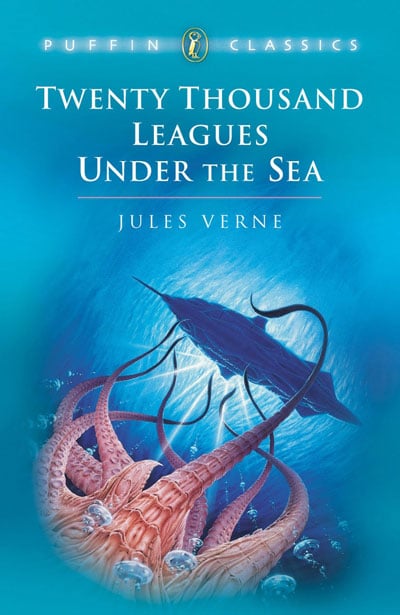
Twenty Thousand Leagues Under the Sea, written by Jules Verne and originally published in French as Vingt mille lieues sous les mers in serial form from 1869 to 1870, is a science fiction adventure novel about three men taken captive aboard the most extraordinary vessel ever built — the Nautilus, an electrically powered submarine constructed and commanded by the enigmatic Captain Nemo. Professor Pierre Aronnax, a French marine biologist who narrates the story; his devoted manservant Conseil; and Ned Land, a Canadian harpooner of legendary skill — are thrown overboard when the Nautilus rams their ship and find themselves prisoners of a man who has withdrawn from the world entirely. What follows is a year-long voyage across the world’s oceans, from the Pacific to the Antarctic to the Atlantic, during which Aronnax catalogues the wonders of the underwater world while Ned Land plans their escape and Captain Nemo reveals, slowly and incompletely, the grief and rage that drove him beneath the sea. One of the most widely read French novels ever written, a foundational text of science fiction, and a book that described submarine technology decades before it existed, it was also the foundation of a Disney film (1954) that introduced it to several generations of children. This guide covers reading level, the translation and edition question, content, themes, and similar books.
For Parents
A 19th-century science fiction adventure classic about three captives aboard a futuristic submarine commanded by the mysterious Captain Nemo. Ages 12–16, grades 6–9 for the full original text. Content: the extensive marine biology cataloguing and formal 19th-century prose are the primary accessibility challenges; no content concerns beyond period-appropriate adventure violence. Abridged children’s editions available for grades 4–7.
For Teachers
A grades 6–9 classic most productively taught through a well-edited modern translation with abridgement of the marine biology cataloguing. The translation question is significant (see below). Captain Nemo is one of the great anti-hero figures in world literature. Verne’s scientific extrapolation — describing submarine technology, electric lighting, and underwater exploration decades before they existed — makes the book a productive text for STEM history discussions. Public domain.
Twenty Thousand Leagues Under the Sea at a Glance
Find on Amazon →| Author | Jules Verne (1828–1905) |
| Original Publication | 1869–1870 (serialized in French); 1872 (first English translation) |
| Grade Level | 6–9 (full text); 4–7 (abridged editions) |
| Recommended Age | 12–16 (full text); 8–13 (abridged) |
| Lexile | ~1030L (varies significantly by translation/edition) |
| ATOS Level | Not confirmed |
| Pages | ~320–450 (varies by translation and edition) |
| Genre | Science fiction / adventure / classic |
| Setting | The world’s oceans; approximately 1866–1868 |
| Status | Public domain; multiple translations and editions available |
For official Lexile and AR levels, visit Lexile.com or AR BookFinder. ReadingVine provides independent editorial assessments.
The Translation Question — More Important Here Than Almost Anywhere Else
For most 19th-century classics, the edition question involves choosing between abridged and unabridged versions of the same text. For Jules Verne in English, there is an additional and more fundamental question: which translation? This matters more for Verne than for most authors because the standard English translation used for most of the 20th century — the 1872 Mercier translation — is widely considered a poor one. It omits approximately a quarter of the original French text, including most of the political content of Captain Nemo’s character, and makes numerous errors that have shaped English-speaking readers’ understanding of Verne’s work for 150 years.
More accurate modern translations are available: F.P. Walter’s translation is considered the most faithful to Verne’s original French and is significantly more complete than the Mercier version. For classroom use or for any reader who wants to engage with what Verne actually wrote, a modern translation is preferable to the Mercier version.
Recommendation: For grades 6–9 readers wanting the complete text, use the F.P. Walter translation or another modern translation. For grades 4–7 or reluctant readers, a well-produced abridged children’s edition that acknowledges the abridgement is the more accessible entry point.
What Reading Level Is Twenty Thousand Leagues Under the Sea?
The Lexile for a standard English edition is approximately 1030L — placing it at approximately high school reading level by formula. The figure varies by translation (the Mercier translation and modern translations have different complexity profiles) and by whether the edition is abridged. ATOS is not confirmed. The primary accessibility challenge in the full text is not the adventure narrative, which moves clearly and compellingly, but the extensive marine biology and oceanography passages in which Aronnax catalogues species of fish, describes ocean geography, and surveys the underwater environment at considerable length. Readers who engage with these passages as Verne’s vision of science find them fascinating; readers who find them tedious find the book considerably longer than its page count suggests. Our assessment: grades 6–9 for the full text, ages 12–16; grades 4–7 for well-produced abridged editions, ages 8–13. For official scores by specific edition, visit Lexile.com or AR BookFinder with the ISBN.
What Is Twenty Thousand Leagues Under the Sea About?
Ships around the world have been reporting encounters with a massive sea creature — fast, armored, capable of ramming iron-hulled vessels. An American expedition sets out to hunt and destroy it. Professor Pierre Aronnax, a French marine biologist, joins the expedition. When the creature rams their ship, Aronnax, his manservant Conseil, and the harpooner Ned Land are thrown into the sea. They are picked up — not rescued, but captured — by the creature itself, which turns out to be the Nautilus: an electrically powered submarine of extraordinary capability, designed and built by a man who calls himself Captain Nemo.
Nemo informs his three prisoners that they are welcome to live aboard the Nautilus and observe everything; they may never leave. What follows is a year-long voyage beneath the world’s oceans — across the Pacific, through submarine forests of coral, beneath polar ice, across the Atlantic, to the ruins of Atlantis — as Aronnax observes and catalogues with scientific delight, Conseil assists with quiet competence, and Ned Land fumes and plots escape. Captain Nemo, meanwhile, reveals himself gradually: a man of extraordinary gifts who has chosen to withdraw from the human world entirely, for reasons connected to a grief so profound that he has renamed himself Nothing. The ending, when it comes, is ambiguous and abrupt — the three men escape, but Nemo’s fate is left unresolved, to be continued in The Mysterious Island (1874).
Captain Nemo — The Novel’s Central Character
Captain Nemo is one of the great characters of 19th-century literature — a figure who combines extraordinary intellectual gifts with implacable moral conviction, profound grief, and an ambiguity that makes him simultaneously the novel’s villain and its most compelling presence. He is a man who has withdrawn from humanity entirely; who built the Nautilus to live beyond any nation’s laws; who attacks warships without mercy while simultaneously feeding the poor of a Mediterranean village from his personal wealth. He weeps at the grave of a drowned sailor. He listens to Bach alone at his organ. He refuses to explain himself.
The Mercier translation significantly diminished Nemo’s political dimension: in the original French, Nemo’s hatred of a specific colonial power (whose identity Verne left deliberately ambiguous in this novel) is clearer, and his attacks on warships are explicitly anti-colonial acts. Modern translations restore this dimension, which makes Nemo considerably more complex than the Mercier version suggests. Verne returned to Nemo in The Mysterious Island, where his identity and backstory are finally revealed.
Verne’s Scientific Vision
Verne wrote Twenty Thousand Leagues Under the Sea in 1869 — twenty-eight years before the first practical submarine (John Philip Holland’s Holland I, 1897) and decades before electric-powered submarines were viable. His Nautilus uses electric power derived from sodium amalgam batteries; its design, capabilities, and interior are described in extraordinary technical detail that Verne researched carefully from available oceanographic literature. Many of the marine creatures Aronnax describes were real species, accurately characterized; the book was partly a vehicle for Verne’s genuine enthusiasm for contemporary marine biology.
The twenty thousand leagues of the title refers to the distance traveled horizontally — approximately 80,000 kilometers, or roughly twice the circumference of the Earth — not the depth reached. Verne was precise about this; the maximum ocean depth in 1870 was not known to be more than a few thousand meters.
Twenty Thousand Leagues Under the Sea Themes and Lessons
The novel’s central tension is between Aronnax’s scientific rapture — he is genuinely delighted by almost everything Nemo shows him — and Ned Land’s furious drive to escape. Both responses to captivity are entirely rational; neither is presented as simply right. Aronnax’s willingness to accept and even enjoy his imprisonment for the sake of scientific knowledge is the book’s most ambiguous moral position, and it is one that Verne examines without resolving.
Discussion questions: Is Aronnax right to admire Nemo even knowing what he knows about Nemo’s violence? What has Nemo withdrawn from, and why? What does Ned Land understand about their situation that Aronnax doesn’t — and vice versa? What would it mean to build a life entirely outside of human society? Why does Verne leave Nemo’s fate unresolved at the end?
The 1954 Disney Film
The 1954 Disney live-action film, directed by Richard Fleischer and starring James Mason as Captain Nemo, Kirk Douglas as Ned Land, and Paul Lukas as Professor Aronnax, was one of the most ambitious and successful Disney productions of its era — winner of two Academy Awards (Best Art Direction and Best Special Effects) and still widely considered the best film adaptation of the novel. The giant squid attack sequence was the most expensive scene Disney had filmed to date. The film is rated G, runs approximately 127 minutes, and departs from the novel in several significant ways while capturing its adventure spirit. Kirk Douglas’s Ned Land sings, which Verne’s Ned Land does not. For most 20th-century English-speaking children, the Disney film was the primary encounter with the story.
Books Similar to Twenty Thousand Leagues Under the Sea
About Jules Verne
Jules Verne (1828–1905) was born in Nantes, France, and trained as a lawyer before turning to writing. He is the second most translated author in history, behind Agatha Christie, and is considered alongside H.G. Wells as one of the founders of modern science fiction. His collaborating publisher Pierre-Jules Hetzel shaped much of his career through the magazine Magasin d’Éducation et de Récréation, for which the Verne novels were serialized. His major works include Journey to the Center of the Earth (1864), From the Earth to the Moon (1865), Twenty Thousand Leagues Under the Sea (1870), Around the World in Eighty Days (1872), and The Mysterious Island (1874). Captain Nemo appears in both Twenty Thousand Leagues and The Mysterious Island; readers who want to know the end of Nemo’s story should read the latter. Verne died in 1905 having published more than sixty novels; several were published posthumously.
Twenty Thousand Leagues Under the Sea: Frequently Asked Questions
What reading level is Twenty Thousand Leagues Under the Sea?
Approximately Lexile 1030L for a standard unabridged English edition; ATOS not confirmed. Our assessment: grades 6–9, ages 12–16 for the full text; grades 4–7 for well-produced abridged editions. The primary accessibility challenge is the extensive marine biology cataloguing, not the adventure narrative itself. For specific edition scores, visit Lexile.com or AR BookFinder with the ISBN.
What is Twenty Thousand Leagues Under the Sea about?
Professor Aronnax, his servant Conseil, and the harpooner Ned Land are captured by the mysterious Captain Nemo aboard his extraordinary submarine, the Nautilus, and taken on a year-long voyage across the world’s oceans. Aronnax observes with scientific wonder; Ned Land plots escape; Nemo — who has withdrawn from the human world entirely for reasons slowly revealed — commands the Nautilus across underwater landscapes no one else has seen.
Which translation of Twenty Thousand Leagues should I read?
For the most accurate and complete text, use a modern translation rather than the standard 1872 Mercier translation, which omits approximately a quarter of Verne’s original and diminishes Captain Nemo’s political character significantly. F.P. Walter’s translation is available online and is considered one of the most faithful. For younger readers, a well-produced abridged children’s edition is more accessible.
Is there a good movie version of Twenty Thousand Leagues?
The 1954 Disney film, directed by Richard Fleischer with James Mason as Nemo and Kirk Douglas as Ned Land, won two Academy Awards and is widely regarded as the best film adaptation. Rated G, approximately 127 minutes. It departs from the novel in several ways while capturing its adventure spirit. Several other adaptations exist; the Disney version remains the most praised.
What does “twenty thousand leagues” mean — is that how deep they go?
No — twenty thousand leagues is the distance traveled horizontally (approximately 80,000 kilometers, roughly twice the circumference of the Earth), not the depth reached. Verne was precise about this distinction. The maximum depth of the ocean was not known in 1870; the Nautilus dives to significant depths but not twenty thousand leagues down, which would be far below any ocean.