
 = Partner Site
Watership Down Reading Level: A Complete Guide
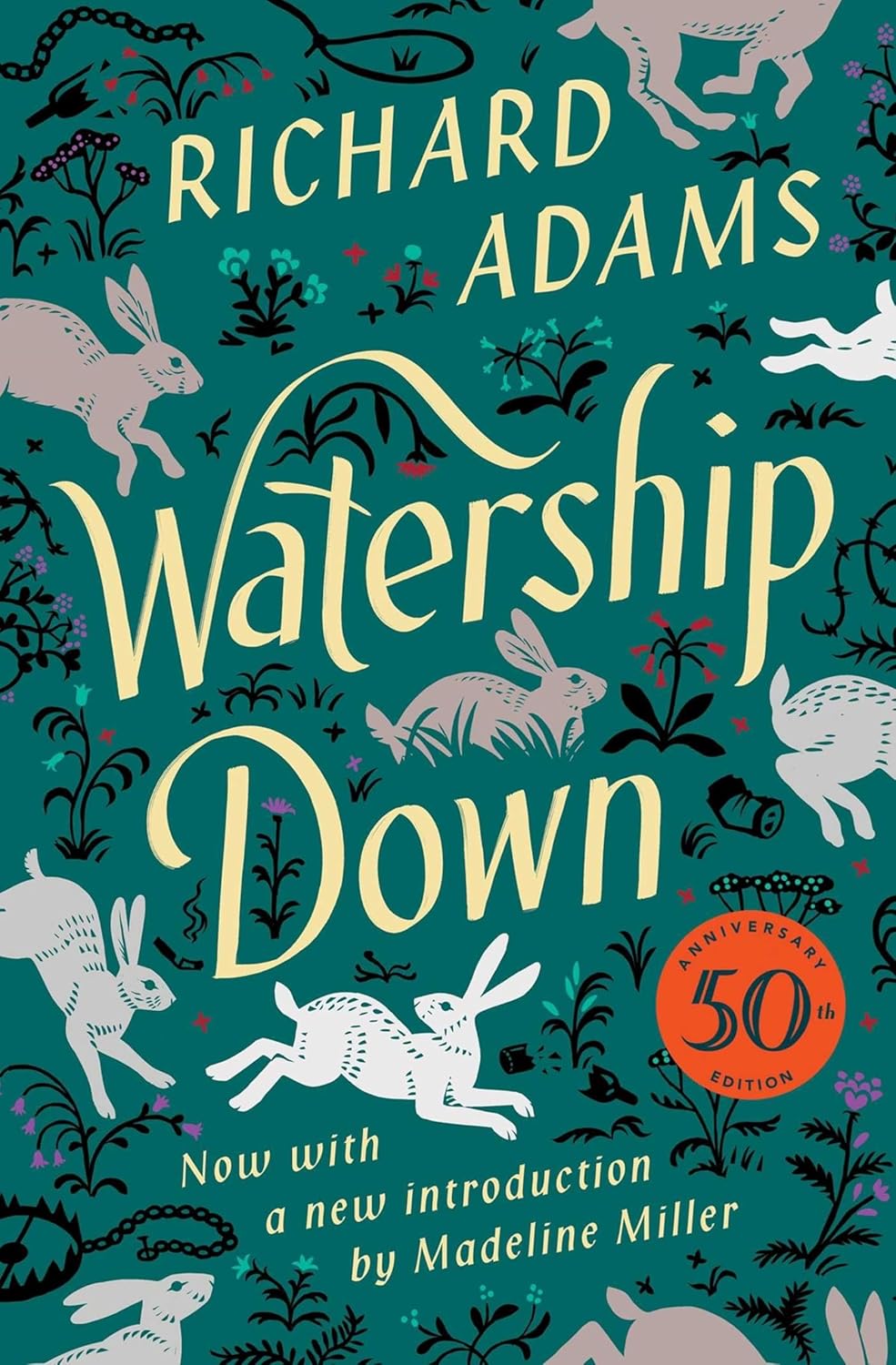
Watership Down by Richard Adams is a sweeping, richly imagined adventure novel about a band of rabbits who flee their doomed warren and journey across the English countryside in search of a new home — a book that works simultaneously as a gripping survival story, a political allegory, and one of the most carefully crafted works of world-building in 20th-century fiction. This complete guide covers Watership Down’s reading level, recommended age, content considerations, characters, themes, and books similar to Watership Down, designed for parents, teachers, and students.
For Parents
Watership Down is a genuine literary novel that happens to feature rabbits — and parents should approach it as such rather than as a gentle animal story. The book contains real peril, death, and violence (rabbit-on-rabbit and predator-on-rabbit), and its political themes are sophisticated enough to reward adult reading. Most parents find it appropriate for strong readers ages 11 and up, though highly capable readers as young as 9 or 10 can engage with it meaningfully. It is one of the most rewarding shared reads a parent and child can undertake together.
For Teachers
Watership Down is a rich text for grades 6–10, offering exceptional material for teaching allegory, leadership and political systems, mythology (the book contains an invented rabbit folklore with its own hero tales), world-building, and the nature of courage. The novel rewards close reading and sustained discussion. It pairs naturally with units on dystopian fiction, animal allegory (alongside Animal Farm), or classical epic structure. An appendix on the rabbits’ invented language, Lapine, supports vocabulary and linguistics discussions.
Watership Down at a Glance
Find on Amazon →| Author | Richard Adams |
| Published | 1972 |
| Grade Level | 6–8 (our assessment); rewarding through grade 12 |
| Recommended Age | 11–16 |
| Flesch-Kincaid Grade | 7.8 |
| Word Count | ~140,000 |
| Pages | 413 (standard paperback) |
| Chapters | 50 chapters across 4 parts, plus epilogue |
| Genre | Adventure / animal fiction / allegory / epic |
| Setting | Berkshire and Hampshire, England; 1970s |
| Awards | Carnegie Medal (1972); Guardian Children’s Fiction Prize (1972) |
For official Lexile and AR levels, visit Lexile.com or AR BookFinder. ReadingVine provides independent editorial assessments.
What Reading Level Is Watership Down?
Watership Down reads at approximately a 7th- to 8th-grade word level by standard readability measures (Flesch-Kincaid grade 7.8), making it one of the more demanding texts in the middle-grade and young adult reading range. Our editorial assessment is grades 6–8 for independent reading, with the book equally rewarding — and in many ways more fully appreciated — by readers through grade 12 and into adulthood. Richard Adams was a civil servant and lover of classical literature when he wrote the book, and his prose reflects that background: the sentences are long and precise, the vocabulary is genuinely challenging, and the narrative voice has the unhurried confidence of a storyteller who trusts his reader.
What makes Watership Down read above its grade level in complexity is not just word difficulty but the density of what Adams is doing simultaneously. The book operates as a survival adventure, a political allegory about different forms of government and society, an invented mythology (the El-ahrairah stories embedded within the narrative), and a meticulous naturalistic portrait of rabbit behavior drawn from Ronald Lockley’s field study The Private Life of the Rabbit. Readers who engage with it only as an adventure story will still have an extraordinary experience, but the full depth of the novel reveals itself to readers who are ready to think about what the different warrens represent and what Adams is saying about leadership, freedom, and the cost of safety. For official Lexile and AR scores, visit Lexile.com or AR BookFinder.
What Age Is Watership Down Appropriate For?
We recommend Watership Down for readers ages 11–16, with the strongest fit at ages 12–14. Strong readers as young as 9 or 10 can engage with it as a compelling adventure story, and many adults encounter the book for the first time as teenagers and find it transformative. The book is most commonly assigned in grades 7–9 and works especially well as a shared family read-aloud for families with children in the 10–14 age range, where adults can help contextualize the political allegory and the more intense content.
Watership Down contains significant violence by the standards of middle-grade fiction. Rabbits are killed by predators — foxes, cats, a dog, and a hawk all appear as threats — and there are intense battles between rabbit warrens involving biting, clawing, and death. The book opens with the destruction of an entire warren, and the threat of death is real and sustained throughout. One antagonist, General Woundwort, is genuinely frightening — a totalitarian rabbit leader whose brutality and menace are portrayed with full seriousness. There is also a distressing sequence involving a rabbit trapped in a snare. None of this violence is gratuitous; it is integral to the story’s themes about freedom, courage, and survival. There is no sexual content, though the plot’s second half involves the rabbits’ need to find does (female rabbits) to ensure the survival of their warren, which is handled matter-of-factly. Parents of sensitive younger readers should be aware that the book does not soften the reality of death in the natural world.
Despite its intensity, Watership Down is ultimately a profoundly hopeful book. The violence serves the story’s central argument: that freedom is worth fighting for, that good leadership is defined by care for those you lead, and that courage is not the absence of fear but the decision to act in spite of it. The book has been beloved by readers from age 10 to 80 for more than fifty years for exactly these reasons.
What Is Watership Down About?
In a field on the outskirts of Sandleford, England, a young rabbit named Fiver has a vision of terrible danger — he senses that their warren is about to be destroyed. When the warren’s chief rabbit dismisses his warning, Fiver’s older brother Hazel leads a small band of rabbits away from Sandleford and into the unknown English countryside. Their destination, glimpsed in Fiver’s vision, is a high, open hill called Watership Down. The journey to reach it takes them through farmland, across a river, through a deadly snare, and into contact with other rabbit communities that reveal very different ways of organizing rabbit society.
When the rabbits reach Watership Down and begin to establish their new warren, they discover a critical problem: their group contains no does, and without females, their warren has no future. This sends Hazel on a series of increasingly dangerous missions to find and recruit does from neighboring warrens — including the militaristic Efrafa, ruled by the terrifying General Woundwort, whose warren is a police state built on control and fear. The confrontation between Hazel’s community and Efrafa forms the novel’s climax, a conflict between two fundamentally different visions of what rabbit society can and should be.
Richard Adams originally told the story to his two daughters during long car journeys in the late 1960s. When they insisted he write it down, he spent evenings composing what became Watership Down, which was rejected by thirteen publishers before being accepted by Rex Collings in 1972. Adams grounded the rabbits’ behavior and social structure in Ronald Lockley’s scientific field study of wild rabbits, and invented an entire rabbit language — Lapine — and rabbit mythology centered on the trickster hero El-ahrairah, whose tales are embedded throughout the novel as the rabbits’ own oral tradition.
Watership Down Characters
Is Watership Down a Banned Book?
Watership Down has faced challenges in some school and library settings, primarily due to its violence and its depiction of a militaristic society in the Efrafa sections. Some challenges have cited the book’s intensity as inappropriate for younger readers, while others have raised concerns about its invented rabbit mythology, including figures such as Frith and El-ahrairah. The American Library Association has recorded challenges against it, though it has never been subject to a widespread ban and remains a staple of middle school and high school reading lists in the United States, the United Kingdom, and around the world. It is consistently listed among the most important British novels of the 20th century.
Watership Down Themes and Lessons
Watership Down is structured around a sustained comparison of different forms of social organization. The original Sandleford warren is comfortable and established but paralyzed by hierarchy and complacency — it cannot respond to an existential threat because the chief rabbit cannot imagine that his authority could be wrong. Cowslip’s warren, which the rabbits encounter midway through their journey, represents a society that has traded freedom and dignity for material comfort and security, with a terrible hidden cost. Efrafa is an authoritarian state built on surveillance, control, and the suppression of individual will in the name of collective safety. Watership Down itself — the warren Hazel builds — is the novel’s positive vision: a community based on distributed leadership, mutual respect, and the recognition that different individuals contribute different kinds of value.
The El-ahrairah stories — the rabbit mythology Adams invented and embedded throughout the novel — add a layer of depth that elevates Watership Down well above most adventure fiction. These tales of the trickster rabbit hero function as the community’s shared culture, the stories that give meaning to suffering and model the values the rabbits aspire to. Adams is arguing that every community needs its stories, its mythology, its shared account of who they are and what they stand for. Discussion questions worth exploring: What does each warren represent as a form of society? What qualities make Hazel an effective leader, and how do they differ from Woundwort’s? What role do the El-ahrairah stories play in the rabbits’ community? What is the novel saying about the relationship between freedom and safety?
How Many Pages and Chapters Are in Watership Down?
Watership Down is 413 pages in the standard paperback edition, divided into four parts and 50 chapters, plus an epilogue. Several chapters also contain embedded El-ahrairah tales — short mythological stories that function as the rabbits’ own folklore. The word count is approximately 140,000 words, making it a genuinely long novel by any standard. At a middle school reading pace of roughly 250 words per minute, most readers in the target age range will take 12–15 hours to finish the book — typically 3 to 4 weeks reading 30–45 minutes a day. The book also includes an appendix of Lapine (the invented rabbit language) terms used throughout the novel, which is worth consulting as readers encounter unfamiliar words in the text. The pacing is deliberate rather than relentless — Adams takes time to describe the English countryside, develop his characters, and embed mythology — so readers who expect constant action may find the early chapters require patience that pays off richly later.
Books Similar to Watership Down
About Richard Adams
Richard Adams was born in 1920 in Berkshire, England — the same county where Watership Down is set — and spent much of his childhood roaming the English countryside that would later become the landscape of his novel. He studied history at Oxford, served in the British Army during World War II, and then worked for decades as a civil servant for the British government. He did not publish his first novel until he was 52 years old. Watership Down began as a story Adams told his two daughters, Juliet and Rosamond, during long car journeys, and they pestered him to write it down until he did. The finished manuscript was rejected by thirteen publishers before Rex Collings accepted it in 1972. It won the Carnegie Medal and the Guardian Children’s Fiction Prize that same year and has never been out of print. Adams went on to write several other novels, including Shardik (1974) and The Plague Dogs (1977), but none achieved the cultural permanence of Watership Down. He died in 2016 at the age of 96, just days after the death of his wife Elizabeth, to whom Watership Down is dedicated. A Netflix animated series adaptation was released in 2018.
Watership Down: Frequently Asked Questions
What grade level is Watership Down?
By standard readability measures, Watership Down reads at approximately a 7th- to 8th-grade word level (Flesch-Kincaid grade 7.8). Our editorial assessment is grades 6–8 for independent reading, with the book rewarding and appropriate through grade 12. The prose is genuinely demanding — long sentences, sophisticated vocabulary, and a deliberate narrative pace — and the thematic complexity rewards readers who are ready to engage with allegory and political ideas alongside the adventure story.
Is Watership Down really a children’s book?
This is one of the most commonly asked questions about Watership Down, and the honest answer is: it depends on how you define children’s book. Adams wrote it for his daughters and it won the Carnegie Medal, the most prestigious British award for children’s literature. But it reads, in many respects, as a sophisticated literary novel for adults — with genuine violence, complex political allegory, invented mythology, and prose that assumes a mature reader. Most children’s literature scholars and librarians classify it as upper middle grade or young adult. It is best understood as a book that works on different levels for different ages: a thrilling adventure story for younger readers, and a rich political and philosophical novel for older ones.
Is Watership Down too violent for kids?
Watership Down contains real violence — predator attacks, rabbit battles, death — that is more intense than most middle-grade fiction. The violence is never gratuitous; it serves the story’s themes and reflects the reality of life in the natural world. Most parents and educators find it appropriate for readers ages 11 and up. For readers ages 9–10, parental co-reading or discussion can help contextualize the more intense scenes. The 1978 animated film adaptation is famously more disturbing than the book in some respects, due to its graphic depictions of blood and violence, and carries a U rating in the UK that many parents find misleading for younger children.
What is El-ahrairah?
El-ahrairah is the trickster hero of the rabbit mythology Richard Adams invented for the novel. His name means roughly “Prince with a Thousand Enemies” in Lapine, the invented rabbit language Adams created. El-ahrairah is the rabbits’ folk hero — a cunning, resourceful figure who survives and outwits his enemies not through strength but through cleverness, disguise, and an indomitable will to live. The El-ahrairah tales embedded throughout Watership Down function as the rabbits’ own oral tradition, the stories that define their values and give meaning to their struggles. Adams was partly inspired by the trickster traditions found in many world mythologies, including Brer Rabbit in African American folklore.
What does Watership Down mean?
Watership Down is a real place — a chalk hill in Hampshire, England, near the town of Kingsclere. “Down” in English refers to a type of open, rolling chalk grassland common in southern England, and Watership is the name of that particular hill. Richard Adams knew the area well from his childhood in neighboring Berkshire. In the novel, Watership Down becomes the name of the hill the rabbits choose as the site of their new warren — a high, open, defensible place with good visibility in all directions, which is exactly what rabbits need.
Is there a movie or TV adaptation of Watership Down?
Yes — two major adaptations exist. The 1978 animated film directed by Martin Rosen is a faithful adaptation that is well-regarded as a piece of animation, but is notably intense and bloody, and has frightened generations of children who encountered it expecting a gentle rabbit story. It is rated PG but widely considered more disturbing than that rating suggests for younger viewers. A 2018 Netflix animated miniseries, featuring an all-star British voice cast, is a more recent and somewhat gentler adaptation that covers the full novel in four episodes. Both are worth watching, but the 1978 film in particular should be previewed by parents before sharing with children under 10.
What is Lapine?
Lapine is the invented rabbit language Richard Adams created for Watership Down. It is used for rabbit-specific concepts that have no human equivalent — words like hrududu (any motor vehicle), elil (enemies or predators), silflay (to go above ground to feed), and tharn (frozen with fear, the way a rabbit goes rigid in the face of danger). Adams included a glossary of Lapine terms at the back of the novel. The language is minimal — Adams invented only the words he needed — but it does important work in making the rabbits feel like a culture with their own way of understanding the world, rather than simply humans in rabbit suits.
Is Watership Down an allegory?
Yes, though Adams was somewhat resistant to overly schematic readings of the book. The different warrens the rabbits encounter clearly represent different forms of political and social organization: Sandleford represents complacent establishment society, Cowslip’s warren represents a community that has traded freedom for material comfort with a terrible hidden cost, and Efrafa represents totalitarianism — a police state built on surveillance and control. Adams drew on his experience as a wartime soldier and his reading in political philosophy, and the allegory is intentional and sustained. At the same time, Adams insisted the book was first and foremost an adventure story about rabbits, and it works brilliantly on that level alone.