
 = Partner Site
The Incredible Journey Reading Level: A Complete Guide
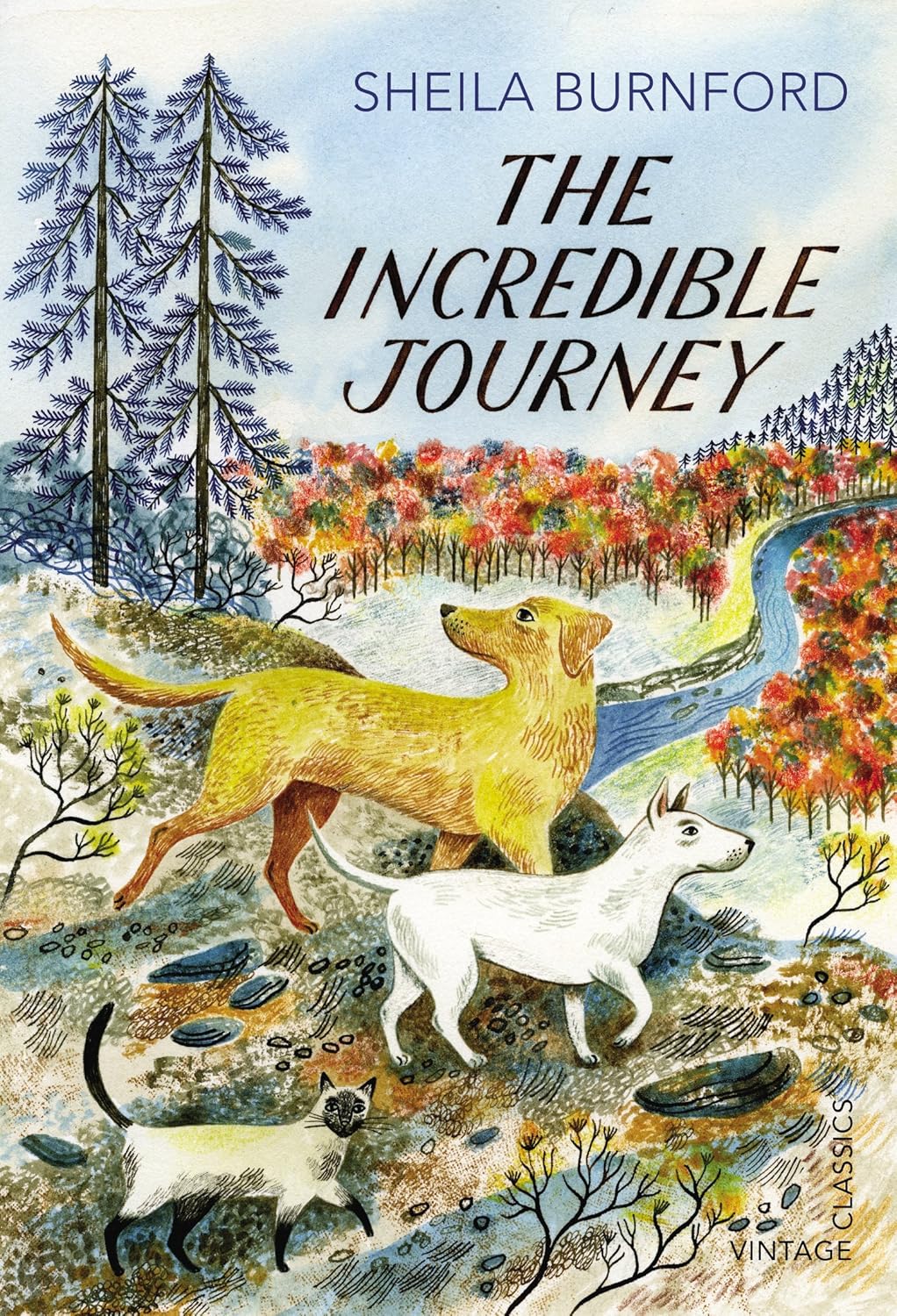
The Incredible Journey by Sheila Burnford is a beloved adventure novel about three devoted animal companions — a young Labrador Retriever, an old Bull Terrier, and a Siamese cat — who travel 250 miles through the Canadian wilderness to find their way home. First published in 1961, this timeless story of loyalty, perseverance, and the unbreakable bond between animals and their human family has been a classroom and family favorite for generations. This guide covers the book’s reading level, recommended age range, content, characters, themes, and more.
For Parents
The Incredible Journey is a wholesome, exciting adventure with virtually no content concerns. The story follows three animals navigating real wilderness dangers — hunger, injury, and harsh weather — making it an emotionally engaging read without being gratuitously dark. It’s a wonderful choice for animal lovers and a great read-aloud for families.
For Teachers
Burnford’s novel offers rich opportunities to explore perspective-taking (the story is told from close third-person, shifting between animal and human viewpoints), descriptive nature writing, and themes of loyalty and resilience. It pairs well with other animal survival narratives and works as a strong independent reading choice for grades 4–6.
The Incredible Journey at a Glance
Find on Amazon →| Author | Sheila Burnford |
| Published | 1961 |
| Grade Level | 4–6 (our assessment) |
| Recommended Age | 9–12 |
| Flesch-Kincaid Grade | 6.2 |
| Word Count | ~38,000 |
| Pages | 148 (standard paperback) |
| Chapters | 9 |
| Genre | Animal adventure / fiction |
| Setting | Canadian wilderness (Ontario) |
| Awards | Canadian Library Association Book of the Year (1963) |
For official Lexile and AR levels, visit Lexile.com or AR BookFinder. ReadingVine provides independent editorial assessments.
What Reading Level Is The Incredible Journey?
We assess The Incredible Journey at a grade 4–6 reading level, making it accessible to most readers in upper elementary school. Its Flesch-Kincaid Grade Level of approximately 6.2 reflects Burnford’s elegant but straightforward prose — descriptive and literary without being complex in sentence structure. The vocabulary leans toward vivid, nature-based language (words like “muskegs,” “portage,” and “desolate” appear regularly), which may stretch younger readers in a productive way.
One important nuance: while the word-level difficulty is solidly in the 4th–6th grade range, the pacing is more deliberate than many modern middle grade novels. There is no human protagonist driving the plot, and the narrative unfolds through quiet observation of the animals rather than rapid action. Readers who enjoy fast-paced chapter books may need some patience, while readers who love nature writing and descriptive storytelling will find it deeply engaging. Emotional complexity is modest — the book is adventurous but not heavy — so it reads younger than its Flesch-Kincaid score might suggest.
For official Lexile and Accelerated Reader scores, visit Lexile.com or AR BookFinder.
What Age Is The Incredible Journey Appropriate For?
We recommend The Incredible Journey for readers ages 9–12. Most readers in this range will have the reading stamina for Burnford’s descriptive style and the emotional maturity to appreciate the stakes without being distressed by them. The book can also work beautifully as a read-aloud for slightly younger children (ages 7–8) with adult support.
The animals face real wilderness dangers throughout the journey, including hunger, exhaustion, injury from a bear encounter, and near-drowning. These scenes are portrayed with care — not gratuitously — but sensitive younger readers who are deeply attached to animals may find some moments tense or upsetting. One animal is temporarily separated and in serious distress near the end. There is no death of a main character. There is no sexual content, strong language, or mature thematic content of any kind.
For most families, this is an exceptionally clean, age-appropriate read. The primary emotional challenge is simply caring about the animals and fearing for their safety — which is exactly the feeling Burnford intended.
What Is The Incredible Journey About?
When the Hunter family leaves for an extended trip to England, they entrust their three beloved pets to the care of a family friend, John Longridge, at his remote country home in the Canadian wilderness. The animals — Luath, a young golden Labrador Retriever; Bodger, an elderly English Bull Terrier; and Tao, a sharp-witted Siamese cat — have lived together their whole lives and share an extraordinary bond. When Longridge departs on a hunting trip, the three animals set off on their own, instinctively heading west through hundreds of miles of rugged Ontario wilderness toward the home they know and love.
The journey is told almost entirely from the animals’ point of view, following their daily struggle to find food, navigate rivers, forests, and freezing temperatures, and protect one another from predators and the elements. Along the way, they encounter a handful of kind humans who offer brief shelter and food — a Finnish farm family, a young wilderness guide — before the animals move on, driven by something Burnford portrays as pure instinct and devotion.
Burnford based the story partly on observation of her own pets and their relationships with each other, and the Canadian setting — Ontario’s lake country — is drawn from her own experience living there. The book was adapted into a popular Disney film in 1963 and again in 1993 under the title Homeward Bound: The Incredible Journey.
The Incredible Journey Characters
Is The Incredible Journey Banned?
The Incredible Journey has no documented history of being challenged or banned in schools or libraries. It is considered one of the most universally appropriate middle grade novels in the canon — free of objectionable content and beloved by educators, parents, and young readers alike. If you are looking for a book with zero controversy concerns, this is an excellent choice.
The Incredible Journey Themes and Lessons
At its core, The Incredible Journey is a story about what it means to belong somewhere — and to someone. The three animals have no map, no plan, and no rational understanding of the distance ahead of them, yet they press on through cold, hunger, and injury because they are going home. Burnford never anthropomorphizes the animals into human-like thinkers; instead, she portrays their drive as something deeper and more primal than reason: pure devotion. This makes the theme of loyalty feel earned and genuine rather than sentimental.
The novel also celebrates the quiet heroism of everyday perseverance. None of the animals’ achievements are dramatic in isolation — each day they simply keep moving, keep protecting each other, keep finding food. It is the accumulation of these small acts of determination that makes the journey feel monumental by the end. For young readers, this is a powerful and accessible model of resilience. Discussion questions might include: What does “home” mean to you — is it a place or the people in it? How do the three animals rely on each other’s different strengths? What would you do if you were in Longridge’s position?
How Many Pages and Chapters Are in The Incredible Journey?
The standard paperback edition of The Incredible Journey runs approximately 148 pages across 9 chapters. With a word count of around 38,000 words, it is a moderately short novel — longer than a chapter book but shorter than most middle grade novels published today. At a comfortable reading pace of 20–25 pages per hour, most readers in the target age range (9–12) will complete the book in 6–8 hours of reading time, making it very manageable for a one- to two-week classroom unit or a long weekend of independent reading. As a read-aloud, parents or teachers should estimate approximately 7–9 hours of reading time at a measured, expressive pace.
Books Similar to The Incredible Journey
About Sheila Burnford
Sheila Burnford (1918–1984) was a Scottish-born Canadian author best known for The Incredible Journey, which remains her most celebrated work and one of the best-loved animal novels of the twentieth century. Born in Scotland, Burnford emigrated to Canada after World War II and settled in Ontario, where the rugged lake country of the Canadian Shield provided the vivid setting for her famous novel. She drew on her own experience living with and observing animals — including a Labrador Retriever, a Bull Terrier, and a Siamese cat much like the ones in the book — and the story grew from watching how those animals interacted with one another. The Incredible Journey won the Canadian Library Association Book of the Year Award in 1963 and was adapted by Disney as a live-action film the same year. A second Disney adaptation, Homeward Bound: The Incredible Journey, was released in 1993 and introduced the story to a new generation. Burnford also wrote Bel Ria (1977), another animal novel, and several works of nonfiction.
The Incredible Journey: Frequently Asked Questions
What grade level is The Incredible Journey?
We assess The Incredible Journey at a grade 4–6 reading level. Its Flesch-Kincaid Grade Level of approximately 6.2 reflects clear, literary prose with vivid nature vocabulary. Most students in 4th through 6th grade will find it a comfortable and rewarding independent read, while it also works well as a class novel in those grades.
Is The Incredible Journey based on a true story?
Not exactly, but it has a real foundation. Sheila Burnford based the three animal characters on her own pets — a Labrador Retriever, a Bull Terrier, and a Siamese cat — and drew on her observations of how they interacted. The specific journey is fictional, but Burnford’s portrayal of the animals’ personalities and relationships was drawn directly from life. The Canadian wilderness setting is also based on the region of Ontario where she lived.
Does any animal die in The Incredible Journey?
No main animal characters die in The Incredible Journey. All three animals — Luath, Bodger, and Tao — complete the journey and are reunited with their family. There are moments of serious danger and injury, and one character’s fate is uncertain for a tense stretch near the end, but the book resolves happily. This makes it one of the safer animal-story choices for readers who are sensitive to animal loss in fiction.
What is the Lexile level of The Incredible Journey?
For the official Lexile measure of The Incredible Journey, visit Lexile.com and search the title directly. ReadingVine provides independent editorial grade-level assessments rather than republishing proprietary Lexile scores.
How is The Incredible Journey different from Homeward Bound?
The 1993 Disney film Homeward Bound: The Incredible Journey is a loose adaptation of Burnford’s novel. The biggest difference is that the film gives the animals speaking voices with distinct comedic personalities (voiced by Michael J. Fox, Sally Field, and Don Ameche), while the novel never anthropomorphizes the animals this way — Burnford portrays them as true animals acting on instinct and emotion, not as humans in animal bodies. The film also changes the animals’ breeds and names and updates the setting. Many readers who love the film are surprised by how different — and how much quieter and more literary — the original book is.
Is The Incredible Journey a good read-aloud?
Yes — The Incredible Journey is an excellent read-aloud choice for families and classrooms. Burnford’s prose is descriptive and rhythmic, making it genuinely pleasurable to read aloud. The relatively short chapters (9 chapters across ~148 pages) make it easy to pace out over a few weeks. It works well for family read-aloud sessions with children ages 7 and up, and as a classroom read-aloud in grades 3–5.
What awards did The Incredible Journey win?
The Incredible Journey won the Canadian Library Association Book of the Year for Children Award in 1963, the same year it was adapted into a Disney film. It also received the Dorothy Canfield Fisher Award. While it was not a Newbery Medal recipient (Burnford was Canadian, and the Newbery is awarded to American authors), it has remained in continuous print for over 60 years and is widely considered a classic of children’s literature.
What themes does The Incredible Journey explore?
The Incredible Journey explores loyalty, perseverance, the meaning of home, survival, and the deep bond between animals and the humans who love them. Unlike many animal stories that use animals as metaphors for human experience, Burnford’s approach is more naturalistic — she portrays the animals as animals, which makes the story’s emotional themes feel all the more genuine and affecting.