
 = Partner Site
Wemberly Worried Reading Level: A Complete Guide
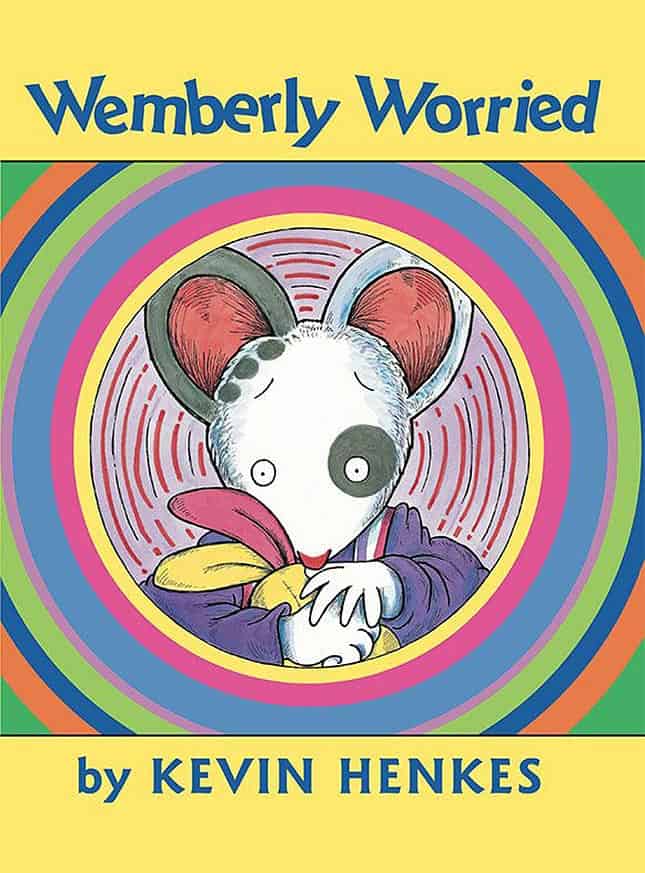
Wemberly Worried, written and illustrated by Kevin Henkes, is a 32-page picture book about a small mouse named Wemberly who worries about everything — spilling her juice, shrinking in the bathtub, the possibility of snakes in the radiator — morning, noon, and night. When the biggest worry of all arrives (her first day of school), something unexpected happens: she meets another worrier named Jewel, and the two become friends. Published in 2000, it received starred reviews from School Library Journal and Publishers Weekly, has sold millions of copies, and is one of the most widely used picture books in PreK–1 classrooms for back-to-school and social-emotional learning units. This guide covers Wemberly Worried‘s reading level, whether it’s a read-aloud or independent read, what it’s about, its themes, how long it takes to read, and similar books — designed for parents and teachers of K–2 readers.
For Parents
A warm, funny book about a child who worries about everything and discovers that school is better than her worst fears — ideal for any child anxious about starting school or a new experience. Best as a read-aloud for ages 4–7, with independent reading accessible for strong K–1 readers. No content concerns. One of the most reassuring picture books available for children who worry.
For Teachers
A classroom staple for PreK–2 back-to-school units and SEL curricula — used widely to introduce feelings vocabulary, discuss worrying, and help children feel less alone in their anxiety. Pairs naturally with other Kevin Henkes mouse books, especially Chrysanthemum, for author studies and school-themed units. The story’s message — that worrying is normal, and that friendship can replace it — lands with both children and adults.
Wemberly Worried at a Glance
Find on Amazon →| Author & Illustrator | Kevin Henkes (author & illustrator) |
| Published | 2000 (Greenwillow Books / HarperCollins) |
| Grade Level | K–1 read-aloud; K–1 independent (our assessment) |
| Recommended Age | Read-aloud ages 4–7; independent reading ages 5–7 |
| Best For | Read-aloud ages 4–7; independent reading ages 5–7 |
| Lexile | AD480L |
| ATOS Level | 2.7 |
| Guided Reading Level | L |
| Word Count | 525 |
| Pages | 32 |
| Genre | Picture book / realistic fiction |
For official Lexile and AR levels, visit Lexile.com or AR BookFinder. ReadingVine provides independent editorial assessments.
What Reading Level Is Wemberly Worried?
Wemberly Worried has a Lexile of AD480L and an ATOS level of 2.7. The “AD” stands for Adult Directed — a Lexile designation for picture books best experienced as read-alouds. The ATOS 2.7 is notably higher than most picture books in this catalog, reflecting that Henkes uses longer sentences and more varied vocabulary than simpler early readers. A child reading independently at a solid K–1 level can work through the text, though some sentences — particularly the long lists of Wemberly’s specific worries — will benefit from having been heard aloud first.
The Guided Reading Level L (Booksource) corresponds to approximately late first grade for independent reading, placing this book slightly above the simplest picture books while remaining very accessible for classroom use at PreK–2. For official Lexile and AR scores, visit Lexile.com or AR BookFinder. ReadingVine’s assessments are independent editorial judgments.
Is Wemberly Worried a Read-Aloud or Independent Read?
This is primarily a read-aloud for ages 4–7 and an independent read for ages 5–7.
As a read-aloud, Wemberly Worried is ideal for back-to-school time — the week before school starts, the night before the first day, or the morning of. The humor of Wemberly’s worries (snakes in the radiator, shrinking in the bathtub) gives anxious children permission to laugh at their own fears, while the emotional truth of her big worry — what if no one at school will like me? — is treated with complete seriousness. Henkes writes worry with both comedy and compassion, and reading it aloud gives children a frame for what they are feeling and the reassurance that what they are feeling is normal.
For independent reading, a confident K–1 reader can manage the text, though some of the longer worry-list sentences will be more fluent for readers who already know the book from hearing it. Many children who love Wemberly Worried return to it independently after hearing it read aloud, precisely because knowing how it ends makes the beginning even better.
Before you start, ask your child: “Is there anything you worry about?” Then read the book. Afterward, you can return to their answer and ask if any of Wemberly’s worries were like theirs — and whether they think Wemberly’s solution might work for them too. This book is especially powerful the night before a new experience, when a child’s worry is at its most specific and most real.
What Is Wemberly Worried About?
Wemberly is a small mouse who worries about everything. She worries about spilling her juice. She worries about the crack in the sidewalk, the scary tree in the yard, the possibility of shrinking in the bathtub, and the definite possibility of snakes in the radiator. She worries in the morning, at noon, and at night. Her family notices. “Worry, worry, worry,” they say. “Too much worry.” But Wemberly cannot stop.
And then the biggest worry arrives: the first day of nursery school. Wemberly worries that she won’t know anyone. She worries that the teacher will be mean. She worries about everything that might go wrong. She brings her doll Petal for comfort. When the day comes, she is terrified — until she notices another girl across the room, clutching a doll of her own, looking just as frightened. The teacher introduces them. The girl’s name is Jewel. Jewel worries too. By the end of the day, both girls have forgotten to worry, because they have been too busy being friends.
The book’s ending is gentle and specific: Wemberly still worries, and Jewel still worries, but now they have each other — and that makes the worrying smaller. Henkes does not promise that worry goes away; he promises that it becomes more manageable when you are not alone with it.
Wemberly Worried Characters
Wemberly is the book’s heart: a small mouse with a large imagination and an even larger capacity for worry, who carries her doll Petal everywhere and uses her as a sounding board for fears both large and small. She is not a character who is cured of worrying by the end — she is a character who finds a friend who understands, which is what actually helps. Jewel, the girl she meets at school, is her mirror: also clutching a doll, also frightened, also relieved to find that the room contains someone like her. Their friendship forms in a single day through the shared recognition of what they each are, and the book’s warmest moment is the illustration of the two of them — each holding their doll — finally relaxed enough to play. Wemberly’s family (her parents and grandmother) are affectionate presences in the book’s first half, doing their best with a worrier they love but cannot entirely reach.
Wemberly Worried Themes and Lessons
Wemberly Worried takes childhood anxiety seriously without pathologizing it. Wemberly’s worries are funny (snakes in the radiator) and real (what if no one at school likes me?) in equal measure, and Henkes treats both with the same respect — never dismissing the funny worries as silly or the real worries as overblown. The book’s implicit argument is that worrying is a temperament, not a flaw: Wemberly does not stop being a worrier by the end of the book. She simply finds someone who worries with her, and that makes the difference. This is a more honest and more useful message for anxious children than “don’t worry” — which is what her family says, and which does not help at all.
The comfort object — Petal the doll — is one of the book’s most thoughtful details. Wemberly brings Petal to school, which is something a real child might worry about being judged for, and the book validates it completely: Jewel also has a doll. The comfort object is not something to grow out of; it is a tool that serves a purpose, and the book never suggests otherwise.
Talking with your child: What does Wemberly worry about? Have you ever worried about something before it happened and then it turned out okay? What do you think helped Wemberly the most? Is there something you bring with you when you feel worried?
How Long Is Wemberly Worried?
Wemberly Worried is 32 pages with 525 words — slightly longer than most simple picture books, reflecting Henkes’s richer sentence structures and the cumulative rhythm of Wemberly’s worry lists. Most adults can read it aloud in about eight to ten minutes. It is the right length for a full read-aloud session with a PreK–1 child: long enough to build genuine emotional investment in Wemberly’s first day, short enough to hold a four-year-old’s attention throughout. It is part of Kevin Henkes’s long-running series of mouse character books, which includes Chrysanthemum, Owen, Lilly’s Purple Plastic Purse, and others — all set in the same mouse world, all dealing with specific emotional experiences of early childhood.
Books Similar to Wemberly Worried
About Kevin Henkes
Kevin Henkes was born in 1960 in Racine, Wisconsin. He published his first picture book at the age of nineteen and has since created nearly fifty books for young readers — picture books, beginning readers, and novels — making him one of the most consistently acclaimed and productive authors in children’s literature. His mouse character books — a loosely connected series of picture books featuring anthropomorphic mice in relatable childhood situations — include Wemberly Worried, Chrysanthemum, Owen, Lilly’s Purple Plastic Purse, Julius, the Baby of the World, and others. Each book is complete on its own and they share a world and a visual sensibility rather than a continuous storyline.
Henkes received the Caldecott Medal in 2005 for Kitten’s First Full Moon and Newbery Honor citations for two of his novels, Olive’s Ocean and The Year of Billy Miller. The New York Times Book Review has called him “a genius.” Wemberly Worried was inspired by Henkes’s own childhood experience with worry and by his observation of the specific anxiety that surrounds the first day of school — an experience he found so universal that he wanted to make a book that gave children a word for what they were feeling and a face to recognize it in. He lives in Madison, Wisconsin.
Wemberly Worried: Frequently Asked Questions
What reading level is Wemberly Worried?
Wemberly Worried has a Lexile of AD480L and an ATOS level of 2.7, with a Guided Reading Level of L. The “AD” designation means it is designed as a read-aloud. Our assessment: read-aloud for ages 4–7; independent reading for ages 5–7. For official Lexile and AR scores, visit Lexile.com or AR BookFinder.
Can a kindergartner read Wemberly Worried alone?
A strong kindergartner or early first-grader comfortable with longer sentences can read the text independently. At 525 words it is longer than the simplest picture books; the worry-list sentences in particular are richer and more varied than standard early reader fare. Most children will benefit from hearing it read aloud first and then returning to it independently.
What grade is Wemberly Worried for?
Publisher grades: PreK–1, ages 4–8. Our assessment: best as a read-aloud for PreK–K (ages 4–6) and as an independent read for K–1 (ages 5–7). One of the most widely used back-to-school picture books for PreK–2 classrooms.
How long does it take to read Wemberly Worried aloud?
About eight to ten minutes for a read-aloud, depending on how much time you take with the illustrations and the worry lists. This is an ideal length for a PreK–1 read-aloud session — long enough to build genuine emotional connection, short enough to hold a young child’s attention throughout.
Is Wemberly Worried good for a child who is anxious about starting school?
It is one of the best books available for this specific situation. The book takes school anxiety seriously without dramatizing it, gives children a character who understands exactly what they are feeling, and offers a resolution that is honest rather than dismissive — Wemberly does not stop worrying, she finds a friend who worries too, and that makes school feel possible. Reading it the night before or the morning of a first day is a well-established classroom and family practice.
What is Wemberly’s doll’s name?
Petal. Wemberly brings Petal everywhere and talks to her about her worries. When Wemberly meets Jewel at school — who also brought a doll — the two girls bond over their shared habit of bringing comfort objects to school. The book treats this as entirely normal and sensible rather than babyish or something to grow out of.