
 = Partner Site
Wonderstruck Reading Level: A Complete Guide
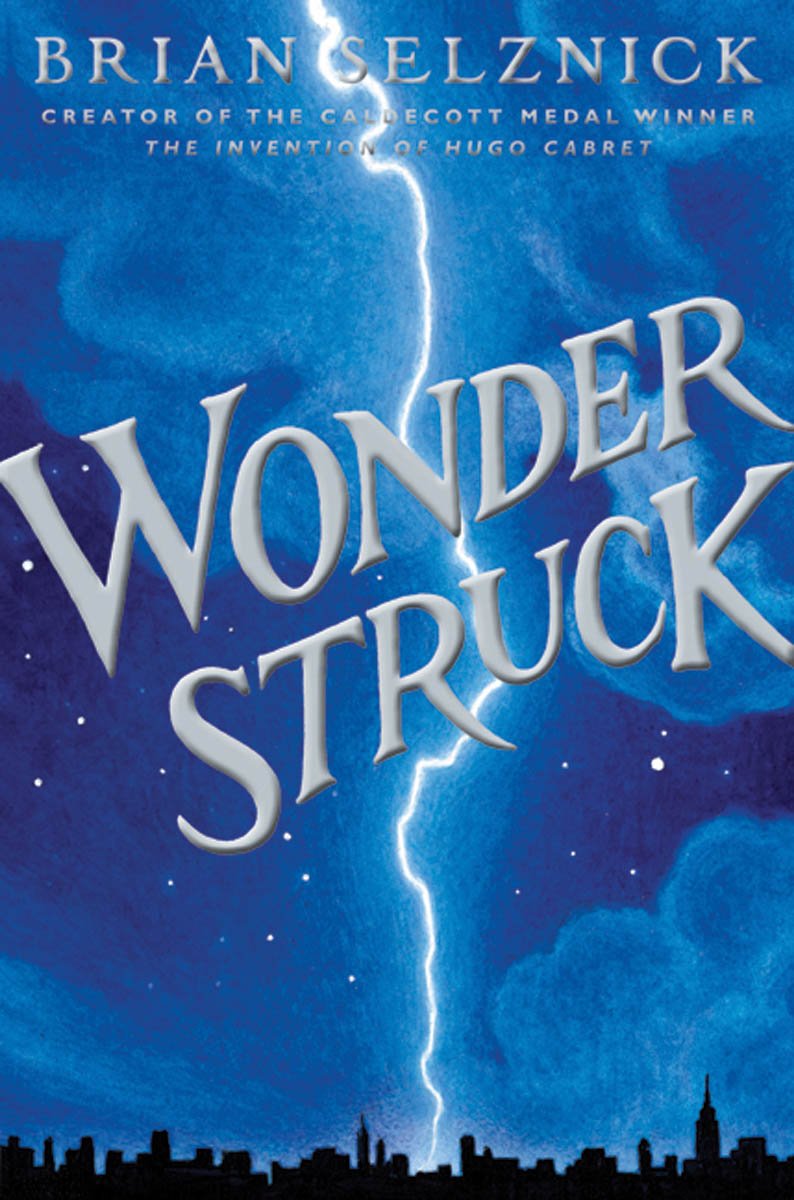
Wonderstruck by Brian Selznick is a breathtaking illustrated novel that tells two parallel stories fifty years apart — one in words, one entirely in pictures — about two deaf children searching for connection, belonging, and a place where they truly fit. This complete guide covers Wonderstruck’s reading level, recommended age, content considerations, characters, themes, and books similar to Wonderstruck, designed for parents, teachers, and students.
For Parents
Wonderstruck is a gentle, emotionally rich novel that handles themes of loss, disability, and the search for family with exceptional care. Its dual-story structure — one told in prose, one told entirely through pencil illustrations — makes it accessible to a wide range of readers, including reluctant readers and those who process information visually. Content concerns are minimal. The book is appropriate for most readers ages 8 and up and is a particularly meaningful choice for families with deaf or hard-of-hearing members.
For Teachers
Wonderstruck is a rich classroom text for grades 4–7 that opens up discussions about visual literacy, Deaf culture and history, natural history museums, and the way stories across time can echo and illuminate each other. The dual-narrative structure — one in prose, one in wordless illustration — is an excellent teaching tool for discussions of point of view, format, and how form shapes meaning. The book also connects naturally to science and history units through its natural history museum setting and its authentic depiction of 1970s New York City.
Wonderstruck at a Glance
Find on Amazon →| Author | Brian Selznick |
| Published | 2011 |
| Grade Level | 4–6 (our assessment) |
| Recommended Age | 8–12 |
| Flesch-Kincaid Grade | 4.9 |
| Word Count | ~22,000 (text only) |
| Pages | 637 (approximately half illustrations) |
| Chapters | 5 parts, alternating prose and illustration sections |
| Genre | Illustrated novel / historical fiction / mystery |
| Setting | Gunflint Lake, Minnesota and New York City, 1977; Hoboken, New Jersey and New York City, 1927 |
| Awards | Schneider Family Book Award (2012) |
For official Lexile and AR levels, visit Lexile.com or AR BookFinder. ReadingVine provides independent editorial assessments.
What Reading Level Is Wonderstruck?
Wonderstruck reads at approximately a 4th- to 5th-grade word level by standard readability measures (Flesch-Kincaid grade 4.9), placing it in the middle-grade range. Our editorial assessment is grades 4–6 for independent reading, with the book equally rewarding for readers through grade 7 or 8 when used in a classroom context. Like its predecessor The Invention of Hugo Cabret, the page count — 637 pages — is significantly inflated by Selznick’s full-page pencil illustrations, which tell one of the book’s two complete narratives without a single word of prose. The actual text is closer to 22,000 words, making it a relatively quick read despite its imposing size.
Wonderstruck is in some ways more complex than Hugo Cabret from a reading-comprehension standpoint, because it requires readers to hold two separate timelines and two separate characters in mind and to understand how they connect — a structure that rewards attentive, thoughtful reading. The wordless illustration sections also demand strong visual literacy: readers must follow a complete narrative told only through images, tracking emotion, action, and story development without any textual guidance. This makes the book an excellent choice for developing visual literacy alongside prose reading skills. For official Lexile and AR scores, visit Lexile.com or AR BookFinder.
What Age Is Wonderstruck Appropriate For?
We recommend Wonderstruck for readers ages 8–12, with the strongest fit at ages 9–11. The dual narrative structure and emotional depth make it particularly rewarding for readers in grades 4–6 who are ready for something more layered than a straightforward adventure story. The book has broad appeal — it works for strong readers who want literary complexity, for visual thinkers who engage better with images than prose, and for reluctant readers who will be drawn in by the illustration sequences before the prose chapters pull them deeper.
Wonderstruck deals honestly with loss, grief, and displacement. Ben’s story begins with the recent death of his mother and his search for a father he never knew; Rose’s story involves running away from home and the loneliness of being deaf in a world that doesn’t communicate in her language. A character is struck by lightning, resulting in hearing loss — this scene may be startling for younger readers. The book touches on themes of abandonment and the desire to belong that may resonate deeply for children who have experienced family disruption. There is no profanity, violence beyond the lightning strike, or sexual content. The overall tone is one of wonder and hope rather than darkness.
Wonderstruck is one of the most thoughtful depictions of Deaf experience in middle-grade literature. The illustration-only storyline — set in 1927 — functions as an immersive experience of what it is like to navigate a world without spoken language, and teachers and parents of deaf or hard-of-hearing children have praised the book for the dignity and authenticity it brings to that experience.
What Is Wonderstruck About?
Wonderstruck tells two stories simultaneously, set fifty years apart. In 1977, twelve-year-old Ben lives in Gunflint Lake, Minnesota with his aunt and uncle following the sudden death of his mother. Ben has always wondered about his father, whom he never knew, and after a late-night accident leaves him deaf, he discovers a clue hidden inside an old book — a bookmark from a New York City bookshop. With nothing but that clue, Ben runs away to New York to search for the father he has never met, eventually finding his way to the American Museum of Natural History.
Told entirely in Selznick’s sweeping pencil illustrations, the parallel story follows Rose in 1927, a deaf girl in Hoboken, New Jersey who is obsessed with a silent film actress named Lillian Mayhew. Rose runs away to New York City on her own quest — to find Lillian, who may be more connected to Rose’s life than she knows. Rose’s story unfolds without a single word of prose, told only through images, placing the reader in the position of navigating the world as a deaf person does: through sight, observation, and visual interpretation.
As the two narratives unfold in alternating sections, their connection — separated by fifty years — gradually becomes clear in a convergence that is both surprising and deeply moving. The American Museum of Natural History serves as a kind of anchor for both stories, a place where wonder lives and where lost things are preserved and made meaningful. Selznick drew on his own deep love of natural history museums, cabinet of curiosities traditions, and the history of Deaf education and culture in crafting the novel’s intricate dual structure.
Wonderstruck Characters
Wonderstruck Themes and Lessons
At the heart of Wonderstruck is the idea that we are all searching for the place and the people where we belong — and that sometimes the connections we need most are ones we didn’t know to look for. Both Ben and Rose are profoundly alone at the start of their stories, cut off from ordinary communication by deafness, separated from family, navigating enormous cities on their own. The novel argues, through its very structure, that isolation is not permanent: that the world contains more connection than we can see, across time as well as space, and that museums, books, and stories are the places where those hidden connections are preserved.
The book’s treatment of Deaf identity is one of its most significant contributions. By telling Rose’s entire story without words, Selznick places every reader — hearing or deaf — in the position of making sense of the world through visual observation alone. This is not presented as a deficit but as a different and equally valid way of moving through life. The novel also touches on the history of Deaf education, including the debate between oral education (teaching deaf children to lip-read and speak) and sign language, which is woven naturally into Rose’s story. Discussion questions worth exploring: How does the wordless illustration format shape how you feel about Rose’s story compared to Ben’s? What do museums represent in this book, and why are they important to both characters? How does losing his hearing change Ben’s experience of the world? What does the novel suggest about the connections between people across generations?
How Many Pages and Chapters Are in Wonderstruck?
Wonderstruck is 637 pages long, structured in five parts that alternate between Ben’s prose narrative and Rose’s wordless illustration narrative. The page count is, as with all of Selznick’s illustrated novels, significantly larger than the reading time suggests: roughly half of the pages are full-page pencil illustrations with no text, and the prose sections total approximately 22,000 words — closer to a short middle-grade novel than to an 600-page tome. Most readers in the target age range finish the book in 5–7 hours of total reading time, typically over a long weekend or about two weeks of 30–45 minute daily reading sessions. The book also includes an extensive author’s note on the history of Deaf culture, the Museum of Natural History, and the cabinet of curiosities tradition, which adds meaningful context and is well worth reading.
Books Similar to Wonderstruck
About Brian Selznick
Brian Selznick was born in 1966 in East Brunswick, New Jersey, and studied illustration at the Rhode Island School of Design. After years working as a children’s book illustrator, he created The Invention of Hugo Cabret (2007), which won the Caldecott Medal in 2008 and invented a new hybrid form of illustrated novel. Wonderstruck (2011) was his second book in that format, and The Marvels (2015) his third. For Wonderstruck, Selznick immersed himself in the history of Deaf culture and education — including a significant period spent at Gallaudet University, the world’s only university designed primarily for deaf and hard-of-hearing students — to ensure the book’s portrayal of Rose’s experience was authentic and respectful. The Schneider Family Book Award, which Wonderstruck received in 2012, is given by the American Library Association to books that authentically embody an artistic expression of the disability experience. Selznick has said that the book grew from his lifelong love of natural history museums and his fascination with the cabinet of curiosities tradition — the precursor to the modern museum — in which collectors assembled objects from across the world into rooms designed to produce wonder in the viewer.
Wonderstruck: Frequently Asked Questions
What grade level is Wonderstruck?
By standard readability measures, Wonderstruck reads at approximately a 4th- to 5th-grade word level (Flesch-Kincaid grade 4.9). Our editorial assessment is grades 4–6 for independent reading, with the book equally rewarding for readers through grade 7 or 8 in a classroom setting. The 637-page count is misleading — roughly half the pages are illustrations, making the actual prose closer to a short middle-grade novel in length.
Do you need to read The Invention of Hugo Cabret before Wonderstruck?
No — Wonderstruck is a completely standalone story with entirely different characters, settings, and plot. The two books share only their format (alternating prose and wordless illustration sections) and their author. That said, readers who have experienced Hugo Cabret first will arrive at Wonderstruck already comfortable with Selznick’s unique storytelling format, which may help them settle into the dual-narrative structure more quickly. Either book makes an excellent starting point.
Why is Rose’s story told only in pictures?
Selznick made the deliberate choice to tell Rose’s 1927 story entirely through wordless illustrations as a way of placing all readers — hearing and deaf alike — in the experience of navigating the world primarily through sight. Rose is deaf, and in 1927 she lives in a world that does not communicate in her language. By removing words from her narrative, Selznick makes the reader feel, rather than simply understand, what that experience is like. It is one of the most discussed and praised formal choices in recent middle-grade literature.
Is there a movie based on Wonderstruck?
Yes. Director Todd Haynes adapted Wonderstruck into a film released in 2017. The film is rated PG and follows the novel’s dual-narrative structure closely, using black-and-white silent-film style cinematography for Rose’s 1927 story and color for Ben’s 1977 story — a cinematic parallel to Selznick’s illustrations-vs-prose format in the book. The film stars Millicent Simmonds, who is deaf in real life, as Rose, a casting choice widely praised for its authenticity.
What award did Wonderstruck win?
Wonderstruck received the Schneider Family Book Award in 2012, given by the American Library Association to books that authentically portray the disability experience. It was specifically recognized for its respectful and immersive portrayal of Deaf identity and culture. The book was also widely recognized on best-of-year lists at the time of its publication.
How are Ben’s and Rose’s stories connected?
The connection between the two storylines — set fifty years apart — is one of Wonderstruck’s central mysteries and best experienced by reading the book rather than having it explained in advance. What can be said without spoiling it: both children are searching for something they cannot name, both end up at the American Museum of Natural History in New York City, and the objects and people that matter to one story turn out to matter to the other in ways that become clear only in the novel’s final sections.
Is Wonderstruck appropriate for a child who is deaf or hard of hearing?
Wonderstruck has been widely praised by the Deaf community and by educators who work with deaf and hard-of-hearing students for its authentic, dignified portrayal of Deaf experience. The book does not treat deafness as a tragedy to be overcome — it treats it as a way of being in the world. Both Ben and Rose are fully realized characters whose deafness is part of who they are, not the defining limit of what they can do or become. Many parents and teachers of deaf or hard-of-hearing children have described the book as deeply meaningful for their students precisely because it centers characters who navigate the world the way they do.
What is a cabinet of curiosities, and why does it matter in Wonderstruck?
A cabinet of curiosities — known in Latin as a Wunderkammer, or “wonder-room” — was a collection assembled by wealthy Europeans from the 16th through 18th centuries, typically filling an entire room with natural specimens, artifacts, artworks, and curiosities from around the world. They were the precursors to modern museums: places designed to produce astonishment in the viewer by bringing the wonders of the world together in one place. In Wonderstruck, the cabinet of curiosities is both a literal plot element and a metaphor for the novel itself — a collection of seemingly unrelated things whose connections become visible only when you step back and see the whole.