
 = Partner Site
Amal Unbound Reading Level: A Complete Guide
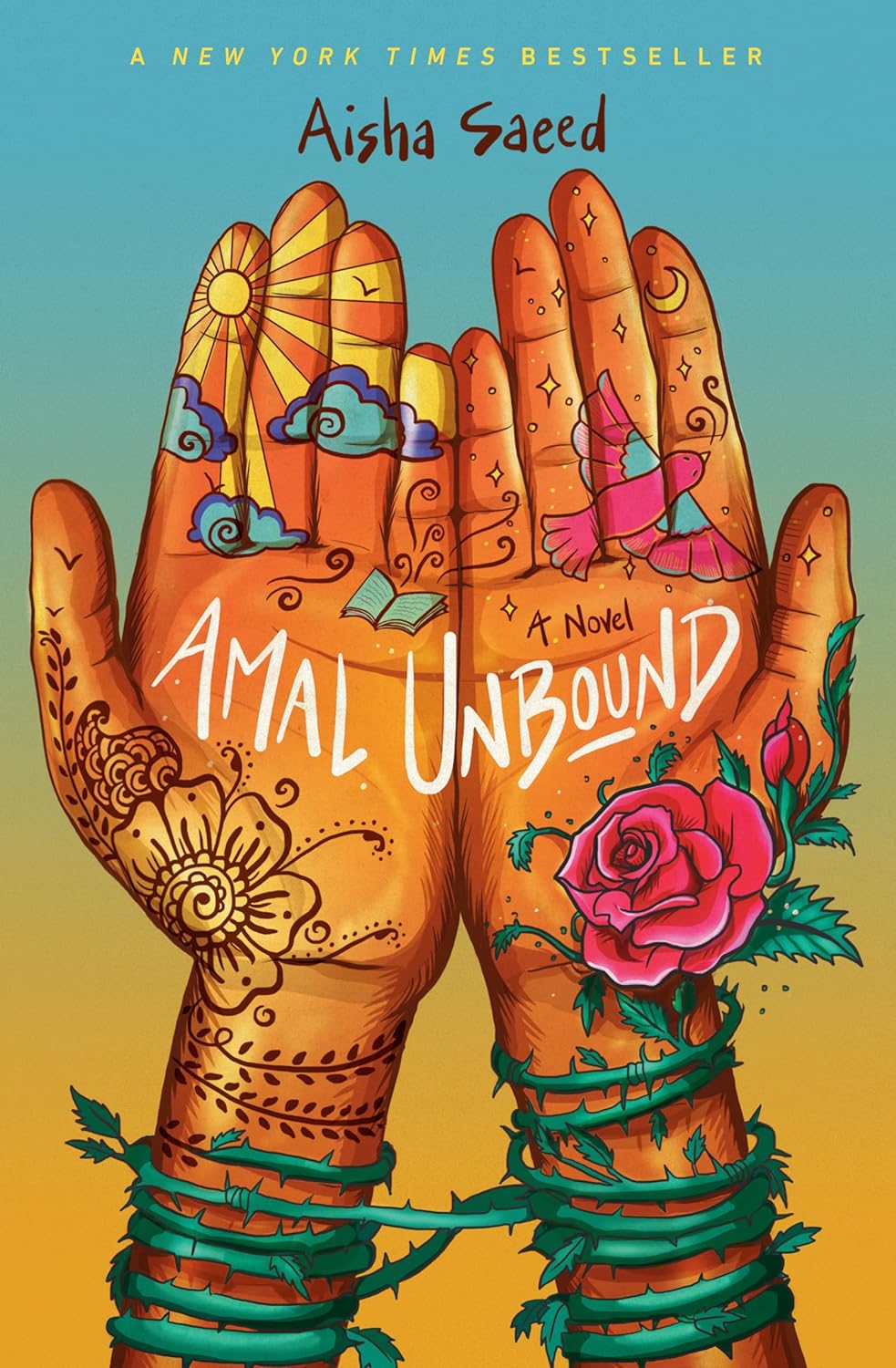
This complete guide to Amal Unbound by Aisha Saeed covers everything parents, teachers, and students want to know — from reading level and recommended age to a full character breakdown, key themes, and the best books to read next. Published in 2018 by Nancy Paulsen Books (Penguin Random House), Amal Unbound is a New York Times bestseller, a Global Read Aloud selection, and a widely taught middle grade novel about girls’ education, social injustice, and the courage required to challenge power. It follows twelve-year-old Amal, a girl in a small Pakistani village who dreams of becoming a teacher — until a single act of defiance against the local landlord’s son lands her in indentured servitude, and she must find a way to reclaim not just her freedom but her future. This guide gives parents, teachers, and students the information they need before, during, and after reading.
For Parents
Amal Unbound deals with serious real-world subject matter — indentured servitude, class inequality, gender discrimination, and the intimidation of entire communities by a corrupt landlord family — but handles it with clarity and hope. The content is not gratuitous: Amal is not physically harmed, there is no sexual content, and while the threat of violence is real and the injustice is unflinching, the novel is ultimately a story of courage and collective action. Common Sense Media rates it ages 10+. The book includes an author’s note explaining indentured servitude and its continued practice, which makes it an excellent read-alongside title for family conversations about inequality and global issues. The novel also touches on postpartum depression, portrayed with sensitivity and without being named as such.
For Teachers
Amal Unbound was selected as the 2018 Global Read Aloud upper elementary/middle grade title and is on state reading lists for 32 states, making it one of the most structurally supported classroom reads at this level. It pairs naturally with social studies units on South Asia, global inequality, girls’ education, and human rights. Saeed’s website offers extensive teacher resources including vocabulary lists, a pronunciation guide for Urdu words and character names, lesson plans, and a full teacher’s guide. Lexile 600L (HL), ATOS 4.2 — appropriate for grades 4–7. The short chapters and first-person voice also make it excellent for read-aloud and close reading activities.
Amal Unbound at a Glance
Find on Amazon →| Author | Aisha Saeed |
| Published | 2018 (Nancy Paulsen Books / Penguin Random House) |
| Grade Level | 4–7 (our assessment) |
| Recommended Age | 9–13 |
| Flesch-Kincaid Grade | ~4.2 |
| Word Count | 38,737 |
| Pages | 234 (hardcover) |
| Genre | Realistic fiction / Contemporary middle grade |
| Setting | Rural village in Punjab, Pakistan; the Khan family estate; contemporary |
| Awards | New York Times Bestseller; 2018 Global Read Aloud (upper elementary/middle grade); South Asian Book Award; ALSC Notable Book (2019); starred reviews from Kirkus, SLJ, Publishers Weekly, Horn Book, School Library Connection; on state reading lists for 32 states |
For official Lexile and AR levels, visit Lexile.com or AR BookFinder. ReadingVine provides independent editorial assessments.
What Reading Level Is Amal Unbound?
Amal Unbound has a Lexile score of 600L (designated HL, meaning “High-Low” — high interest, lower text complexity) and an ATOS level of 4.2. Our editorial assessment is grades 4–7, with a recommended age of 9–13. The Booksource interest level is grades 3–8. The “HL” Lexile designation is significant: it signals that the book’s thematic and emotional content is aimed at a more mature audience than the word-level complexity alone would suggest. A reader who is technically capable of reading at grade 3 by Lexile metrics may still find the novel’s exploration of servitude, gender inequality, and systemic injustice more meaningful at grade 4 or above.
Saeed writes in a prose style that is deliberately clear and unadorned — Horn Book called it “short chapters and unadorned prose” that make the story “accessible and direct.” This is a craft choice, not a limitation. The directness of the language mirrors Amal’s voice: matter-of-fact, precise, and brave about naming what she sees. The readability makes the book genuinely appropriate for a wide range of readers, from strong grade 3 readers on up through middle school, and accounts for its wide use both in upper elementary and in grades 6–7. Reluctant readers in particular respond well to it — it appears on YALSA’s Top Ten for Reluctant Readers, an uncommon honor for a middle grade novel focused on global issues rather than action or adventure.
For official Lexile and AR scores, visit Lexile.com or AR BookFinder.
What Age Is Amal Unbound Appropriate For?
We recommend Amal Unbound for readers ages 9–13. Common Sense Media rates it age 10+. The novel addresses serious real-world issues — forced labor, class oppression, and the targeting of a family by a corrupt and powerful man — but does so without graphic violence, sexual content, or profanity. The tone throughout is hopeful, and Amal’s perspective keeps the story grounded in a child’s experience rather than overwhelming younger readers with its darker systemic realities.
The central premise — a twelve-year-old girl is taken from her family and forced to work as a servant to pay off a fabricated debt — may be disturbing for some younger or more sensitive readers, particularly because the injustice of it is never minimized. Jawad Sahib is menacing, and the novel makes it clear that he and his family have displaced villagers and used violence to maintain control. Amal witnesses the aftermath of this violence without being present for it. Amal’s mother suffers from what the novel depicts as recurring postpartum depression (never named as such, since Amal wouldn’t know the term); her inability to function is part of the chain of events that leads to Amal’s situation. The novel also depicts the disappointment Amal’s family feels at the birth of another daughter — a cultural reality Saeed renders honestly rather than sentimentally. There is no sexual content. No significant profanity. No graphic violence on the page.
For families: the author’s note at the end of the novel is an important part of the reading experience. It explains indentured servitude, its continued real-world practice, and the real girls and women who fight similar injustices without headlines or recognition. Reading it alongside your child opens natural conversations about inequality, courage, and why telling these stories matters.
What Is Amal Unbound About?
Twelve-year-old Amal lives in a small village in Punjab, Pakistan, where she loves school, borrows books from her friend Omar’s school library whenever she can, and plans to attend college and become a teacher like her beloved Miss Sadia. When her mother falls into a deep depression after the birth of Amal’s fifth younger sister, Amal — as the eldest daughter — is pulled out of school to manage the household. It is supposed to be temporary. Then, during a rare stolen hour at the market, she is struck by a car, and the young man inside — Jawad Sahib, son of the village’s powerful and feared landlord — tries to take her pomegranate. Amal refuses. She talks back. And everything changes.
Within days, Jawad Sahib arrives at her father’s door with a demand: Amal will come to the Khan estate to work as a servant, paying off the family’s accumulated debt through her labor. The debt, of course, is rigged — structured so that it can never actually be paid off, charging for each day of Amal’s presence while simultaneously adding new fees. Amal’s parents have no recourse. The Khans control everything: the land, the loans, the local police, and the lives of everyone who lives in their shadow. Amal is driven through the estate’s tall walls and guarded gates and assigned to wait on Jawad’s mother, Nasreen Baji.
What follows is both a portrait of survival under an unjust system and a story about what it means to refuse to be reduced to your circumstances. Amal secretly borrows books from Jawad’s library. She teaches a young servant girl named Fatima to read. She navigates jealousies and alliances among the other servants. And when she discovers that Jawad has committed murder — and that she knows where the evidence is hidden — she faces the most dangerous choice of her life: stay silent and survive, or act and risk everything. Saeed’s author’s note frames the entire novel in the context of Malala Yousafzai and the millions of girls like Amal who fight for justice without ever making a headline.
Amal Unbound Characters
Is Amal Unbound Banned?
It appears Amal Unbound has not been banned or formally challenged anywhere in the United States. It does not appear on the American Library Association’s lists of challenged or banned books. It was selected as the 2018 Global Read Aloud, used as a shared classroom text in thousands of schools internationally during a six-week fall reading period, and is on the state reading list for 32 states. Its subject matter — the courage of a girl fighting for her education and her freedom — generates widespread institutional support. If anything, the novel’s argument for girls’ education and its window into life in rural Pakistan make it the kind of book that teachers actively champion. There are no documented removal attempts.
Amal Unbound Themes and Lessons
The deepest argument in Amal Unbound is not about one girl’s exceptional bravery, but about the bravery of the ordinary. Saeed wrote this novel in the wake of reading about Malala Yousafzai — not because she wanted to write about Malala, but because Malala’s story made her think about all the girls who were doing the same thing, fighting for the same things, and would never have their names in any headline. Amal is specifically not exceptional in that way. She is a good student, a caring eldest daughter, a girl who loves books — someone whose whole situation came about because of ordinary circumstances stacking on top of each other, not because she did something heroic. The novel’s quiet insistence is that her resistance matters anyway. That what she does at the end of the book — passing information that will bring the Khans to justice — is an act of genuine courage even though nobody will write about it.
The literacy theme runs throughout like a spine. Books are what Amal was taken away from. Books are what she steals back. The act of teaching Fatima to read inside the very estate that is trying to own her is Saeed’s most precise image of what education means — not as credential or career, but as the one thing that cannot be entirely taken from you, the one thing you can carry and give away at the same time. For family and classroom discussion: Why does Jawad ban Amal from the library? What does the literacy center reveal about the Khans’ relationship to education? What does Amal’s name mean, and how does the novel earn it?
How Many Pages and Chapters in Amal Unbound?
Amal Unbound is 234 pages in the hardcover edition, with approximately 38,737 words. The chapters are short — typically two to four pages — and the pacing is brisk, which partly explains why it connects with reluctant readers despite dealing with challenging subject matter. Most readers at the target age complete it in one to two weeks of independent reading; the short chapters also make it well-suited for daily read-aloud in a classroom setting. For context on the novel’s setting, Saeed’s website offers a wealth of teacher resources including a pronunciation guide for Urdu words and character names, vocabulary lists, and background material on Pakistan — all of which enrich the experience for readers who are coming to this world for the first time.
Books Similar to Amal Unbound
About Aisha Saeed
Aisha Saeed is a Pakistani-American author, former teacher, and attorney who lives in Atlanta, Georgia, with her family. She earned her bachelor’s and master’s degrees in elementary education from the University of Florida, taught second grade in Michigan, Florida, and Georgia, and went on to law school — an unusual combination that shows up directly in her writing: her books tend to be both pedagogically grounded and structurally precise about how power works. She began writing her debut YA novel, Written in the Stars, while teaching second grade, finishing pages during her son’s nap times and at night. Amal Unbound came to her in 2012, when she read about Malala Yousafzai’s story and found herself thinking not about Malala but about all the children she’d worked with — refugee students, children with starkly difficult circumstances — who were showing the same resilience without any recognition. The idea that she wanted to capture, she has said, was the bravery of the person who acts for justice even when no spotlight will ever find them. Amal’s name means “hope” in Arabic, and that is what Saeed intended: not a story about an exceptional girl, but about what ordinary hope, sustained in impossible conditions, can do. She is a founding member of the nonprofit We Need Diverse Books, an organization dedicated to getting more books featuring diverse characters into the hands of all children. Her companion novel Omar Rising (2022) continues the story of Amal’s best friend as he navigates an elite boarding school. She has also written a Wonder Woman middle grade adventure series and a picture book, Bilal Cooks Daal, illustrated by Anoosha Syed.
Amal Unbound: Frequently Asked Questions
What reading level is Amal Unbound?
Amal Unbound has a Lexile score of 600L (HL) and an ATOS level of 4.2. Our editorial assessment is grades 4–7, ages 9–13. The “HL” Lexile designation means “High-Low” — high interest level, lower text complexity — indicating that the book’s themes are more mature than the word-level difficulty suggests. The prose is clear and direct by design, which makes it accessible for a wide range of readers and accounts for its appearance on YALSA’s Top Ten for Reluctant Readers. For official scores, visit Lexile.com or AR BookFinder.
What age is Amal Unbound appropriate for?
We recommend Amal Unbound for ages 9–13. Common Sense Media rates it age 10+. There is no sexual content, no significant profanity, and no graphic violence. The content to know: the central premise involves a twelve-year-old being taken from her family and forced into labor, the antagonist has had people killed, and the novel depicts both gender disappointment at the birth of daughters and a mother’s postpartum depression with honesty. For readers as young as 9 who are mature and curious about the world, it is appropriate and valuable. For more sensitive readers, ages 10–11 is a good entry point.
What is indentured servitude, and is it still happening?
Indentured servitude is a system in which a person is required to work for another person or family to “repay” a debt — one that is typically structured to be impossible to pay off, keeping the worker in perpetual bondage. It is illegal in Pakistan and in most countries worldwide, but it continues to be practiced, particularly in rural areas where powerful landowners control access to loans, land, and local institutions. Saeed’s author’s note addresses this directly and frames Amal’s story as representative of millions of girls and women who are still living versions of it. Teachers often use this novel as an entry point to broader research on modern slavery and bonded labor.
Is Amal Unbound inspired by a true story?
Amal is a fictional character, but the novel was directly inspired by real events and real people. Saeed has said the idea came to her in 2012 after reading about Malala Yousafzai — not to tell Malala’s story, but to tell the story of all the girls fighting similar battles who never make headlines. Her own experiences teaching refugee children and students from difficult circumstances also shaped the novel. The author’s note explicitly states that Amal represents real women and girls around the world who fight injustice without recognition. The practice of indentured servitude Saeed depicts is real and ongoing.
How does Amal Unbound end?
Amal learns that Jawad Sahib has murdered a villager whose disappearance has been under police investigation, and that her fellow servant Bilal knows where the body is hidden. Rather than stay silent to protect herself, Amal passes this information to Asif, a young teacher at the local literacy center whose father is a lawyer. Within a week, Jawad Sahib and his father Khan Sahib are arrested. Amal is released from her servitude, the village is freed from the Khans’ grip, and Amal returns home. The ending is hopeful and affirming without being naive: the novel does not pretend the world is now fixed, only that Amal did what she could with what she knew — and that it was enough.
Is there a sequel to Amal Unbound?
Yes. Omar Rising (2022) is a companion novel that follows Amal’s best friend Omar as he attends Ghalib Academy, an elite boarding school, on a scholarship. He arrives expecting opportunity and finds that first-year scholarship students are treated as second-class citizens — assigned menial chores and barred from clubs and teams. The novel explores class, belonging, and what it costs to be the only person like you in a room. It can be read independently but is best read after Amal Unbound.
What does Amal’s name mean?
Amal (أمل) means “hope” in Arabic. It is used widely across the Arabic-speaking world and in Muslim communities internationally, including in Pakistan. Saeed chose the name deliberately — Amal herself notes it in the novel. The name is not just symbolic decoration: the novel is structured around the question of whether hope is something that can survive being stripped of everything that fed it. The answer Saeed gives is yes, but not easily, and not without cost.
Is Amal Unbound banned?
It appears Amal Unbound has not been banned or challenged anywhere. It was the 2018 Global Read Aloud selection for upper elementary and middle grade, used in thousands of classrooms internationally, and is on the state reading list for 32 states. Its subject matter — girls’ education, courage, and justice — generates institutional support rather than controversy. It does not appear on the ALA’s challenged or banned books lists.