
 = Partner Site
Anne of Green Gables Reading Level: A Complete Guide
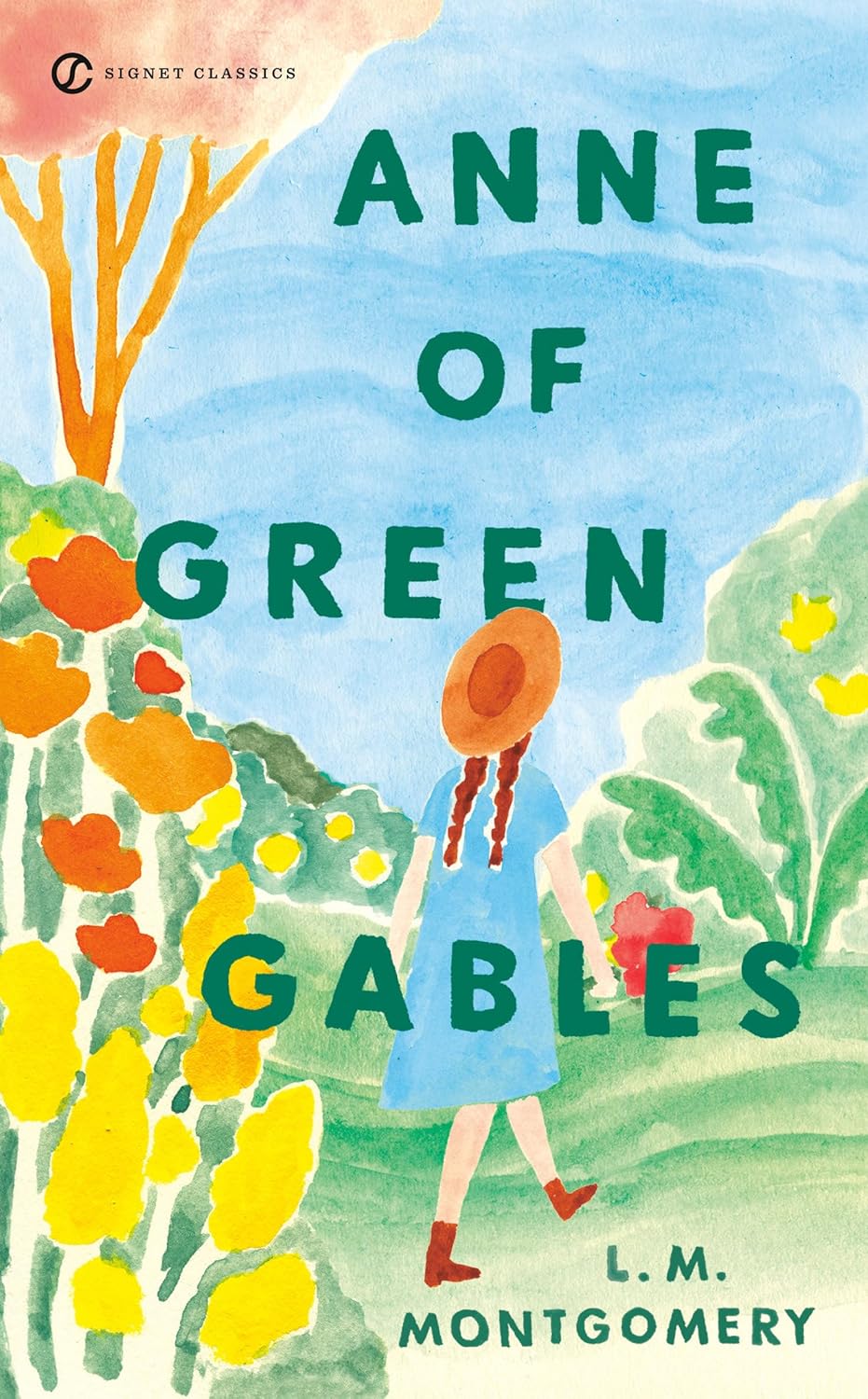
Anne of Green Gables by L.M. Montgomery tells the story of Anne Shirley, a red-haired orphan with a fierce imagination who transforms the lives of everyone in her small Prince Edward Island community. This guide provides parents and teachers with reading level information, age recommendations, content insights, and discussion questions for this beloved classic about friendship, belonging, and the power of imagination.
For Parents
Find the right reading level for your child, understand the book’s themes about finding family and self-acceptance, and get conversation starters to help your child explore questions about imagination, friendship, and what makes a person truly belong.
For Teachers
Access grade-level guidance, reading metrics, character analysis support, and thematic discussion questions. This Montgomery classic offers rich opportunities for exploring early 20th-century Canadian life, character transformation, and the celebration of imagination and individuality.
Anne of Green Gables at a Glance
Find on Amazon →| Author | L.M. Montgomery |
| Published | 1908 |
| Grade Level | 5–7 (our assessment) |
| Recommended Age | 10–13 |
| Flesch-Kincaid Grade | 7.4 |
| Word Count | ~119,000 |
| Pages | ~384 (standard paperback) |
| Chapters | 38 |
| Genre | Classic fiction / coming-of-age |
| Setting | Avonlea, Prince Edward Island, Canada, 1870s–1880s |
| Awards | Classic (beloved worldwide, adapted numerous times) |
For official Lexile and AR levels, visit Lexile.com or AR BookFinder. ReadingVine provides independent editorial assessments.
What Reading Level Is Anne of Green Gables?
Anne of Green Gables is appropriate for grades 5–7, with a Flesch-Kincaid grade level of 7.4. The vocabulary reflects early 20th-century Canadian English with some period terms and extensive descriptive passages that require patience. Montgomery’s prose is lush and romantic—she delights in describing Prince Edward Island’s natural beauty and Anne’s elaborate flights of fancy—which means the book reads more slowly than plot-driven contemporary fiction.
Montgomery’s writing style is warm, humorous, and deeply affectionate toward her characters. Anne’s dialogue is distinctive—she speaks in torrents, with dramatic vocabulary and poetic phrases that reflect her love of beautiful words. The narrative voice is gently ironic, capturing both Anne’s perspective and the adults’ bemused reactions to her. The episodic structure means each chapter is often a self-contained adventure or mishap, making it excellent for serial reading.
The story resonates most deeply with readers ages 10–13 who can appreciate Anne’s transformation from unwanted orphan to beloved daughter, relate to her struggles with temper and imagination, and connect with themes about finding where you belong. Strong fifth graders can manage it; sixth and seventh graders are the ideal audience, particularly readers who love character-driven stories and don’t mind a slower pace.
What Age Is Anne of Green Gables Appropriate For?
Anne of Green Gables is most appropriate for readers ages 10–13. The book is gentle and wholesome—Anne faces challenges like loneliness, fitting in, and learning to control her temper, but nothing traumatic or inappropriate. The tone is warm and ultimately hopeful.
Orphan experience: Anne has been passed from home to home and mistreated. She describes her past loneliness matter-of-factly but without dwelling on trauma.
Period attitudes: The book reflects early 1900s rural Canadian society, including some outdated gender expectations and occasional mentions of Anne’s red hair being “unfortunate.”
Anne’s mishaps: Anne gets into various scrapes—she dyes her hair green, gets drunk on currant wine by accident, breaks her ankle. These are played for gentle humor rather than drama.
Matthew’s death: Near the end, Matthew dies suddenly of a heart attack. This is sad but handled with grace and focuses on the family’s love and memories.
What’s NOT in the book: No inappropriate content, no violence. The book ends hopefully—Anne has found her forever home and family. The message is deeply affirming: you can find belonging, love is transformative, and being yourself is more important than fitting in.
What Is Anne of Green Gables About?
Matthew and Marilla Cuthbert, elderly siblings who have never married, live together on their farm called Green Gables in the village of Avonlea on Prince Edward Island. They decide to adopt a boy from an orphanage to help Matthew with the farm work. Through a miscommunication, the orphanage sends them a girl instead—eleven-year-old Anne Shirley, red-haired, freckled, and desperately eager to please.
Matthew, shy and gentle, falls in love with Anne immediately. Marilla, practical and stern, intends to send her back. But Anne’s passionate plea—she’s never had a real home, she promises to be good, she loves Green Gables already—softens Marilla. They decide to keep her on trial. Anne’s joy is explosive and absolute.
Anne is unlike any child Marilla has known. She talks constantly, using elaborate vocabulary and poetic phrases. She renames places to suit her imagination: the Barry pond becomes “the Lake of Shining Waters,” an avenue of trees becomes “the White Way of Delight.” She has an elaborate inner life fed by books and daydreams. She’s also impulsive, dramatic, and prone to scrapes: she accidentally dyes her hair green trying to change its red color, she gets drunk on currant wine thinking it’s raspberry cordial, she walks a ridgepole on a dare and falls and breaks her ankle.
Anne’s greatest friendship is with Diana Barry, a girl her own age who lives nearby. They become “bosom friends” and “kindred spirits”—Montgomery’s loving portrait of intense girlhood friendship is one of the book’s great pleasures. Anne also develops a rivalry with Gilbert Blythe, a smart, handsome boy who teases her about her red hair. Anne smashes a slate over his head and vows never to speak to him again—a vow she keeps for years despite his attempts to apologize.
Through it all, Anne is learning what it means to belong. Marilla teaches her discipline and responsibility, correcting her romantic notions with practical sense. Matthew adores her quietly and indulges her when Marilla won’t. The community of Avonlea—nosy, judgmental, but ultimately kind—accepts her. Anne excels in school, finding that her imagination makes her a brilliant student and storyteller.
The book follows Anne from age eleven to sixteen, covering her first years at Green Gables and her success at school. She wins a scholarship to Queen’s Academy to study for a teaching certificate, achieving far beyond what anyone expected of an orphan girl. Her rival Gilbert also wins a scholarship. At Queen’s, Anne distinguishes herself academically and wins another scholarship to attend college.
But tragedy strikes when Matthew dies suddenly of a heart attack, brought on by stress and shock after learning that the bank holding his and Marilla’s savings has failed. Grief-stricken and facing worsening eyesight, Marilla fears she may have to sell Green Gables. Anne immediately gives up her college scholarship so she can stay in Avonlea, teach at the local school, and care for Marilla. When Gilbert learns of Anne’s situation, he gives up the Avonlea teaching position so she can remain at home. His kindness finally breaks down the tension between them, and they begin a true friendship.
The book ends with Anne at sixteen, on the threshold of womanhood, her romantic dreams tempered by real loss but her essential optimism intact. She has found her home, her family, and her place in the world. The bend in the road that she worried about has come, but she faces it with hope rather than fear.
Anne of Green Gables Characters
Anne of Green Gables Themes and Lessons
At its heart, Anne of Green Gables is about finding where you belong and being loved for exactly who you are. Anne arrives at Green Gables unwanted—a mistake, wrong in every way (a girl when they wanted a boy, talkative when they value quiet, imaginative when they prize practicality). But Matthew and Marilla learn to love not despite her differences but because of them. Anne doesn’t have to change her essential nature to be accepted; rather, the Cuthberts and Avonlea change to appreciate her gifts. The book teaches that true belonging comes when people love you for yourself, not for who they wish you were.
The book also celebrates imagination as a strength rather than a weakness. Anne’s elaborate fantasies are initially seen as silly and impractical, but they’re also what makes her an exceptional student, a loyal friend, and someone who finds beauty everywhere. Montgomery argues that people who can imagine deeply feel deeply, create meaningfully, and live richly. Anne’s imagination isn’t something to outgrow but something to channel and refine.
Discussion questions for families:
- How do Matthew and Marilla each show love to Anne in different ways?
- Why does Anne refuse to forgive Gilbert for so long? What finally changes her mind?
- What does Anne’s decision to give up college and stay with Marilla teach about love and sacrifice?
- How does Anne’s imagination help her and hurt her at different points in the story?
How Many Pages and Chapters in Anne of Green Gables?
Anne of Green Gables is approximately 384 pages in standard editions and is divided into 38 chapters. The word count is about 119,000 words—a substantial novel that covers five years of Anne’s life from age eleven to sixteen. Chapters average about 10 pages and each typically focuses on a specific episode or mishap.
For independent readers ages 10–13, the book typically takes 10–12 hours to read. The descriptive passages and episodic structure mean the pace is leisurely rather than urgent. Many readers find it slow at first but deeply absorbing once they settle into Montgomery’s rhythms. As a read-aloud, it takes approximately 8–10 hours and works beautifully in installments—the chapter structure makes it perfect for bedtime reading over several weeks.
Books Similar to Anne of Green Gables
About L.M. Montgomery
Lucy Maud Montgomery (1874–1942) was born on Prince Edward Island, Canada, and Anne of Green Gables draws directly from her childhood there. She was raised by strict grandparents after her mother died and her father left, giving her intimate knowledge of both the beauty of PEI and the loneliness of a spirited child in a restrictive household. Anne Shirley is partly autobiographical—Montgomery poured her own imagination, love of nature, and childhood loneliness into the character. The book was rejected by multiple publishers before being accepted in 1908. It became an immediate bestseller and remains one of the most beloved children’s books ever written, translated into dozens of languages. Montgomery wrote seven sequels following Anne through marriage, motherhood, and her children’s lives. She also wrote other beloved series including the Emily books and Pat of Silver Bush. Montgomery struggled with depression throughout her life, which makes the joy and hope in her books all the more remarkable. Anne of Green Gables has been adapted for stage, film, and television numerous times; the 1985 Canadian miniseries is particularly beloved. The book’s enduring appeal lies in its celebration of imagination, its warm portrait of community, and Anne herself—one of literature’s most vivid, lovable heroines.
Anne of Green Gables: Frequently Asked Questions
Does Anne marry Gilbert in Anne of Green Gables?
Not in the first book—Anne of Green Gables ends with Anne at sixteen, with she and Gilbert just becoming friends after years of rivalry and silence. They don’t marry until the third book in the series, Anne of the Island, when Anne is in her early twenties. The first book focuses on Anne’s childhood and her finding family at Green Gables. The romance with Gilbert develops slowly across multiple books. In the first book, their relationship evolves from enemies (Anne smashes a slate over his head for teasing her about her red hair) to academic rivals to the beginnings of friendship when Gilbert gives up the Avonlea teaching position so Anne can stay near Marilla.
What grade level is Anne of Green Gables?
Anne of Green Gables is appropriate for grades 5–7 (ages 10–13). The Flesch-Kincaid level of 7.4 reflects early 20th-century prose with extensive descriptive passages. The vocabulary is sophisticated and the pacing is slower than contemporary fiction. Strong fifth graders can manage it, though sixth and seventh graders will appreciate the emotional depth more fully. The book is particularly beloved by readers who enjoy character-driven stories, don’t mind slower pacing, and appreciate detailed descriptions of nature and emotion. It works beautifully as a family read-aloud for slightly younger readers who might struggle with independent reading at this level.
What happens at the end of Anne of Green Gables?
The book ends with both loss and hope. Matthew dies suddenly of a heart attack, and Marilla faces the possibility of losing Green Gables due to failed bank investments and her failing eyesight. Anne immediately gives up her college scholarship to stay in Avonlea, teach at the local school, and care for Marilla. Gilbert Blythe sacrifices the Avonlea teaching position to Anne so she can stay near home, and this act of kindness finally heals their long feud—they become friends. The final chapter shows Anne at sixteen, having lost Matthew but secure in Marilla’s love and her place in Avonlea. She faces the future with characteristic optimism, ready to embrace whatever comes. It’s a bittersweet but ultimately hopeful ending—Anne has found her forever home and family.
Why is Anne’s hair red in Anne of Green Gables?
Anne’s red hair is a central part of her character and the story. In the time period and setting (1880s Prince Edward Island), red hair was considered unfortunate or even ugly—a source of teasing and social difficulty. Anne is deeply self-conscious about her red hair and freckles, seeing them as her greatest flaw. This reflects the era’s beauty standards and gives Anne something concrete to struggle with regarding self-acceptance. Her hair color is what prompts Gilbert’s teasing (calling her “Carrots”), which triggers their long feud. It’s also what motivates her disastrous attempt to dye it, which turns it green instead. Montgomery uses Anne’s red hair to explore themes of self-acceptance and learning that what makes you different can also make you special. By the end, Anne has learned to accept her appearance as part of who she is.
Is Anne of Green Gables based on a true story?
Anne of Green Gables is fiction, but it draws heavily on L.M. Montgomery’s own life. Montgomery grew up on Prince Edward Island in Cavendish (the model for Avonlea), was raised by strict grandparents after her mother died, and poured her own imagination, love of nature, and childhood experiences into Anne. The house that inspired Green Gables still stands in Cavendish and is now a museum. Many of the locations in the book—Lover’s Lane, the Lake of Shining Waters, the Haunted Wood—are based on real places Montgomery knew. Anne’s romantic imagination and love of beautiful words mirror Montgomery’s own childhood personality. While Anne’s specific story is invented, the emotional truth of a lonely, imaginative child finding love and belonging comes directly from Montgomery’s experience.
Does Anne of Green Gables have sequels?
Yes, Montgomery wrote seven sequels following Anne through her entire life. Anne of Avonlea (second book) covers Anne’s young adult years teaching in Avonlea. Anne of the Island (third book) follows her to college and her eventual engagement to Gilbert. Anne of Windy Poplars (fourth) covers her years as a school principal. Anne’s House of Dreams (fifth) follows her early married life. Anne of Ingleside (sixth) focuses on her life with six children. Rainbow Valley and Rilla of Ingleside (seventh and eighth) focus primarily on Anne’s children, particularly during World War I. Most readers start with Anne of Green Gables and continue with Anne of Avonlea and Anne of the Island, which form a satisfying trilogy about Anne’s journey to adulthood. The later books are beloved by devoted fans but not as universally read.
What is Anne’s personality in Anne of Green Gables?
Anne is passionate, imaginative, talkative, and dramatic. She speaks in torrents, using elaborate vocabulary and poetic phrases. She has an intense inner life fed by books and daydreams, renaming ordinary places with romantic names and seeing beauty everywhere. She’s also impulsive and has a fierce temper—she smashes a slate over Gilbert’s head for teasing her and refuses to speak to him for years. She’s deeply loyal to her friends (calling Diana her “bosom friend” and “kindred spirit”) and desperately wants to be loved and belong. She’s also insecure about her appearance, particularly her red hair and freckles. She’s academically brilliant, especially in literature and creative subjects. Over the course of the book she matures, learning to control her temper and balance imagination with practicality, but she never loses her essential optimism, romanticism, and ability to find joy in everyday beauty.
How old is Anne in Anne of Green Gables?
Anne is eleven years old when she arrives at Green Gables at the beginning of the book. The story follows her from age eleven to sixteen, covering five formative years of her life. When the book ends, she is sixteen and has just completed her teaching certification at Queen’s Academy. She’s on the threshold of adulthood—no longer the impulsive child who arrived at Green Gables but not yet fully grown. The sequels continue her story: Anne of Avonlea covers ages sixteen to eighteen, Anne of the Island follows her through college (roughly ages eighteen to twenty-two), and subsequent books follow her through marriage, motherhood, and into middle age. But the first book, which remains the most beloved, captures that particular magic of the transition from childhood to young adulthood.