
 = Partner Site
Babe: The Gallant Pig Reading Level: A Complete Guide
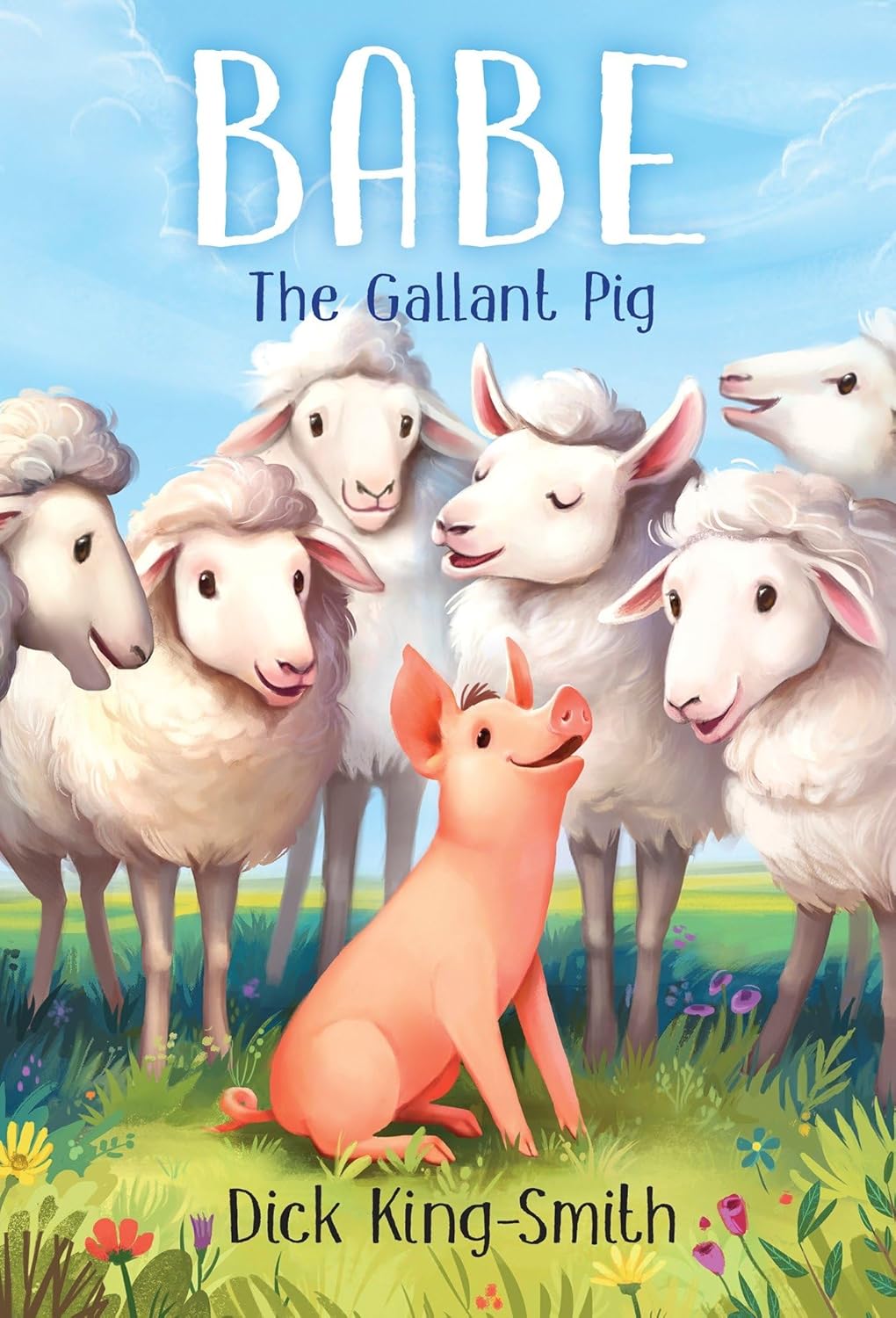
Babe: The Gallant Pig by Dick King-Smith is a warm, funny, and thoroughly charming novel about a piglet who is won at a fair by a sheep farmer named Farmer Hogget, adopted by a sheepdog named Fly, and who discovers — through politeness, intelligence, and an apparently inexhaustible goodwill toward everyone he meets — that he can do something no pig has ever done before: herd sheep. One of the great gentle comic novels of 20th-century children’s literature, it is a book about the surprising things that become possible when you refuse to accept that you are limited by what you are supposed to be. This complete guide covers the reading level, age appropriateness, themes, characters, and everything parents and teachers need to know about this beloved classic.
For Parents
Babe: The Gallant Pig is one of those rare books that is funny and warm and completely without content concerns, and that manages to be genuinely moving without being sentimental. Best suited for readers ages 7-10, it is an ideal family read-aloud: the animal characters are distinct and delightful, the comedy is gentle and precise, and the central situation — a pig who wants to be a sheepdog — is so inherently pleasing that readers of almost any age will find themselves rooting for Babe with complete commitment. It is exactly the kind of book that gets pressed into children’s hands by parents who remember loving it, and that children promptly love in their turn.
For Teachers
A widely used classic well suited to grades 3-4, Babe: The Gallant Pig is an excellent text for teaching character development through action rather than description, the way authors establish distinct animal voices, and how a simple central premise can carry a novel’s full thematic weight. Babe’s success at sheepherding through courtesy rather than command is a quietly radical idea, and discussing why it works — why the sheep respond to “please” when they would not respond to fear — opens rich conversations about leadership, respect, and what it means to be genuinely good at something. The novel also connects naturally to units on farm life, animal behavior, and the British countryside.
Babe: The Gallant Pig at a Glance
Find on Amazon →| Author | Dick King-Smith |
| Published | 1983 (UK); 1985 (US) |
| Grade Level | 3-4 (our assessment) |
| Recommended Age | 7-10 |
| Flesch-Kincaid Grade | 5.3 |
| Word Count | ~20,000 |
| Pages | 133 (standard paperback) |
| Chapters | 10 |
| Genre | Animal fiction / classic children’s literature |
| Setting | Hogget’s Farm, rural England, present day |
| Awards | Guardian Children’s Fiction Prize (1984); Carnegie Medal shortlist |
For official Lexile and AR levels, visit Lexile.com or AR BookFinder. ReadingVine provides independent editorial assessments.
What Reading Level Is Babe: The Gallant Pig?
Babe: The Gallant Pig reads at approximately a 3rd-4th grade level by our editorial assessment, with a Flesch-Kincaid grade level of around 5.3. That score runs slightly high for a novel most strongly associated with grades 3-4 — King-Smith writes with a pleasurably old-fashioned British precision that occasionally produces longer sentences and more elevated vocabulary than contemporary American children’s fiction of equivalent target age. Words and phrases with a specifically British flavor — “byre,” “gallant,” the rhythms of English rural life — may require brief explanation for American readers, though none of it significantly impedes comprehension.
What makes the novel easy and pleasurable to read — considerably more so than the F-K score alone suggests — is the clarity and warmth of its central situation. Babe wants to herd sheep. He is very polite. The sheep respond to politeness. Everything that follows from this premise is logical, funny, and entirely satisfying, and the ten chapters move forward with the comfortable confidence of a story that knows exactly what it is and is in no hurry to be anything else. At approximately 20,000 words it is one of the shorter novels in its recommended range and is a natural bridge book for readers moving from early chapter books to longer middle grade fiction.
The book is most commonly recommended for grades 3-4. For official Lexile and Accelerated Reader scores, visit Lexile.com or AR BookFinder.
What Age Is Babe: The Gallant Pig Appropriate For?
We recommend Babe: The Gallant Pig for readers ages 7-10, though it has been read aloud to younger children and enjoyed by adults. This is one of the most content-concern-free novels in the elementary canon — gentle, warm, and entirely without anything that requires parental guidance.
The novel’s only genuine content note is that Babe is a pig on a farm, and the possibility of his eventual fate as food is present throughout — never dwelt upon, never dramatized, but there as a background fact that most children will be aware of and that some may find distressing. The novel handles this with complete tact: Farmer Hogget’s growing attachment to Babe, and his wife Mrs. Hogget’s evolving view of the pig, resolve the question without requiring the reader to confront it directly. A sheep named Ma is killed by dogs in a scene that is described briefly and without graphic detail but is the novel’s most upsetting moment. There is no other violence, no strong language, and no content concerns beyond those inherent in a novel set on a working farm.
Babe: The Gallant Pig is one of those novels that parents and grandparents who encountered it as children can recommend to today’s children with complete confidence that the experience will be the same: warm, funny, and entirely good. It is also one of the most reliable read-aloud choices in this age range — the animal voices reward performance, the humor lands well when shared, and the ending, which is genuinely moving, is better when experienced in company.
What Is Babe: The Gallant Pig About?
Farmer Hogget wins a piglet at the village fair — a small, pink, cheerful creature who will grow into a Large White pig of considerable size. He brings the piglet home to his farm, where his sheepdog Fly adopts the pig as one of her own litter and the pig — who will eventually be named Babe, though the name comes late and gently — grows up among dogs rather than pigs and acquires, along the way, the habits and the ambitions of a sheepdog.
Babe is extraordinarily polite. He asks the hens permission before eating with them. He addresses the sheep with courtesy. He is, by the standards of the farm, a thoroughly unusual pig, and Fly — practical, affectionate, and slightly bewildered by him — loves him with the uncomplicated warmth of a mother who does not entirely understand her child but supports him absolutely.
The sheep, for their part, respond to Babe’s courtesy in ways they have never responded to the sheepdogs’ commands. Sheepdogs herd sheep through dominance — through the threat of force, the wolf instinct that the sheep’s ancient fear recognizes and obeys. Babe herds sheep by asking them. He says please. He explains what is needed. He treats the sheep as creatures with opinions worth considering, and the sheep — intelligent, opinionated, and deeply unappreciated — find this so unprecedented and so welcome that they do whatever he asks.
Farmer Hogget, a man of very few words and very precise observations, notices what Babe can do and begins training him — quietly, methodically, with the patience of a farmer who has learned that the best things take exactly as long as they take. The novel builds toward the Grand Challenge Sheep Dog Trials, where Babe will compete against the best sheepdogs in the county, and where the question of whether a pig who herds through courtesy can match dogs who herd through dominance will be answered in front of the entire village.
Dick King-Smith was a farmer before he became a writer — he farmed in Gloucestershire for twenty years — and the novel’s rendering of farm life has the specific, affectionate accuracy of someone who has lived it. He wrote The Sheep-Pig (its original British title) in 1983, and it won the Guardian Children’s Fiction Prize the following year. The 1995 film Babe brought the story to a worldwide audience and is one of the most celebrated children’s films ever made.
Babe: The Gallant Pig Characters
Is Babe: The Gallant Pig Banned?
Babe: The Gallant Pig has not been banned or challenged and does not appear on any lists of challenged books. It is one of the most universally embraced novels in the elementary canon — warmly recommended by librarians, teachers, and parents, and shelved in virtually every school and public library. There is simply nothing in it to object to, which is part of what makes it such a reliable recommendation across a wide age range.
Babe: The Gallant Pig Themes and Lessons
The central theme of Babe: The Gallant Pig is that courtesy is not a weakness but a form of power — that treating others with genuine respect is not just nicer than treating them with contempt, but more effective. Babe succeeds where the sheepdogs fail not because he is stronger or faster or more intimidating, but because he asks the sheep to cooperate rather than commanding them to obey. The sheep, who have been herded by fear their entire lives, respond to being asked with a warmth and a willingness that fear could never produce. This is a simple idea and a radical one, and King-Smith trusts children to understand it without spelling it out.
The novel is also a story about refusing to accept that you are limited by what you are supposed to be. Pigs do not herd sheep. This is a fact of farm life so obvious that no one questions it — except Babe, who has not been told he cannot, and Farmer Hogget, who notices what Babe actually does rather than what pigs are supposed to do. The novel’s quiet argument is that assumptions about what is possible based on category — species, background, expectation — are frequently wrong, and that the person who ignores those assumptions and simply tries the thing is often the one who discovers it can be done.
Family and belonging are the novel’s third great theme, rendered through Fly’s adoption of Babe and her complete, uncomplicated love for a pig who is nothing like her puppies. Babe belongs to Fly’s family not because he is the right kind of creature but because she chose him, and because he loves her back. The novel suggests, without making a speech about it, that family is less about what you are than about who claims you and who you claim in return.
Discussion starters for classrooms and families: Why do the sheep respond to Babe differently than they respond to the sheepdogs? What does Babe have that the sheepdogs don’t — and what do the sheepdogs have that Babe doesn’t? Why does Farmer Hogget believe in Babe when no one else does? What does it mean to be “gallant”? Is Babe brave? What makes the ending so satisfying?
How Many Pages and Chapters Are in Babe: The Gallant Pig?
The standard paperback edition of Babe: The Gallant Pig is 133 pages, divided into 10 chapters averaging around thirteen pages each. The word count is approximately 20,000 words, making it one of the shorter novels in its recommended range and one of the most comfortable length commitments for readers in grades 3-4. The ten chapters are substantial enough to feel like complete episodes rather than fragments, and the novel’s steady forward movement — each chapter advancing Babe’s development and the farm’s response to it — gives the book a satisfying sense of momentum.
For readers in the target age range of 7-10, expect a reading time of roughly 2-3 hours, or about a week of comfortable reading at 20 minutes per session. It is an ideal read-aloud book — the animal voices reward performance, the British idioms and farm vocabulary are fun to explore together, and the final chapter, which builds to the Sheep Dog Trials with genuine suspense, is almost impossible to stop before the end. Many families read it in two or three extended sittings. As a classroom text, it works well across one to two weeks, with time for the kind of discussion about courtesy, identity, and unexpected capability that the novel quietly invites.
Books Similar to Babe: The Gallant Pig
About Dick King-Smith
Dick King-Smith (1922-2011) was a British author who spent twenty years farming in Gloucestershire before turning to writing in his fifties — a trajectory that is directly visible in the specificity and affection with which his fiction renders farm life and farm animals. He published his first book in 1978 and went on to write more than a hundred novels for children, becoming one of the most beloved British children’s authors of the 20th century. The Sheep-Pig — published in the United States as Babe: The Gallant Pig — won the Guardian Children’s Fiction Prize in 1984 and was adapted into the celebrated 1995 film Babe, which introduced King-Smith’s story to a worldwide audience. His other notable novels include The Hodgeheg (1987), Ace: The Very Important Pig (1990), and The Water Horse (1990). He was appointed Officer of the Order of the British Empire (OBE) for services to children’s literature in 2009, two years before his death at the age of eighty-eight. King-Smith’s conviction — visible in all his best work — was that farm animals have rich interior lives and deserve to be treated as fully realized characters rather than props, and that children who are given access to those interior lives become more generous and more observant readers of the world.
Babe: The Gallant Pig: Frequently Asked Questions
What reading level is Babe: The Gallant Pig?
Babe: The Gallant Pig has a Flesch-Kincaid grade level of approximately 5.3, which runs slightly high for a novel most strongly associated with grades 3-4. Our editorial assessment places it at grades 3-4 (ages 7-10). The British idioms and farm vocabulary account for some of the elevated score; the novel’s clarity, warmth, and short length make it considerably more accessible in practice. For official Lexile and AR scores, visit Lexile.com or AR BookFinder.
Is the book the same as the movie?
The 1995 film Babe is closely based on the novel and captures its spirit and central situation faithfully. The film expands some elements — adding more animal characters, developing the subplot about Farmer Hogget’s wife, and giving the ending a slightly more dramatic frame — but the core of the story is the same: a polite pig who herds sheep through courtesy rather than command. Families who have seen the film will find the book a comfortable and rewarding companion; families who read the book first will find the film a very good adaptation. The novel is shorter, quieter, and slightly more English in its humor than the film, which gives it a distinct pleasure of its own even for readers who know the story well.
Why does Babe say “please” to the sheep?
Because he was raised by Fly, who taught him to be polite, and because he genuinely does not understand why you would treat another creature any other way. Babe’s courtesy is not a technique he has developed; it is simply who he is. The sheep respond to it because they have never been asked rather than commanded, and being asked turns out to feel so different from being threatened that they will do almost anything for a creature who treats them with respect. King-Smith’s point — delivered through the comedy of a sheepherding pig — is that genuine courtesy is not just nicer than dominance, it is more effective: it produces willing cooperation rather than resentful compliance.
What does “gallant” mean in the title?
“Gallant” means brave, noble, and honorable — particularly in the face of difficulty or danger. The title is a deliberate elevation: calling a pig “gallant” applies to him a word usually reserved for knights and heroes, and it is the novel’s way of insisting, from the first page, that Babe deserves to be taken seriously as a protagonist. By the end of the novel, readers who have followed Babe to the Sheep Dog Trials will find the title entirely accurate: he is, in every sense that matters, gallant.
Is Babe ever in danger of being eaten?
The possibility is present throughout the novel — Babe is a pig on a farm, and Mrs. Hogget’s early view of him is entirely practical. King-Smith handles this with complete tact: the question is always there in the background and is never resolved by an explicit declaration but by the gradual, evident reality of Farmer Hogget’s attachment to Babe and the Hoggets’ recognition of what he is capable of. By the time the Sheep Dog Trials arrive, the question has been settled without anyone having to say so. Parents who are concerned about this element should know that the novel manages it with such lightness and such care that most children take it in stride.
What grade is Babe: The Gallant Pig typically assigned in?
Babe: The Gallant Pig is most commonly used in grades 3 and 4, both as a classroom read-aloud and as independent reading. It is a popular bridge book for readers moving from early chapter books to longer middle grade fiction. It connects naturally to science units on farm animals and to social-emotional learning discussions about kindness, respect, and what it means to treat others with courtesy. It is also widely used as a companion read alongside Charlotte’s Web for units on animal fiction or farm settings.
What is the book’s original title?
The novel was published in the United Kingdom in 1983 under the title The Sheep-Pig — a title that is more matter-of-fact and slightly funnier than the American title. It was published in the United States in 1985 as Babe: The Gallant Pig, a title that emphasizes the protagonist’s character rather than his function. After the 1995 film, the book was widely reissued in both countries under the film’s title Babe, though editions under both original titles remain in print. All editions contain the same text.