
 = Partner Site
Mr. Popper’s Penguins Reading Level: A Complete Guide
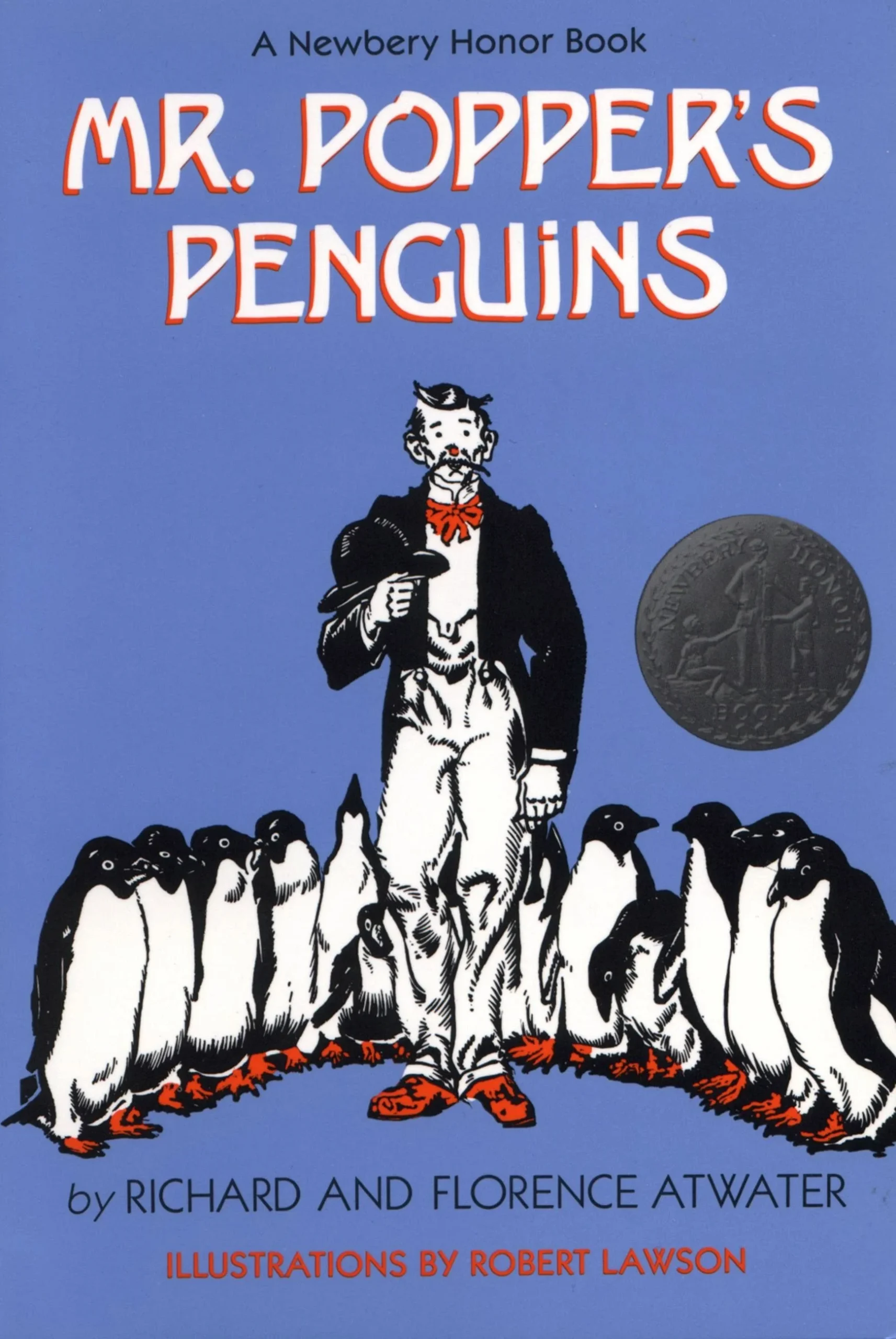
Mr. Popper’s Penguins by Richard and Florence Atwater is a classic American comic novel about a house painter named Mr. Popper who dreams of polar exploration, receives a penguin in the mail from an Antarctic admiral, and watches his orderly small-town life spiral cheerfully out of control as one penguin becomes twelve and his house is converted into a makeshift polar habitat. Warm, funny, and utterly delightful, it has been making children laugh since 1938 and remains one of the most purely enjoyable read-aloud novels in American children’s literature. This complete guide covers the reading level, age appropriateness, themes, characters, and everything parents and teachers need to know about this beloved classic.
For Parents
Mr. Popper’s Penguins is one of those rare books that is funny for children and funny for adults reading it aloud — the comedy works on multiple levels, with Mr. Popper’s hapless good nature and the penguins’ magnificent indifference to human convention combining into something that is simply, reliably, joyful. Best suited for readers ages 7-10, it is gentle, warm, and completely without any content concerns. It is exactly the right book for a family that wants to read something together and laugh.
For Teachers
A Newbery Honor book widely used in grades 3-5, Mr. Popper’s Penguins is an excellent text for teaching comic fiction, the episodic novel structure, and how authors build humor through repetition, escalation, and the collision of ordinary life with extraordinary circumstances. Its short chapters and steady forward momentum make it ideal for classroom read-alouds. It also connects naturally to science curricula on penguins, Antarctica, and animal behavior, making it one of the more versatile cross-curricular choices at this grade level.
Mr. Popper’s Penguins at a Glance
Find on Amazon →| Authors | Richard Atwater and Florence Atwater |
| Published | 1938 |
| Grade Level | 3-5 (our assessment) |
| Recommended Age | 7-10 |
| Flesch-Kincaid Grade | 5.6 |
| Word Count | ~28,000 |
| Pages | 140 (standard paperback) |
| Chapters | 20 |
| Genre | Comic fiction / classic children’s literature |
| Setting | Stillwater, a small American town, 1930s |
| Awards | Newbery Honor (1939) |
For official Lexile and AR levels, visit Lexile.com or AR BookFinder. ReadingVine provides independent editorial assessments.
What Reading Level Is Mr. Popper’s Penguins?
Mr. Popper’s Penguins reads at approximately a 3rd-5th grade level by our editorial assessment, with a Flesch-Kincaid grade level of around 5.6. That score runs slightly high for a book most strongly associated with grades 3-4 — the sentence structures are occasionally more complex than the story’s light comic tone suggests, and some of the vocabulary reflects the novel’s 1930s origin. Words like “icebox,” “janitor,” and the general texture of Depression-era American domestic life may require brief explanation for contemporary readers, though none of it impedes comprehension for long.
What makes the book easy to read — far easier than the F-K score suggests — is the propulsive forward momentum of its plot. Each chapter escalates the central comic situation a little further: one penguin becomes two, two become twelve, twelve go on a vaudeville tour. Readers are carried forward by the need to find out what happens next, and the short chapters (most are five to seven pages) provide constant satisfaction as each new problem is introduced and temporarily resolved. The book is an ideal choice for readers who are ready to move beyond early chapter books but who benefit from shorter, faster chapters and consistent comic payoff.
The book is most commonly recommended for grades 3-5 and works exceptionally well as a classroom or family read-aloud. For official Lexile and Accelerated Reader scores, visit Lexile.com or AR BookFinder.
What Age Is Mr. Popper’s Penguins Appropriate For?
We recommend Mr. Popper’s Penguins for readers ages 7-10. There are no content concerns of any kind. This is one of the most universally appropriate books in the middle grade canon — gentle, funny, and entirely without anything that requires parental guidance or classroom management.
There is nothing in Mr. Popper’s Penguins that requires a content warning. The Popper family experiences financial difficulty during the Depression, which is depicted matter-of-factly rather than distressingly. One penguin, Captain Cook, becomes ill and recovers. The novel’s only challenge for sensitive readers is that the ending involves the Popper family separating from the penguins — handled with lightness and resolution rather than grief, but worth knowing for children who become deeply attached to the birds over the course of the story.
Mr. Popper’s Penguins is one of the most consistently recommended books for newly independent readers who are ready for a full novel. Its combination of short chapters, clear prose, steady humor, and irresistible central situation makes it one of the best possible bridges between early chapter books and longer middle grade fiction.
What Is Mr. Popper’s Penguins About?
Mr. Popper is a house painter in the small town of Stillwater who spends his working days on ladders and his evenings reading about Antarctica. He has never traveled anywhere, but he knows more about polar exploration than almost anyone in Stillwater, and he dreams with the completeness of a man who has never expected his dreams to come true. Then he writes a fan letter to Admiral Drake, who is leading an Antarctic expedition, and Admiral Drake — to everyone’s astonishment including Mr. Popper’s — writes back. And then sends a penguin.
The penguin, whom Mr. Popper names Captain Cook, arrives in a large crate and proceeds to reorganize the Popper household entirely. He slides down the stairs, eats all the fish in the icebox, walks through the neighborhood, and generally demonstrates that a penguin in a small American house is a source of infinite comic possibility. Mrs. Popper is more patient about this than most people would be. The children, Bill and Janie, are delighted. The neighbors are bewildered.
When Captain Cook falls ill from loneliness, the aquarium sends a female penguin named Greta. Greta and Captain Cook promptly produce ten more penguins, and the Popper household, already stretched thin on a house painter’s Depression-era wages, is now home to twelve penguins who eat an enormous quantity of fish and require the furnace to be turned off and the house converted into a polar habitat. Mr. Popper, with the cheerful ingenuity of a man who has never done anything sensible in his life, converts the refrigerator into a penguin door and trains the penguins to perform. The Popper Performing Penguins go on a theatrical tour, playing vaudeville houses across America, and for a brief and glorious period, Mr. Popper is exactly as famous as his dreams always imagined he might be.
Richard Atwater began writing the novel in the mid-1930s but suffered a stroke before completing it. His wife Florence finished the manuscript and shepherded it to publication in 1938. The novel was illustrated by Robert Lawson, whose precise, affectionate drawings of the penguins are an integral part of its appeal.
Mr. Popper’s Penguins Characters
Is Mr. Popper’s Penguins Banned?
Mr. Popper’s Penguins has not been banned or challenged and does not appear on any lists of challenged books. It is one of the most universally embraced titles in American children’s literature — a Newbery Honor book that has been in continuous print since 1938 and that is shelved in virtually every school and public library in the country. There is simply nothing in it to object to, which is one of its significant practical virtues as a classroom text.
Mr. Popper’s Penguins Themes and Lessons
The central theme of Mr. Popper’s Penguins is the relationship between dreaming and living — what happens when an ordinary person’s extraordinary dream unexpectedly collides with the texture of ordinary life. Mr. Popper has spent years reading about Antarctica from his armchair, dreaming of a world he will never see, certain that his dreams are separate from his real life. Then his dream arrives in the mail, in a crate, and proceeds to eat all his fish. The comedy of the novel comes entirely from this collision: a man built for small-town routine encountering something as magnificently non-routine as twelve penguins, and finding that his response to the collision is joy rather than catastrophe.
The novel is also, quietly, about resourcefulness and the creative response to constraint. Mr. Popper is a man of limited means during the Depression, and the penguin problem — feeding twelve birds, housing them, keeping them cold — is a genuine material challenge. His solutions (converting the icebox, training the penguins to perform, taking the show on the road) are improvised and impractical by any conventional standard, and they work. The novel suggests, gently, that the quality most useful in a difficult situation is not practicality but imagination.
The ending asks something real of readers: Mr. Popper must let the penguins go, releasing them to a life in the Arctic that is better for them even though it means losing them. This is handled quickly and lightly in the novel, but it is there — a small, true note about what loving something well sometimes requires.
Discussion starters for classrooms and families: Why does Mr. Popper love reading about Antarctica so much when he has never traveled anywhere? How does each new penguin problem change the Popper family’s life? What do you think Mrs. Popper really thinks about the penguins? What does Mr. Popper learn from his experience with the penguins that he couldn’t have learned from his books? Why does he decide to go with the penguins at the end?
How Many Pages and Chapters Are in Mr. Popper’s Penguins?
The standard paperback edition of Mr. Popper’s Penguins is approximately 140 pages, divided into 20 short chapters averaging around seven pages each. The word count is approximately 28,000 words. The chapters are brief, punchy, and almost always end with a small comic escalation that propels the reader into the next one — a structure that makes the book nearly impossible to put down once started.
For readers in the target age range of 7-10, expect a reading time of roughly 2-3 hours, or about a week of comfortable reading at 20 minutes per session. It works beautifully as a family or classroom read-aloud that can be completed in two weeks at a chapter a day, or in a single extended weekend sitting for enthusiastic readers. Robert Lawson’s original illustrations appear throughout the text and are worth pausing over — they give the penguins individual personalities that the prose only sketches, and children who study them will find details that reward attention.
Books Similar to Mr. Popper’s Penguins
About Richard and Florence Atwater
Richard Atwater (1892-1948) was a classics professor and newspaper columnist in Chicago who began writing Mr. Popper’s Penguins in the mid-1930s. He suffered a debilitating stroke before completing the manuscript, and his wife Florence Atwater (1896-1979) finished the novel from his notes and drafts, shepherding it to publication in 1938. Florence later said that Richard had written most of the novel and that her contribution was primarily completion and revision, but the book is credited to both of them and is understood as a true collaboration shaped by her hand at its most critical stage. The novel was illustrated by Robert Lawson, who would go on to win the Newbery Medal in 1945 for Rabbit Hill and who is one of the great illustrators of American children’s literature. Mr. Popper’s Penguins received a Newbery Honor in 1939, the year after its publication, and has been in continuous print ever since. It is Richard and Florence Atwater’s only book.
Mr. Popper’s Penguins: Frequently Asked Questions
What reading level is Mr. Popper’s Penguins?
Mr. Popper’s Penguins has a Flesch-Kincaid grade level of approximately 5.6, which runs slightly high for a book most strongly associated with grades 3-4. The plot’s comic momentum and short chapters make it read considerably more easily than that score suggests. Our editorial assessment places it at grades 3-5 (ages 7-10). For official Lexile and AR scores, visit Lexile.com or AR BookFinder.
How many penguins are in Mr. Popper’s Penguins?
Twelve, by the novel’s middle section. The story begins with one penguin, Captain Cook, sent to Mr. Popper by Admiral Drake from Antarctica. When Captain Cook falls ill from loneliness, the aquarium sends a female penguin named Greta. Greta and Captain Cook produce ten eggs, all of which hatch. The twelve penguins are named Captain Cook, Greta, Columbus, Louisa, Nelson, Jenny, Magellan, Adelina, Scott, Isabella, Ferdinand, and Victoria — a roster of explorers and royalty that Mr. Popper names with the enthusiasm of a man who has spent his life reading about exploration.
Is Mr. Popper’s Penguins based on a true story?
No — it is an entirely fictional comic novel. However, Richard Atwater drew on real knowledge of penguin behavior and Antarctic exploration in constructing the story, and the penguins’ habits and needs as depicted in the novel are reasonably accurate for their era. The novel was written in the 1930s, when Antarctic exploration was genuinely current news — expeditions by Roald Amundsen, Robert Falcon Scott, and Richard Byrd were within living memory or actively ongoing, and Mr. Popper’s enthusiasm for the subject would have resonated with contemporary readers in a way that requires a little more historical context today.
What happened to the penguins at the end of Mr. Popper’s Penguins?
Admiral Drake returns and offers Mr. Popper a place on an Arctic expedition, bringing the penguins to their natural habitat. Mr. Popper decides to go with the penguins rather than stay in Stillwater — trading his armchair dreams of polar exploration for the real thing. The penguins will live in the Arctic; Mr. Popper will explore with the expedition. Mrs. Popper and the children will be provided for in his absence. The ending is swift and light rather than bittersweet — the Atwaters do not linger over the parting — but it resolves the novel’s central tension between Mr. Popper’s dreams and his ordinary life by letting the dreams win.
What grade is Mr. Popper’s Penguins typically assigned in?
Mr. Popper’s Penguins is most commonly used in grades 3, 4, and 5, both as a classroom read-aloud and as independent reading. It is a popular bridge book for readers moving from early chapter books to longer middle grade fiction. It connects naturally to science units on penguins and Antarctica and to social studies units on the 1930s and the Depression era. Individual chapters work well as standalone read-aloud pieces for even younger grades.
Is there a movie version of Mr. Popper’s Penguins?
Yes — a 2011 film starring Jim Carrey as a modernized version of Mr. Popper. The film takes significant liberties with the novel: it updates the setting to contemporary New York, changes Mr. Popper from a house painter to a businessman, and alters the plot substantially. It is an entertaining family film but shares relatively little with the novel beyond the basic premise of penguins disrupting a man’s domestic life. Families who enjoy the movie and then read the book (or vice versa) will find it an interesting exercise in comparing how the same basic situation is handled very differently in different media and eras.
Who illustrated Mr. Popper’s Penguins?
The original illustrations were created by Robert Lawson, one of the great American illustrators and authors of the 20th century. Lawson is the only person to have won both the Caldecott Medal (for illustration, for They Were Strong and Good in 1941) and the Newbery Medal (for writing, for Rabbit Hill in 1945). His illustrations for Mr. Popper’s Penguins — precise, affectionate, and slightly formal in the style of the era — give the penguins individual personalities and contribute substantially to the book’s charm. They are worth pausing over in a classroom or family read-aloud setting.
Why did only one of the Atwaters finish the book?
Richard Atwater began writing Mr. Popper’s Penguins in the mid-1930s but suffered a serious stroke before completing the manuscript. His wife Florence finished the novel from his notes and incomplete drafts and saw it through to publication in 1938. Florence later described her contribution as primarily completion and light revision, crediting the bulk of the invention to Richard. The book is published under both their names and is considered a collaboration, though the precise division of their contributions is not fully documented. It is their only book. Richard Atwater died in 1948; Florence Atwater lived until 1979.