
 = Partner Site
The Mouse and the Motorcycle Reading Level: A Complete Guide
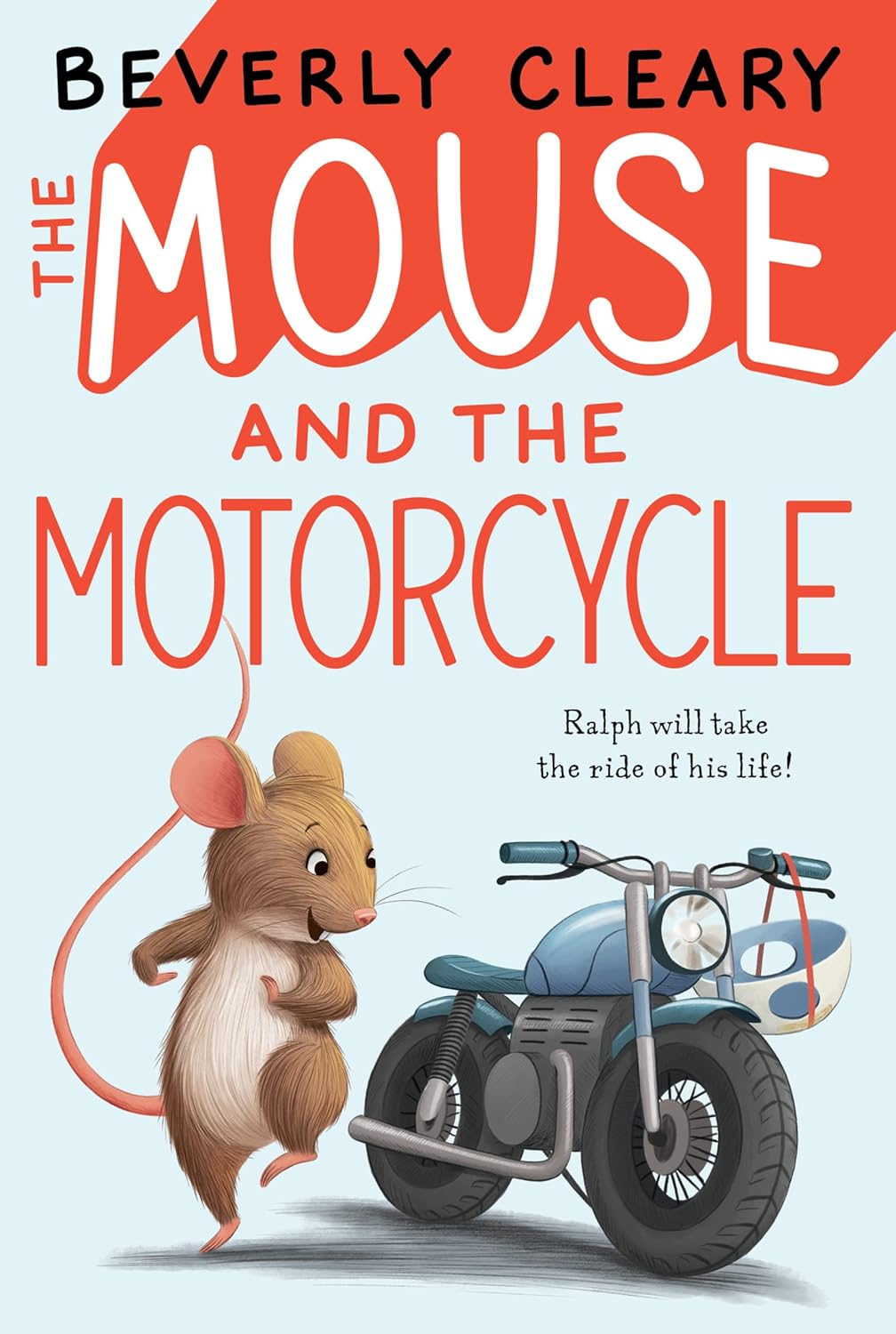
The Mouse and the Motorcycle by Beverly Cleary is a warm, funny, and thoroughly enchanting novel about a young mouse named Ralph who lives in the Mountain View Inn with his large family, who discovers a toy motorcycle in the room of a boy named Keith, and who discovers along with it something he has never had before: speed, adventure, and a human friend. The first book in Beverly Cleary’s beloved Ralph the Mouse trilogy, it is a classic of talking-animal fiction for younger readers — a book about the specific joy of going fast, the unlikely friendship between a mouse and a boy, and the courage required to reach for something new when everything familiar is telling you to stay put. This complete guide covers the reading level, age appropriateness, themes, characters, and everything parents and teachers need to know about this enduring classic.
For Parents
The Mouse and the Motorcycle is one of those novels that has been delighting children for more than sixty years without showing any sign of wearing out its welcome — funny, fast-moving, and full of the specific pleasure of watching a small creature discover what he is capable of. Best suited for readers ages 7-10, it is an ideal family read-aloud and a natural first chapter book for readers who are ready to move beyond picture books and early readers. Parents who remember it from their own childhood will find it exactly as they left it: warm, funny, and entirely good.
For Teachers
A widely used classic well suited to grades 2-4, The Mouse and the Motorcycle is an excellent text for teaching how authors establish character quickly, how point of view shapes narrative, and how the best animal fiction uses its animal protagonist to illuminate human experience from a fresh angle. Ralph’s perspective on the hotel — the crumbs, the dangers, the extraordinary machinery of human life — is an invitation to see a familiar world as strange and wonderful again, and discussing that perspective is one of the most productive exercises available at this grade level.
The Mouse and the Motorcycle at a Glance
Find on Amazon →| Author | Beverly Cleary |
| Published | 1965 |
| Grade Level | 3-4 (our assessment) |
| Recommended Age | 7-10 |
| Flesch-Kincaid Grade | 5.1 |
| Word Count | ~28,000 |
| Pages | 158 (standard paperback) |
| Chapters | 13 |
| Genre | Animal fantasy / adventure |
| Setting | The Mountain View Inn, a California mountain hotel, 1960s |
| Awards | Young Reader Medal (California, Georgia, Pacific Northwest) |
For official Lexile and AR levels, visit Lexile.com or AR BookFinder. ReadingVine provides independent editorial assessments.
What Reading Level Is The Mouse and the Motorcycle?
The Mouse and the Motorcycle reads at approximately a 3rd-4th grade level by our editorial assessment, with a Flesch-Kincaid grade level of around 5.1. That score runs slightly high for a novel most strongly associated with grades 2-4 — Cleary writes with a warm, conversational precision that occasionally produces longer sentences than contemporary early chapter books, but the vocabulary is entirely accessible and the novel’s pace and humor carry developing readers forward without difficulty. The chapters are substantial enough to feel like real chapters without being overwhelming, and the central situation — a mouse who has found a motorcycle and must figure out how to ride it — is so immediately appealing that most children in the target age range will need little encouragement to continue.
What makes the novel particularly effective at this level is Cleary’s gift for rendering Ralph’s perspective with complete imaginative consistency. The hotel seen from a mouse’s angle — the vast distances between rooms, the terrifying vacuum cleaner, the extraordinary windfall of a peanut butter sandwich — is the same hotel seen from a child’s angle scaled down further, and younger readers find this doubling instinctively satisfying. The novel is one of the most reliable early chapter book recommendations in the canon precisely because it meets children where they are: curious, a little frustrated by the rules, and entirely ready to believe that somewhere nearby something extraordinary is happening.
The book is most commonly recommended for grades 2-4, with grades 3-4 as the sweet spot for independent reading. For official Lexile and Accelerated Reader scores, visit Lexile.com or AR BookFinder.
What Age Is The Mouse and the Motorcycle Appropriate For?
We recommend The Mouse and the Motorcycle for readers ages 7-10, though it is widely read aloud to younger children and enjoyed by older students who encounter it in classrooms. This is one of the most content-concern-free novels in the elementary canon — entirely warm, gentle, and without anything requiring parental guidance.
There is essentially nothing in The Mouse and the Motorcycle that requires a content warning. Ralph faces some genuine dangers — the vacuum cleaner, a wastepaper basket he cannot escape from, the risk of being discovered by hotel guests — but all are handled with the lightness and humor appropriate to the age range. A subplot involves Keith becoming ill, which gives Ralph the opportunity to repay his friend’s kindness, and the illness is mild and resolved. There is no violence, no strong language, and no content concerns whatsoever. The novel’s tension is the pleasurable, exciting kind that makes children want to turn the page.
The Mouse and the Motorcycle is one of the most reliable read-aloud choices for families with children in the 5-9 age range — the chapters are exactly the right length for a bedtime reading session, Ralph’s voice rewards performance, and the motorcycle sequences in particular are great fun when read with appropriate enthusiasm. Two sequels follow Ralph’s continuing adventures: Runaway Ralph (1970) and Ralph S. Mouse (1982), giving readers who fall in love with Ralph a substantial continuing story.
What Is The Mouse and the Motorcycle About?
Ralph is a young mouse who lives with his large family in the walls of the Mountain View Inn, a slightly faded mountain hotel in California. Life in the hotel is a mixture of abundance and danger: the kitchen offers extraordinary opportunities for a resourceful mouse, but the humans, the housekeepers, and especially the vacuum cleaner represent constant threats to mouse survival. Ralph is adventurous by nature and frustrated by the cautious, rule-following life his mother insists upon — he wants more than the walls of the hotel can offer, but he does not yet know what more would look like.
Then a family checks into Room 215, and with them comes a boy named Keith and, in Keith’s overnight bag, a small shiny toy motorcycle. Ralph, investigating the room at night, finds the motorcycle on the bedside table. On an impulse — and with the discovery that making a sound like a motorcycle engine is exactly what is required to make it go — he rides it off the table and into the wastebasket, where he is discovered by Keith the next morning.
Keith, rather than being frightened or trying to catch Ralph, is delighted. He and Ralph reach an understanding: Ralph can use the motorcycle whenever he likes, as long as he wears the toy crash helmet Keith provides, and in exchange Keith has something no other boy in the hotel has — a friend who is a mouse. Their friendship develops across the days of Keith’s stay, built on the specific equality of two individuals who recognize in each other a kindred spirit despite every obvious difference.
The novel’s plot turns on a crisis: Keith becomes ill with a fever, and the aspirin that could help him is somewhere in the hotel. Ralph, who has caused a certain amount of trouble in the hotel’s recent history and who owes Keith more than one favor, sets out through the hotel at night to find the aspirin — a journey that is both genuinely dangerous and genuinely funny, and that requires Ralph to be braver than he has ever been before.
Beverly Cleary has spoken about the novel as having come from her son’s love of toy cars and her own memory of the mountain hotels she visited as a child — the specific atmosphere of a slightly faded resort, the long corridors, the sense of a large building full of lives being lived in parallel. The motorcycle was her son’s suggestion: what if a mouse found one of his toy cars? The novel answers that question with sixty years of continuous reader delight.
The Mouse and the Motorcycle Characters
Is The Mouse and the Motorcycle Banned?
The Mouse and the Motorcycle has not been banned or challenged and does not appear on any lists of challenged books. It has been one of the most widely recommended novels in the elementary canon since its publication in 1965 — embraced by educators, librarians, and parents as a reliable, warm, and entirely appropriate first chapter book experience. Beverly Cleary is one of the most honored and most universally trusted American children’s authors, and The Mouse and the Motorcycle is among the books most frequently cited by adults as a formative reading experience from their own childhoods.
The Mouse and the Motorcycle Themes and Lessons
The central theme of The Mouse and the Motorcycle is the specific joy of discovering what you are capable of — the experience of finding the thing that makes you feel most fully alive and most fully yourself. For Ralph, the motorcycle is not just a vehicle; it is the first evidence that the world is larger and more exciting than the walls of the Mountain View Inn, and that he is larger and more capable than the cautious life his mother has prescribed. The novel’s argument is not that rules are wrong but that some things are worth the risk of breaking them — and that the courage to reach for something new is one of the most important things a young creature can develop.
Friendship across difference is the novel’s second great theme, rendered through the unlikely equality of Ralph and Keith. The two have nothing obvious in common — one is a mouse, one is a boy; one lives in the walls, one lives in the world — and yet they recognize each other immediately as kindred spirits: curious, adventurous, slightly frustrated by the adults who are in charge of their lives, and entirely willing to trust someone who has demonstrated they are trustworthy. Their friendship is the novel’s most quietly radical idea: that genuine equality between two creatures is not about similarity but about mutual recognition.
Responsibility and loyalty are the novel’s third great themes, rendered through Ralph’s aspirin quest. Ralph has caused Keith trouble — the motorcycle has been lost through his recklessness, and Keith has been generous in response — and when Keith falls ill, Ralph has the opportunity to repay a debt that he did not have to incur and that no one is requiring him to repay. His decision to set out through the hotel at night, alone, in genuine danger, is the novel’s moral center: the moment when Ralph stops being a creature who wants things for himself and becomes a creature who acts for someone else.
Discussion starters for families and classrooms: Why does the motorcycle make Ralph feel different than he has ever felt before? What makes Keith and Ralph friends, when they are so different from each other? Why does Ralph decide to go looking for the aspirin? What does Ralph’s mother want for him, and is she right to want it? What does Ralph learn about himself by the end of the novel?
How Many Pages and Chapters Are in The Mouse and the Motorcycle?
The standard paperback edition of The Mouse and the Motorcycle is 158 pages, divided into 13 chapters averaging around twelve pages each. The word count is approximately 28,000 words — making it one of the shorter novels in its recommended range and an excellent choice for readers making their first sustained independent reading attempt. The chapters are substantial without being daunting, and the novel’s steady pace — each chapter advancing the central friendship and building toward the aspirin quest — gives readers a satisfying sense of progress and momentum.
For readers in the target age range of 7-10, expect a reading time of roughly 3-4 hours, or about a week of comfortable reading at 20-30 minutes per session. Many children finish it in a weekend of enthusiastic reading — the motorcycle sequences in particular make stopping difficult. As a classroom read-aloud it is one of the most reliable choices in grades 2-4: the chapters are exactly the right length for a classroom session, Ralph’s voice rewards expressive reading, and the hotel setting generates productive discussion about perspective and scale. Two sequels — Runaway Ralph (1970) and Ralph S. Mouse (1982) — give readers who fall in love with the characters a continuing story. All three books feature illustrations by Louis Darling in the original editions, whose drawings of Ralph on his motorcycle are among the most recognizable images in American children’s literature.
Books Similar to The Mouse and the Motorcycle
About Beverly Cleary
Beverly Cleary (1916-2021) was one of the most beloved American children’s authors of the 20th century, whose books have sold more than ninety million copies and have been in continuous print since the 1950s. Born in McMinnville, Oregon, she grew up on a farm and later in Portland, where she became a voracious reader and eventually a librarian — an experience that directly shaped her conviction that children deserve books about ordinary life rendered with honesty and humor rather than moralism. Her most celebrated books include the Ramona series, the Henry Huggins series, and Dear Mr. Henshaw, which won the Newbery Medal in 1984. The Mouse and the Motorcycle, published in 1965, came from her son’s love of toy vehicles and became the first of a three-book series following Ralph S. Mouse through the Mountain View Inn and beyond. Cleary received the Laura Ingalls Wilder Award in 1975 for her substantial and enduring contribution to American children’s literature, and the National Medal of Arts in 2003. She lived in California until her death in 2021 at the age of 104. A statue of Ramona Quimby stands in Portland’s Beverly Cleary Sculpture Garden, and the elementary school she attended has been renamed in her honor.
The Mouse and the Motorcycle: Frequently Asked Questions
What reading level is The Mouse and the Motorcycle?
The Mouse and the Motorcycle has a Flesch-Kincaid grade level of approximately 5.1, which runs slightly high for a novel most associated with grades 2-4. Our editorial assessment places it at grades 3-4 (ages 7-10). The prose is warm and accessible, the chapters are substantial without being daunting, and the central situation carries developing readers forward with ease. For official Lexile and AR scores, visit Lexile.com or AR BookFinder.
How does Ralph make the motorcycle go?
Ralph discovers that the toy motorcycle responds to the sound of its engine — specifically, that making the sound “pb-pb-pb” with his mouth causes the motorcycle to move. This is one of the novel’s most immediately delightful details and one of the most discussed: Cleary presents it matter-of-factly, as simply the way this particular motorcycle works for this particular mouse, without explaining or justifying it. Children accept it completely, which is the right response, and it gives the novel one of its best running jokes: Ralph making motorcycle sounds under his breath at moments of excitement throughout the rest of the book.
Are there sequels to The Mouse and the Motorcycle?
Yes — two sequels follow Ralph’s continuing adventures. Runaway Ralph (1970) takes Ralph away from the Mountain View Inn to a summer camp, where he must navigate new dangers and new friendships. Ralph S. Mouse (1982) brings Ralph to a school, where his motorcycle makes him something of a celebrity among the students. All three books were illustrated by Louis Darling in the original editions and have remained in continuous print. Most readers consider The Mouse and the Motorcycle the strongest of the three, but the sequels are warmly recommended for readers who want more of Ralph’s company.
Is there a film or TV adaptation?
Yes — The Mouse and the Motorcycle was adapted as a television film in 1986, produced by ABC and featuring a live-action mouse puppet for Ralph. The film is faithful to the novel’s story and spirit and has been used in classrooms alongside the book for decades. It is available on DVD and through various streaming services. Families and teachers who have read the novel together often watch the film as a companion piece, and comparing the two — what the film keeps, what it changes, what the novel can do that the film cannot — is a productive and enjoyable exercise.
What grade is The Mouse and the Motorcycle typically assigned in?
The Mouse and the Motorcycle is most commonly used in grades 2, 3, and 4, both as a classroom read-aloud and as an independent reading text. It is one of the most popular bridge books for readers making the transition from early chapter books to longer middle grade fiction. It connects naturally to science units on mammals and ecosystems and to social-emotional learning discussions about friendship, responsibility, and courage. Many teachers use it as an introduction to the concept of perspective in fiction — asking students to consider how the hotel looks different from Ralph’s point of view than from a human guest’s point of view is one of the most accessible and most productive perspective-taking exercises available at this grade level.
How does The Mouse and the Motorcycle compare to Beverly Cleary’s other books?
The Mouse and the Motorcycle is one of three distinct strands in Beverly Cleary’s work. The Ramona and Henry Huggins books are realistic fiction about ordinary children in a Portland neighborhood — grounded, funny, and entirely human. Dear Mr. Henshaw is a more serious, emotionally complex novel for older readers that won the Newbery Medal. The Ralph the Mouse trilogy is Cleary’s animal fantasy strand — lighter in tone than the Ramona books, more purely adventurous, and aimed at slightly younger readers. All three strands share Cleary’s characteristic warmth, precision, and respect for children’s intelligence, but The Mouse and the Motorcycle is the most immediately accessible entry point for youngest readers and the most reliable first chapter book recommendation in her catalog.