
 = Partner Site
Poppy Reading Level: A Complete Guide
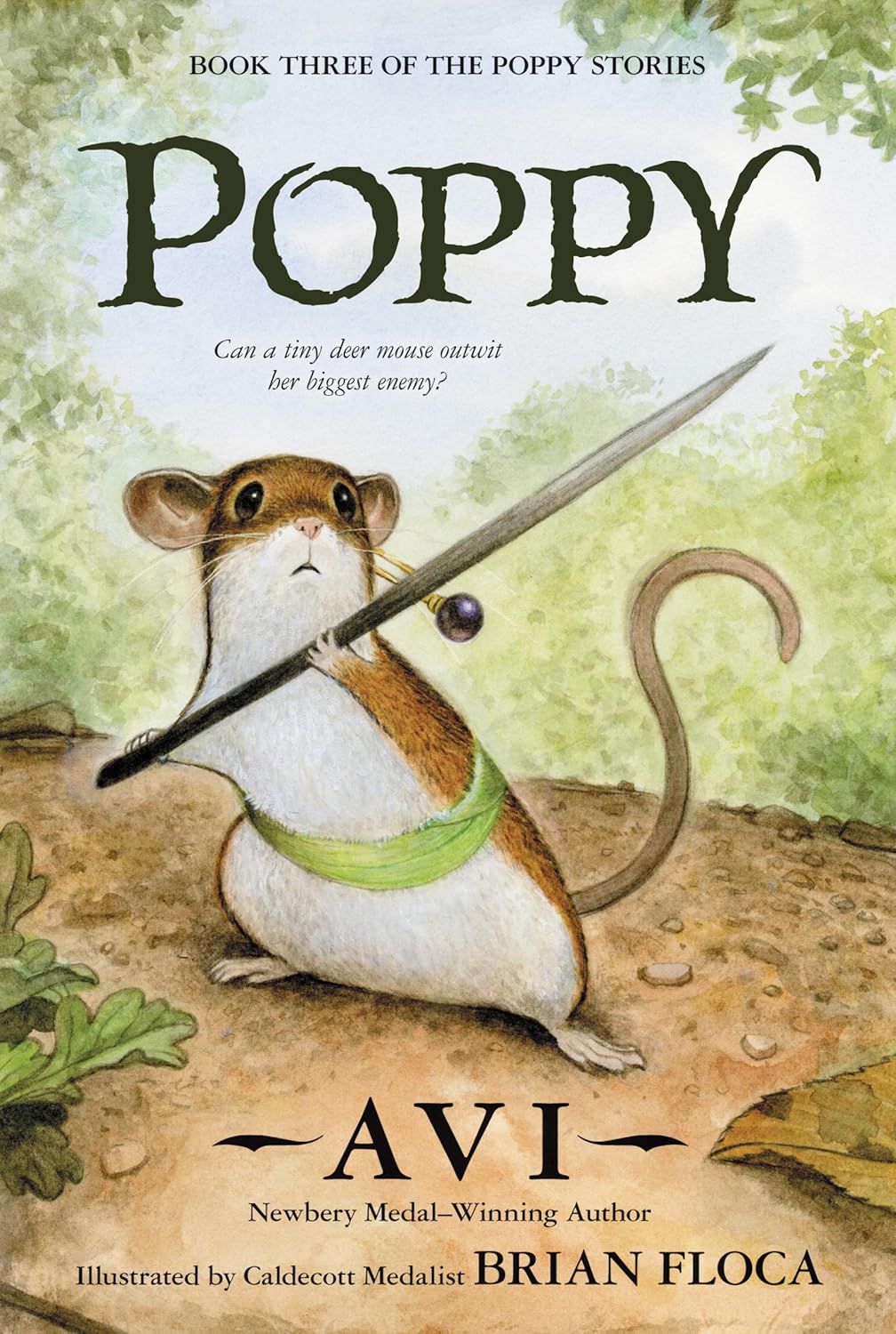
Poppy by Avi is a funny, fast-moving, and surprisingly suspenseful adventure novel about a young deer mouse named Poppy who must cross Dimwood Forest to find a new home for her large and hungry family — and who must first face down Mr. Ocax, a great horned owl who has ruled the forest through fear and the fiction of his own indispensability for as long as anyone can remember. The first published book in Avi’s beloved Poppy series, it is a classic of animal fantasy in the tradition of Charlotte’s Web and Mrs. Frisby and the Rats of NIMH: a novel in which small creatures have large adventures, in which courage is the quality that matters most, and in which the world is organized around a central injustice that a single brave individual is finally willing to name. This complete guide covers the reading level, age appropriateness, themes, characters, and everything parents and teachers need to know about this beloved book.
For Parents
Poppy is a novel about a small mouse who decides that the thing everyone has been afraid of is not actually as dangerous as advertised — and who is right, but only barely. Best suited for readers ages 8-11, it is fast-moving, funny, and genuinely suspenseful in the way that the best children’s adventure fiction always is: real enough to be exciting, contained enough to be safe. The porcupine Ereth is one of the funniest characters in middle grade fiction, and Poppy’s particular combination of intelligence and determination makes her one of the most satisfying protagonists at this level. Parents looking for an animal adventure with genuine narrative drive and genuine moral weight will find it an excellent choice.
For Teachers
A widely used novel well suited to grades 3-5, Poppy is an excellent text for teaching the relationship between courage and knowledge, how authors build villains who are frightening because they are believable rather than supernatural, and how animal fantasy uses small-scale adventure to explore large-scale ideas. Mr. Ocax is one of the most instructive villains in middle grade fiction: his power rests entirely on the other animals’ belief in a story he has told them, and Poppy’s discovery that the story is false is the novel’s central lesson about the relationship between fear, authority, and truth. The novel connects naturally to discussions about courage, questioning authority, and what it means to stand up for what you know to be right.
Poppy at a Glance
Find on Amazon →| Author | Avi |
| Published | 1995 |
| Grade Level | 3-5 (our assessment) |
| Recommended Age | 8-11 |
| Flesch-Kincaid Grade | 4.9 |
| Word Count | ~28,000 |
| Pages | 147 (standard paperback) |
| Chapters | 21 |
| Genre | Animal fantasy / adventure |
| Setting | Dimwood Forest, a fictional woodland, present day |
| Awards | ALA Notable Children’s Book; Boston Globe-Horn Book Award Honor |
For official Lexile and AR levels, visit Lexile.com or AR BookFinder. ReadingVine provides independent editorial assessments.
What Reading Level Is Poppy?
Poppy reads at approximately a 3rd-5th grade level by our editorial assessment, with a Flesch-Kincaid grade level of around 4.9. Avi writes with a clean, propulsive energy — short chapters, forward momentum, dialogue that crackles — and the novel has the page-turning quality of adventure fiction that is genuinely well-constructed rather than merely fast. The vocabulary is accessible with occasional words that reward a quick discussion, and the forest setting and animal characters give the novel a concreteness that makes it easy to visualize even for readers encountering this kind of animal fantasy for the first time.
The novel is short enough — 147 pages, approximately 28,000 words — to be accessible to strong 3rd grade readers, and rich enough in moral and thematic content to be fully rewarding through 5th grade. The porcupine Ereth’s colorful language (his invented expletives, which are entirely made-up and entirely funny) gives the novel a comic register that particularly delights readers in the 8-11 range. The story’s central argument — that Mr. Ocax’s power rests on a lie, and that discovering the lie requires courage rather than strength — is simple enough to be accessible and substantial enough to be worth discussing at length.
The book is most commonly recommended for grades 3-5. For official Lexile and Accelerated Reader scores, visit Lexile.com or AR BookFinder.
What Age Is Poppy Appropriate For?
We recommend Poppy for readers ages 8-11. This is one of the more content-appropriate adventure novels at this level — the dangers are real but the world is an animal fantasy, and the violence, when it comes, is the violence of predator and prey rather than anything gratuitous.
The novel opens with the death of Poppy’s companion Ragweed, killed by Mr. Ocax — this happens in the first chapter and is the event that sets the story in motion. It is depicted quickly and without graphic detail, but it is real and some younger readers may find it upsetting. Mr. Ocax is a genuine predator and a genuine threat throughout the novel; his danger to Poppy is real, not merely performed. The forest setting involves the ordinary hazards of small-animal life — hawks, owls, foxes, the general precariousness of being very small in a world of larger creatures. Ereth the porcupine uses invented expletives that are entirely made-up compound words and phrases rather than actual profanity — these are played entirely for comedy and have made him one of the most beloved characters in the series. There is no sexual content, no human violence, and nothing beyond what is appropriate for the recommended age range.
Poppy has been in print since 1995 and is one of the most reliably recommended animal adventure novels in the elementary range. It is a natural next read for children who have loved Charlotte’s Web or Mrs. Frisby and the Rats of NIMH and are ready for something with more narrative drive and more explicit adventure. The series it begins — eight books in total — gives enthusiastic readers a substantial world to inhabit once Poppy herself has won them over.
What Is Poppy About?
Dimwood Forest is governed by Mr. Ocax, a great horned owl who has declared himself the protector of all the small creatures who live there. His rule is simple: no animal may travel through the forest without his permission, and no animal may approach New House, the abandoned farmhouse on the far side of the forest, without his explicit consent. In exchange for this obedience, Mr. Ocax promises protection from Lungwort, a fearsome porcupine who — according to Mr. Ocax — would destroy any creature he encountered. The animals of Dimwood Forest have accepted this arrangement for as long as anyone can remember.
Poppy is a young deer mouse who has grown up in this world and accepted its rules without question. Then her companion Ragweed is killed by Mr. Ocax at the very beginning of the novel — killed without warning, without the threat that was supposed to justify Mr. Ocax’s power — and Poppy begins to wonder whether the story Mr. Ocax has been telling is actually true.
Her family is desperate. Their home near Dimwood is overcrowded, the food is running out, and the one place that could support them — New House, with its abundant food and ample space — is the place Mr. Ocax has forbidden them to go. Poppy’s father, the timid and rule-following Lungwort, refuses to challenge Mr. Ocax’s authority. Poppy, who has a dead companion and a growing suspicion, decides she will go to New House herself — crossing Dimwood Forest alone, without permission, to find out whether New House is safe and whether Mr. Ocax’s prohibition makes any sense.
Her journey through Dimwood Forest brings her into contact with Ereth, a porcupine of tremendous rudeness, tremendous self-regard, and — as Poppy gradually discovers — tremendous fundamental decency. Ereth is the novel’s great comic gift: his complaints are magnificent, his invented profanity is genuinely funny, and his eventual attachment to Poppy, expressed in the most curmudgeonly possible terms, is one of the most satisfying animal friendships in children’s literature.
What Poppy discovers at New House — about Mr. Ocax, about the story he has been telling, about the nature of his actual power and his actual vulnerability — is the novel’s central revelation, and it reframes everything that has come before. Avi is writing about the relationship between fear, authority, and truth: about how a sufficiently frightening story, told with sufficient confidence by a sufficiently powerful figure, can organize an entire community around an injustice that is not actually inevitable.
Avi conceived the Poppy series as a response to his admiration for the tradition of animal fantasy fiction — particularly Kenneth Grahame’s The Wind in the Willows and Robert C. O’Brien’s Mrs. Frisby and the Rats of NIMH — and as an opportunity to write adventure fiction for younger readers that took both the adventure and the readers seriously. The series ultimately ran to eight books, with Poppy appearing in various combinations of danger, determination, and unlikely alliance throughout.
Poppy Characters
Is Poppy Banned?
Poppy has not been banned or widely challenged. It has been embraced by educators, librarians, and parents as an excellent and entirely appropriate animal adventure novel. The only element that occasionally generates parental questions is Ereth’s language — his colorful invented compound expletives — which are entirely made up, entirely funny, and entirely harmless, and which Avi has spoken about designing specifically to give the character comic energy without actual profanity. These questions have not resulted in formal challenges, and the novel remains one of the most consistently recommended animal adventure novels in the elementary range.
Poppy Themes and Lessons
The central theme of Poppy is the relationship between fear, authority, and truth — the argument that power sustained by a false story is only as strong as the story’s believability, and that the most courageous act available to anyone living under such power is to question whether the story is actually true. Mr. Ocax’s authority over Dimwood Forest does not rest on his actual strength, which Poppy eventually discovers is vulnerable in ways no one has tested. It rests on the animals’ belief that he is both necessary and invincible — a belief he has cultivated deliberately and that serves him entirely. Poppy’s journey is, at its heart, an act of inquiry: she goes to find out whether what she has been told is true. The courage that requires is the novel’s central moral lesson.
The novel is also a portrait of what fear does to communities over time. The animals of Dimwood Forest are not stupid or weak; they are creatures who have accepted an unjust arrangement because the arrangement comes with a promise of safety, and because questioning it seems more dangerous than accepting it. Lungwort is not a coward; he is the portrait of what good creatures become when fear becomes habit. The contrast between his deference and Poppy’s inquiry is not a condemnation of him but an honest account of what it costs, and what it takes, to be the one who asks the question everyone has decided not to ask.
Friendship and family are the novel’s third great themes, rendered through Poppy’s relationship with Ereth and her relationship with her large, chaotic, entirely lovable family. Ereth’s friendship is the novel’s comic gift — grudging, grumbling, ultimately complete — and it demonstrates one of the novel’s quietest arguments: that genuine help often comes from unexpected directions and in forms that do not look like help until they are.
Discussion starters for classrooms and families: Why do the animals of Dimwood Forest obey Mr. Ocax? What is the difference between Poppy’s courage and her father Lungwort’s fear? What does Ereth’s help cost him, and why does he give it anyway? What does Poppy discover at New House, and why is that discovery so important? What would it have taken for Lungwort to be the one who made the journey instead of Poppy?
How Many Pages and Chapters Are in Poppy?
The standard paperback edition of Poppy is 147 pages, divided into 21 short chapters averaging around seven pages each. The word count is approximately 28,000 words, making it one of the shorter novels in its recommended range and one of the most comfortable length commitments for readers in grades 3-5. The short chapters — each ending at a point of forward tension — give the novel the addictive quality of good adventure fiction: it is very difficult to stop at a convenient place, which is not a problem.
For readers in the target age range of 8-11, expect a reading time of roughly 3-4 hours, or about a week of comfortable reading at 20-30 minutes per session. Many readers finish it in a single rainy afternoon. It is an excellent read-aloud choice — Ereth’s invented language particularly rewards performance, and the forest chase sequences build tension well when read aloud at pace. As a classroom text it works well in one to two weeks, with time for discussion of the novel’s central argument about fear and authority. It is also a natural gateway to the rest of the Poppy series, and teachers who introduce Poppy in class frequently find that students seek out the subsequent books independently.
Books Similar to Poppy
About Avi
Avi (born Edward Irving Wortis in 1937) is one of the most prolific and most celebrated American authors of children’s and young adult fiction, with more than seventy books to his credit across a remarkable range of genres — historical fiction, mystery, adventure, fantasy, and realistic fiction. He has won the Newbery Medal (for Crispin: The Cross of Lead in 2003) and two Newbery Honors (for The True Confessions of Charlotte Doyle in 1991 and Nothing But the Truth in 1992), making him one of the most decorated authors in the award’s history. The name Avi was given to him by his twin sister in childhood and is the only name he has published under throughout his career. Poppy, published in 1995, was his first book in the series that would eventually run to eight volumes, and it remains among his most beloved works. He has spoken about the Poppy series as an opportunity to write adventure fiction that respected both the animal fantasy tradition and the intelligence of young readers — fiction in which the danger is real, the stakes are genuine, and the protagonist’s courage is earned rather than given. The Poppy series continues with Poppy and Rye (1998), Ragweed (1999, a prequel), Ereth’s Birthday (2000), and four subsequent volumes.
Poppy: Frequently Asked Questions
What reading level is Poppy?
Poppy has a Flesch-Kincaid grade level of approximately 4.9. Our editorial assessment places it at grades 3-5 (ages 8-11). The prose is clean and propulsive, the chapters are short and forward-moving, and the animal fantasy world is easy to visualize. The novel’s central argument about fear, authority, and truth is accessible to strong 3rd grade readers and fully rewarding through 5th grade. For official Lexile and AR scores, visit Lexile.com or AR BookFinder.
What kind of animal is Poppy?
Poppy is a deer mouse — a small North American rodent, reddish-brown with a white belly, known for large ears and large eyes. Deer mice are one of the most common small mammals in North American forests and fields. Avi chose the deer mouse deliberately: small enough to be genuinely vulnerable to the predators in the forest, agile enough to be a convincing adventurer, and appealing enough in appearance to be an immediately sympathetic protagonist. The novel’s illustrations (by Brian Floca) capture the deer mouse’s specific physical qualities with the accuracy and affection that Avi’s prose demands.
What is Ereth’s language and why is it funny?
Ereth expresses his extremely strong feelings through invented compound phrases that function as expletives — colorful, energetic, and entirely made up. Phrases like “salt licks and snapdragons” and similar constructions give him a distinctive voice that is simultaneously rude and completely harmless, funny precisely because the energy is real and the words are nonsense. Avi designed this deliberately: he wanted Ereth to have the comic energy of a character who swears constantly without using actual profanity. Readers in the 8-11 range find this spectacularly satisfying, and reading Ereth’s outbursts aloud — which teachers and parents are strongly encouraged to do with full commitment — is one of the great pleasures of the book.
What does Mr. Ocax actually want?
Mr. Ocax wants food and control — specifically, the guarantee that the mice and other small creatures of Dimwood Forest will remain available to him as prey, and that no competing predator will challenge his access to them. His story about protecting the animals from the dangerous porcupine is a fiction designed to keep them nearby, obedient, and grateful. He is not evil in a supernatural or inexplicable way; he is a predator who has discovered that a well-told story is more reliable than direct force, and who has organized an entire community around the story’s perpetuation. Understanding what he actually wants — and why his story serves that want so effectively — is one of the most productive discussions the novel generates.
Is Poppy part of a series?
Yes — Poppy is the first book in an eight-volume series set in and around Dimwood Forest. The series includes Poppy and Rye (1998), Ragweed (1999, a prequel following Poppy’s companion before the events of Poppy), Ereth’s Birthday (2000), Poppy’s Return (2005), Poppy and Ereth (2009), Poppy and the Bear (2017), and Ragweed and Poppy (2019). Readers who fall in love with Poppy and Ereth in the first book have a substantial world to inhabit, and Ereth’s Birthday — which focuses on the porcupine — is particularly beloved by readers who found Ereth the most compelling character in Poppy.
What grade is Poppy typically assigned in?
Poppy is most commonly used in grades 3, 4, and 5, both as a classroom read-aloud and as independent reading. It is a popular bridge book for readers moving from early chapter books to longer middle grade fiction, and it connects naturally to discussions about courage, authority, and truth that work across a wide range of elementary grade levels. Many teachers use it in conjunction with other animal fantasy novels — Charlotte’s Web, Mrs. Frisby and the Rats of NIMH — for units on the genre. It is also widely used as a read-aloud in grades 3-4, where Ereth’s language and the forest chase sequences make it an unusually engaging shared text.