
 = Partner Site
Becoming Naomi León Reading Level: A Complete Guide
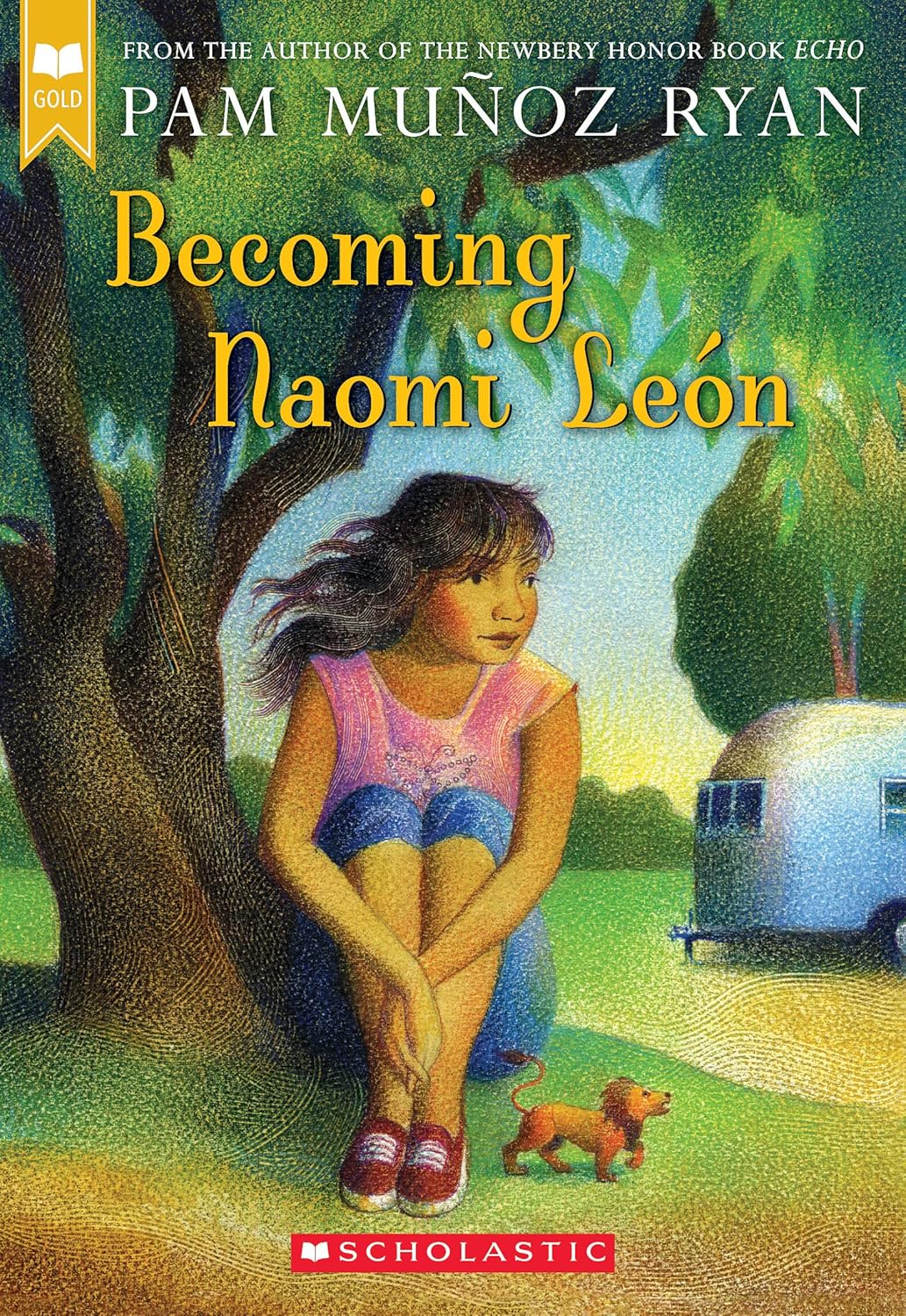
Becoming Naomi León by Pam Muñoz Ryan is a warm, quietly courageous novel about a fifth grader named Naomi Soledad León Outlaw who has lived in a trailer park in California with her great-grandmother and younger brother Owen for as long as she can remember — until the mother who abandoned them reappears and threatens to take Naomi away, and the family must travel to Oaxaca, Mexico to find the father the children have never known. A novel about identity, belonging, and the specific courage of children who have been asked to be small and who discover they are larger than they thought, it is one of Pam Muñoz Ryan’s most accessible and most affecting books. This complete guide covers the reading level, age appropriateness, themes, characters, and everything parents and teachers need to know about this important novel.
For Parents
Becoming Naomi León is a novel about a girl who has learned to make herself invisible and who must learn to be seen. Best suited for readers ages 9-12, it deals with parental abandonment, a mother who is manipulative and self-serving, and the specific vulnerability of children in unstable custody situations. It is also warm, funny in places, and full of the richness of Oaxacan culture and landscape that gives the second half of the novel its particular glow. Parents who give their children this book are giving them a story about a girl who finds out who she is when everything familiar is taken away — and who discovers that who she is turns out to be exactly enough.
For Teachers
A widely taught novel well suited to grades 4-6, Becoming Naomi León is an exceptional text for teaching character transformation, the role of cultural identity in self-discovery, and how authors use setting as a mirror for a protagonist’s inner journey. Naomi’s transformation in Oaxaca — from a girl who makes lists because she cannot speak, to a girl who carves her own image in wood — is one of the most fully realized character arcs in contemporary middle grade fiction. The novel also opens essential discussions about immigration, family structure, and what makes a family real regardless of legal or biological definition.
Becoming Naomi León at a Glance
Find on Amazon →| Author | Pam Muñoz Ryan |
| Published | 2004 |
| Grade Level | 4-6 (our assessment) |
| Recommended Age | 9-12 |
| Flesch-Kincaid Grade | 5.1 |
| Word Count | ~52,000 |
| Pages | 246 (standard hardcover) |
| Chapters | 27 |
| Genre | Realistic fiction / contemporary fiction |
| Setting | Lemon Tree Trailer Park, California; Oaxaca, Mexico |
| Awards | Pura Belpré Award (2005); ALA Notable Children’s Book |
For official Lexile and AR levels, visit Lexile.com or AR BookFinder. ReadingVine provides independent editorial assessments.
What Reading Level Is Becoming Naomi León?
Becoming Naomi León reads at approximately a 4th-6th grade level by our editorial assessment, with a Flesch-Kincaid grade level of around 5.1. Ryan writes in Naomi’s voice with warmth and specificity — the prose has the quality of a child who observes everything carefully and who has learned to process the world through lists and quiet watching rather than speech. The vocabulary is wide without being difficult, and the novel’s two distinct settings — the Lemon Tree Trailer Park and Oaxaca during the Night of the Radishes festival — give the prose two distinct textures that reflect Naomi’s transformation.
The novel is accessible to strong 4th grade readers but most rewarding for readers in grades 5-6, who will feel the full weight of Naomi’s situation — the specific vulnerability of a child whose mother has reappeared with legal standing and bad intentions — and who will respond to the Oaxacan sections with the wonder they deserve. The novel moves in two clear halves: a tense, domestic California first half and a luminous, expansive Mexican second half, and the contrast between them is one of its most effective structural choices.
The book is most commonly recommended for grades 4-6. For official Lexile and Accelerated Reader scores, visit Lexile.com or AR BookFinder.
What Age Is Becoming Naomi León Appropriate For?
We recommend Becoming Naomi León for readers ages 9-12. The novel deals with parental abandonment, a manipulative and unreliable mother, custody threat, and the specific fear of a child who does not know whether the adults around her can protect her. All of this is handled with honesty and care, and the novel’s warmth and resolution make the difficult material bearable and ultimately affirming.
Naomi’s mother, Skyla, abandoned Naomi and Owen years before the novel begins and reappears not out of love but out of convenience — she wants Naomi specifically, not Owen, which is one of the novel’s most quietly devastating details. Skyla is depicted as manipulative, self-serving, and emotionally unreliable, and her scenes carry genuine menace of the particular kind that comes from an adult who has legal standing over a child and who cannot be trusted with that power. Owen has a speech impediment and some developmental differences that are depicted matter-of-factly. The journey to Mexico involves some mild danger and uncertainty. There is no violence and no sexual content. The novel’s difficulty is entirely emotional and situational, and it resolves with the clarity and warmth it earns.
For children who have experienced absent parents, unstable family situations, or the particular anxiety of not knowing whether the adults responsible for them can be trusted, the novel offers something rare: a story in which a child’s fear is taken seriously, in which the adults who love her find a way to protect her, and in which her own courage turns out to be part of what saves her. The resolution is genuinely satisfying without being false.
What Is Becoming Naomi León About?
Naomi Soledad León Outlaw is in fifth grade and lives with her great-grandmother Gram and her younger brother Owen in the Lemon Tree Trailer Park in Lemon Tree, California. Gram is loving and capable in the way of people who have been managing on their own for a long time. Owen is small and sweet and has a lisp and a slight developmental difference that makes the world slightly harder for him than for other children. Naomi is the quiet one — a girl who makes lists when she cannot speak, who has learned to take up as little space as possible, and who has a talent for carving soap figures that she has not yet understood is an inheritance.
Then Skyla appears. Skyla is Naomi and Owen’s mother, who left them with Gram years ago and who has been absent ever since. She arrives at the trailer park with a new boyfriend named Clive and a set of intentions that become clear gradually: she wants to take Naomi — only Naomi, not Owen — and she has legal rights that Gram, who has never formally adopted the children, may not be able to counter. The threat is real and specific, and Naomi’s fear is the novel’s first sustained emotional note.
Gram’s response is to go south. She has always believed that the children’s father, a man named Santiago León, is in Oaxaca, Mexico — and if Santiago can be found, and if he is the person Gram believes him to be, he can provide the legal and moral counterweight to Skyla’s claim. The family drives to Oaxaca in a caravan with other migrant workers returning home for the holidays, and the second half of the novel is set during the Days of the Dead and the Night of the Radishes — the extraordinary Oaxacan festival in which enormous radishes are carved into elaborate scenes and displayed in the zócalo.
In Oaxaca, Naomi discovers several things at once: that her father is real and present and good; that the talent for carving she has expressed in soap is a family inheritance from a long line of Oaxacan woodcarvers; that the name she has always been slightly embarrassed by — Naomi Soledad León Outlaw — is a map of exactly who she is and where she comes from; and that the girl who has spent her whole life making herself small is capable, when it matters, of being very large indeed.
Pam Muñoz Ryan drew on her own Mexican heritage and on extensive research into Oaxacan culture for the novel’s second half, and the Night of the Radishes sections are among the most vividly rendered cultural material in contemporary middle grade fiction. She has spoken about the novel as being, at its heart, about the specific experience of bicultural identity — of being a person who belongs to two worlds and who must learn to claim both.
Becoming Naomi León Characters
Is Becoming Naomi León Banned?
Becoming Naomi León has not been widely banned or challenged. It has been embraced by educators, librarians, and award committees as an important and beautifully rendered contribution to the literature of Latino identity and bicultural experience. The Pura Belpré Award in 2005 recognized both its literary quality and its significance in the canon of Latino children’s literature. Its honest depiction of a manipulative parent and an unstable custody situation has been cited as realistic and age-appropriate rather than a source of concern. It is widely taught in elementary and middle school classrooms across the country.
Becoming Naomi León Themes and Lessons
The central theme of Becoming Naomi León is the relationship between identity and inheritance — the argument that who we are is not only what we have made ourselves but what has been passed down to us, and that discovering that inheritance is part of growing up. Naomi has spent her life not knowing the León half of herself: not knowing her father, not knowing Oaxaca, not knowing that the impulse to carve she has been expressing in soap bars is a family gift stretching back generations. The journey to Oaxaca is a journey toward that knowledge, and what Naomi finds there — not just her father but her name, her talent, her place in a line of people — is the thing that makes her capable of being seen.
The novel is also a portrait of what it means to be bicultural — to belong to two worlds, to speak two languages, to carry two sets of traditions — in a way that neither erases the other. Naomi is Mexican American, and the novel treats both halves of that identity as real and present: the California trailer park is as much her home as Oaxaca turns out to be. Ryan does not ask Naomi to choose between her worlds but to claim both, which is the novel’s deepest act of generosity toward its protagonist.
Courage and voice are the novel’s third great theme. Naomi’s habit of making lists instead of speaking is not a character flaw but a survival strategy — a child who has learned that speaking up draws attention that is not always safe. Her gradual recovery of voice across the novel, and her final act of public courage at the Night of the Radishes, is the most satisfying arc the novel offers: a girl who has been small for good reasons becoming large in a moment that requires it.
Discussion starters for classrooms: Why does Naomi make lists? What does her full name — Naomi Soledad León Outlaw — tell us about who she is and where she comes from? What does Naomi find in Oaxaca that she couldn’t find in California? What makes Gram a good parent even though she isn’t Naomi’s biological parent? Why does Skyla want Naomi but not Owen, and what does that tell us about Skyla? What does carving wood give Naomi that soap carving couldn’t?
How Many Pages and Chapters Are in Becoming Naomi León?
The standard hardcover edition of Becoming Naomi León is 246 pages, divided into 27 chapters averaging around nine pages each. The word count is approximately 52,000 words. The chapters are substantial and the novel moves in two clear halves — a tense California section and a luminous Oaxacan section — that together give the book the structure of a journey: away from the familiar and toward something new and necessary.
For readers in the target age range of 9-12, expect a reading time of roughly 5-7 hours, or about a week and a half of comfortable reading at 30 minutes per session. As a classroom text, the novel works well in a two-to-three week unit, with the California-to-Mexico transition providing a natural midpoint discussion. The Night of the Radishes sections are particularly well suited to paired research assignments on Oaxacan culture and the Noche de Rábanos festival, which is real and takes place annually on December 23rd. Many teachers use the novel in conjunction with Pam Muñoz Ryan’s Esperanza Rising, which covers related themes of Mexican American identity and immigration from a different historical and economic angle.
Books Similar to Becoming Naomi León
About Pam Muñoz Ryan
Pam Muñoz Ryan is one of the most celebrated American authors of middle grade fiction, known for novels that combine lyrical prose, cultural specificity, and protagonists who live at the margins of the social worlds they inhabit. Born in Bakersfield, California, she grew up in a large, multigenerational Mexican American family, and her grandmother’s immigration story directly inspired Esperanza Rising (2000), her best-known novel before Echo. Becoming Naomi León, published in 2004, drew on her own bicultural experience and on her deep familiarity with Oaxacan culture to create the novel’s richly rendered Mexican sections. It won the Pura Belpré Award in 2005, and Echo would go on to receive a Pura Belpré Author Honor in 2016. Her other notable works include Riding Freedom (1998) and Echo (2015). She lives in California and has spoken extensively about her conviction that Latino children deserve to see their full cultural complexity reflected in the books available to them — not only the immigration story, not only the experience of poverty, but the richness, the beauty, and the deep roots of Mexican and Mexican American life.
Becoming Naomi León: Frequently Asked Questions
What reading level is Becoming Naomi León?
Becoming Naomi León has a Flesch-Kincaid grade level of approximately 5.1. Our editorial assessment places it at grades 4-6 (ages 9-12). The prose is warm and accessible, with two distinct textures reflecting the novel’s two settings — tense California and luminous Oaxaca. The emotional demands of the custody situation are more significant than the word-level score suggests. For official Lexile and AR scores, visit Lexile.com or AR BookFinder.
Why does Naomi make lists?
Naomi makes lists — of her own good qualities, of Spanish words, of things she knows and things she wants to know — because lists are a way of organizing a world she cannot always control and of speaking when she cannot bring herself to speak aloud. Her list-making is a survival strategy developed by a child who has learned that being quiet is safer than being noticed, and that written words are more reliable than spoken ones when the people around you cannot always be trusted. The lists also function as a character portrait: what Naomi chooses to list tells readers everything about what she values and what she fears. By the novel’s end, when she can speak, the lists become less necessary — which is one of the quietest measures of her transformation.
What is the Night of the Radishes (Noche de Rábanos)?
The Noche de Rábanos is a real annual festival held in Oaxaca, Mexico, on December 23rd, in which enormous radishes — some growing to extraordinary sizes — are carved into elaborate scenes and displayed in the city’s central plaza, the zócalo. The tradition dates to the colonial period and has been formalized as an annual competition and celebration since 1897. Carvers create figures of people, animals, historical scenes, and nativity scenes from the radishes, and the display draws visitors from across Mexico and around the world. Ryan uses the festival as the setting for the novel’s climax, and the carving competition that Naomi enters — in which her soap-carving talent translates directly to the radish medium — is both historically grounded and emotionally precise. Teachers who want to extend the novel’s cultural content will find the real Noche de Rábanos a rich research topic.
Why does Skyla want Naomi but not Owen?
The novel makes clear that Skyla wants Naomi for reasons that have to do with Skyla’s own needs rather than Naomi’s welfare — she wants a babysitter for her boyfriend’s children, a girl who will be useful in ways that Owen, with his developmental differences, would not be. This is one of the novel’s most pointed and most painful details: a mother who would separate two children who have only ever had each other, not out of genuine love for either but out of calculation about which one serves her purpose better. Ryan does not spell this out in so many words, but it is unmistakable, and readers who notice it — and children often do — find it one of the most disturbing things in the book. It is also, quietly, the novel’s clearest argument for why Gram and Santiago are Naomi’s real parents.
What is the Pura Belpré Award?
The Pura Belpré Award is given annually by the American Library Association to Latino writers and illustrators whose work best portrays, affirms, and celebrates the Latino cultural experience in literature for children and youth. It is named for Pura Belpré, the first Latina librarian at the New York Public Library, who was also a storyteller who preserved Puerto Rican folklore. Becoming Naomi León won the Pura Belpré Award for narrative in 2005, recognizing Naomi’s story as a particularly important contribution to the literature of Mexican American experience. Pam Muñoz Ryan’s Echo later received a Pura Belpré Author Honor in 2016 — a recognition of distinction, though not the main award.
Is Becoming Naomi León based on a true story?
No — it is a work of fiction. However, Pam Muñoz Ryan drew extensively on her own bicultural experience growing up in a Mexican American family in California, and on her deep familiarity with Oaxacan culture, for the novel’s most specific and most vivid details. The Night of the Radishes festival is real and depicted accurately. The carving tradition of Oaxacan woodcarvers is real. The specificity of the Lemon Tree Trailer Park and its community is drawn from Ryan’s knowledge of the Central Valley communities where she grew up. The characters and plot are invented; the cultural world they inhabit is genuinely observed.
What grade is Becoming Naomi León typically assigned in?
Becoming Naomi León is most commonly assigned in grades 4, 5, and 6, both as independent reading and as a classroom text. It is particularly well suited to units on cultural identity, immigration, family structure, and Latino literature. Many teachers pair it with Esperanza Rising for a two-book Pam Muñoz Ryan unit covering different aspects of Mexican and Mexican American experience. The Night of the Radishes sections pair naturally with research assignments on Oaxacan culture and the real Noche de Rábanos festival. It is also widely used in social-emotional learning contexts for its portrait of a child finding courage and voice after learning to be invisible.