
 = Partner Site
Calico Captive Reading Level: A Complete Guide
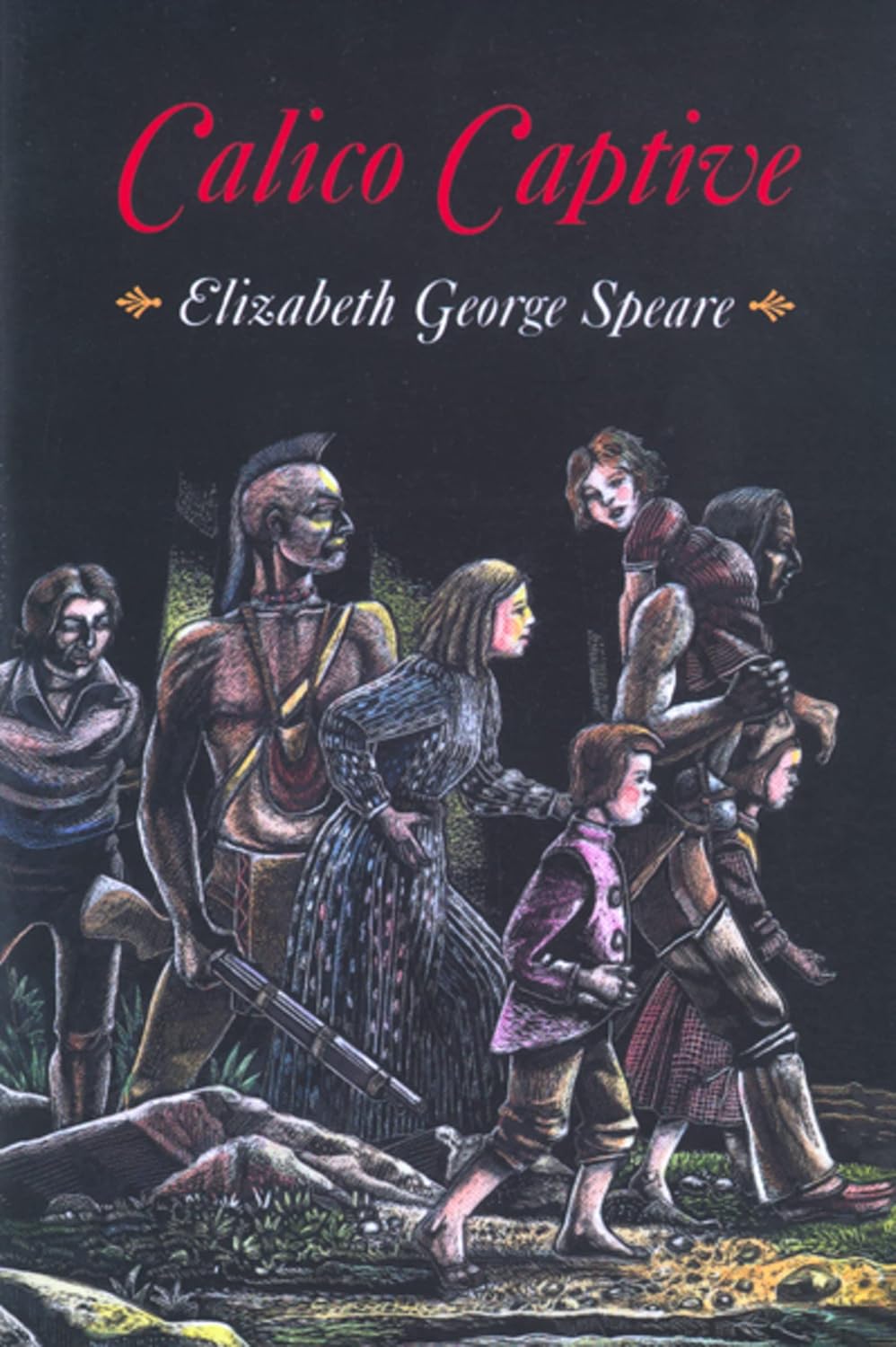
Calico Captive, written by Elizabeth George Speare, is a 274-page historical novel set at the outbreak of the French and Indian War. In August 1754, Miriam Willard — a teenage girl living in Charlestown, New Hampshire — is taken captive along with her pregnant sister Susanna Johnson, Susanna’s husband James, and their three young children during an Abenaki raid. What follows is a harrowing march northward through the wilderness toward Canada, during which Susanna gives birth on the trail and names her newborn daughter Captive. After weeks of forced march, the prisoners arrive in Montreal, a city of French colonial intrigue and shifting wartime loyalties. There Miriam, by a sudden turn of fortune, is taken in by the prominent Du Quesne family, where she discovers a society utterly unlike anything in her New Hampshire experience. The novel is based directly on a true story: the captivity narrative of Susanna Johnson, whose account was published in 1807. Published in 1957 by Houghton Mifflin and Elizabeth George Speare’s first novel — she would go on to win two Newbery Medals, for The Witch of Blackbird Pond (1959) and The Bronze Bow (1962), and to receive the Laura Ingalls Wilder Award in 1989 — Calico Captive remains in print and in classroom use nearly seventy years after its publication. Like the Speare novels that won greater recognition, it engages questions of cultural encounter, captivity, identity, and survival in colonial New England. Like the Speare novels, it also reflects the perspective of a white New England author of the mid-20th century, which teachers and parents should engage with rather than ignore. This complete guide covers Calico Captive‘s reading level, recommended age, content, key figures, themes, the representation question, and similar books — designed for parents, teachers, and students.
For Parents
A gripping historical novel about a teenage girl’s captivity during the French and Indian War — well-paced, historically grounded, and the first novel by one of America’s most celebrated children’s historical fiction writers. Ages 10–14, grades 5–8. Content includes captivity, the hardships of forced wilderness march, and period-accurate depictions of colonial conflict. The book uses period-era terminology for Indigenous people that reflects its 1957 publication date.
For Teachers
A grades 5–8 historical fiction text for French and Indian War units — one of the few children’s novels set in this period and directly based on a primary source. Speare’s prose is excellent and the historical research is solid. The depiction of the Abenaki people reflects 1957 assumptions and terminology; the guide to teaching the book well includes that conversation. Best paired with primary sources from the period and Indigenous perspectives on the conflict.
Calico Captive at a Glance
Find on Amazon →| Author | Elizabeth George Speare (1908–1994) |
| Published | 1957 (Houghton Mifflin; HMH current publisher) |
| Grade Level | 5–8 (our assessment) |
| Recommended Age | 10–14 |
| Lexile | 900L |
| ATOS Level | 6.0 |
| Guided Reading Level | S |
| Pages | 274–288 (editions vary) |
| Genre | Historical fiction |
| Setting | New Hampshire and Montreal; 1754–1758 |
For official Lexile and AR levels, visit Lexile.com or AR BookFinder. ReadingVine provides independent editorial assessments.
What Reading Level Is Calico Captive?
Calico Captive has a Lexile of 900L and an ATOS level of 6.0, with a Guided Reading Level of S. These scores place it at approximately a grades 5–7 independent reading level — consistent with the publisher’s interest level (grades 4–8) and with its widespread use across those grades. Speare’s prose is clear and assured — more direct than the high Lexile might suggest, with short declarative sentences in the action sequences and more complex construction in the Montreal scenes that reflect the social world Miriam is navigating. The 900L reflects the overall complexity of the vocabulary and sentence structure across the full novel.
Our editorial assessment places it at grades 5–8, ages 10–14. The wilderness march section reads quickly despite its difficulty; the Montreal section requires more patience as Miriam learns the social codes of French colonial society. Both sections reward the historical reader who brings some context to the French and Indian War period. For official Lexile and AR scores, visit Lexile.com or AR BookFinder. ReadingVine’s assessments are independent editorial judgments.
What Age Is Calico Captive Appropriate For?
We recommend Calico Captive for readers ages 10–14, grades 5–8. The primary content considerations are historical: the captivity narrative involves the realities of forced march through wilderness, captivity, the hardships of war, and the loss of autonomy. Susanna’s childbirth on the march is handled with restraint but present. The fate of some of the captives — separation, sale, and in some cases permanent loss of freedom — is depicted with historical directness. Nothing is gratuitous; the book is a 1957 children’s novel and reflects that era’s conventions about what to show young readers. The representation question regarding the Abenaki is addressed in its own section below.
The True Story Behind Calico Captive
The novel is based directly on the historical record of the Johnson family captivity. In August 1754, a party of Abenaki warriors raided the settlement of Charlestown, New Hampshire — then known as Number Four — and took several colonists captive, including James Johnson, his pregnant wife Susanna, their three young children, and Susanna’s teenage sister Miriam Willard. The captives were marched northward to Canada, where they were sold to French colonists. Susanna Johnson gave birth during the march — the baby she named Captive survived. The family spent years in captivity in Montreal before eventually being ransomed and returned to New England.
Susanna Johnson herself wrote an account of the captivity, which was first published in 1807 as A Narrative of the Captivity of Mrs. Johnson. This document — a primary source in the captivity narrative tradition that was a significant genre of colonial American literature — is the direct basis for Speare’s novel. Speare followed the historical record faithfully for the major events and invented the texture of daily experience, the romantic subplot, and the interior life of Miriam Willard, whose perspective is central to the novel but who left no separate written account.
The captivity narrative as a genre — first-person accounts of colonial Americans captured by Indigenous people, published and widely read in the 17th and 18th centuries — was one of the most popular forms of literature in early America. Speare’s fictional retelling draws on this tradition while adding the novelist’s tools of character development and narrative pacing.
What Is Calico Captive About?
It is August 1754 in Charlestown, New Hampshire. Miriam Willard, seventeen years old, is at her sister Susanna’s house — Susanna, very pregnant, and her husband James Johnson, and their three young children. The day holds the promise of Phineas Whitney, Miriam’s sweetheart, who is on his way to Harvard. Then comes the raid. The Abenaki warriors come swiftly; within hours the Johnsons, Miriam, and several other settlers are captives, marching northward through the forest toward Canada.
The march is brutal — icy streams, meager rations, the relentless pace, and the terror of what waits at the end. Susanna gives birth during the march. She names the baby Captive. The prisoners manage the wilderness with difficulty and courage; some do not survive the journey. When they arrive in Montreal, the French colonial capital, the family is separated and sold to different households. Miriam, through a stroke of fortune, ends up in the household of Madame Du Quesne, a wealthy and sophisticated French woman whose world is entirely foreign to Miriam’s Puritan New England upbringing.
Montreal is a revelation: French fashion, Catholic religion, formal social codes, music, dancing, the pleasures of a wealthy colonial city. Miriam adapts, learns, and finds herself drawn to Pierre Laroche, a young Frenchman — a complication for a girl whose heart and loyalties have always been with Phineas Whitney and New England. The novel follows Miriam’s years in Montreal as she works toward her family’s freedom, navigates competing loyalties and identities, and ultimately makes her choices about who she is and where she belongs.
Calico Captive Characters
A Note on the Depiction of the Abenaki
The Abenaki people — whose raid on Charlestown initiates the novel’s action — are depicted throughout Calico Captive in ways that reflect the assumptions and terminology of a 1957 white New England author writing historical fiction set in 1754. The word “Indian” is used consistently throughout; the word “squaw” appears in the text. The Abenaki characters are depicted primarily as threatening figures whose motivations are not developed; the novel is told entirely from the perspective of the English colonial captives.
This is worth naming directly for teachers and parents, for the same reasons that the discussion of Abenaki perspective matters in any teaching of the French and Indian War. The Abenaki raid on Charlestown did not occur in isolation: it took place within a complex geopolitical conflict in which the Abenaki had their own history, their own alliances, their own losses, and their own reasons for the actions they took. The novel, following the perspective of Susanna Johnson’s original captivity narrative (which was itself an 18th-century colonial text), does not present that context.
For classroom use, the most productive approach is to pair the novel with materials that provide Abenaki and Indigenous perspectives on the French and Indian War period — both to give students a fuller historical picture and to model the practice of seeking out the perspectives that any single narrative, however well-crafted, necessarily omits. The novel’s value as historical fiction about colonial New England is real; the limitation of its perspective on the Abenaki is equally real. Both are worth naming.
Calico Captive Themes and Lessons
The novel’s most interesting structural tension is Miriam’s Montreal experience: she is a captive in a city that is also a revelation. The French colonial world she encounters is richer, more sophisticated, and in some ways more pleasurable than anything in her New Hampshire experience. She learns to love aspects of it. The question of whether this makes her disloyal — to Phineas, to her family, to her Puritan New England identity — is the novel’s most honest and most complex question, and Speare does not answer it too quickly. Miriam’s growth from the vain girl of the opening chapters to someone capable of making genuine sacrifices is the novel’s most productive teaching thread.
The captivity narrative tradition that underlies the book connects Calico Captive to a significant strand of early American literature. Captivity narratives — first-person accounts of colonial Americans taken by Indigenous people — were among the most widely read texts in early America, serving simultaneously as adventure stories, spiritual testimonies, and propaganda documents about colonial conflict. Reading Susanna Johnson’s original 1807 narrative alongside Speare’s novel is one of the most productive exercises available for teaching the difference between primary source and historical fiction, and for examining what a novelist chooses to emphasize, change, or invent.
Discussion questions for classrooms and families: How does Miriam change between the beginning and end of the novel — what experiences change her? What does the baby named Captive represent? How does Miriam’s experience in Montreal challenge her assumptions about French Catholics and about her own Puritan New England values? What does the novel leave out about the Abenaki? What would the story look like told from a different perspective?
Elizabeth George Speare’s Legacy
Calico Captive was Speare’s first novel, published when she was forty-nine years old — she had written magazine articles about family life before turning to historical fiction for children. The novel was recognized as an ALA Notable Book but did not win the Newbery; her next two novels would. The Witch of Blackbird Pond (1959), also set in colonial New England and also about a girl navigating an unfamiliar culture, won the Newbery Medal in 1959. The Bronze Bow (1962), set in first-century Judea, won the Newbery Medal in 1962 — making Speare one of only five authors in Newbery history to win the medal twice. The Sign of the Beaver (1983) received a Newbery Honor and the Scott O’Dell Award for Historical Fiction. In 1989 she received the Laura Ingalls Wilder Award for her distinguished and enduring contribution to children’s literature. She died in 1994.
The themes and tensions of Calico Captive — cultural encounter in colonial New England, a young woman navigating between worlds, the question of where she belongs — run through all of Speare’s major work. Kit Tyler in The Witch of Blackbird Pond faces the same essential situation as Miriam Willard: brought from one culture into another, forced to navigate new codes and loyalties, uncertain which self is her true one. Reading the two books together is the most productive Speare author study available at this level.
Books Similar to Calico Captive
About Elizabeth George Speare
Elizabeth George Speare was born on November 21, 1908, in Melrose, Massachusetts. She attended Smith College and Boston University, trained as a high school English teacher, and married Alden Speare in 1936. She spent her early adult years raising two children in Connecticut before turning to writing in earnest in her forties. She published magazine articles about family life before discovering, as she described it, “a true story from New England history with a character who seemed to me an ideal heroine” — the story of the Johnson family captivity — which became Calico Captive, her first novel, published in 1957 when she was forty-nine.
The novels that followed secured her place among the most important American children’s historical fiction writers of the 20th century. The Witch of Blackbird Pond (1959) won the Newbery Medal; The Bronze Bow (1962) won the Newbery Medal again — making her one of only five two-time Newbery winners in the award’s history. The Sign of the Beaver (1983) received a Newbery Honor. In 1989 she received the Laura Ingalls Wilder Award for her distinguished and enduring contribution to children’s literature. She died on November 15, 1994, in Tucson, Arizona.
All of Speare’s major historical fiction shares a central preoccupation: a protagonist placed between two cultures, forced to navigate loyalty, identity, and belonging across that divide. Miriam Willard in Calico Captive, Kit Tyler in The Witch of Blackbird Pond, and Matt in The Sign of the Beaver face versions of the same essential situation — the encounter with cultural difference under extreme pressure — that Speare returned to across her entire career.
Calico Captive: Frequently Asked Questions
What reading level is Calico Captive?
Lexile 900L, ATOS 6.0, Guided Reading Level S. Our assessment: grades 5–8, ages 10–14. The prose is clear and assured; the historical content benefits from contextual scaffolding about the French and Indian War period. For official Lexile and AR scores, visit Lexile.com or AR BookFinder.
What is Calico Captive about?
In August 1754, seventeen-year-old Miriam Willard is taken captive in an Abenaki raid on Charlestown, New Hampshire, along with her pregnant sister Susanna Johnson and Susanna’s family. After a harrowing wilderness march to Canada, during which Susanna gives birth and names her baby Captive, the prisoners arrive in Montreal. Miriam ends up in the household of the wealthy Du Quesne family, where she navigates French colonial society while working toward her family’s freedom — and questioning her own loyalties and identity.
Is Calico Captive based on a true story?
Yes — it is based directly on the historical captivity of the Johnson family in 1754, documented in Susanna Johnson’s own Narrative of the Captivity of Mrs. Johnson, first published in 1807. Speare followed the major historical events faithfully and invented the texture of daily experience, the interior life of Miriam Willard, and the romantic subplot. The Johnson family, the raid, the march, Montreal, and the eventual ransom are all historical.
What other books did Elizabeth George Speare write?
The Witch of Blackbird Pond (1959, Newbery Medal), about a girl from Barbados navigating Puritan Connecticut; The Bronze Bow (1962, Newbery Medal), set in first-century Judea; and The Sign of the Beaver (1983, Newbery Honor and Scott O’Dell Award), about a boy left alone in colonial Maine who is befriended by an Abenaki boy. All four novels explore cultural encounter in historical settings; The Witch of Blackbird Pond is the most direct companion to Calico Captive in themes and approach.
How does Calico Captive depict the Abenaki?
The Abenaki are depicted as threatening figures whose motivations are not developed, using period-era terminology (“Indians,” “squaw”) throughout. The novel follows the perspective of the English colonial captives and Susanna Johnson’s 1807 captivity narrative; it does not present the Abenaki perspective or context for their actions. Teachers using the book should supplement it with Abenaki and Indigenous perspectives on the French and Indian War period. See the Representation section of this guide.
What is the significance of the baby named Captive?
Susanna Johnson names the baby born during the forced march “Captive” — a name that encapsulates the family’s situation in a single word and that carries the specific weight of a mother naming her child for the circumstances of its birth. The name is historically accurate: the real Susanna Johnson named her baby Captive. In the novel, the baby represents the stakes of the captivity — a child born into bondage who deserves to go home — and her eventual freedom is one of the book’s most important resolutions.