
 = Partner Site
Flowers for Algernon Reading Level: A Complete Guide
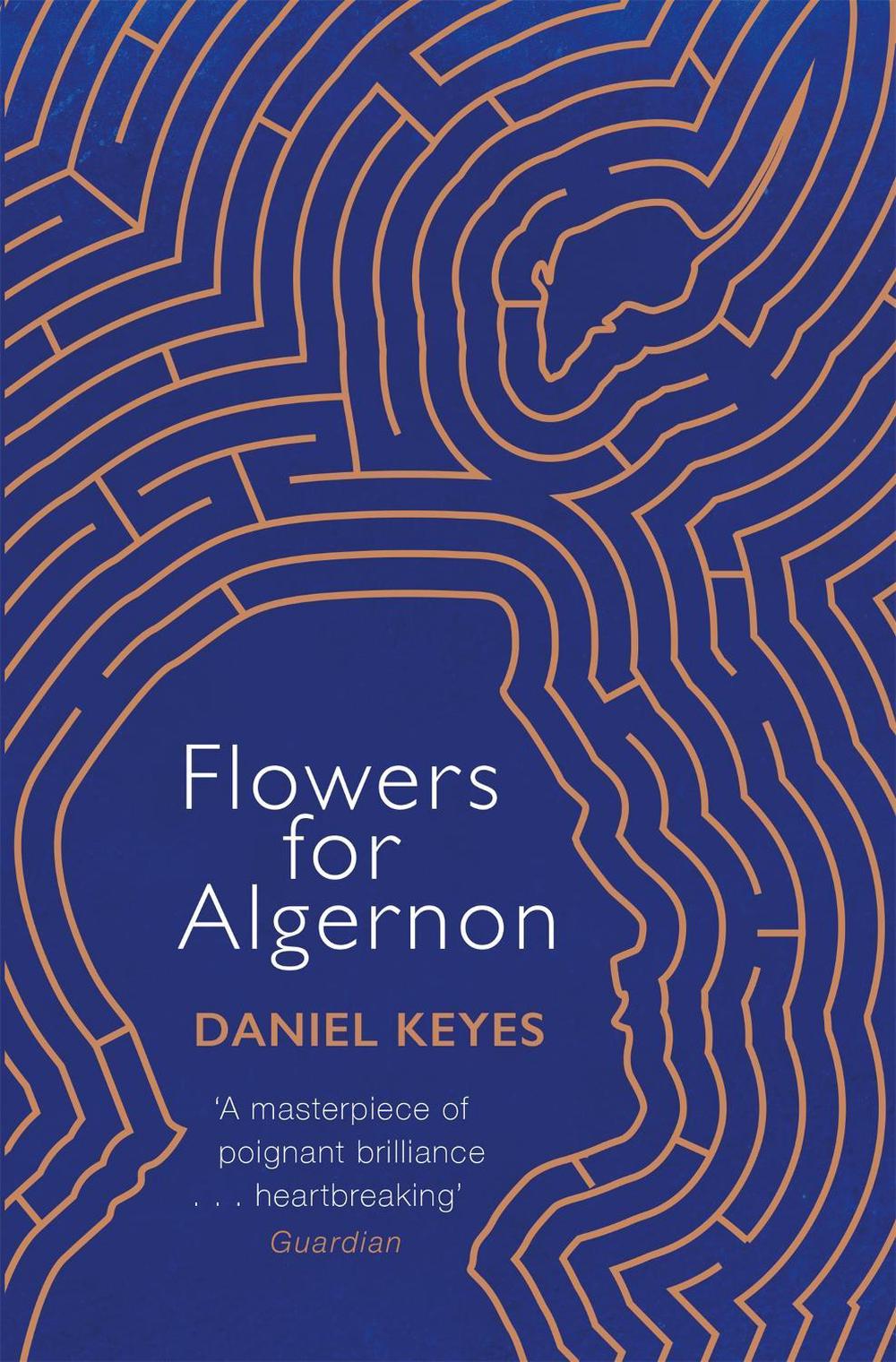
Flowers for Algernon by Daniel Keyes is a novel about Charlie Gordon, a thirty-two-year-old man with an intellectual disability who undergoes experimental brain surgery to triple his intelligence — and who documents the entire experience, from before the operation to its eventual reversal, in a series of “progress reports” that he writes himself. The progress reports are the novel: the prose begins with Charlie’s pre-surgery spelling and grammar, improves as his intelligence grows, peaks at a level of sophistication that outstrips the scientists who created the experiment, and then slowly, heartbreakingly, deteriorates again as the effects reverse. Published as a short story in 1959 (Hugo Award) and expanded into a novel in 1966 (Nebula Award), it is one of the most formally inventive works in the high school literary canon — a tragedy in which the medium is the message and the reader experiences Charlie’s rise and fall in the same prose Charlie uses to record it. This complete guide covers Flowers for Algernon‘s reading level, recommended age, content considerations, characters, themes, and books similar to Flowers for Algernon, designed for parents, teachers, and students.
For Parents
A science fiction classic taught widely in grades 8–10, structured as a first-person journal whose prose evolves to reflect the narrator’s changing intelligence. Contains sexual content — Charlie’s exploration of sexuality as his intelligence grows — and themes of disability, scientific ethics, and institutional treatment of people with intellectual disabilities. Appropriate for ages 13 and up.
For Teachers
One of the most formally teachable novels in the secondary school canon — the progress report structure makes the novel’s tragedy literal and visible in the prose itself, which gives students a concrete entry point into discussion of how form embodies meaning. The ethical questions the novel raises about intelligence, identity, consent, and the treatment of people with disabilities remain as urgent as they were in 1966. Widely used in grades 8–10 and in high school reading intervention settings; aligned to CCSS 9–10.
Flowers for Algernon at a Glance
Find on Amazon →| Author | Daniel Keyes |
| Published | 1966 as novel (Harcourt, Brace & World); originally a short story, 1959 |
| Grade Level | 8–10 (our assessment) |
| Recommended Age | 13+ |
| Lexile | Not published for standard editions |
| Word Count | ~77,750 |
| Pages | ~311 (Harvest/Harcourt paperback) |
| Structure | Series of dated progress reports (no traditional chapters) |
| Genre | Literary science fiction |
| Setting | New York City; 1960s |
| Awards | Hugo Award for Best Short Fiction (1960); Nebula Award for Best Novel (1966) |
For official Lexile and AR levels, visit Lexile.com or AR BookFinder. ReadingVine provides independent editorial assessments.
What Reading Level Is Flowers for Algernon?
Standard Lexile and ATOS scores are not widely published for Flowers for Algernon in the way they are for most novels in this catalog, partly because the novel’s formal structure — prose that begins at a low literacy level and rises and falls across the text — makes formula-based scoring genuinely unreliable. A score taken from Charlie’s early progress reports would suggest a primary-grade text; a score taken from his peak-intelligence entries would suggest college level; an average of both would be meaningless. The novel resists the metrics by design.
In practice, Flowers for Algernon is taught in grades 8–10 and in high school reading intervention settings. It is aligned to Common Core Standards 9–10.1 through 9–10.6 in curriculum documents from multiple states. The reading challenge is not the prose itself — the early sections are genuinely simple, the middle sections are accessible literary prose, and the late sections are emotionally rather than linguistically difficult — but the emotional and ethical complexity of the material. Students who encounter the novel for the first time at the right age typically describe it as one of the most affecting reading experiences they have had in school; students who encounter it too young often lack the frame of reference to engage with its ethical questions about disability, identity, and scientific responsibility. At approximately 77,750 words and 311 pages, most classroom readers complete it in two to three weeks. For official Lexile and AR scores, visit Lexile.com or AR BookFinder. ReadingVine’s assessments are independent editorial judgments.
What Age Is Flowers for Algernon Appropriate For?
We recommend Flowers for Algernon for readers ages 13 and up. The novel’s most challenging content — the primary basis for decades of challenges and removals — is Charlie’s emerging sexuality as his intelligence grows. As his cognitive and emotional development accelerates, he begins to understand and experience sexual attraction in ways he previously could not, and documents these experiences in his progress reports with the same directness he applies to everything else. The sexual content is not graphic by contemporary standards, but it is adult in register and reflects an adult man’s experience rather than a teenager’s.
Charlie’s post-surgery life includes two romantic and sexual relationships: one with Alice Kinnian, his former teacher at the adult education center, and one with Fay Lillman, a free-spirited neighbor. The novel depicts his sexual experiences in both relationships through his progress reports — directly but not graphically. The more significant content concern for some parents is the nature of the Charlie-Alice relationship: Alice was his teacher before he underwent the surgery, and the power dynamic between them — which shifts dramatically as Charlie’s intelligence surpasses hers — is part of the novel’s ethical landscape rather than something the text ignores. The novel also depicts Charlie’s memories of childhood sexual abuse by his mother Rose, who punished him severely and with sexual shame for normal adolescent responses. Drug and alcohol use appear in the novel as part of the period setting. The novel’s emotional difficulty — specifically, the regression in the final third and Charlie’s awareness of his own deterioration — should be discussed with readers who may be sensitive to themes of cognitive decline.
What Is Flowers for Algernon About?
Charlie Gordon is thirty-two years old, works as a janitor and dough mixer at a bakery in New York, and attends reading and writing classes at the Beekman Center for Retarded Adults. His IQ is 68. He is good-natured, eager to learn, and profoundly aware that other people are smarter than he is and that this awareness costs him something he cannot name. His teacher, Miss Alice Kinnian, recommends him for an experimental program: Drs. Strauss and Nemur have developed a surgical procedure that may dramatically increase intelligence, and they have been testing it on a mouse named Algernon. Charlie is to be the first human subject. He agrees, immediately and without reservation, because he wants to be smart more than he has ever wanted anything.
The surgery works. Charlie’s progress reports, which begin with phonetic spelling and childlike syntax, begin to change within weeks. The sentences grow longer. The vocabulary expands. The self-awareness deepens. By several months post-surgery, Charlie has surpassed the intelligence of the scientists who operated on him and is conducting his own research into the theoretical basis of their procedure. He reads voraciously, learns languages, makes musical connections, and discovers that the people who have surrounded him his entire life — his coworkers at the bakery who treated him with apparent affection — were mocking him without his knowledge. The discovery of what his “friends” thought of him is the novel’s first great grief, and Charlie is not equipped for grief.
As his intelligence peaks, Charlie begins to understand things about his own past that he previously could not access: memories of a childhood shaped by a mother who could not accept having a son with an intellectual disability, who alternately tried to force normalcy on him and retreated into denial. He begins a relationship with Alice, deepened now by the fact that he can meet her as an equal for the first time. He discovers flaws in the theoretical basis of Strauss and Nemur’s work and publishes what he calls the “Algernon-Gordon effect” — the finding that the surgery’s improvements are unstable and will reverse. Algernon begins to deteriorate: erratic, confused, dying. He buries Algernon in his backyard and puts flowers on the grave.
Then the regression begins. The progress reports start to simplify. Words become harder. Thoughts that came easily become slippery. Charlie watches himself — with full awareness at first, and then with decreasing awareness — losing what he gained. He ends his relationships with Alice and with Fay because he cannot bear to be watched as he diminishes. He visits his estranged family — his mother, now in dementia; his father, who does not recognize him; his sister Norma, who is coping alone. He quits his job at the bakery rather than endure the pity of his coworkers. In the novel’s final progress report, Charlie prepares to check himself into the Warren State Home and asks, in the last sentences, that someone put flowers on Algernon’s grave.
Flowers for Algernon Characters
Is Flowers for Algernon Banned?
Flowers for Algernon appears on the ALA’s list of the 100 Most Frequently Challenged Books of 1990–1999, ranked at number 43. The primary reason for challenges centers on the sections of the novel in which Charlie struggles to understand and express his sexual desires. A Pennsylvania school district removed it from required reading lists in 1975, citing “explicit sexual content,” and a Texas school board declared it “pornographic” in 1981. In 2025, the Escambia County, Florida school board voted to remove it from all of its school libraries and reading lists after it appeared on a list of books someone in the state had objected to as sexually explicit.
The “pornographic” characterization of the novel is worth examining against what it actually contains. Charlie’s sexual experiences are depicted through his progress reports — in his own voice, at the level of self-reflection appropriate to each stage of his development. The sections that have drawn challenges are not scenes of gratuitous description but moments of a man discovering and attempting to understand a dimension of his experience that his earlier cognitive limitations had prevented him from fully accessing. The novel’s argument is that sexual development is a part of human development, and that a person with an intellectual disability is still a full person whose inner life includes the full range of human experiences.
The deeper irony of the challenges is worth naming: the most frequent challenge reason targets the novel’s most humane argument. Flowers for Algernon insists on Charlie’s full humanity — including the sexuality that challengers find inappropriate — against a history of treating people with intellectual disabilities as less than fully human. The challenges to the novel’s sexual content reproduce, in a different register, exactly the dehumanization the novel is critiquing.
Flowers for Algernon Themes and Lessons
The novel’s central formal argument is made through its prose rather than about it. Charlie’s progress reports begin with misspelled words, simple sentences, and the specific syntactic patterns of a person whose literacy is limited but whose desire to communicate is genuine and warm. As the surgery takes effect, the reports improve — gradually at first, then accelerating, until Charlie is writing with the precision and range of a fully realized literary intelligence. Then the regression begins, and the prose does what nothing else in the novel could accomplish as directly: it dismantles itself. By the final progress reports, the reader is watching Charlie not just describe his loss but enact it on the page. This is the technique that makes the novel devastating rather than merely sad.
Keyes has said the novel was inspired partly by Aristotle’s observation that tragedy requires a fall from a great height. Charlie’s pre-surgery state is not a fall waiting to happen — he is happy in it, he is loved in it, and the people around him have a relationship with him that, however complicated by their condescension, is real. The surgery creates the height from which the fall becomes possible. What the novel argues is not that the surgery was wrong to attempt but that it was wrong to attempt on a human being without understanding its long-term effects — and that the scientists who performed it were motivated at least as much by ambition as by care for Charlie. Charlie was a good subject because he was eager and cooperative and would not refuse. These qualities were what made him vulnerable.
The novel’s engagement with how people with intellectual disabilities are treated by the people around them — the coworkers who mock Charlie while pretending to befriend him, the mother who could not accept him, the scientists who see him as a career milestone — is the element that gives it its sustained ethical force. Charlie’s intelligence at the novel’s peak allows him to understand what was done to him and by whom, and the understanding is not liberating but devastating. Knowing who laughed at him does not change that they laughed. Knowing his mother’s fear did not change what it did to him. The novel argues that intelligence does not solve the problem of how people treat each other; it only makes the problem visible.
Discussion questions for classrooms and families: How does the change in Charlie’s prose style across the novel make you feel the story differently than if it were told in a consistent voice? What does the novel argue about the difference between intelligence and wisdom — and does becoming smarter make Charlie better or worse at being human? What ethical obligations did Strauss and Nemur have to Charlie — and did they meet them? What does the novel argue about how people with intellectual disabilities are treated — and what does Charlie’s regression reveal about what his “friendships” at the bakery actually were? Is Charlie happier before or after the surgery — and does the answer to that question change what you think the novel is saying?
How Long Is Flowers for Algernon?
The Harvest/Harcourt paperback is approximately 311 pages. The novel has no traditional chapters — it is structured entirely as dated progress reports, each titled “progris riport” in the early entries and evolving in formatting and sophistication along with Charlie’s writing. The total word count is approximately 77,750. Most classroom readers complete it in two to three weeks; the novel reads faster than its page count suggests because the early and late sections — written in simpler prose — move quickly, and the middle sections are propulsive in a different way.
Teachers should note that the novel exists in two distinct versions: the original 1959 novelette (approximately 22 pages), which many teachers use as an introduction or standalone assignment, and the 1966 novel (approximately 311 pages), which is the standard assigned text. The novelette is the compressed version of the same arc; the novel expands Charlie’s relationships, his family history, and his intellectual peak into full development. Both versions are worth knowing about, because students who have encountered the novelette version in anthology readers may believe they have read the full novel.
Books Similar to Flowers for Algernon
About Daniel Keyes
Daniel Keyes was born in 1927 in Brooklyn, New York. He served in the U.S. Maritime Service, studied psychology at Brooklyn College, worked in fashion photography, and eventually earned a master’s degree in English and American Literature from New York University while teaching English in New York City public schools during the day and writing on weekends. Two experiences during this period became the seeds of Flowers for Algernon: a conflict with his own parents, who pushed him toward pre-medical education against his desire to write, which led him to wonder what would happen if intelligence could be artificially increased; and a pivotal moment while teaching students with disabilities when one of them asked if they could be mainstreamed into a regular class if they worked hard enough and became smart. A second student in the same period regressed after being removed from regular lessons, losing all the literacy he had gained — “when he came back to school, he had lost it all,” Keyes said. “It was a heart-breaker.”
He wrote the short story version over several years and collected fourteen rejections before it was accepted by The Magazine of Fantasy & Science Fiction in 1959. It won the Hugo Award the following year. Keyes spent the next several years expanding it into the novel, which won the Nebula Award upon publication in 1966. The novel was adapted into the film Charly in 1968, for which Cliff Robertson won the Academy Award for Best Actor; into a Broadway musical in 1978; and into television productions in 1961 and 2000. Keyes published several other works, including the nonfiction book The Minds of Billy Milligan (1981), about a man with multiple personality disorder. He received the Author Emeritus honor from the Science Fiction and Fantasy Writers of America in 2000. He died in 2014 at the age of eighty-six.
Flowers for Algernon: Frequently Asked Questions
What reading level is Flowers for Algernon?
Standard Lexile and ATOS scores are not reliably published for Flowers for Algernon because the novel’s prose changes dramatically across the text — from a pre-literacy level to graduate-school sophistication and back — making formula scores meaningless. In practice, the novel is taught in grades 8–10 and high school reading intervention settings, aligned to CCSS 9–10. Our editorial assessment places it at grades 8–10, ages 13 and up. For official Lexile and AR scores, visit Lexile.com or AR BookFinder.
What grade is Flowers for Algernon appropriate for?
We recommend grades 8–10, ages 13 and up. The novel contains sexual content (Charlie’s relationships with Alice and Fay, depicted through his progress reports), depictions of childhood psychological and sexual shaming by his mother, and the emotionally difficult arc of cognitive decline with full awareness. The reading level metrics are unreliable due to the novel’s changing prose style.
How many pages are in Flowers for Algernon?
The Harvest/Harcourt paperback is approximately 311 pages with no traditional chapters — only dated progress reports. Word count is approximately 77,750. Most classrooms complete it in two to three weeks. Note that a much shorter novelette version (approximately 22 pages) exists from 1959, which is often anthologized separately; students who have read the short story have not read the novel.
What is Flowers for Algernon about?
Charlie Gordon, a thirty-two-year-old man with an IQ of 68, undergoes experimental brain surgery to increase his intelligence and documents the entire experience in progress reports — from before the operation through his rise to extraordinary intelligence and his eventual regression back to his original state. The novel is structured as those progress reports, and the prose itself changes to reflect Charlie’s changing mind: simple and misspelled at the start, sophisticated and precise at the peak, and then gradually deteriorating again at the end.
What is the significance of Algernon in Flowers for Algernon?
Algernon is the laboratory mouse who received the intelligence-enhancement surgery before Charlie and whose arc foreshadows Charlie’s. He is the novel’s most important structural device: when Algernon begins to deteriorate and die, Charlie understands that he will follow the same path — and he does. The flowers Charlie puts on Algernon’s grave in the novel’s final pages give the book its title and its most compressed image: the honoring of an intelligence that was given and then taken away, in a gesture that connects Charlie’s fate to Algernon’s and insists that both losses matter.
Why is Flowers for Algernon banned?
The primary challenge reason is sexual content — specifically the passages in which Charlie, as his intelligence grows, begins to understand and explore his sexuality. Challenges have consistently centered on the parts of the novel in which Charlie struggles to understand and express his sexual desires. A Pennsylvania school district removed it in 1975 for “explicit sexual content” and a Texas school board declared it “pornographic” in 1981. The sexual content in the novel is not graphic; the challenges reflect discomfort with the novel’s assertion that a man with an intellectual disability has a full inner life that includes sexuality — which is also the novel’s most important ethical argument.
Is there a Flowers for Algernon movie?
Yes — the 1968 film Charly, directed by Ralph Nelson and starring Cliff Robertson, for which Robertson won the Academy Award for Best Actor. It is rated R and is appropriate for the same age range as the novel, or somewhat older. A television adaptation also aired in 2000. The Broadway musical adaptation ran in 1978. The novel has been adapted for stage, radio, and television multiple times across six decades.
Is Flowers for Algernon a short story or a novel?
Both exist. The original 1959 version is a short story (sometimes called a novelette) of approximately 22 pages that won the Hugo Award. Daniel Keyes expanded it into a full novel in 1966, which won the Nebula Award. The novel is the standard assigned version in schools; the short story is often anthologized independently and appears in many middle and high school literature textbooks. They tell the same story; the novel adds Charlie’s family history, his relationship with Fay, and a more fully developed account of his intellectual peak. Students who have read the short story version have not read the novel.