
 = Partner Site
Harry Potter and the Chamber of Secrets Reading Level: A Complete Guide
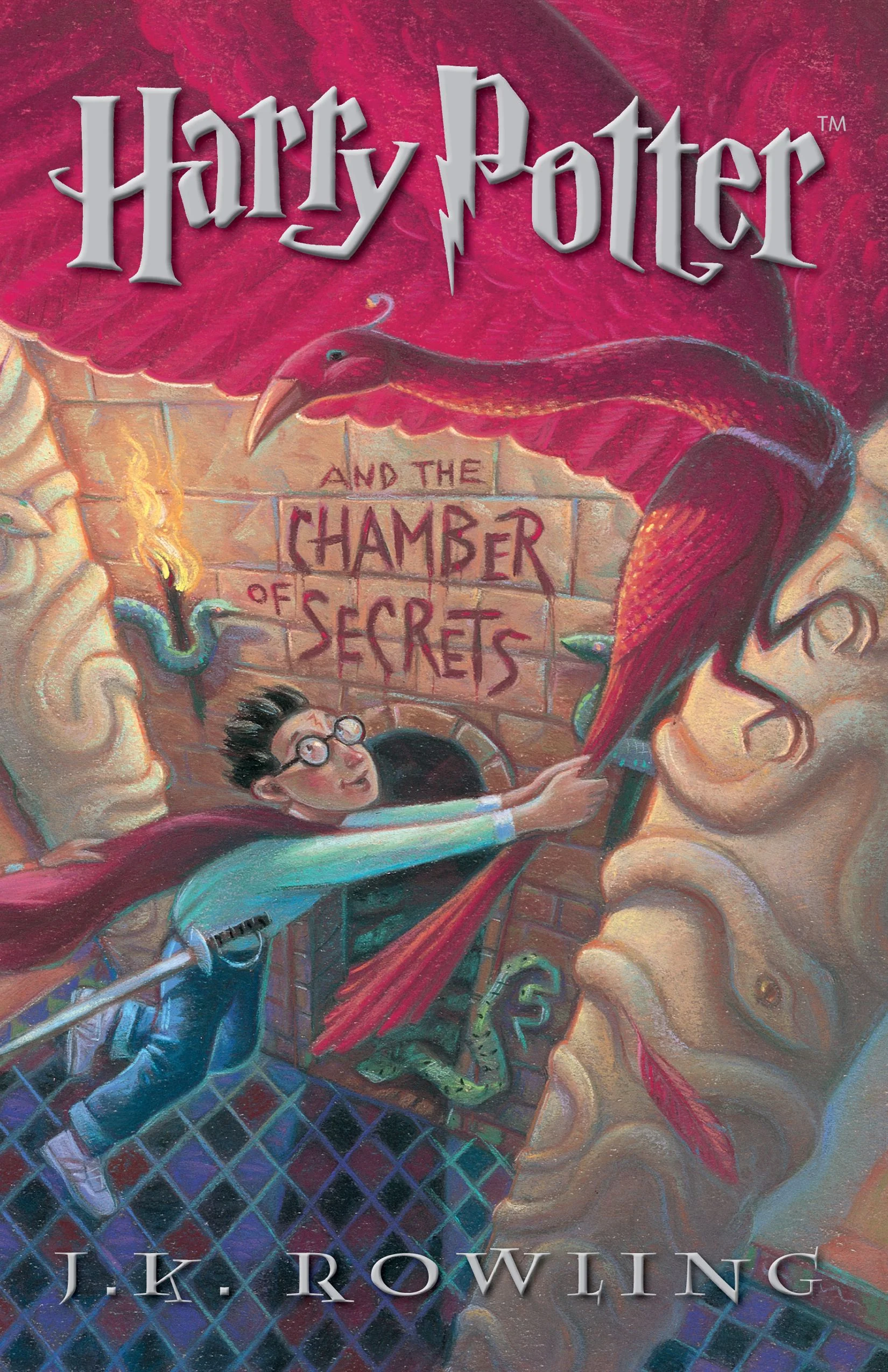
Harry Potter and the Chamber of Secrets by J.K. Rowling is the second book in the Harry Potter series, following Harry’s second year at Hogwarts as a series of mysterious attacks petrifies students and a voice only Harry can hear whispers through the walls. Darker and more suspenseful than the first book, it introduces the series’ central mythology around Voldemort’s origins and deepens the world Rowling established in The Sorcerer’s Stone. This complete guide covers Chamber of Secrets‘s reading level, recommended age, content considerations, characters, themes, and books similar to Harry Potter and the Chamber of Secrets, designed for parents, teachers, and students.
For Parents
Chamber of Secrets is noticeably darker than Sorcerer’s Stone — the threat feels more real, the mystery is more unsettling, and the climax involves a giant serpent and a character who is placed in mortal danger. Best for readers ages 8–12 reading independently, though many younger children enjoy it as a read-aloud alongside a parent. Content is appropriate for the age range with a few things worth knowing in advance.
For Teachers
Well suited to grades 4–6, Chamber of Secrets offers strong material for discussing prejudice, identity, and the danger of judging others by their origins. The “Mudblood” slur and the blood-purity subplot give the novel more classroom traction than its adventure premise suggests. Pairs naturally with The Sorcerer’s Stone for a series unit, or with The Giver for a unit on societies that sort and exclude.
Harry Potter and the Chamber of Secrets at a Glance
Find on Amazon →| Author | J.K. Rowling |
| Published | 1998 (UK); 1999 (US) |
| Grade Level | 4–6 (our assessment) |
| Recommended Age | 8–12 |
| Flesch-Kincaid Grade | ~6.2 |
| Word Count | ~85,000 |
| Pages | 341 (Scholastic paperback) |
| Chapters | 18 |
| Genre | Fantasy / adventure |
| Setting | Hogwarts School of Witchcraft and Wizardry; the Weasley home; Diagon Alley; 1992–93 |
| Series | Harry Potter, Book 2 |
For official Lexile and AR levels, visit Lexile.com or AR BookFinder. ReadingVine provides independent editorial assessments.
What Reading Level Is Harry Potter and the Chamber of Secrets?
Chamber of Secrets reads at approximately a 4th–6th grade level by our editorial assessment, with a Flesch-Kincaid grade level of around 6.2. This is slightly higher than Sorcerer’s Stone (approximately 5.5), reflecting a longer and slightly more complex book — though the difference is modest and readers who handled the first book comfortably will have no trouble with the second. Rowling’s prose is clear and propulsive, her vocabulary is rich without being obstructive, and the mystery structure keeps chapters moving at a pace that rewards rather than exhausts younger readers.
The series is well known for escalating in complexity and darkness across books, and Chamber of Secrets is the first step up that ladder. Parents who found Sorcerer’s Stone right for their child can generally move directly to this one; parents who felt Sorcerer’s Stone was at the edge of their child’s comfort level may want to wait a year before continuing. For official Lexile and AR scores, visit Lexile.com or AR BookFinder. ReadingVine’s assessments are independent editorial judgments.
What Age Is Harry Potter and the Chamber of Secrets Appropriate For?
We recommend Chamber of Secrets for independent readers ages 8–12. It is darker than Sorcerer’s Stone in ways that are meaningful rather than incidental, and parents should be aware of the specifics before placing it with a sensitive younger reader.
The novel’s central threat — a monster loose in the school that is petrifying and nearly killing students — is sustained throughout and more frightening than the dangers in the first book. The climax involves Harry facing a giant basilisk in near-total darkness, a character who is dying, and a memory of Voldemort that behaves as a fully present villain. A character is possessed without their knowledge for much of the book, which some younger readers find disturbing. The blood-purity subplot introduces the slur “Mudblood” — used by Draco Malfoy against Hermione — which is handled seriously and is one of the novel’s most important teaching moments, but parents should be prepared for the word to appear and to discuss it. There is no sexual content and no significant profanity. Overall the content is appropriate for the recommended age range; the primary consideration is the sustained atmosphere of threat and the intensity of the climax.
For most readers 8 and up, Chamber of Secrets is a richly satisfying step forward in the series. The darkness serves the story and is never gratuitous, and the resolution is fully earned. Children who are sensitive to jump-scare moments or sustained menace may do better waiting until 9 or 10.
What Is Harry Potter and the Chamber of Secrets About?
Harry Potter’s second year at Hogwarts begins badly and gets worse. Before he even boards the Hogwarts Express, a house-elf named Dobby appears in his bedroom with a warning: Harry must not return to Hogwarts, because terrible things are going to happen there. Harry returns anyway. Shortly after the school year begins, students and a cat start being found petrified — paralyzed and left as though dead — alongside messages written in blood on the walls: The Chamber of Secrets has been opened. Enemies of the Heir, beware. Harry, Ron, and Hermione begin their own investigation while the school’s staff tries to manage a rising panic.
Harry is also hearing a voice — cold, murderous, and apparently invisible — moving through the walls of the castle in a way no one else can detect. This, combined with the revelation that Harry is a Parselmouth (someone who can speak to snakes), makes him the subject of suspicion among his fellow students. The investigation leads Harry and his friends into the history of Hogwarts, to a monster of legend, and to the discovery that the Chamber of Secrets — sealed for fifty years — has been opened before.
The novel’s final act descends into the Chamber itself, where Harry discovers not only the monster but also the originating source of Voldemort’s power: a memory preserved in a diary that has been possessing Ginny Weasley for the entire school year. The confrontation that follows is the most intense in the series to this point, and it establishes the pattern of escalating danger that will carry through all seven books. Rowling also introduces several elements — the diary Horcrux, the question of what distinguishes Harry from Voldemort, the sword of Godric Gryffindor — that will pay off across the full series.
Harry Potter and the Chamber of Secrets Characters
Is Harry Potter and the Chamber of Secrets Banned?
The Harry Potter series is one of the most frequently challenged in American schools and libraries, and Chamber of Secrets shares that history. The series appears regularly on the American Library Association’s lists of most frequently banned and challenged books, with objections primarily centered on witchcraft, the occult, and concerns about the portrayal of magic as a positive force. In 2019, a Catholic school in Nashville removed the entire series from its library on the advice of exorcists who believed the books could conjure evil spirits.
These challenges have not resulted in widespread removal from public school libraries or curricula, and the books remain among the most widely read and widely available in the world. Rowling’s magic is fantasy rather than instructional, and the series is consistently recognized by educators and librarians as age-appropriate literature. Parents with concerns about the magical content should be aware that the series has no connection to any actual religious or occult practice.
Harry Potter and the Chamber of Secrets Themes and Lessons
The blood-purity subplot — the contempt Draco Malfoy and the Slytherin world direct at Muggle-born witches and wizards, crystallized in the “Mudblood” slur — gives Chamber of Secrets its most enduring thematic weight. Rowling is writing about racism, about the arbitrary cruelty of judging people by their origins rather than their character, and she is writing about it in a world where the prejudice has real power and real victims. The series’ eventual revelation that Voldemort himself is half-Muggle adds a layer of irony that becomes increasingly significant as the books progress.
The novel’s other central theme is the relationship between identity and choice. Dumbledore’s famous line — “It is our choices, Harry, that show what we truly are, far more than our abilities” — is the novel’s moral statement, offered directly in response to Harry’s fear that his Parseltongue and other shared traits with Voldemort mark him as fundamentally similar to his enemy. This is one of Rowling’s most carefully constructed ideas, and it is introduced here in its cleanest form before the series complicates it considerably.
Discussion questions for families and classrooms: Why does the “Mudblood” slur upset Ron so much when Hermione seems to shake it off? What does Dumbledore mean when he tells Harry that our choices show what we truly are? How is Tom Riddle similar to Harry — and what makes them different? What does Dobby’s situation say about loyalty and freedom?
How Many Pages and Chapters in Harry Potter and the Chamber of Secrets?
The Scholastic paperback edition of Chamber of Secrets is 341 pages across 18 chapters. At approximately 85,000 words, it is longer than Sorcerer’s Stone (77,000 words) and noticeably more substantial — the pacing is slightly slower in the middle section as the mystery deepens and red herrings accumulate, before the final act accelerates sharply. Most readers in the target age range finish it in one to two weeks of steady reading.
The series escalates significantly in length from this point: Prisoner of Azkaban is 107,000 words, and the later books are considerably longer still. Parents planning to read the series through should be aware that Chamber of Secrets is still among the shorter entries and that the commitment grows substantially after Book 3.
Books Similar to Harry Potter and the Chamber of Secrets
About J.K. Rowling
J.K. Rowling was born in 1965 in Yate, England. She conceived the idea for Harry Potter on a delayed train from Manchester to London in 1990 and spent the next several years writing the first book while working as a teacher and a single mother living on benefits in Edinburgh. Harry Potter and the Philosopher’s Stone was rejected by twelve publishers before Bloomsbury acquired it in 1996; Rowling’s editor reportedly advised her to get a day job as children’s books rarely made money. The book was published in the UK in 1997 and in the US — as Harry Potter and the Sorcerer’s Stone — in 1998. Chamber of Secrets followed in 1998.
The Harry Potter series has sold more than 600 million copies worldwide, been translated into more than 85 languages, and generated a film series, theme parks, stage plays, and an expanded universe of companion works. Rowling has become one of the best-selling authors of all time and one of the most recognizable names in publishing history. She has also been a prominent public figure in British cultural life and has been involved in several significant public controversies in the years since the series concluded. She lives in Edinburgh.
Harry Potter and the Chamber of Secrets: Frequently Asked Questions
What reading level is Harry Potter and the Chamber of Secrets?
Chamber of Secrets has a Flesch-Kincaid grade level of approximately 6.2. Our editorial assessment places it at grades 4–6 (ages 8–12). It is slightly more complex than Sorcerer’s Stone but accessible to any reader who handled the first book comfortably. For official Lexile and AR scores, visit Lexile.com or AR BookFinder.
What grade is Harry Potter and the Chamber of Secrets appropriate for?
We recommend grades 4–6 as the primary independent reading range. Children who enjoyed Sorcerer’s Stone are generally ready for this one at the same age. The climax is more intense than the first book; sensitive readers under 8 may do better waiting until they’re a little older.
How many pages are in Harry Potter and the Chamber of Secrets?
The Scholastic paperback is 341 pages across 18 chapters. Word count is approximately 85,000 words — longer than Sorcerer’s Stone and among the shorter entries in the series. Most readers in the target age range finish it in one to two weeks.
What is Harry Potter and the Chamber of Secrets about?
During Harry’s second year at Hogwarts, students begin being found petrified by an unknown attacker, and threatening messages appear on the walls warning that the Chamber of Secrets has been opened. Harry, Ron, and Hermione investigate while Harry is haunted by a disembodied voice only he can hear — and by the discovery that he can speak to snakes, a rare and unsettling ability that links him uncomfortably to Voldemort.
Do I need to read Harry Potter and the Sorcerer’s Stone first?
Yes. Chamber of Secrets assumes familiarity with the characters, the world, and the events of the first book. Jumping in here would mean missing the foundation for nearly everything — the characters’ relationships, the rules of the magical world, and the backstory with Voldemort that gives the series its stakes.
Is Chamber of Secrets scarier than Sorcerer’s Stone?
Yes, meaningfully so. The threat in Chamber of Secrets is more sustained and the climax is more intense — Harry faces a basilisk in near-total darkness and a memory of Voldemort that operates as a present villain. The book is still firmly in the middle-grade range, but parents of children who found parts of Sorcerer’s Stone frightening should be prepared for this one to go further.
What is a Horcrux — does Chamber of Secrets explain it?
The word “Horcrux” is not used in Chamber of Secrets, but Tom Riddle’s diary is one — a piece of Voldemort’s soul concealed in an object to preserve his life. The concept is introduced retroactively in Half-Blood Prince (Book 6), where it becomes central to the series’ endgame. Readers on a first read will not know the significance of the diary until much later in the series, which is exactly how Rowling intended it.
Is there a Harry Potter and the Chamber of Secrets movie?
Yes. The film adaptation was released in 2002, directed by Chris Columbus and starring Daniel Radcliffe as Harry, Emma Watson as Hermione, and Rupert Grint as Ron. It is rated PG and is generally faithful to the novel’s plot. The basilisk and the Chamber sequences are more visually intense on screen than on the page; parents of younger or more sensitive children should take the film’s PG rating seriously.