
 = Partner Site
Harry Potter and the Prisoner of Azkaban Reading Level: A Complete Guide
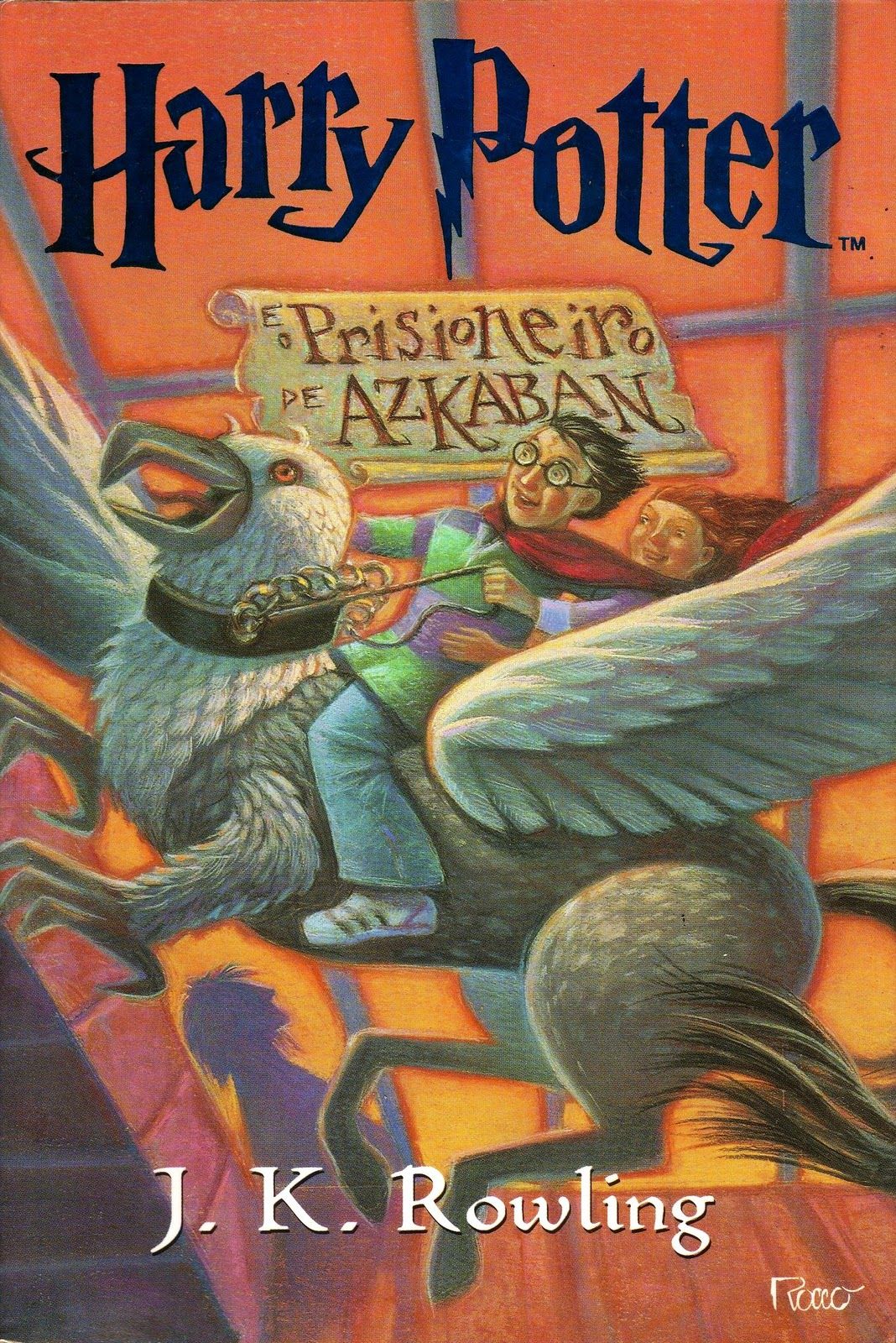
Harry Potter and the Prisoner of Azkaban by J.K. Rowling is the third book in the Harry Potter series, following Harry’s third year at Hogwarts under the shadow of an escaped prisoner from the wizarding prison of Azkaban — a murderer believed to have been Voldemort’s closest ally, and who is said to be coming for Harry. Widely considered the point at which the series fully hits its stride, it is richer, more emotionally complex, and more formally inventive than its predecessors, introducing time travel, werewolves, and the series’ most morally nuanced characters. This complete guide covers Prisoner of Azkaban‘s reading level, recommended age, content considerations, characters, themes, and books similar to Harry Potter and the Prisoner of Azkaban, designed for parents, teachers, and students.
For Parents
Prisoner of Azkaban is darker than the first two books in sustained rather than episodic ways — the Dementors alone make it a meaningfully more intense read — but it is also warmer, funnier, and more emotionally satisfying than either predecessor. Best for independent readers ages 9–13, it is the book where the series becomes something more than a very good children’s adventure.
For Teachers
Well suited to grades 5–7, Prisoner of Azkaban is an excellent text for teaching moral complexity — almost every adult character in this book is more complicated than they first appear — and for introducing time-travel narrative structure. The Dementors as a metaphor for depression has been widely discussed and opens productive conversations about mental health. Pairs naturally with the rest of the Harry Potter series, or with A Wrinkle in Time for a unit on time and consequence in fantasy.
Harry Potter and the Prisoner of Azkaban at a Glance
Find on Amazon →| Author | J.K. Rowling |
| Published | 1999 (UK); 1999 (US) |
| Grade Level | 5–7 (our assessment) |
| Recommended Age | 9–13 |
| Flesch-Kincaid Grade | ~6.6 |
| Word Count | ~107,000 |
| Pages | 435 (Scholastic paperback) |
| Chapters | 22 |
| Genre | Fantasy / adventure |
| Setting | Hogwarts School of Witchcraft and Wizardry; Hogsmeade; 1993–94 |
| Series | Harry Potter, Book 3 |
For official Lexile and AR levels, visit Lexile.com or AR BookFinder. ReadingVine provides independent editorial assessments.
What Reading Level Is Harry Potter and the Prisoner of Azkaban?
Prisoner of Azkaban reads at approximately a 5th–7th grade level by our editorial assessment, with a Flesch-Kincaid grade level of around 6.6 — a step up from Chamber of Secrets (6.2) that reflects a longer, more structurally complex book. The novel’s time-travel plot requires the reader to hold multiple timelines simultaneously, the character motivations are more layered than in the first two books, and Rowling’s prose has visibly matured — scenes are longer, the emotional register is wider, and the comedy is sharper.
The series’ escalating complexity is one of its most deliberate features, and Prisoner of Azkaban is the first book where that escalation becomes genuinely demanding rather than merely enjoyable. Readers who were pushed by Chamber of Secrets may want to wait a year before tackling this one; readers who sailed through the first two books will almost certainly find this one their favorite. For official Lexile and AR scores, visit Lexile.com or AR BookFinder. ReadingVine’s assessments are independent editorial judgments.
What Age Is Harry Potter and the Prisoner of Azkaban Appropriate For?
We recommend Prisoner of Azkaban for independent readers ages 9–13. It is darker than the first two books in ways that are sustained throughout rather than confined to a climactic sequence, and there are several specific elements parents should know about before placing it with a younger or more sensitive reader.
The Dementors — soul-sucking creatures that guard Azkaban prison and patrol Hogwarts in this book — are the novel’s most significant content consideration. They cause anyone nearby to relive their worst memories and can ultimately destroy a person’s soul entirely; their effect on Harry, who relives his parents’ murders, is depicted with real emotional intensity. Rowling has confirmed the Dementors were inspired by her own experience of depression, and the novel’s portrayal of their effects is one of the most honest depictions of that experience in children’s fiction. For children who are themselves managing anxiety or depression, this may be either validating or difficult — parents are best placed to judge. The novel also includes a werewolf transformation scene that is genuinely frightening, and a climax that involves multiple revelations, a near-execution, and significant emotional violence. There is no sexual content and no significant profanity. The darkness throughout is purposeful and well-handled, but it is real.
For readers 9 and up who are emotionally ready for a more demanding book, Prisoner of Azkaban is widely regarded as the series at its best — and the book most likely to turn a Harry Potter reader into a lifelong one. The emotional complexity and the craft of the plotting reward the extra maturity it asks for.
What Is Harry Potter and the Prisoner of Azkaban About?
Before Harry’s third year begins, news reaches the wizarding world that Sirius Black has escaped from Azkaban — the first person ever to do so. Sirius is believed to have been Voldemort’s most devoted follower, and the Ministry of Magic believes he is coming for Harry. Dementors — the prison’s soul-draining guards — are stationed around Hogwarts to protect the students, though their effect on Harry is particularly devastating: each time they come near, he collapses and relives the night his parents were murdered.
The school year brings two new teachers who matter enormously. Professor Lupin, the new Defense Against the Dark Arts teacher, is the best the position has ever had — patient, gifted, and genuinely invested in Harry’s development. Professor Trelawney, the Divination teacher, is a figure of gentle comedy until she isn’t. Hagrid is now a professor too, teaching Care of Magical Creatures, and an early lesson involving a hippogriff named Buckbeak sets a subplot in motion that will intersect with the main story in the final act.
The novel’s structure turns on a series of revelations in its final third that reframe everything the reader understood about the story. Sirius Black is not what he appears to be. Peter Pettigrew — long believed dead — is not dead. Lupin is not entirely what he appears to be. And the night Harry’s parents died involved a betrayal that reaches further back than Harry knew, touching everyone he has come to love. The time-travel sequence in the final chapters asks the reader to retrace everything that happened while holding the new information simultaneously — a structural achievement that is one of the most satisfying in popular fiction for this age group.
More than any previous book, Prisoner of Azkaban is about grief, injustice, and the limits of what justice can actually deliver. Harry gets something in this book that he has never had and then loses it in the same night, and the resolution — while hopeful — does not pretend that the loss didn’t happen.
Harry Potter and the Prisoner of Azkaban Characters
Is Harry Potter and the Prisoner of Azkaban Banned?
Like all books in the Harry Potter series, Prisoner of Azkaban has been challenged in schools and libraries across the United States, primarily on the grounds of witchcraft and occult content. The series appears regularly on the ALA’s most frequently challenged and banned books lists. Individual challenges have occasionally resulted in removal from specific school libraries, though the series remains among the most widely available and widely assigned in the world.
The challenges have not meaningfully affected the series’ reach or reputation. Educators and librarians consistently defend it as age-appropriate fantasy literature with no connection to actual occult practice, and Prisoner of Azkaban in particular — with its themes of injustice, mercy, and the complexity of moral judgment — is widely considered among the series’ most literarily distinguished entries.
Harry Potter and the Prisoner of Azkaban Themes and Lessons
Prisoner of Azkaban is fundamentally a novel about the gap between justice and the law — about what happens when the systems designed to deliver justice fail, and what individuals owe each other in the absence of institutional protection. The Ministry of Magic’s treatment of Sirius Black is the novel’s central injustice: a man imprisoned for twelve years without a trial, condemned on circumstantial evidence, and unable to clear his name even when the truth becomes available because the system has no mechanism to hear it. Harry’s inability to deliver the justice the situation demands is one of the novel’s most honest and most painful conclusions.
The Dementors work on multiple levels. As plot elements, they are the novel’s primary threat and the source of Harry’s most difficult challenge. As metaphor, they are one of children’s fiction’s most accurate portraits of depression — the way it drains joy from every memory, forces sufferers to relive their worst moments, and can feel like a soul-level emptying rather than a mood. The Patronus charm — conjured by focusing on a genuinely happy memory with enough force to hold the Dementor at bay — is correspondingly one of fiction’s most specific and useful metaphors for the kind of active mental work that managing depression requires.
The book is also about fear, and about the specific form of courage that confronting fear requires. Professor Lupin’s Boggart lesson — in which students must face their deepest fear and transform it into something ridiculous — is the novel’s lightest and most instructive sequence, and the lesson it embodies runs through everything Harry does with the Patronus: not the absence of fear but the ability to hold something good alongside it.
Discussion questions for families and classrooms: Why is Sirius Black’s situation unjust even after the truth is revealed — what does the novel say about the limits of the law? What does the Boggart lesson tell us about how to deal with fear? Why do the Dementors affect Harry more severely than other students? What does Dumbledore mean when he tells Hermione that more than one innocent life can be saved? Is Peter Pettigrew a coward, a villain, or both?
How Many Pages and Chapters in Harry Potter and the Prisoner of Azkaban?
The Scholastic paperback edition of Prisoner of Azkaban is 435 pages across 22 chapters — about 100 pages longer than Chamber of Secrets and the first book in the series to feel genuinely substantial in hand. At approximately 107,000 words, it is where the series begins its steady growth toward the later books’ considerable length. Most readers in the target age range finish it in one to two weeks; many report the final third being essentially impossible to put down as the revelations accumulate.
The novel’s time-travel sequence in the final chapters — in which Harry and Hermione relive the night’s events from a different vantage point — is structurally among the most satisfying in children’s fiction. Rowling planted the clues for it throughout the book, and rereading with knowledge of the ending reveals how carefully she prepared what seemed like background detail. It is an excellent text for discussing foreshadowing and narrative structure with students who are ready for that level of analysis.
Books Similar to Harry Potter and the Prisoner of Azkaban
About J.K. Rowling
J.K. Rowling was born in 1965 in Yate, England. She conceived the idea for Harry Potter on a delayed train from Manchester to London in 1990 and spent the next several years writing the first book while working as a teacher and a single mother living on benefits in Edinburgh. Harry Potter and the Philosopher’s Stone was rejected by twelve publishers before Bloomsbury acquired it in 1996. Prisoner of Azkaban, published in 1999, was the first Harry Potter book to debut at number one on bestseller lists on both sides of the Atlantic — by this point the series had become a genuine cultural phenomenon.
Rowling has said in interviews that the Dementors in Prisoner of Azkaban were drawn directly from her own experience of severe depression in her mid-twenties, and that writing them was a way of making sense of something she found difficult to articulate otherwise. This personal investment is visible in the specificity and accuracy of their depiction, and it is one reason the novel resonates so deeply with readers who recognize what the Dementors represent. The Harry Potter series has sold more than 600 million copies worldwide. She lives in Edinburgh.
Harry Potter and the Prisoner of Azkaban: Frequently Asked Questions
What reading level is Harry Potter and the Prisoner of Azkaban?
Prisoner of Azkaban has a Flesch-Kincaid grade level of approximately 6.6. Our editorial assessment places it at grades 5–7 (ages 9–13). It is the first book in the series where the complexity feels genuinely demanding — readers who found Chamber of Secrets easy will find this one satisfying; those who found it difficult may want to wait a year. For official Lexile and AR scores, visit Lexile.com or AR BookFinder.
What grade is Harry Potter and the Prisoner of Azkaban appropriate for?
We recommend grades 5–7 as the primary independent reading range, with strong 4th-grade readers also managing it well. The Dementors and the werewolf transformation make it more intense than the first two books; sensitive readers under 9 may do better waiting.
How many pages are in Harry Potter and the Prisoner of Azkaban?
The Scholastic paperback is 435 pages across 22 chapters. Word count is approximately 107,000 words — noticeably longer than Chamber of Secrets. Most readers in the target age range finish it in one to two weeks, often faster in the final third.
What is Harry Potter and the Prisoner of Azkaban about?
During Harry’s third year at Hogwarts, the escaped prisoner Sirius Black — believed to be Voldemort’s most devoted follower — is hunting him, while soul-draining Dementors patrol the school. As Harry learns to defend himself against the Dementors and investigates Sirius’s true connection to his parents, a series of revelations in the final act reframes everything he understood about the night his parents died.
Why is Prisoner of Azkaban considered the best Harry Potter book?
Many readers and critics consider it the series’ high point for several reasons: the plotting is tighter and more inventive than any previous book, the time-travel structure is executed with precision, the new characters (Lupin, Sirius, Pettigrew) are among the series’ most complex, and it is the last book where the story fits comfortably in a single volume without sprawling. It is also the book where Rowling’s prose most clearly matured from children’s fiction into something with wider literary ambition.
What are Dementors in Harry Potter?
Dementors are the guards of Azkaban prison — hooded, soul-draining creatures that feed on happiness and force their victims to relive their worst memories. They can perform a “Dementor’s Kiss,” removing a person’s soul entirely. Their effect on Harry — who relives his parents’ murders each time they come near — is one of the novel’s most emotionally intense elements. Rowling has confirmed they were inspired by her experience of depression.
Is there time travel in Harry Potter and the Prisoner of Azkaban?
Yes. In the novel’s final act, Harry and Hermione use a Time-Turner — a device that allows them to travel back several hours — to relive the night’s events and change their outcome. The time-travel sequence is one of the most carefully constructed in children’s fiction: Rowling planted clues for it throughout the book that only become visible on a second read, and the mechanics are internally consistent in ways that reward close attention.
Is there a Harry Potter and the Prisoner of Azkaban movie?
Yes. The film was released in 2004, directed by Alfonso Cuarón — a change from Chris Columbus, who directed the first two — and is widely considered the best film in the series. It is rated PG and stars Daniel Radcliffe, Emma Watson, and Rupert Grint, with Gary Oldman as Sirius Black and David Thewlis as Lupin. Cuarón’s interpretation is noticeably darker and more stylized than the first two films and takes more creative liberties with the source material.