
 = Partner Site
Harry Potter and the Goblet of Fire Reading Level: A Complete Guide
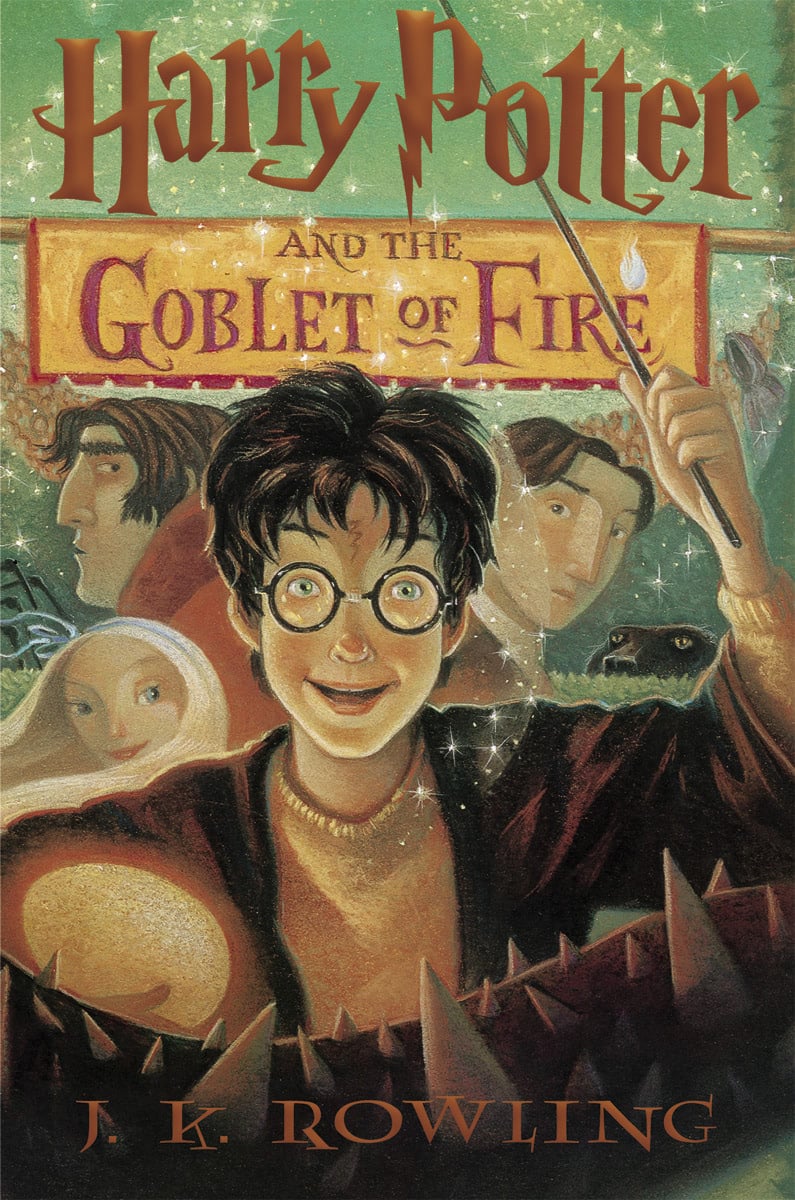
Harry Potter and the Goblet of Fire by J.K. Rowling is the fourth book in the Harry Potter series, following Harry’s fourth year at Hogwarts as he is unexpectedly entered into a dangerous magical tournament — and as Voldemort moves from a shadowy threat to a fully present one for the first time. The longest and darkest book in the series to this point, it is the novel where Harry Potter stops being a children’s series and becomes something else: a young adult story with real stakes, real deaths, and a villain who wins at the end. This complete guide covers Goblet of Fire‘s reading level, recommended age, content considerations, characters, themes, and books similar to Harry Potter and the Goblet of Fire, designed for parents, teachers, and students.
For Parents
Goblet of Fire is a genuine turning point in the series — a character dies, Voldemort returns in full, and the ending offers no reassuring resolution. Best for readers ages 10–14, and a book where parental awareness of the content is more important than for any of the first three.
For Teachers
Well suited to grades 6–8, Goblet of Fire offers strong material for discussing propaganda, institutional failure, and the way fear enables authoritarian control — themes that become central to the series from here on. At 734 pages it is a significant classroom commitment; it works best as independent reading with structured discussion rather than a whole-class text.
Harry Potter and the Goblet of Fire at a Glance
Find on Amazon →| Author | J.K. Rowling |
| Published | 2000 |
| Grade Level | 6–8 (our assessment) |
| Recommended Age | 10–14 |
| Flesch-Kincaid Grade | ~6.8 |
| Word Count | ~190,000 |
| Pages | 734 (Scholastic paperback) |
| Chapters | 37 |
| Genre | Fantasy / young adult |
| Setting | Hogwarts; the Quidditch World Cup; the Triwizard Tournament grounds; 1994–95 |
| Series | Harry Potter, Book 4 |
For official Lexile and AR levels, visit Lexile.com or AR BookFinder. ReadingVine provides independent editorial assessments.
What Reading Level Is Harry Potter and the Goblet of Fire?
Goblet of Fire reads at approximately a 6th–8th grade level by our editorial assessment, with a Flesch-Kincaid grade level of around 6.8 — modest compared to the book’s actual demands. At nearly 190,000 words and 734 pages, it is longer than Prisoner of Azkaban and requires sustained reading stamina that the formula score doesn’t capture. The plot is more complex than any previous book in the series, the cast has expanded significantly, and Rowling is juggling multiple storylines — the Triwizard Tournament, the mystery of who entered Harry’s name, and the gathering threat of Voldemort — across a much larger canvas.
The series’ escalation in complexity and darkness continues sharply here. Readers who found Prisoner of Azkaban at the edge of their comfort level should wait before tackling this one — not only because of the length but because the content, including a character’s death and Voldemort’s full return, represents a meaningful step up from anything in the first three books. Confident readers who devoured Books 1–3 will find it immensely satisfying. For official Lexile and AR scores, visit Lexile.com or AR BookFinder. ReadingVine’s assessments are independent editorial judgments.
What Age Is Harry Potter and the Goblet of Fire Appropriate For?
We recommend Goblet of Fire for readers ages 10–14. This is the book where the series’ content shifts meaningfully from middle-grade to young adult territory, and parents should be aware of the specifics before placing it with a younger or more sensitive reader.
Goblet of Fire contains the series’ first on-page death of a significant character — Cedric Diggory is murdered by Voldemort in the novel’s climax, suddenly and without ceremony, and Harry witnesses it directly. This death is not softened; it is depicted as abrupt, senseless, and devastating, and Harry’s traumatic response to it extends well into the next book. The climax also includes Voldemort’s full physical return in a ritual that involves Harry’s blood being taken forcibly, Peter Pettigrew cutting off his own hand, and the disinterment of a bone from a grave — sequences that are genuinely disturbing and that represent the most graphic content in the series to this point. The book also introduces the Cruciatus Curse (a torture spell used in a classroom demonstration and later on Harry himself), the Imperius Curse (mind control), and the Killing Curse in active use. A character is kept prisoner under horrific conditions for an extended period. There is no sexual content, though there is a first romantic subplot — Harry and Ron’s anxieties about asking girls to the Yule Ball — handled with warmth and comic awkwardness. Parents of readers under 10, or of sensitive readers at any age, should review these elements carefully.
For readers 10 and up who are emotionally ready for a darker and more demanding book, Goblet of Fire is a hugely satisfying entry in the series — ambitious, funny in its first half, and genuinely harrowing in its second. The darkness serves Rowling’s larger argument about what it costs to face evil, and the ending’s refusal of easy comfort is one of the series’ most important and most honest moments.
What Is Harry Potter and the Goblet of Fire About?
The book opens at the Quidditch World Cup — a massive, joyful gathering of wizards from across the world that ends in terror when Death Eaters attack the campsite and the Dark Mark appears in the sky for the first time in thirteen years. It is a warning that something is changing. When Harry returns to Hogwarts, he finds the school hosting the Triwizard Tournament: a legendary competition between three wizarding schools in which one champion from each school competes in three dangerous tasks. The age restriction should mean Harry cannot enter. His name comes out of the Goblet of Fire anyway.
The tournament — a dragon task, an underwater rescue, and a maze — provides the novel’s structural spine and much of its first half’s excitement. But the tournament itself is a trap, constructed and manipulated from the beginning to deliver Harry to Voldemort. The novel’s mystery is who entered Harry’s name, and why — a question whose answer, when it comes, is among the most elaborate and carefully constructed reveals in the series.
The final act descends into the graveyard at Little Hangleton, where Voldemort’s return is completed in a ritual that uses Harry’s blood and the bones of Voldemort’s father. The confrontation that follows — Harry and Voldemort’s wands connecting in a Priori Incantatem — produces a sequence involving the echoes of Voldemort’s previous victims that is one of the most emotionally affecting in the series, and Harry’s escape and return to Hogwarts carrying Cedric’s body is the image that defines the book’s ending. Rowling does not resolve the grief or the fear that follows. The next chapter begins differently than any chapter before it.
Harry Potter and the Goblet of Fire Characters
Is Harry Potter and the Goblet of Fire Banned?
Like all books in the Harry Potter series, Goblet of Fire has been challenged in schools and libraries primarily on the grounds of witchcraft and occult content. The series appears regularly on the ALA’s most frequently challenged and banned books lists, and individual challenges have occasionally resulted in removal from specific school libraries.
Goblet of Fire has also drawn specific objections to its violence — the graveyard sequence in particular — from parents who felt it was inappropriate for younger readers. These objections are more substantive than the witchcraft challenges, and they are consistent with our own recommendation to reserve the book for readers 10 and up. The novel remains widely available and widely read.
Harry Potter and the Goblet of Fire Themes and Lessons
Goblet of Fire is the book where Rowling begins her sustained examination of how institutions fail in the face of threats they would rather not acknowledge. The Ministry of Magic’s response to Voldemort’s return — denial, suppression, political maneuvering — establishes a pattern that runs through the next three books and gives the series much of its political substance. Cornelius Fudge’s refusal to believe what Harry reports from the graveyard is not merely cowardice; it is a portrait of how systems protect themselves from uncomfortable truths at the expense of the people they are supposed to protect.
The novel also introduces the wizarding world’s own forms of discrimination — against giants, werewolves, house-elves, and half-bloods — with more specificity than any previous book. Hermione’s S.P.E.W. campaign is comic, but the underlying reality of house-elf enslavement is not, and Rowling is careful to show the limits of well-meaning activism that doesn’t listen to those it claims to help. The series’ argument about prejudice deepens considerably here.
Cedric’s death is the novel’s most important moral statement. It is meaningless in the way that real violence is meaningless — no grand purpose, no redemptive arc, no warning given in time. Dumbledore’s speech at the end of the year, asking the students to remember Cedric and to resist the temptation to pretend it didn’t happen, is one of the series’ most direct addresses to its readers about what it is asking them to understand.
Discussion questions for families and classrooms: Why does the Ministry of Magic refuse to believe Voldemort has returned — what does their response say about how institutions handle uncomfortable truths? What does Cedric’s death mean for Harry, and how does Dumbledore ask the students to respond to it? How does Hermione’s S.P.E.W. campaign illustrate both the importance and the limits of advocacy? What changes for Harry in the graveyard, and why does the series feel different after this book?
How Many Pages and Chapters in Harry Potter and the Goblet of Fire?
The Scholastic paperback edition of Goblet of Fire is 734 pages across 37 chapters — nearly twice the length of Prisoner of Azkaban and the first book in the series that feels genuinely long. At approximately 190,000 words, it is a substantial commitment, though the tournament structure gives the middle section a propulsive energy that keeps most readers moving. Avid readers in the target age range typically finish it in two to three weeks; readers who are less experienced with long books may take longer and benefit from a reading schedule.
The length creates one notable structural issue: the middle section, covering the tournament’s three tasks, is excellent entertainment but does not advance the central mystery as efficiently as the tighter books in the series. Readers and parents should be aware that the pacing is uneven compared to Prisoner of Azkaban, and that the payoff for the long middle comes entirely in the final act. Those final chapters are worth every page that precedes them.
Books Similar to Harry Potter and the Goblet of Fire
About J.K. Rowling
J.K. Rowling was born in 1965 in Yate, England, and conceived Harry Potter on a delayed train from Manchester to London in 1990. Goblet of Fire, published in 2000, was the first book in the series to be released simultaneously in the UK and the US — a response to the illegal leak of early copies — and sold three million copies in its first weekend, a publishing record at the time. Rowling has said that Goblet of Fire was the most difficult book in the series to write; she identified a fundamental structural flaw late in the drafting process and had to discard and rewrite a significant portion of the manuscript. The solution she found — which involves a character whose function in the plot is revealed only in the final act — is one of the most praised pieces of plotting in the series.
The Harry Potter series has sold more than 600 million copies worldwide and has been translated into more than 85 languages. She lives in Edinburgh.
Harry Potter and the Goblet of Fire: Frequently Asked Questions
What reading level is Harry Potter and the Goblet of Fire?
Goblet of Fire has a Flesch-Kincaid grade level of approximately 6.8. Our editorial assessment places it at grades 6–8 (ages 10–14). The formula score undersells the real challenge — at 734 pages and nearly 190,000 words, the stamina required is as significant as the sentence-level complexity. For official Lexile and AR scores, visit Lexile.com or AR BookFinder.
What grade is Harry Potter and the Goblet of Fire appropriate for?
We recommend grades 6–8 as the primary independent reading range, with confident 5th-grade readers also managing it well. The graveyard sequence and Cedric’s murder make it more intense than any previous book in the series; parents of readers under 10 should review the content note above carefully.
How many pages are in Harry Potter and the Goblet of Fire?
The Scholastic paperback is 734 pages across 37 chapters. Word count is approximately 190,000 words — nearly twice the length of Prisoner of Azkaban. Most avid readers in the target age range finish it in two to three weeks.
What is Harry Potter and the Goblet of Fire about?
Harry’s fourth year at Hogwarts is dominated by the Triwizard Tournament — a dangerous competition between three wizarding schools — after his name is mysteriously entered despite his being too young to compete. As Harry battles dragons, merpeople, and a bewitched maze, a deeper conspiracy is unfolding: the tournament is a trap designed to deliver him to Voldemort, whose full return in the novel’s climax marks the point of no return for the series.
Who dies in Harry Potter and the Goblet of Fire?
Cedric Diggory, the Hogwarts Triwizard champion, is murdered by Voldemort in the graveyard at Little Hangleton. His death is sudden, without warning, and witnessed directly by Harry. It is the first major character death in the series and the moment that definitively marks the shift from children’s adventure to young adult fiction. Peter Pettigrew also kills a minor character — Frank Bryce — in the novel’s opening chapter.
What is the Triwizard Tournament in Harry Potter?
The Triwizard Tournament is a legendary magical competition between the three largest European wizarding schools: Hogwarts, Durmstrang, and Beauxbatons. One champion from each school competes in three dangerous tasks. The tournament was discontinued after several deaths and is reinstated in this book for the first time in centuries. Its reintroduction is, as the novel reveals, orchestrated by Voldemort’s agents as a mechanism for capturing Harry.
Is Goblet of Fire too scary for a 9-year-old?
For most 9-year-olds, yes — we recommend waiting until 10. The graveyard sequence is the most intense content in the series to this point, and Cedric’s murder is depicted with a bluntness that younger readers may find genuinely distressing. Parents who know their child handled the first three books without difficulty are best placed to judge readiness, but the content step-up here is real and worth taking seriously.
Is there a Harry Potter and the Goblet of Fire movie?
Yes. The film was released in 2005, directed by Mike Newell, and is rated PG-13 — the first in the series to receive that rating. It stars Daniel Radcliffe, Emma Watson, and Rupert Grint, with Robert Pattinson as Cedric Diggory and Ralph Fiennes making his first appearance as Voldemort. The PG-13 rating accurately reflects the content escalation; parents who showed their children the first three films without preview should watch this one first before sharing it.