
 = Partner Site
Harry Potter and the Half-Blood Prince Reading Level: A Complete Guide
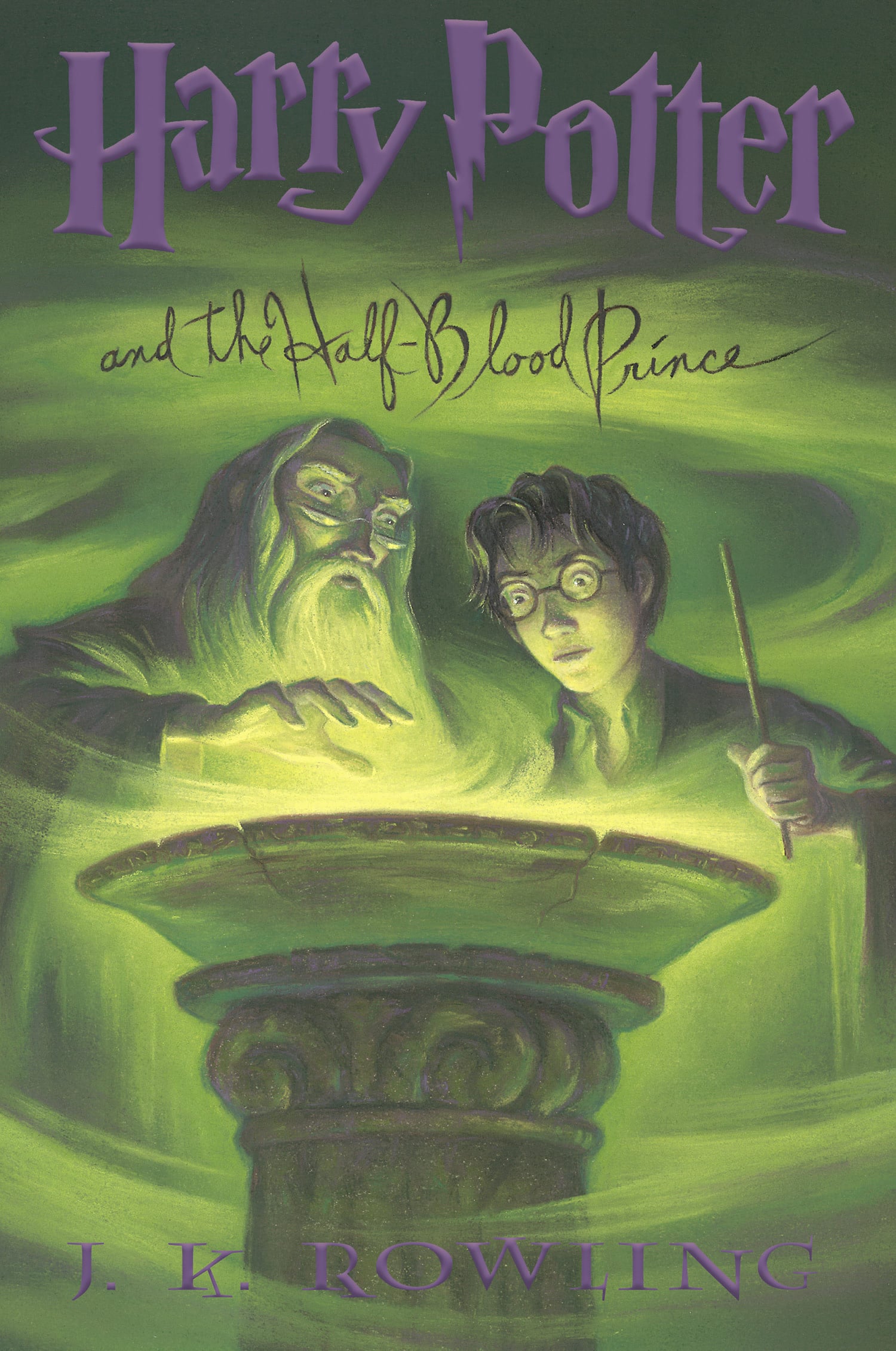
Harry Potter and the Half-Blood Prince by J.K. Rowling is the sixth book in the Harry Potter series, following Harry’s sixth year at Hogwarts as Dumbledore begins taking him into the past through a Pensieve to understand Voldemort’s origins — and as the identity of the mysterious Half-Blood Prince, whose annotated potions textbook Harry has been using all year, becomes one of the series’ most significant reveals. Darker and more focused than Order of the Phoenix, it functions as the series’ penultimate chapter: clearing away mystery, deepening the mythology, and ending with a death that changes everything. This complete guide covers Half-Blood Prince‘s reading level, recommended age, content considerations, characters, themes, and books similar to Harry Potter and the Half-Blood Prince, designed for parents, teachers, and students.
For Parents
More focused and structurally tighter than Order of the Phoenix, and in many ways more emotionally devastating — the ending is the series’ most shocking to this point and leaves the story irrevocably changed. Best for readers who have completed Books 1–5 and are ages 12 and up.
For Teachers
Most effectively taught as part of a complete series unit. For grades 7–9, the Pensieve chapters — in which Dumbledore walks Harry through Voldemort’s past — offer rich material on the origins of evil, the ethics of mercy, and the relationship between childhood and the adults we become. The Horcrux concept is central to understanding Deathly Hallows and worth significant classroom time.
Harry Potter and the Half-Blood Prince at a Glance
Find on Amazon →| Author | J.K. Rowling |
| Published | 2005 |
| Grade Level | 7–9 (our assessment) |
| Recommended Age | 12+ |
| Flesch-Kincaid Grade | ~7.1 |
| Word Count | ~168,000 |
| Pages | 652 (Scholastic paperback) |
| Chapters | 30 |
| Genre | Fantasy / young adult |
| Setting | Hogwarts; the Burrow; various memories; 1996–97 |
| Series | Harry Potter, Book 6 |
For official Lexile and AR levels, visit Lexile.com or AR BookFinder. ReadingVine provides independent editorial assessments.
What Reading Level Is Harry Potter and the Half-Blood Prince?
Half-Blood Prince reads at approximately a 7th–9th grade level by our editorial assessment, with a Flesch-Kincaid grade level of around 7.1 — consistent with Order of the Phoenix and reflecting the maturity the series has reached by its sixth volume. The prose is controlled and efficient, and the book moves considerably faster than its predecessor despite being 652 pages. Rowling strips away the padding that made Order of the Phoenix feel long and replaces it with a novel in which almost every chapter advances either the plot or the reader’s understanding of Voldemort’s history.
The demands here are primarily narrative rather than linguistic. Half-Blood Prince requires the reader to hold six books’ worth of established relationships, backstory, and foreshadowing in mind while processing new information that recontextualizes much of what came before. The Horcrux revelation in particular asks the reader to integrate a new concept that will govern the entire final book. For readers who have followed the series closely, this is enormously satisfying; for readers approaching it cold, it is simply incomprehensible. For official Lexile and AR scores, visit Lexile.com or AR BookFinder. ReadingVine’s assessments are independent editorial judgments.
What Age Is Harry Potter and the Half-Blood Prince Appropriate For?
We recommend Half-Blood Prince for readers ages 12 and up. The content escalation from Order of the Phoenix is different in character rather than strictly greater in degree — this is a more emotionally targeted book than its predecessor, and parents should be aware of the specifics.
The novel’s most significant content consideration is its ending: Dumbledore’s death, at Snape’s hand on the Astronomy Tower, is the series’ most devastating loss to this point and is handled with a directness and finality that will hit readers who have grown up with the series very hard. The scene is not graphic but it is unambiguous, and the chapters that follow — Harry’s grief, the funeral — are among the series’ most emotionally intense. The book also introduces the Inferi — reanimated corpses used by Voldemort — in a cave sequence that is the novel’s most frightening episode, involving Harry and Dumbledore’s violent encounter with them in water. A character is poisoned in a scene that is extended and distressing. The sixth year romantic subplots — Harry and Ginny, Ron and Lavender, Hermione’s reaction — are handled with humor and warmth and are entirely appropriate. There is no sexual content. The novel’s overall tone is darker and more elegiac than its predecessors, but the darkness is purposeful and precisely targeted.
For readers 12 and up who have followed the series, Half-Blood Prince is widely regarded as the most satisfying single volume in the later books — tighter than Order of the Phoenix, richer than Goblet of Fire, and ending with the event that makes everything in Deathly Hallows necessary.
What Is Harry Potter and the Half-Blood Prince About?
The wizarding world is openly at war. Voldemort’s Death Eaters are operating without concealment, attacking Muggles and wizards alike, and the Ministry of Magic — having spent the previous year denying Voldemort’s return — is now scrambling to respond to a threat it refused to prepare for. Harry arrives at Hogwarts for his sixth year to find Dumbledore has made him a specific offer: private lessons, just the two of them, in which Dumbledore will walk Harry through a series of memories — his own and others’ — showing the life of Tom Riddle from orphaned infant to the most feared dark wizard alive.
These Pensieve chapters are the novel’s heart. Rowling traces Voldemort’s history with precision and without sentimentality: a loveless conception, a mother who died, a cold orphanage, a boy who was cruel to other children before he understood what he was. The portrait is not sympathetic — Dumbledore is explicit that Voldemort made choices — but it is complete, and it gives the series’ villain a specificity and coherence he lacked when he was merely a shadow and a name. The Horcrux revelation — the pieces of Voldemort’s soul hidden in objects across the wizarding world, which must all be destroyed before he can be killed — emerges from these lessons as Harry’s mission going forward.
Running alongside Dumbledore’s lessons is the mystery of the Half-Blood Prince — the former owner of Harry’s annotated Potions textbook, whose handwritten spells and shortcuts have made Harry unexpectedly gifted in a class he always struggled with. The identity of the Prince, and what that identity means, is the novel’s most carefully managed reveal. Also running alongside it: Draco Malfoy, given a task by Voldemort that he is visibly struggling with, whose story in this book is one of Rowling’s most sympathetic treatments of a character she has spent five books making it easy to dislike.
The novel ends on the Astronomy Tower. What happens there, and who does it, and why — these are the questions that drove one of the most intense periods of fan speculation in publishing history between 2005 and 2007, and the answers in Deathly Hallows vindicate the book’s most careful readers.
Harry Potter and the Half-Blood Prince Characters
Is Harry Potter and the Half-Blood Prince Banned?
Like all books in the Harry Potter series, Half-Blood Prince has been challenged in schools and libraries on the grounds of witchcraft and occult content, appearing regularly on the ALA’s most frequently challenged books lists. No challenges specific to this volume have generated significant attention beyond the series-wide pattern. It remains widely available and widely assigned.
Harry Potter and the Half-Blood Prince Themes and Lessons
The Pensieve chapters are the novel’s philosophical core, and their argument is among Rowling’s most serious: evil is not made in a moment, and it is not inevitable even from the most damaged beginning, but it is made — through choices, through the consistent refusal to love or be loved, through the decision to treat other people as instruments. Tom Riddle’s childhood was genuinely terrible, and Rowling acknowledges this without using it as an excuse. Dumbledore’s insistence that Voldemort made choices — that the circumstances of his birth and upbringing do not account for everything he became — is the series’ most careful engagement with the question of moral responsibility.
The Horcrux concept is Rowling’s most direct statement of the series’ central argument about love and death. A Horcrux is created by committing murder — by the most violent possible violation of another person’s existence — and it keeps the creator alive by splitting their soul. Voldemort has made himself immortal at the cost of his own wholeness: he cannot die, but he also cannot feel. The contrast with Harry, whose protection comes from his mother’s willingness to die for him, is deliberate and precise. One kind of power survives by destroying; the other survives by giving.
Draco’s story in this book is Rowling’s most nuanced treatment of a character she has consistently made it easy to dislike. He was given a mission that seemed like an honor and turns out to be a death sentence — Voldemort expects him to fail, and the mission is designed as punishment for his father’s failures. Draco’s inability to kill Dumbledore is not weakness; it is the first evidence the series provides that he is something more than his upbringing. What he does with that is one of Deathly Hallows‘s most quietly important threads.
Discussion questions for classrooms and families: Does Voldemort’s childhood explain what he became — or only describe it? What is the significance of Dumbledore’s insistence that Tom Riddle made choices? What does the Horcrux concept say about what Voldemort is willing to sacrifice for immortality — and what does that reveal about his values? Is Draco a coward or something more complicated? What does Dumbledore’s death ask of Harry, and of the reader?
How Many Pages and Chapters in Harry Potter and the Half-Blood Prince?
The Scholastic paperback edition is 652 pages across 30 chapters — significantly shorter than Order of the Phoenix and considerably more tightly paced. At approximately 168,000 words, it moves faster than its length suggests because Rowling has eliminated almost all structural padding. Most readers in the target age range finish it in two to three weeks; many report it as the fastest read in the later series despite its length. The balance between the Pensieve lessons, the school year’s romantic subplots, and the gathering threat of Draco’s mission is handled with more economy than any previous book in the series.
Books Similar to Harry Potter and the Half-Blood Prince
About J.K. Rowling
J.K. Rowling was born in 1965 in Yate, England, and conceived Harry Potter on a delayed train from Manchester to London in 1990. Half-Blood Prince, published in July 2005, sold nine million copies in its first 24 hours in the US and UK combined — a record at the time. Rowling has said in interviews that the Pensieve chapters, tracing Voldemort’s origins, were among the most carefully researched and written passages in the series: she wanted the portrait of how someone becomes capable of the things Voldemort does to be specific enough to be genuinely disturbing rather than simply evil by decree.
The Harry Potter series has sold more than 600 million copies worldwide and has been translated into more than 85 languages. Rowling has been involved in several significant public controversies in the years since the series concluded. She lives in Edinburgh.
Harry Potter and the Half-Blood Prince: Frequently Asked Questions
What reading level is Harry Potter and the Half-Blood Prince?
Half-Blood Prince has a Flesch-Kincaid grade level of approximately 7.1. Our editorial assessment places it at grades 7–9 (ages 12+). It is tighter and faster-moving than Order of the Phoenix despite comparable length, and requires six books of established context to fully follow. For official Lexile and AR scores, visit Lexile.com or AR BookFinder.
What grade is Harry Potter and the Half-Blood Prince appropriate for?
We recommend grades 7–9 and ages 12 and up. The Inferi sequence, Dumbledore’s death, and the emotional weight of the ending make it the most affecting book in the series to this point. Strong 6th-grade readers who handled Order of the Phoenix comfortably can manage it, but parents should review the content note above.
How many pages are in Harry Potter and the Half-Blood Prince?
The Scholastic paperback is 652 pages across 30 chapters. Word count is approximately 168,000 words. Most readers finish it in two to three weeks — many find it the fastest read in the later series despite its length.
What is Harry Potter and the Half-Blood Prince about?
In his sixth year, Harry receives private lessons from Dumbledore exploring Voldemort’s past through a series of memories — revealing his origins, his Horcruxes, and the full nature of what Harry must destroy to defeat him. Meanwhile the identity of the mysterious Half-Blood Prince, whose annotated potions textbook Harry has been using all year, builds toward one of the series’ most significant reveals.
Who is the Half-Blood Prince?
Severus Snape. The annotated potions textbook Harry finds belonged to Snape as a student — half-blood because his father was a Muggle named Tobias Prince, his mother the witch Eileen Prince. The revelation reframes Snape’s relationship to Harry across the entire series and sets up everything the seventh book will reveal about his true allegiances.
What is a Horcrux?
A Horcrux is an object in which a dark wizard has hidden a piece of their soul, created by committing murder. As long as a Horcrux survives, the wizard cannot die. Voldemort has created multiple Horcruxes, splitting his soul to achieve what he considers immortality. The Horcrux hunt — finding and destroying all of them — is Harry’s mission in Deathly Hallows, and understanding what Horcruxes are and why Voldemort made them is the central work of Half-Blood Prince.
Does Dumbledore die in Half-Blood Prince?
Yes. Dumbledore is killed by Snape on the Astronomy Tower at the end of the novel. The circumstances of his death — what Dumbledore asked of Snape, and why, and what Snape’s compliance means — are not explained until Deathly Hallows, in the Pensieve chapter “The Prince’s Tale.” Reading Half-Blood Prince a second time, after Deathly Hallows, reveals the full weight of every scene between them.
Is there a Harry Potter and the Half-Blood Prince movie?
Yes. The film was released in 2009, directed by David Yates, and is rated PG. It stars Daniel Radcliffe, Emma Watson, and Rupert Grint, with Jim Broadbent as Slughorn. The film is generally faithful to the novel’s major plot points but compresses the Pensieve lessons considerably — readers who want the full portrait of Voldemort’s history will need to read the book.