
 = Partner Site
Jacob Have I Loved Reading Level: A Complete Guide
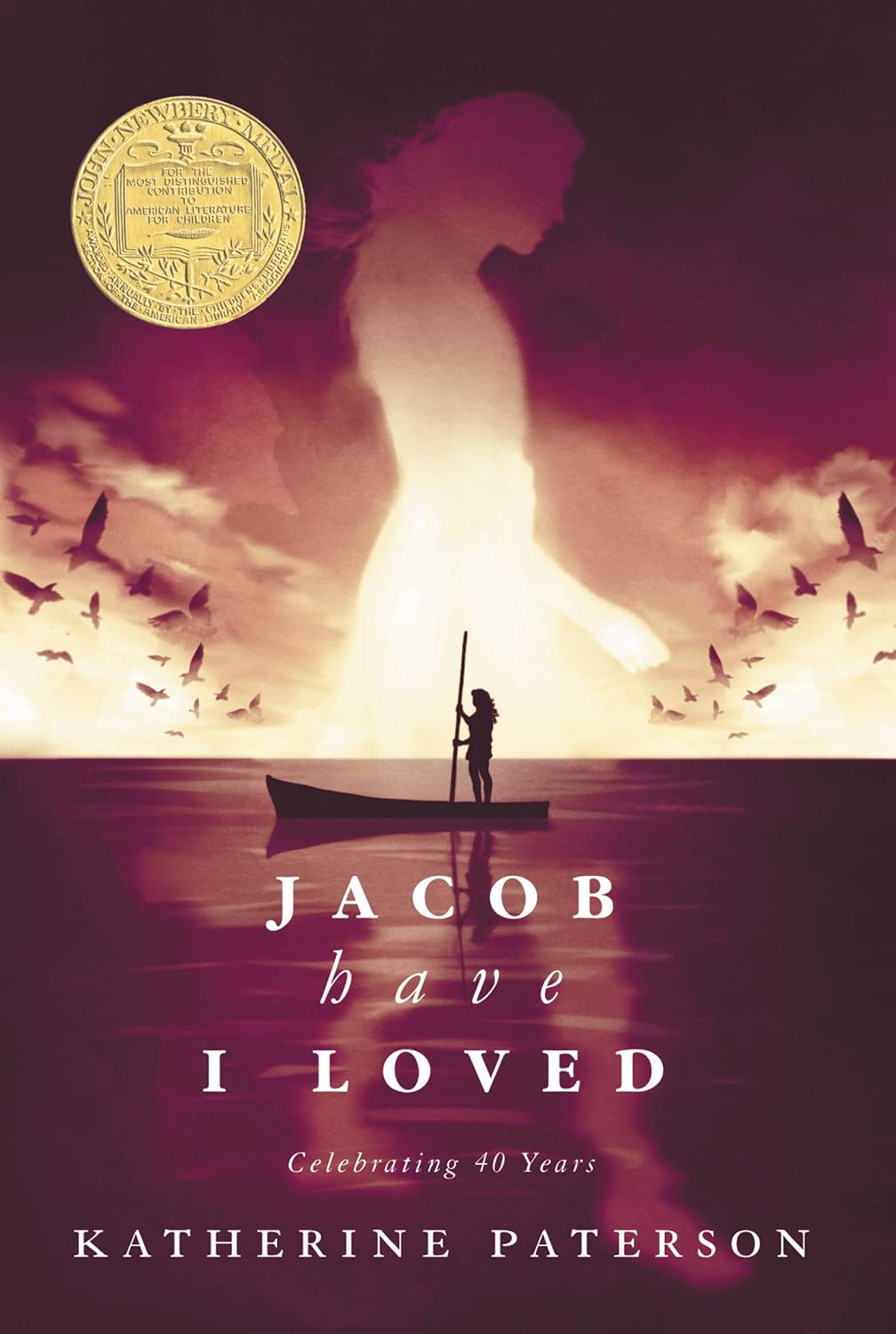
Jacob Have I Loved by Katherine Paterson is a Newbery Medal novel about a girl growing up on a Chesapeake Bay island in the 1940s who believes, with a conviction that shapes her entire adolescence, that her beautiful and talented twin sister has stolen everything that should have been hers — her parents’ attention, her best friend, her future, and the life she was meant to have. First published in 1980, it is one of the most psychologically honest novels in the Newbery canon: a book about sibling rivalry, resentment, and the long, difficult work of becoming a self that isn’t defined by what it lacks. This complete guide covers Jacob Have I Loved‘s reading level, recommended age, content considerations, characters, themes, and books similar to Jacob Have I Loved, designed for parents, teachers, and students.
For Parents
Jacob Have I Loved is a quiet, demanding novel — not demanding in terms of content, which is mild, but in terms of what it asks emotionally of its reader. Sara Louise’s resentment of her sister is so sustained and so honest that the book can feel uncomfortable to read, which is precisely its point. Best for readers ages 10–14, it is especially resonant for any child who has felt overshadowed or unfairly compared.
For Teachers
A Newbery Medal winner commonly assigned in grades 5–8, Jacob Have I Loved is an outstanding text for teaching first-person unreliable narration, the gap between perception and reality, and the way resentment shapes memory. The novel’s Biblical allusion — the title comes from Romans 9:13, “Jacob have I loved, but Esau have I hated” — opens rich discussion of favoritism, election, and what it means to feel unchosen. Pairs naturally with The Great Gilly Hopkins for a Katherine Paterson unit.
Jacob Have I Loved at a Glance
Find on Amazon →| Author | Katherine Paterson |
| Published | 1980 |
| Grade Level | 5–8 (our assessment) |
| Recommended Age | 10–14 |
| Flesch-Kincaid Grade | ~5.9 |
| Word Count | ~60,000 |
| Pages | 216 (HarperCollins paperback) |
| Chapters | 19 |
| Genre | Historical fiction / coming-of-age |
| Setting | Rass Island, Chesapeake Bay, Maryland; 1941–1950s |
| Awards | Newbery Medal (1981) |
For official Lexile and AR levels, visit Lexile.com or AR BookFinder. ReadingVine provides independent editorial assessments.
What Reading Level Is Jacob Have I Loved?
By our editorial assessment, Jacob Have I Loved reads at a grade 5–8 level. The Flesch-Kincaid formula places it at approximately grade 5.9 — accessible to a confident fifth-grade reader at the sentence level, and written in Sara Louise’s plain, direct voice without the complexity of sentence structure that makes some historical fiction laborious. Paterson’s prose is clean and unadorned, which suits both the Chesapeake Bay waterman’s world she is describing and the character doing the narrating.
The challenge, as with The Great Gilly Hopkins, is emotional rather than linguistic. Sara Louise is an unreliable narrator not because she lies but because her resentment distorts everything she sees — she interprets every event through the lens of what Caroline has taken from her, and the reader must do the work of seeing past that lens to understand what is actually happening. This requires a maturity that most readers reach somewhere in the 11–13 range, and it is the reason the novel tends to land harder on a reread in adulthood than it does at first encounter in middle school. Strong 5th-grade readers can access the text; readers 12 and up are more likely to feel its full weight.
For official Lexile and Accelerated Reader scores, visit Lexile.com or AR BookFinder. ReadingVine’s assessments are independent editorial judgments.
What Age Is Jacob Have I Loved Appropriate For?
We recommend Jacob Have I Loved for readers ages 10–14. The novel contains no sexual content beyond a brief, chaste romantic subplot, no profanity, and no significant violence. Its emotional difficulty comes entirely from its subject matter: sustained sibling resentment, a sense of being unloved and passed over, and the long adolescence of a girl who cannot find a way out of her own bitterness.
Parents should be aware that the novel’s portrayal of Sara Louise’s feelings — her rage at Caroline, her sense that her parents favor her sister, her growing conviction that she is unlovable — is rendered with enough honesty and specificity to be genuinely uncomfortable. This is not a book that reassures its reader that the feelings will pass or that everything will be fine. It is a book that takes those feelings seriously and follows them to their conclusion, which is ultimately hopeful but hard-won and arrives late. For children who are themselves navigating feelings of being overlooked or unfairly compared to a sibling, the novel can be both deeply validating and emotionally intense. It is worth discussing rather than simply assigning.
What Is Jacob Have I Loved About?
Sara Louise Bradshaw grows up on Rass, a small, isolated waterman’s island in the Chesapeake Bay, in the 1940s. Her twin sister Caroline is beautiful, musically gifted, and effortlessly beloved — by their parents, by the island, by everyone who encounters her. Sara Louise crabs and tonks for oysters alongside her father, is competent and capable and largely invisible, and has spent her entire life feeling like the wrong twin, the one who survived when everyone would have been just as happy if the balance had tipped the other way. The title she has given herself, in her own mind, is Esau — the one God did not choose.
The novel covers roughly a decade of Sara Louise’s adolescence, from the arrival of a mysterious older man named Hiram Wallace on the island through the end of World War II and into the years after. Wallace becomes first an object of suspicion, then of fascination, then — in Sara Louise’s complicated inner life — of something more, though the novel handles this with restraint. Her friendship with Call, the awkward boy who has always been her closest companion, shifts and eventually breaks under the weight of Caroline’s presence. Her relationship with her deeply religious grandmother, who quotes the novel’s title verse with what Sara Louise reads as particular venom, becomes a lens for her own sense of being divinely unloved.
The novel’s final section moves forward in time to Sara Louise’s adult life — the path she finds out of Rass, the work she does, and the moment that finally breaks open the story she has been telling herself since childhood. Paterson’s resolution is not a reconciliation with Caroline or a revelation that Sara Louise was loved all along. It is quieter and more honest than that: a moment in which Sara Louise, performing her work in the world, understands for the first time that she is enough — not because anyone has told her so, but because she has finally stopped waiting for someone to.
Jacob Have I Loved Characters
Is Jacob Have I Loved Banned?
Jacob Have I Loved has not been widely banned or formally challenged and does not appear on the American Library Association’s lists of frequently challenged books. It is considered a distinguished, age-appropriate work of children’s historical fiction and is widely taught and shelved in schools across the country without documented controversy. Its emotional difficulty has occasionally prompted individual parental concern, but this has not translated into formal challenge activity.
Jacob Have I Loved Themes and Lessons
The novel’s title comes from Romans 9:13 — “As it is written, Jacob have I loved, but Esau have I hated” — and the Biblical parallel is central to Paterson’s argument. Sara Louise has cast herself as Esau: the one passed over, the one God chose against, the one whose birthright was taken by a more favored sibling through no fault of his own. What the novel slowly and carefully demonstrates is that Sara Louise’s Esau story is one she has written herself, from evidence she has selectively gathered over a lifetime, and that the story is destroying her.
This is not the same as saying her feelings are wrong or that her pain is not real. Paterson is scrupulously honest about the ways in which Caroline does receive more attention, more praise, and more of the world’s limited resources of admiration. Sara Louise is not imagining it. What she is doing is interpreting it — concluding that it means she is unloved, that it is Caroline’s fault, and that she has no future worth having until the imbalance is corrected. These conclusions are where the novel parts ways with her, and where it does its most important work.
The resolution arrives not through any change in Sara Louise’s relationship with Caroline but through Sara Louise’s encounter with her own competence in the world — the discovery, in her adult work, that she is genuinely good at something that matters, that this goodness has nothing to do with Caroline, and that the life she has spent envying her sister’s life is actually her own life, available to her now if she will only stop grieving what it isn’t. It is one of the most quietly radical resolutions in the Newbery canon: not love as the answer, but work — the discovery of a self that does not require validation to exist.
Discussion questions for classrooms and families: Is Sara Louise a reliable narrator — how do we know what to believe in her account? Is Caroline actually as favored as Sara Louise believes, or is Sara Louise seeing what she expects to see? What does the novel’s Biblical title add to its meaning? What finally changes for Sara Louise at the end, and why does it come when it does? Do you feel sympathy for Sara Louise, or frustration with her, or both — and does that change as the novel progresses?
How Many Pages and Chapters in Jacob Have I Loved?
The standard HarperCollins paperback edition of Jacob Have I Loved is 216 pages across 19 chapters. At approximately 60,000 words, it is a mid-length novel for its age range — longer than The Great Gilly Hopkins but considerably shorter than Inkheart or The Neverending Story — and most readers in the target range will finish it in a week of steady reading at 30–40 minutes per session.
For classroom use, the novel works well in a three-week unit. The first third establishes the island setting and Sara Louise’s situation with enough detail that it can feel slow to impatient readers; it is worth telling students that the payoff comes later and that the groundwork Paterson is laying is doing real work. The novel’s final chapters, which shift in time and tone, benefit from extended discussion — the ending is compressed and elliptical in a way that rewards sitting with it rather than moving quickly past it.
Books Similar to Jacob Have I Loved
About Katherine Paterson
Katherine Paterson was born in 1932 in Qing Jiang, China, the daughter of American missionary parents, and grew up between China, the American South, and Virginia. She spent four years in Japan as a missionary before turning to fiction writing in her thirties, and the moral seriousness and cultural breadth of those experiences shape every novel she has written.
Paterson is one of the most decorated authors in the history of American children’s literature. She has won the Newbery Medal twice — for Bridge to Terabithia in 1978 and for Jacob Have I Loved in 1981 — and the Newbery Honor for The Great Gilly Hopkins in 1979. She received the Hans Christian Andersen Award in 1998 and served as the National Ambassador for Young People’s Literature from 2010 to 2011. Jacob Have I Loved draws on research she conducted into the waterman culture of the Chesapeake Bay islands, a world that was already disappearing when she wrote about it and is further diminished today. She has said in interviews that the novel is, among other things, about the experience of being a second child who spent her own childhood feeling overlooked — a personal investment that is visible on every page. She lives in Vermont.
Jacob Have I Loved: Frequently Asked Questions
What reading level is Jacob Have I Loved?
Jacob Have I Loved has a Flesch-Kincaid grade level of approximately 5.9. Our editorial assessment places it at grades 5–8 (ages 10–14). The prose is accessible, but Sara Louise’s unreliable narration and the emotional complexity of her situation make it most rewarding for readers 12 and up. For official Lexile and AR scores, visit Lexile.com or AR BookFinder.
What grade is Jacob Have I Loved appropriate for?
We recommend grades 5–8 as the primary range, most commonly assigned in 6th and 7th grade. Strong 5th-grade readers can access the text, but the psychological subtlety of the narration and the novel’s slow emotional payoff are better suited to readers 11 and up.
How many pages are in Jacob Have I Loved?
The standard HarperCollins paperback is 216 pages across 19 chapters. Word count is approximately 60,000 words. Most readers in the target age range will finish it in about a week of steady reading.
What is Jacob Have I Loved about?
Sara Louise Bradshaw grows up on a Chesapeake Bay island in the 1940s convinced that her beautiful, talented twin sister Caroline has taken everything that should have been hers — her parents’ love, her best friend, her future. The novel follows a decade of her adolescence and the long, difficult work of building a self that isn’t defined by what it lacks.
What does the title Jacob Have I Loved mean?
The title comes from Romans 9:13 — “Jacob have I loved, but Esau have I hated.” Sara Louise has cast herself as Esau throughout her childhood: the twin who was passed over, the one God chose against, the one whose birthright was taken. Paterson uses the Biblical allusion to frame Sara Louise’s resentment as something older and deeper than sibling rivalry — a feeling of being fundamentally, cosmically unchosen — and then to question whether that story is true.
Is Jacob Have I Loved a good book for a 12-year-old?
Yes — it is particularly well suited to readers ages 11–13 who have felt overlooked, compared unfavorably to a sibling, or unconvinced of their own worth. The content is mild; the emotional intensity is real. A 12-year-old who is a patient reader and is prepared for a slow-building story with a quiet rather than dramatic resolution will find it one of the most memorable books they’ve read.
Why did Jacob Have I Loved win the Newbery Medal?
Jacob Have I Loved won the Newbery Medal in 1981 for the quality of its writing — specifically for the precision and authenticity of Paterson’s prose, the psychological depth of Sara Louise’s characterization, the meticulously researched portrait of Chesapeake Bay waterman culture, and the moral seriousness with which the novel treats its themes of resentment, identity, and vocation. It was Paterson’s second Newbery Medal, making her one of only a handful of authors to win it twice.
Is Jacob Have I Loved part of a series?
No. Jacob Have I Loved is a standalone novel with a complete, self-contained story. Katherine Paterson’s other novels — including Bridge to Terabithia and The Great Gilly Hopkins — are separate works. There are no sequels.