
 = Partner Site
Journey to the Center of the Earth Reading Level: A Complete Guide
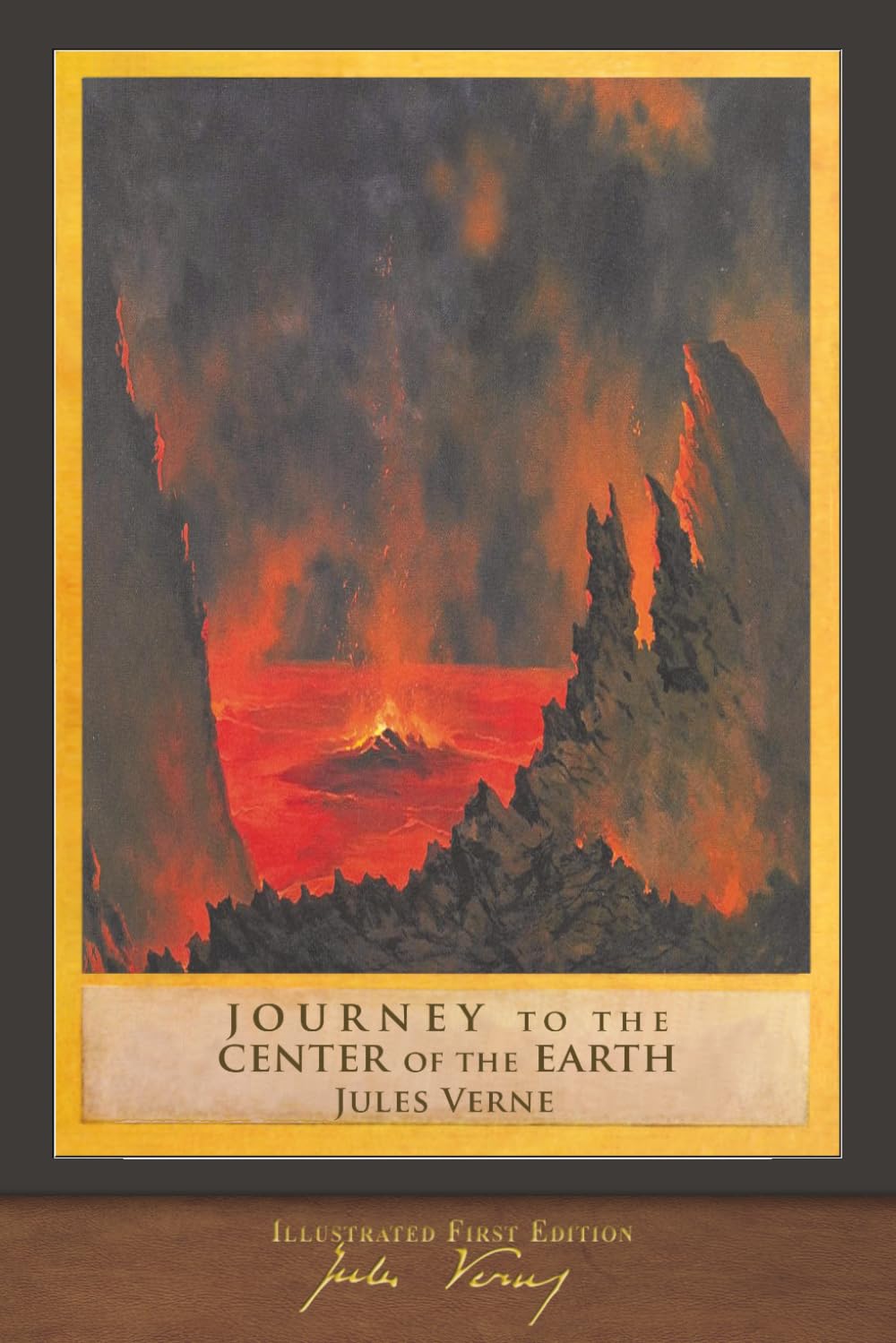
Journey to the Center of the Earth, written by Jules Verne and first published in French in 1864, is a science fiction adventure novel about an eccentric German professor who discovers a cryptic runic message in an ancient Icelandic manuscript — instructions left by a 16th-century explorer named Arne Saknussemm pointing the way to the center of the Earth through a volcanic tube in Iceland. The professor (named Lidenbrock or Hardwigg depending on translation) immediately determines to make the journey. His reluctant nephew Axel (or Harry) narrates the adventure. Their Icelandic guide Hans completes the party. Together they descend through the crater of the dormant volcano Sneffels, travel through underground tunnels and passages for weeks, discover an underground ocean the size of the Mediterranean, encounter prehistoric marine creatures, nearly die multiple times, and are ultimately ejected from the volcano Stromboli in southern Italy. Published the same year as Verne’s breakthrough to international fame, it is one of the foundational texts of science fiction and one of Verne’s most consistently enjoyed novels by readers of all ages. This guide covers reading level, the translation question, content, themes, and similar books. For Verne’s full biography, see our Twenty Thousand Leagues Under the Sea guide.
For Parents
A 19th-century science fiction adventure in which a professor, his reluctant nephew, and an Icelandic guide descend into a volcano and discover an underground world of prehistoric creatures and vast subterranean oceans. Ages 10–14, grades 5–8. Notably more accessible than Twenty Thousand Leagues (Lexile ~620L vs. ~1030L). No content concerns. Multiple translations and abridged editions available; see translation note below.
For Teachers
A grades 5–8 Verne classic that is considerably more accessible than Twenty Thousand Leagues — shorter, lower Lexile, and without the extended marine biology cataloguing. Useful for Earth science and geology units as well as science fiction history. The prehistoric creature encounters and the underground ocean are scientifically inaccurate by modern understanding, which is itself productive classroom discussion material.
Journey to the Center of the Earth at a Glance
Find on Amazon →| Author | Jules Verne (1828–1905) |
| Original Publication | 1864 (French); first English translation 1871 |
| Grade Level | 5–8 (full text); 4–7 (abridged editions) |
| Recommended Age | 10–14 (full text); 8–12 (abridged) |
| Lexile | ~620L (varies by translation/edition) |
| ATOS Level | Not confirmed |
| Word Count | ~72,176 |
| Pages | ~262–320 (varies by edition) |
| Genre | Science fiction / adventure / classic |
| Setting | Iceland and underground; 1860s |
| Status | Public domain; multiple translations and editions |
For official Lexile and AR levels, visit Lexile.com or AR BookFinder. ReadingVine provides independent editorial assessments.
What Reading Level Is Journey to the Center of the Earth?
The Lexile for a standard English edition is approximately 620L — considerably more accessible than Twenty Thousand Leagues Under the Sea (~1030L) and comparable to many contemporary middle-grade novels. The interest level is grades 6–12 per Booksource. Our assessment: grades 5–8 for the full text, ages 10–14; grades 4–7 for well-produced abridged editions, ages 8–12. The prose is more adventure-paced and less encyclopedic than Twenty Thousand Leagues — there is considerably less geological and paleontological cataloguing than Aronnax’s marine biology surveys, and the narrative momentum is stronger throughout. ATOS is not confirmed. For official scores by specific edition, visit Lexile.com or AR BookFinder with the ISBN.
A Note on Translations
The translation question applies here as it does to all Verne in English — see our Twenty Thousand Leagues guide for the full explanation. The character names differ across translations: the professor is “Lidenbrock” in some editions and “Von Hardwigg” or “Hardwigg” in others; the nephew is “Axel” in the more faithful translations and “Harry” in others. This creates confusion when comparing editions or adaptations. Most modern translations and abridged editions use “Lidenbrock” and “Axel,” which are closer to the original French. The early English translations (Malleson 1871) are less accurate than modern translations; as with Twenty Thousand Leagues, a modern translation is preferable for classroom or serious reading. Free editions are available at Project Gutenberg.
What Is Journey to the Center of the Earth About?
Professor Lidenbrock, an eccentric and obsessive Hamburg geologist, discovers a runic manuscript inside an old Icelandic book. The manuscript, decoded, contains directions from 16th-century explorer Arne Saknussemm to the center of the Earth — enter through the crater of Sneffels, a dormant Icelandic volcano, at a specific time when the shadow of a nearby peak marks the right passage. The professor immediately determines to go. His nephew Axel, who narrates the novel, is appalled but cannot refuse. Their Icelandic guide Hans — imperturbable, silent, competent beyond anything the other two can match — completes the party.
The descent begins. The volcano’s passages lead down through geological strata — granite, limestone, schist — with the professor identifying each layer with delight and Axel managing his terror. Water becomes critical and nearly absent before an underground river saves them. They emerge onto the shore of an underground ocean — the Lidenbrock Sea — vast, lit by electrical phenomena in the atmosphere above, populated by enormous prehistoric marine creatures who fight each other on the water’s surface. A raft crosses the sea. A storm. A message from Saknussemm pointing the way forward. A blocked passage they blast open. An underwater current that carries them at tremendous speed to the surface — erupted from Mount Stromboli on an island off southern Italy.
Verne’s Science — What He Got Right and Wrong
Verne wrote in 1864, and his scientific understanding of the Earth’s interior was limited by the knowledge of his time — which is part of what makes the novel productive as a science education companion. The existence of an underground ocean, of breathable air deep within the Earth, and of living prehistoric creatures preserved underground is not consistent with what geoscience now understands about the planet’s interior. The temperature increases Axel worries about (heat increasing with depth) were a real scientific debate in Verne’s time; modern understanding confirms that the Earth’s interior is far too hot and pressurized for the journey Verne describes.
What Verne did accurately capture was the stratigraphic layering of rock — the professor’s identification of geological strata as they descend is broadly consistent with 19th-century geology — and the general principle that the fossil record is layered chronologically, with older species deeper. The prehistoric creatures the party encounters belong to their correct geological periods. For classroom use, the novel provides a natural opportunity to discuss what Verne knew, what he imagined, and what we now understand about the Earth’s interior.
Journey to the Center of the Earth Themes and Lessons
The novel’s most durable comedy is the contrast between the professor — absolutely fearless, absorbed in scientific observation regardless of mortal danger — and Axel, who is frightened and reasonable in ways the professor considers tiresome. Verne uses Axel’s fear as the reader’s emotional anchor: we feel what Axel feels, and through him we feel the genuine wonder of what they find, because Axel is capable of wonder in a way that the professor — who expected to find all of this — is not. Hans, the Icelandic guide, says almost nothing across the entire novel and solves most of the practical problems that would otherwise kill them all. He is the novel’s most interesting peripheral character.
Discussion questions: Is Professor Lidenbrock right to drag Axel on this journey? What is the difference between scientific curiosity and recklessness? What does Hans contribute to the expedition that the professor and Axel can’t? What does the novel get right about the Earth’s interior — and what does modern science say instead?
Film Adaptations
Two major film adaptations are widely known. The 1959 film, directed by Henry Levin and starring James Mason as Professor Lindenbrook (note the different spelling) and Pat Boone as his student Alec McEwen, follows the general adventure structure of the novel while making significant changes — most notably adding a female character and a villainous rival. It is rated G and runs approximately 132 minutes. The 2008 film starring Brendan Fraser uses the novel as a framing device rather than an adaptation — the characters in the film are reading the Verne novel and find that it is a guidebook to actual underground passages. The 2008 film was one of the first major releases in modern 3D and helped establish the current era of 3D filmmaking. Both films are rated PG.
Books Similar to Journey to the Center of the Earth
About Jules Verne
See our Twenty Thousand Leagues Under the Sea guide for a full biography of Jules Verne. Journey to the Center of the Earth was published in 1864, Verne’s third novel. He described it as a story in which he could give free rein to his enthusiasm for geology and paleontology — sciences he had studied carefully before writing.
Journey to the Center of the Earth: Frequently Asked Questions
What reading level is Journey to the Center of the Earth?
Approximately Lexile 620L for a standard English edition; ATOS not confirmed. Our assessment: grades 5–8 for the full text, ages 10–14; grades 4–7 for abridged editions. Considerably more accessible than Twenty Thousand Leagues (~1030L) — shorter, faster-paced, and without the extended scientific cataloguing of that novel. For official scores by edition, visit Lexile.com or AR BookFinder with the ISBN.
What is Journey to the Center of the Earth about?
Professor Lidenbrock discovers instructions from a 16th-century explorer pointing the way to the Earth’s center through an Icelandic volcano. With his nephew Axel and their guide Hans, he descends through volcanic passages, discovers a vast underground ocean with prehistoric creatures, and eventually erupts from Mount Stromboli in southern Italy.
Why do some editions use different character names?
Different English translations use different names for the same characters. The professor is “Lidenbrock” in more faithful translations and “Hardwigg” or “Von Hardwigg” in older ones; the nephew is “Axel” in most modern translations and “Harry” in others. Modern translations using “Lidenbrock” and “Axel” are generally considered more accurate to Verne’s original French. When searching reading level databases, confirm you have the right edition by checking the translator’s name.
Is the science in Journey to the Center of the Earth accurate?
No — a breathable underground ocean inhabited by prehistoric creatures is not consistent with what geoscience understands about the Earth’s interior, which is far too hot and pressurized for the journey Verne describes. The stratigraphic layering of rock and the chronological organization of the fossil record are broadly accurate; the underground world itself is scientifically imaginative rather than scientifically plausible. This makes the novel a productive companion to Earth science discussions about what we now understand vs. what Verne imagined.
Is Journey to the Center of the Earth in the public domain?
Yes — the original text is in the public domain and freely available at Project Gutenberg and other sources. Specific modern editions may be under copyright; the underlying Verne text is not.