
 = Partner Site
The City of Ember Reading Level: A Complete Guide
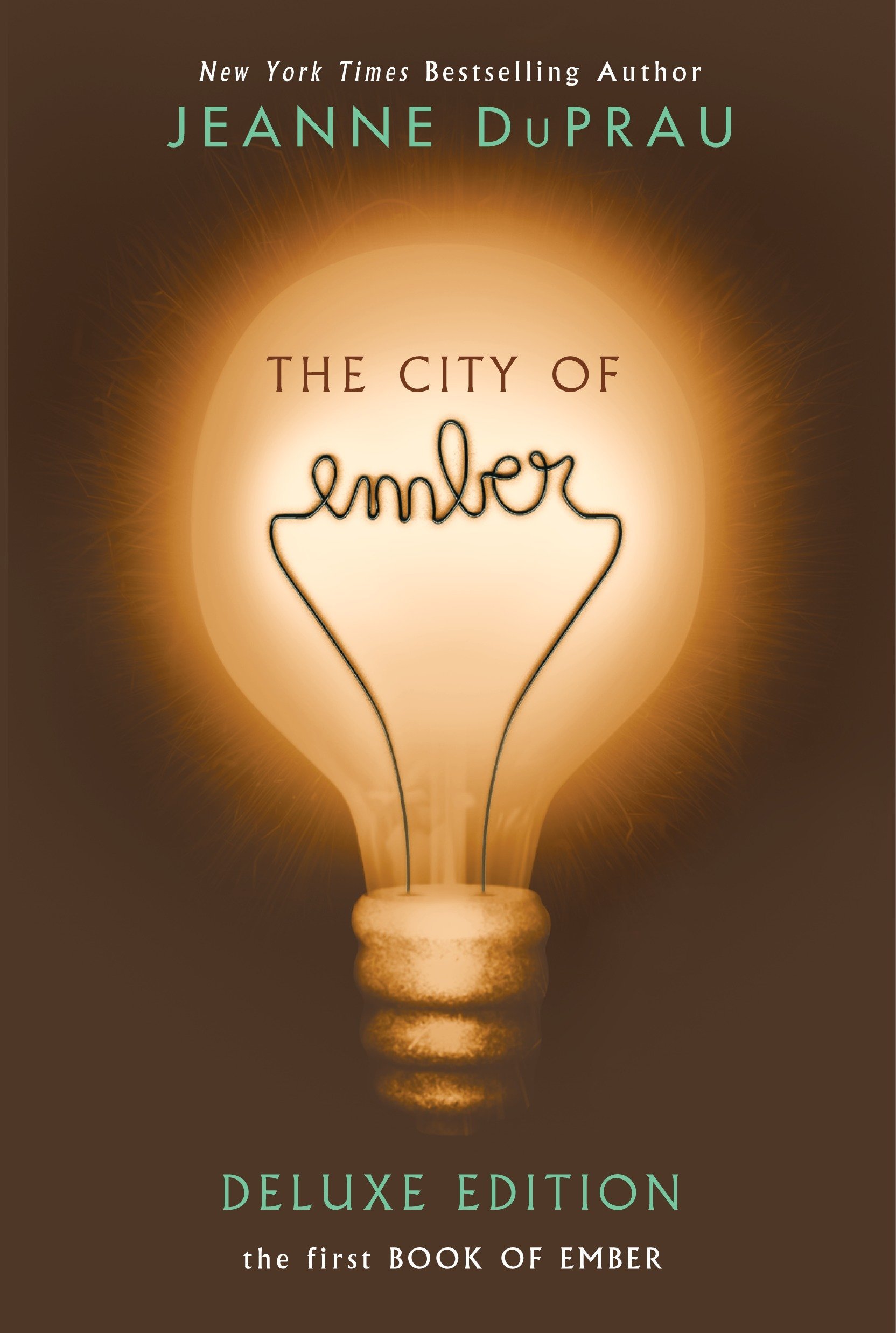
This complete guide to The City of Ember by Jeanne DuPrau covers everything parents, teachers, and students need to know — from reading level and age appropriateness to characters, themes, and similar books. Published in 2003 as DuPrau’s debut novel — written when she was nearly sixty, after decades of nonfiction writing — The City of Ember is the first book in the Books of Ember series and one of the most original world-building premises in middle-grade science fiction. The city of Ember is an underground city built as humanity’s last refuge: no sun, no sky, no knowledge of the world above. For 241 years, its citizens have lived by the light of enormous electric lamps powered by a failing generator, eating from storerooms that are nearly empty, and trusting in the vague reassurances of a corrupt mayor. When twelve-year-old Lina Mayfleet finds the remnants of an ancient document in a chewed-up box — a message from the city’s original Builders — she and her friend Doon Harrow begin a race to decode its instructions before the lights go out forever. The novel has sold more than four million copies and has been a classroom staple for over two decades.
For Parents
The City of Ember is one of the most content-friendly titles in middle-grade science fiction — genuinely appropriate for the full range of ages it targets. There is no profanity, no sexual content, and no graphic violence. The most significant content considerations are: Lina’s grandmother has dementia-like symptoms and dies peacefully offscreen during the story; the city’s mayor is corrupt and uses his authority to hoard food while citizens go hungry; and the climactic escape involves navigating dangerous underground tunnels and a rushing river in the dark, which some younger or more anxious readers may find intense. The overwhelming atmosphere of the book is one of wonder and discovery rather than dread, and the two protagonists are resourceful, capable, and morally admirable. For most families of readers aged 8 and up, there is very little to navigate here content-wise — this is a genuinely accessible adventure.
For Teachers
The City of Ember is a classroom workhorse for upper elementary and early middle school grades — engaging enough to hold reluctant readers, rich enough in theme and world-building for substantive discussion, and clean enough in content to be universally assigned without parent concern. It works exceptionally well as an introduction to science fiction and dystopian fiction before students are ready for the moral complexity of The Giver or the intensity of The Hunger Games. The novel’s embedded puzzle — the torn and chewed message from the Builders that Lina and Doon piece together — gives it a unique interactive quality in the classroom: students naturally want to decode the message alongside the characters. It connects strongly to science units on energy, sustainability, and resource management, and to social studies units on government, community responsibility, and what happens when institutions fail. Common classroom grades are 4–6.
The City of Ember at a Glance
Find on Amazon →| Author | Jeanne DuPrau |
| Published | 2003 |
| Grade Level | 4–6 (our assessment) |
| Recommended Age | 8–12 |
| Flesch-Kincaid Grade | 5.0 |
| Word Count | ~60,000 |
| Pages | 270 (hardcover) / 288 (paperback) |
| Chapters | Prologue + 20 chapters |
| Genre | Middle-grade science fiction / Dystopian adventure |
| Setting | The underground city of Ember (unnamed future) |
| Awards | ALA Notable Children’s Book; New York Public Library 100 Titles for Reading and Sharing; Kirkus Reviews Editors’ Choice (starred); Mark Twain Award (2006); William Allen White Children’s Book Award; nominated to 28 state award lists |
For official Lexile and AR levels, visit Lexile.com or AR BookFinder. ReadingVine provides independent editorial assessments.
What Reading Level Is The City of Ember?
The City of Ember has a Lexile score of 680L and an ATOS level of 5.0, worth 9 AR points. The confirmed word count is around 60,000. Our Flesch-Kincaid calculation aligns with the ATOS at approximately grade 5.0. There is an interesting split between these two metrics worth understanding: a Lexile of 680L falls in the typical range for 3rd–4th grade readers, while an ATOS of 5.0 aligns more with 5th grade. The discrepancy is common and reflects what the two tools measure. Lexile is primarily a sentence-length and vocabulary measure — DuPrau’s prose is written in short, clear sentences with accessible vocabulary. ATOS factors in additional complexity signals and tends to produce higher scores for this book. Both are legitimate measures of different aspects of reading difficulty.
Our editorial assessment of grades 4–6 reflects the reading experience as a whole. The prose is smooth and accessible — DuPrau spent decades as a technical writer before turning to fiction, and her writing has the clean efficiency of someone accustomed to explaining complex ideas simply. Strong readers in 3rd grade will have no trouble with the text. But the novel’s world — a post-apocalyptic underground city with decaying infrastructure, a corrupt government, and a ticking clock — is thematically richer than the Lexile suggests, and the book is most widely read and discussed in grades 4–6. For readers on the younger end, the story’s core premise (everything familiar is running out and nobody in charge is doing anything about it) may benefit from a brief parent or teacher context-setting conversation. For official Lexile and AR scores, visit Lexile.com or AR BookFinder.
What Age Is The City of Ember Appropriate For?
We recommend The City of Ember for readers ages 8–12. Common Sense Media rates it appropriate for ages 9 and up. The publisher lists the interest level as grades 5–9, but in practice the book is widely and successfully read starting in grade 4. It is one of the most content-accessible science fiction novels in the middle-grade canon — there is genuinely very little for parents to navigate here.
Content concerns are minimal. Lina’s grandmother shows signs of cognitive decline throughout the novel — confusion, forgetfulness, wandering — and dies peacefully offscreen (found having passed in her sleep). This is handled with gentleness rather than graphic detail and is one of the novel’s few emotionally heavy moments. The city’s mayor is revealed to be hoarding food and supplies for himself while telling citizens that all is well — a portrait of institutional corruption that is more disillusioning than frightening, and which is handled as a teachable element rather than a traumatic revelation. The climactic escape through Ember’s underground Pipeworks and down a river in complete darkness is tense and physically dangerous, with the children navigating rushing water and rough terrain by touch — some younger or more anxious readers may find this sequence stressful. There is no profanity, no sexual content, no romantic content, and no graphic violence of any kind.
What makes The City of Ember stand out in the dystopian genre is precisely its content restraint: DuPrau tells a genuine story about societal collapse and institutional failure without resorting to the graphic darkness that characterizes many adult treatments of the same themes. The threat in the novel is existential — the lights are going out and no one will acknowledge it — but the emotional register is wonder and determination more than horror. Younger readers who find The Giver too heavy or The Hunger Games too intense will often find that The City of Ember hits the right register for their stage of readiness.
What Is The City of Ember About?
The novel opens in the distant past with a brief prologue explaining how the Builders created the underground city of Ember to preserve a small remnant of humanity through an unspecified catastrophe. They placed detailed instructions for leaving the city — meant to be opened after about 200 years — inside a locked metal box set to open automatically at the proper time. The box was entrusted to the city’s mayor and intended to be passed down from one mayor to the next, ensuring the instructions would be available when Ember’s supplies began to fail. But at some point, a mayor, hoping the box might contain something valuable, tried to open it early. When he failed, he hid it away and never revealed its existence before his death. Forgotten and buried among ordinary belongings, the box remained lost for generations until its timer finally unlocked it, far too late to serve its original purpose.
By the time the story’s present begins, it is year 241 of Ember’s existence — roughly forty years past its intended expiration date. The city is fraying: the generator that powers the lights flickers and fails, plunging the city into terrifying blackouts that grow longer and more frequent. The storerooms that have supplied Ember’s citizens with food, clothing, and everything else they need are running down to empty shelves. Crops in the greenhouses are blighting. A coughing disease passes through the population. And Mayor Cole, the current mayor, stands up at public gatherings to assure everyone that the Builders intended Ember to last forever, that there is no reason for concern, and that any citizen who spreads alarm will face consequences.
Twelve-year-olds Lina Mayfleet and Doon Harrow receive their adult job assignments on the same day and trade assignments with each other: Lina becomes a Messenger, running messages through Ember’s dark streets, and Doon goes to work in the Pipeworks, the labyrinth of tunnels and pipes far below the city where the generator lives. Lina has already found the instructions box — it had been in her family’s apartment since one of her ancestors was the mayor — and her baby sister Poppy has thoroughly chewed its contents. All that survives are fragments of seven steps, their words partial or missing. Lina and Doon, separately convinced that Ember is dying, begin piecing the message together. What they find will require more courage than either of them has ever needed — and will pit them against the corrupt mayor who has his own reasons for making sure no one finds out what the Builders left behind.
The City of Ember Characters
Is The City of Ember Banned?
The City of Ember has no documented history of formal challenges or library removals, and it does not appear on the ALA’s frequently challenged books lists. Its content is exceptionally clean for the dystopian genre — no profanity, no sexual content, no graphic violence — and its portrait of government corruption, while pointed, is both age-appropriate and widely considered an asset rather than a liability in classroom discussion. With over four million copies sold and widespread use in schools across the country, it is one of the most securely established titles in middle-grade science fiction, and has generated no organized opposition in its more than twenty years in print.
The City of Ember Themes and Lessons
The most persistent theme of The City of Ember is the relationship between knowledge and survival. Everything that is going wrong in Ember — the failing generator, the depleted storerooms, the spreading despair — is made worse by the fact that the people in charge are actively suppressing information about how bad things are. Mayor Cole knows the storerooms are being depleted. He knows the generator is failing. He tells no one, because acknowledging the problem would require confronting his own hoarding and admitting that Ember’s future is in genuine danger. What saves Ember is not heroic combat or supernatural intervention but two children who pay attention, follow evidence, and refuse to believe the official reassurances. DuPrau is making a consistent and readable argument that curiosity and critical thinking are survival skills, not just intellectual virtues.
The resource depletion storyline also carries a quiet environmental allegory that has become more resonant since the book’s publication in 2003. Ember was designed to last 200 years; it has lasted 241, past its expiration date, still drawing down a supply of resources that was never infinite. The Builders’ instructions were meant to lead the citizens out before those resources ran out — a transition planned for but never executed. Readers who notice this parallel to Earth’s own resource challenges will find it productive. Discussion questions worth exploring: What responsibility do people in authority have to tell their communities difficult truths? What happens to a community when leaders prioritize their own comfort over the common good? What does Ember’s story suggest about the relationship between planning for the future and trusting that future generations will carry those plans out?
How Many Pages and Chapters in The City of Ember?
The City of Ember is 270 pages in the hardcover and 288 pages in the standard paperback, with a brief prologue (“The Instructions”) and 20 numbered chapters. At ~60,000 words, it sits at approximately the same length as Flush by Carl Hiaasen and is comfortable territory for middle-grade readers who have graduated from shorter chapter books. Chapters are moderate length — averaging around 13–14 pages — and alternate between Lina’s and Doon’s perspectives, a structure that DuPrau uses with care: readers are never kept in either viewpoint long enough to lose momentum, and the chapter breaks tend to fall at moments of low-level narrative tension that make it genuinely hard to stop reading.
At a comfortable reading pace for readers ages 8–12, expect roughly 4–6 hours of total reading time. Many readers finish it over a weekend. Classroom use typically runs two to three weeks with discussion activities. The novel pairs especially well with science curriculum on electricity and power generation, ecosystems and food systems, and sustainability — all of which DuPrau handles with enough factual grounding to serve as accessible introductions to real concepts. The embedded puzzle of the torn instructions, with its missing words and fragmentary clues, also makes a natural classroom activity: teachers often have students attempt their own decoding before revealing how Lina and Doon solve it.
Books Similar to The City of Ember
About Jeanne DuPrau
Jeanne DuPrau was born in June 1944 in San Francisco, California, and grew up with a love of reading and the particular fascination with mysterious doorways — wardrobes leading to Narnia, rabbit holes leading to Wonderland — that she has said characterized her earliest writing attempts. She earned a Bachelor of Arts in English Literature from Scripps College in Claremont, California, in 1966 and received a secondary teaching credential from the University of California, Berkeley, in 1967. What followed was several decades of varied work: she taught high school English, worked as an editor for educational publishing companies, and spent years as a technical writer, including time working at Apple. Before turning to fiction, DuPrau wrote nonfiction books on subjects ranging from adoption to cloning to cellular biology to the American colonies. Her memoir, The Earth House (1993), recounts her experience with Zen Buddhism and the building of a rammed-earth house near a Zen center with her partner, who died of cancer before the house was finished. The City of Ember, published in 2003, was her first novel — written when she was approaching sixty, after a full career in other forms of writing. It received starred reviews from Kirkus Reviews, Publishers Weekly, and Voice of Youth Advocates, was named an ALA Notable Children’s Book, was adapted for film in 2008, and has sold more than four million copies. DuPrau followed it with three sequels completing the Books of Ember series: The People of Sparks (2004), The Prophet of Yonwood (2006), and The Diamond of Darkhold (2008). She returned to middle-grade science fiction with Project F in 2023. She lives in Menlo Park, California, where she has a garden and a small dog, and describes writing as both the hardest and most satisfying thing she knows how to do.
The City of Ember: Frequently Asked Questions
What reading level is The City of Ember?
The City of Ember has a Lexile score of 680L and an ATOS level of 5.0, worth 9 AR points. The confirmed word count is around 60,000. Our editorial assessment is grades 4–6. There is a notable split between the two metrics: Lexile 680L corresponds to roughly 3rd–4th grade reading ability, reflecting DuPrau’s clean, direct prose; ATOS 5.0 aligns with 5th grade and reflects the additional complexity the tool measures. Both are accurate measures of different aspects of the text. In practice, the book reads comfortably to strong 3rd graders and is most commonly assigned in grades 4–6.
What age is The City of Ember appropriate for?
We recommend ages 8–12. Common Sense Media rates it 9 and up. This is one of the most content-friendly titles in middle-grade science fiction: no profanity, no sexual content, no graphic violence. Main content considerations are a grandmother who shows cognitive decline and dies peacefully offscreen, a corrupt mayor who hoards supplies while lying to citizens, and a tense escape sequence through underground tunnels and rushing water in complete darkness. Most readers 8 and up will handle all of this comfortably.
Is there a City of Ember movie?
Yes. A 2008 film adaptation was produced by Walden Media and Playtone, directed by Gil Kenan, and filmed in Belfast, Northern Ireland. It starred Saoirse Ronan as Lina, Harry Treadaway as Doon, Bill Murray as Mayor Cole, and Tim Robbins as Doon’s father. The film is rated PG. Critical reception was mixed — Common Sense Media and many book fans noted that the film’s fast pace sacrificed some of the novel’s storytelling logic and character depth — but it is frequently used alongside classroom readings and introduces the story’s world effectively on screen. The visual design of Ember, with its Dickensian grimy streets and the vast darkness pressing in from all sides, is considered one of the film’s genuine strengths.
How many books are in the City of Ember series?
The Books of Ember series runs four books. The City of Ember (2003) is the first. The People of Sparks (2004) picks up immediately after Ember’s citizens emerge to the surface world and must build a new life in an above-ground community called Sparks — with predictable friction between the newcomers and the established residents. The Prophet of Yonwood (2006) is a prequel set before the Disaster that necessitated Ember’s construction. The Diamond of Darkhold (2008) returns to Lina and Doon and resolves the series. All four books are comparable in length and reading level to the first. Readers who want more of Ember’s world have plenty of material to explore.
What is the “Disaster” in The City of Ember?
In The City of Ember itself, the nature of the catastrophe that caused the Builders to create Ember is deliberately left vague. The novel’s prologue describes the Builders constructing a refuge for humanity in the face of some unspecified threat, but it does not spell out what that threat was. This ambiguity is intentional — DuPrau was more interested in the story of what happens to a community that has been cut off from its history than in the mechanics of an apocalyptic event. The prequel novel, The Prophet of Yonwood, explores the era just before the Disaster and provides more context, but the first book maintains the mystery as part of its thematic design: the Emberites don’t know their own history, and neither, for most of the novel, does the reader.
Why were Lina and Doon the ones to find the instructions?
The instructions box had been in Lina’s family’s apartment for generations — her great-great-grandfather was the seventh mayor, the one who stole the box and failed to open it before he died. It passed down through the family as an old, locked box that no one thought to examine until its timer finally opened the lock on its own. Lina found it when her grandmother dislodged it from the back of a closet, and before Lina could read its contents carefully, her baby sister Poppy chewed much of the document to pieces. The discovery wasn’t a result of special wisdom or destiny — it was the ordinary accident of a box being in the wrong place for the wrong reasons, found by the right person at what turned out to be almost too late a moment. That accidental quality is part of what makes the novel feel grounded rather than chosen-one heroic.
What does “Ember” mean in the book’s title?
The name “Ember” carries its most obvious resonance in the novel’s central tension: an ember is a glowing piece of fire at the edge of going out — still lit, still producing heat and light, but diminishing. The city of Ember, with its flickering lamps and failing generator, is exactly that: a civilization at the edge of darkness, its light almost exhausted. The name also works as a compressed version of the word “remember” — a city that has almost entirely forgotten its own origins and purpose. Whether DuPrau intended both readings, the double meaning is there, and students who notice it on their own tend to be pleased with themselves for finding it.
Is The City of Ember science fiction or fantasy?
The City of Ember is science fiction — specifically post-apocalyptic science fiction. Everything in the novel, from the underground city’s electric infrastructure to the storerooms of preserved food to the generator in the Pipeworks, is grounded in plausible technology rather than magic. The novel asks “what if” questions about human society, resource depletion, and institutional failure — the classic concerns of science fiction — rather than introducing supernatural or magical elements. It is sometimes shelved or classified as fantasy due to its setting feeling otherworldly, but DuPrau constructed Ember on a foundation of scientific and social plausibility that puts it firmly in the SF tradition. This distinction is worth making in a classroom context, as it opens a useful discussion about what science fiction is and how it uses imagined futures to ask questions about the present.