
 = Partner Site
Lunch Money Reading Level: A Complete Guide
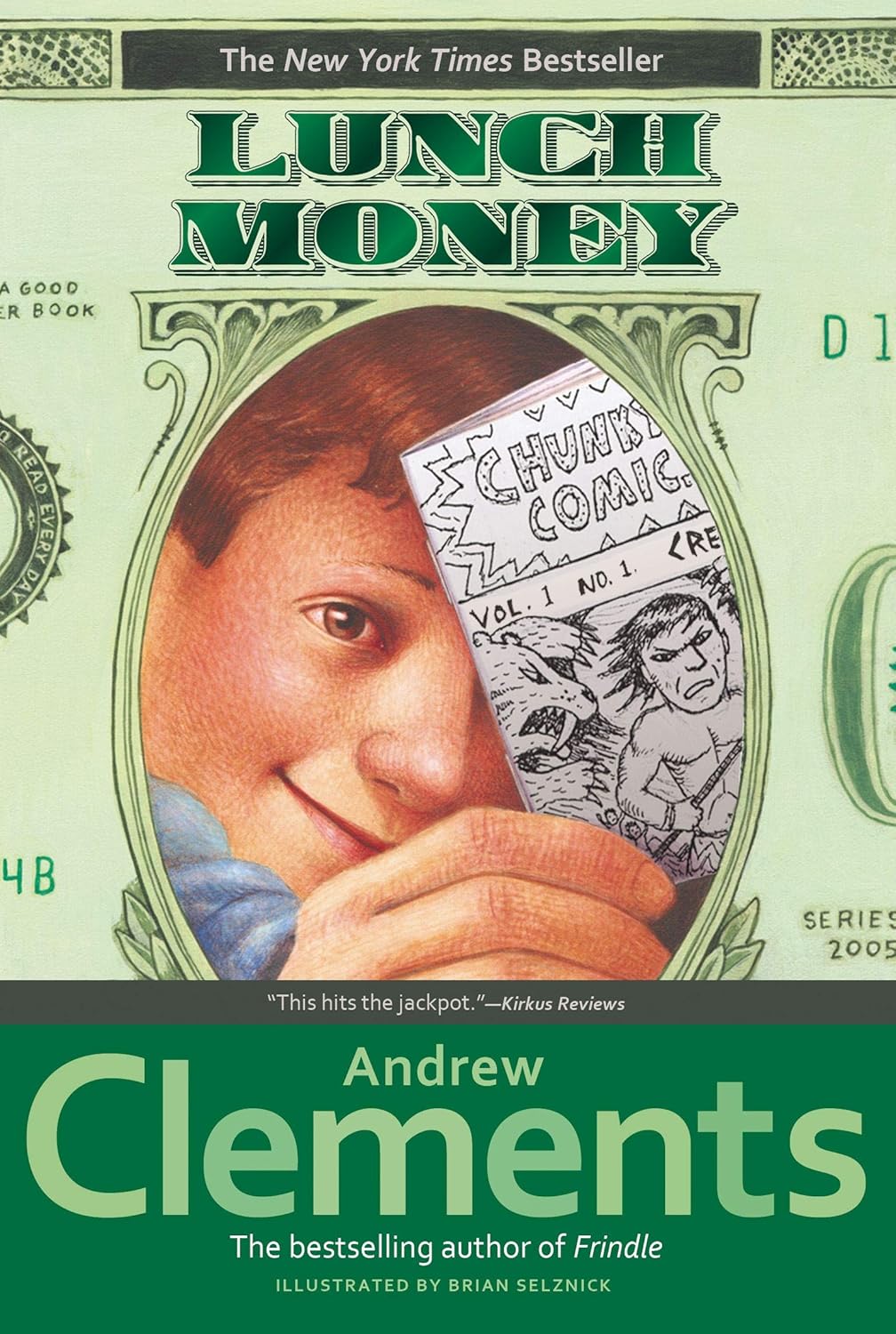
Lunch Money, written by Andrew Clements and illustrated by Brian Selznick, is a 222-page school novel about Greg Kenton — a sixth-grader with a gift for making money and a long-running rivalry with his neighbor Maura Shaw — who discovers that his classmates have hundreds of dollars jingling in their pockets at school every day and invents Chunky Comics: tiny, hand-made miniature comic books sold at lunch for twenty-five cents. When Maura starts selling her own illustrated mini-books and cuts into his business, Greg is ready for war. The problem is that Maura’s books are actually good. The bigger problem arrives when the principal bans their sale entirely. Enemies become partners; partners take on a system; and Greg discovers, in the process, that money might not be the point. Published in 2005 by Atheneum, illustrated by Brian Selznick (who would later win the Caldecott Medal for The Invention of Hugo Cabret), and praised by School Library Journal for its “fast-paced and humorous story line” and examination of “true wealth, teamwork, community mindedness, and the value of creative expression,” it is one of Clements’s most entrepreneurially minded school novels. This guide covers reading level, age appropriateness, themes, and similar books.
For Parents
A warm, funny school novel about a kid who loves making money, a rival who loves making books, and what happens when they’re forced to work together — and then to fight for the right to sell their work. Ages 8–12, grades 4–6. No content concerns. An excellent book for children who are entrepreneurially minded, creatively minded, or both — and for discussions of what money is actually for.
For Teachers
A grades 4–6 classroom novel with a natural fit for economics, entrepreneurship, and creative expression units. The principal’s ban on comic sales generates the book’s best discussion question: when does a school have the right to restrict student commerce? Clements never offers an easy answer. The illustrated mini-books within the novel are excellent inspiration for a student comic-making project.
Lunch Money at a Glance
Find on Amazon →| Author | Andrew Clements (1949–2019) |
| Illustrator | Brian Selznick |
| Published | 2005 (Atheneum Books for Young Readers) |
| Grade Level | 4–6 (our assessment) |
| Recommended Age | 8–12 |
| Lexile | 840L |
| ATOS Level | 5.2 |
| Fountas & Pinnell | R |
| Word Count | 38,550 |
| Pages | 222–240 (editions vary) |
| Genre | Realistic fiction / humor / school story |
| Setting | Elementary/middle school, contemporary |
For official Lexile and AR levels, visit Lexile.com or AR BookFinder. ReadingVine provides independent editorial assessments.
What Reading Level Is Lunch Money?
Lexile 840L, ATOS 5.2, Fountas & Pinnell R, interest level grades 4–7. Our assessment: grades 4–6, ages 8–12. The 840L is higher than other Clements novels in this catalog (*The Report Card* at 700L; *No Talking* at 750L), reflecting a slightly more complex vocabulary and sentence structure, but the book reads at approximately the same pace — Clements’s propulsive school storytelling keeps the 38,550-word count from feeling long. Most readers in the target range complete it in four to seven days. For official scores, visit Lexile.com or AR BookFinder.
What Is Lunch Money About?
Greg Kenton loves money. He has loved it since he was five, when he discovered that quarters were worth more than pennies regardless of size. He saves carefully, spends almost nothing, and is always looking for an opportunity. When he forgets his lunch one day and has to eat the school cafeteria food, he notices that every kid at school has loose change — quarters, dimes, half-dollars — floating in their pockets, spent on nothing in particular. He calculates: four hundred kids times fifty cents each equals two hundred dollars a day. Someone should be selling those kids something worth buying.
Greg invents Chunky Comics: hand-made miniature comic books, folded from a single sheet of paper, sold at lunch for a quarter. They are original, they are cheap to produce, and the kids love them. Business is good — until he discovers that Maura Shaw, his longtime rival from across the street, is selling her own illustrated mini-books and pulling customers away. Greg wants war. The problem is, Maura’s books are better than he expected. And when he actually reads them, he has to admit they’re genuinely good.
Before the rivals can fully resolve their competition, the principal bans the sale of all comic books and student-made materials at school, citing concerns about violent and inappropriate content. Greg and Maura — for the first time in their lives — are on the same side. The rest of the novel is their campaign to change the school policy, Greg’s changing relationship with money and creativity, and what both of them discover about why they actually make what they make.
Lunch Money Themes and Lessons
Greg’s transformation is the novel’s most interesting arc — and it is more specific than the standard “learns a lesson about greed” story might suggest. Greg doesn’t stop loving money; he discovers that what he actually loves is making things, and that the money was a measure of how much people valued what he made. The shift from pure entrepreneurship to creative entrepreneurship is subtle but genuine: by the end of the book, Greg is making comics because he loves making them, and the money has become secondary. This is a real distinction and worth discussing with children who are entrepreneurially minded — the difference between selling something and making something worth selling.
The principal’s ban is the book’s most productively discussable event. Her concern about comic book content is not entirely wrong — some comics are violent and inappropriate — but her blanket ban catches Greg and Maura’s genuine creative work in the same net. The question of when an institution has the right to restrict student expression and commerce is not resolved easily by Clements, which is as it should be.
Discussion questions: Why does Greg love money — what does he think it means? What changes his mind about what matters most? Is the principal right to ban all student-made materials, or just wrong ones? If you were going to make and sell something at school, what would it be?
A Note on Brian Selznick’s Illustrations
Brian Selznick illustrated both Frindle and Lunch Money for Clements — a long creative partnership. When Lunch Money was published in 2005, Selznick was already an established children’s book illustrator; two years later, his own book The Invention of Hugo Cabret (2007) won the Caldecott Medal. The illustrations in Lunch Money include both the chapter-header drawings and samples of Greg and Maura’s actual Chunky Comics — the mini-book pages are reproduced as part of the text, which gives the novel a visual dimension that most Clements novels don’t have and that reinforces the book’s argument about creative work as something real and worth seeing.
Books Similar to Lunch Money
About Andrew Clements
See our The Report Card guide for a full biography. Lunch Money was published in 2005, the year before Clements’s twentieth book, and represents one of his most sustained engagements with the question of what school does to creativity and commerce — a question he returned to differently in No Talking (language) and The Report Card (intelligence). The Brian Selznick illustrations are among the most visually significant in any Clements novel, particularly the Chunky Comics pages reproduced within the text.
Lunch Money: Frequently Asked Questions
What reading level is Lunch Money?
Lexile 840L, ATOS 5.2, Fountas & Pinnell R. Our assessment: grades 4–6, ages 8–12. The 840L is higher than other Clements novels but the book reads at a similar pace; most readers in the target range finish in four to seven days. For official scores, visit Lexile.com or AR BookFinder.
What is Lunch Money about?
Greg Kenton, a sixth-grader who loves making money, invents Chunky Comics — tiny hand-made comic books sold at school for a quarter. When rival Maura Shaw cuts into his business with her own mini-books, they’re ready for war. When the principal bans both their products, enemies become partners. Greg discovers along the way that what he actually loves is making things, not just making money.
What are Chunky Comics?
Tiny hand-made miniature comic books folded from a single sheet of paper, sold at lunch for twenty-five cents. Their production instructions are described in enough detail in the novel that children can make their own — which makes a natural classroom or family extension activity. Brian Selznick’s illustrations include sample Chunky Comics pages as part of the text.
Who is Brian Selznick?
Brian Selznick illustrated both Frindle and Lunch Money for Clements. He later wrote and illustrated The Invention of Hugo Cabret (2007), which won the Caldecott Medal and was adapted into Martin Scorsese’s film Hugo. He is one of the most celebrated children’s book illustrators in America.